

Chippendale Mahogany Desk Chair
When you search for a chippendale mahogany desk chair, you are looking at substantial seating built for studies and libraries.
Chippendale Mahogany Desk Chair
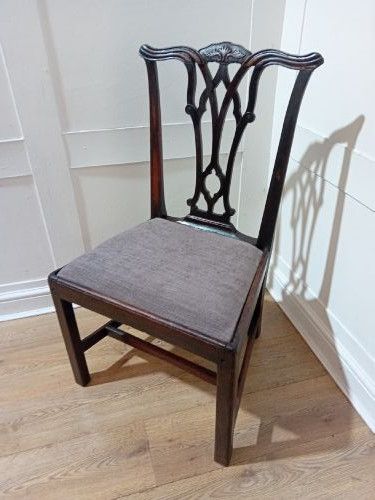
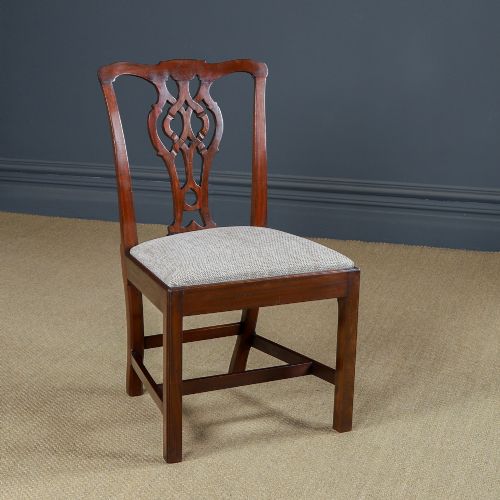
A chippendale mahogany desk chair bridges the gap between formal seating and practical workspace furniture from the eighteenth century onwards. Buyers find various iterations on this page, ranging from genuine Georgian period examples to later revivals from the Victorian and Edwardian eras.
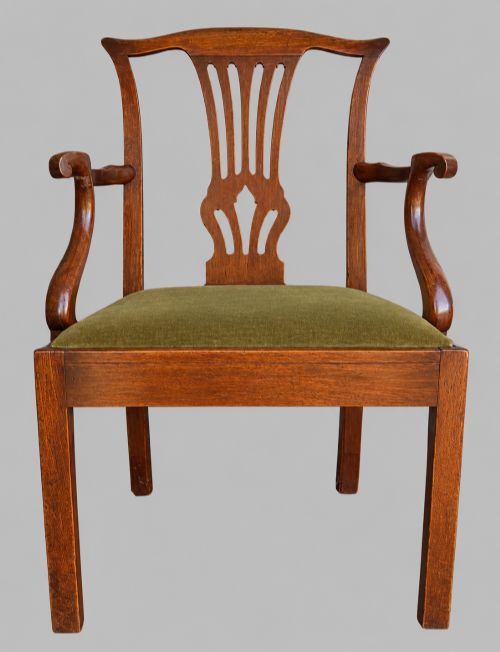
Forms span from open armchairs and library chairs to specific revolving desk models. The most common variants on this page combine traditional elbow chair dimensions with sturdy timber frames suitable for regular use at a writing table.
Materials and construction
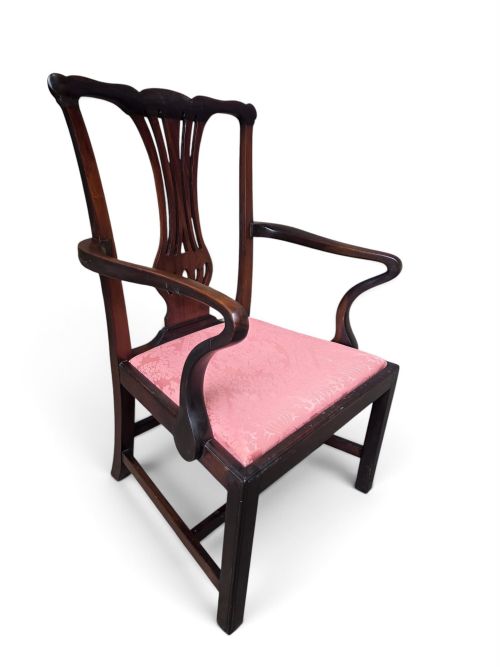
Makers relied heavily on solid mahogany, sometimes specifying Cuban timber, valued for its dense grain and durability. This wood provided the structural strength required for carved chair legs and robust arm supports.
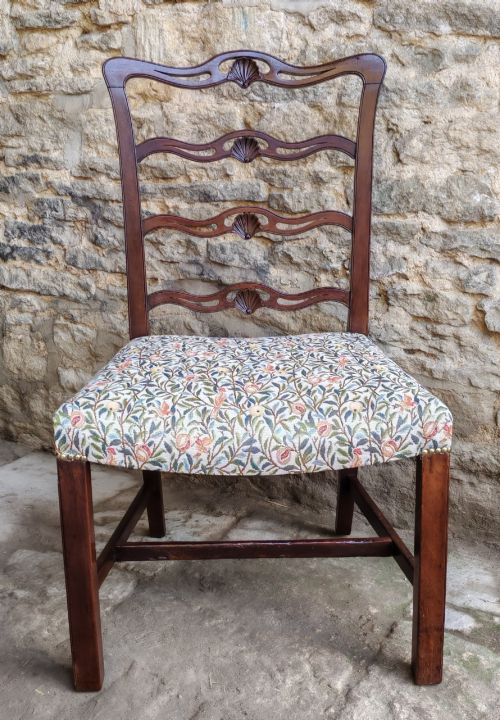
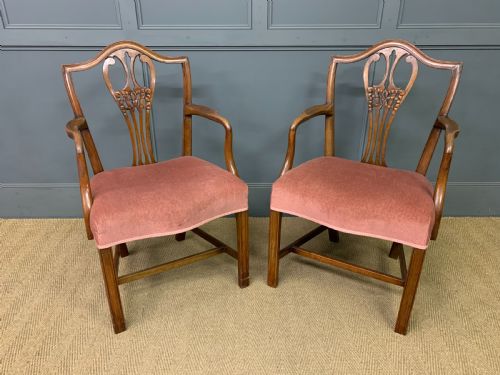
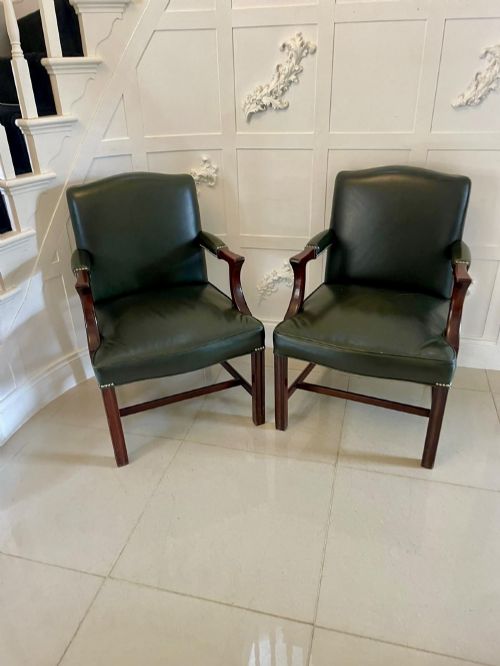
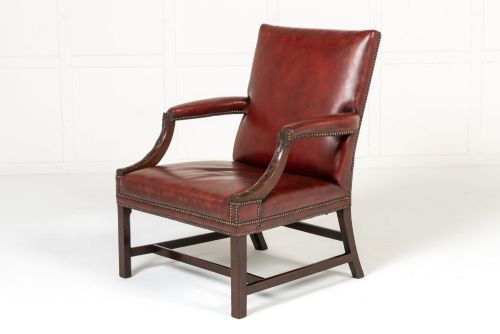
Upholstery elements incorporate materials such as leather, hide, velvet, fabric, and tapestry. Brass tacks and detailed carvings complete the traditional construction methods seen across these listings.
Listings span from the eighteenth century through the Georgian and Victorian periods into the early twentieth century, utilising mahogany alongside leather, brass, and tapestry.
Evaluating craftsmanship
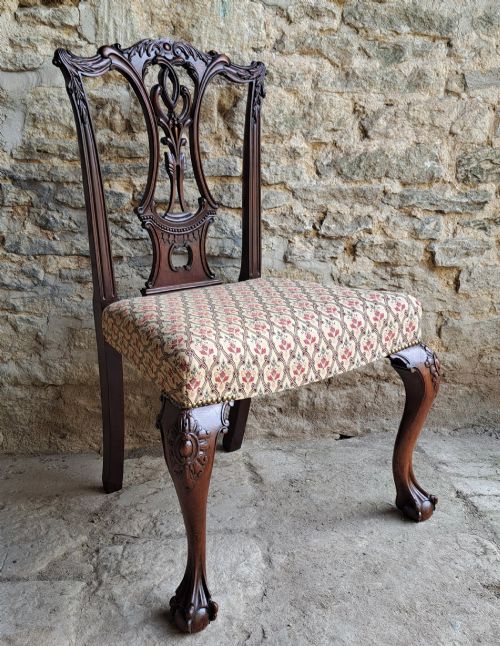
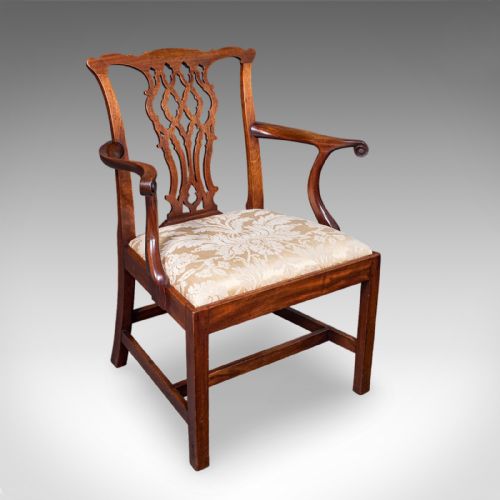
Quality reveals itself in the crispness of the hand-carving and the thickness of the mahogany timber used for the frame. Pieces with deep, well-defined relief work on the splat and legs demonstrate superior workshop standards.
The integration of secondary timbers and the quality of the upholstery materials further separate standard production from exceptional examples. Original leather hide and careful joinery elevate the overall merit of an armchair.
Alfred Allen of Birmingham·Gill & Reigate·Gillows
The Chippendale Mahogany Desk Chair Glossary
- Chippendale
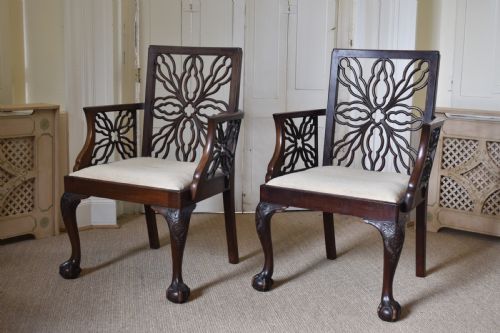
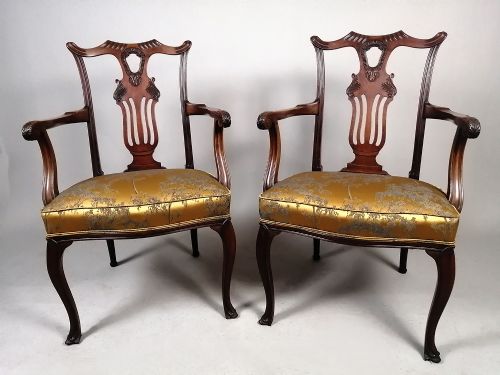
- A style originating from the designs of Thomas Chippendale, characterised by elaborate fretwork, ribbon backs, and cabriole legs. These design cues define the aesthetic of many office and library seats.
- Gainsborough
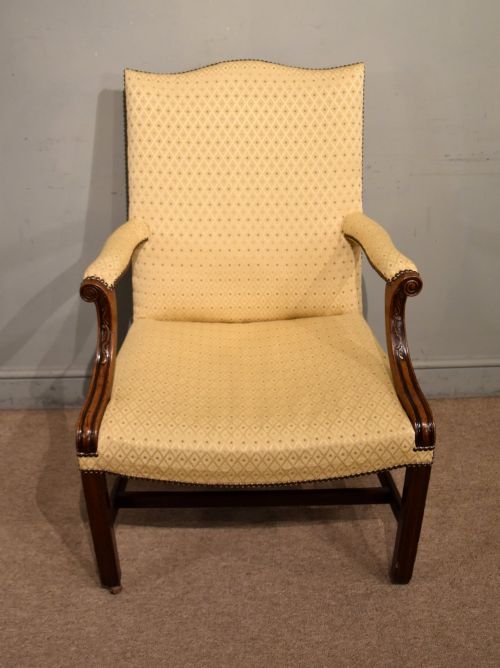
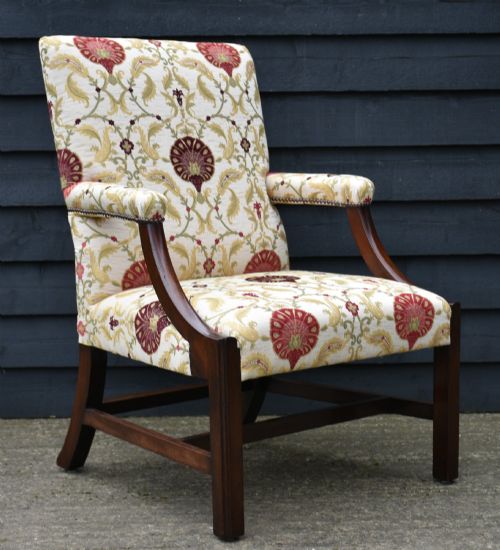
- A wide, upholstered armchair with open padded arms, designed during the Georgian period for domestic study and reading use. They frequently appear on this page configured as desk chairs.
- Carver
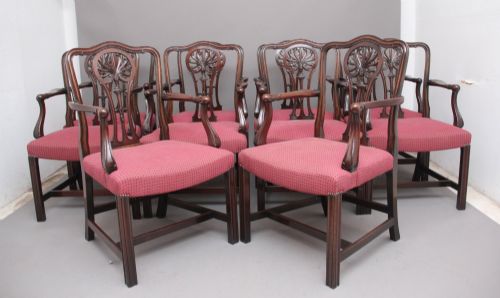
- An armchair, often matching a set of smaller side chairs, featuring elevated elbows for comfortable seating at a table or desk. These pieces serve well in modern home offices.
- Cockpen
- A specific type of Chinese-inspired lattice chair featuring open woodwork panels. This distinct form appears occasionally within eighteenth and nineteenth-century listings.
- Elbow chair
- A traditional term for an armchair providing support for the arms, frequently used interchangeably with desk and library seating.
Chippendale Mahogany Desk Chair: Frequently Asked Questions
What defines a chippendale mahogany desk chair?
These seats combine eighteenth-century aesthetic principles with sturdy timber frames designed for writing and study. They incorporate carved wooden details alongside upholstered elements.
Craftsmen built them to function comfortably at a desk while retaining formal decorative appeal.
How do I distinguish eighteenth-century pieces from later revivals?
Eighteenth-century examples show the natural patina and wear accumulated over centuries of use. Wood density and construction joints offer clues to the exact manufacturing era.
Revival pieces from the Victorian and Edwardian periods often employ machine assistance alongside hand finishing.
Were these chairs originally made for offices?
Makers originally constructed them for grand libraries, private studies, and morning rooms in large country houses. Owners used them while reading, writing correspondence, and conducting business.
Over time, buyers adapted them for modern home workspaces and studies.
What upholstery materials appear on these chairs?
Upholstery options recorded in the listings include hand-dyed leather, traditional fabric, velvet, and tapestry. Many pieces feature brass nailhead trim securing the material to the wooden frame.
Original coverings are sometimes preserved, though many antique chairs have been reupholstered in period-appropriate textiles.