

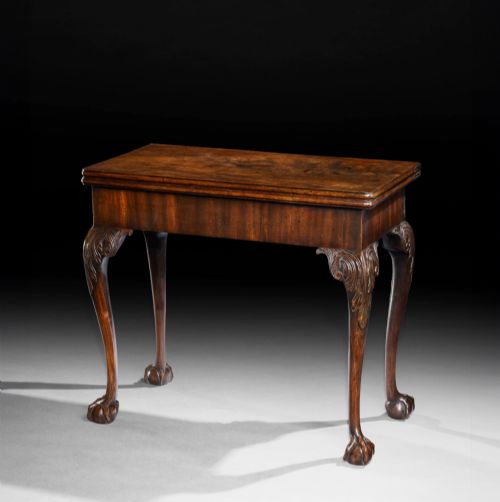
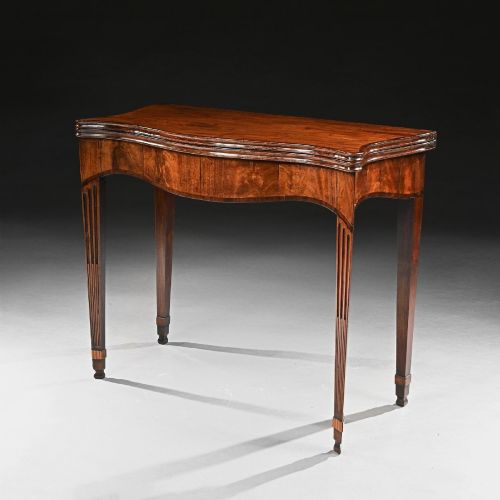
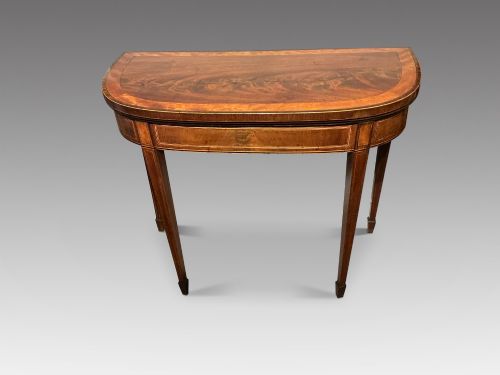
Georgian Mahogany Gaming Table
A georgian mahogany gaming table brings centuries of social history into the room, combining fine cabinetmaking with a place for cards and board play.
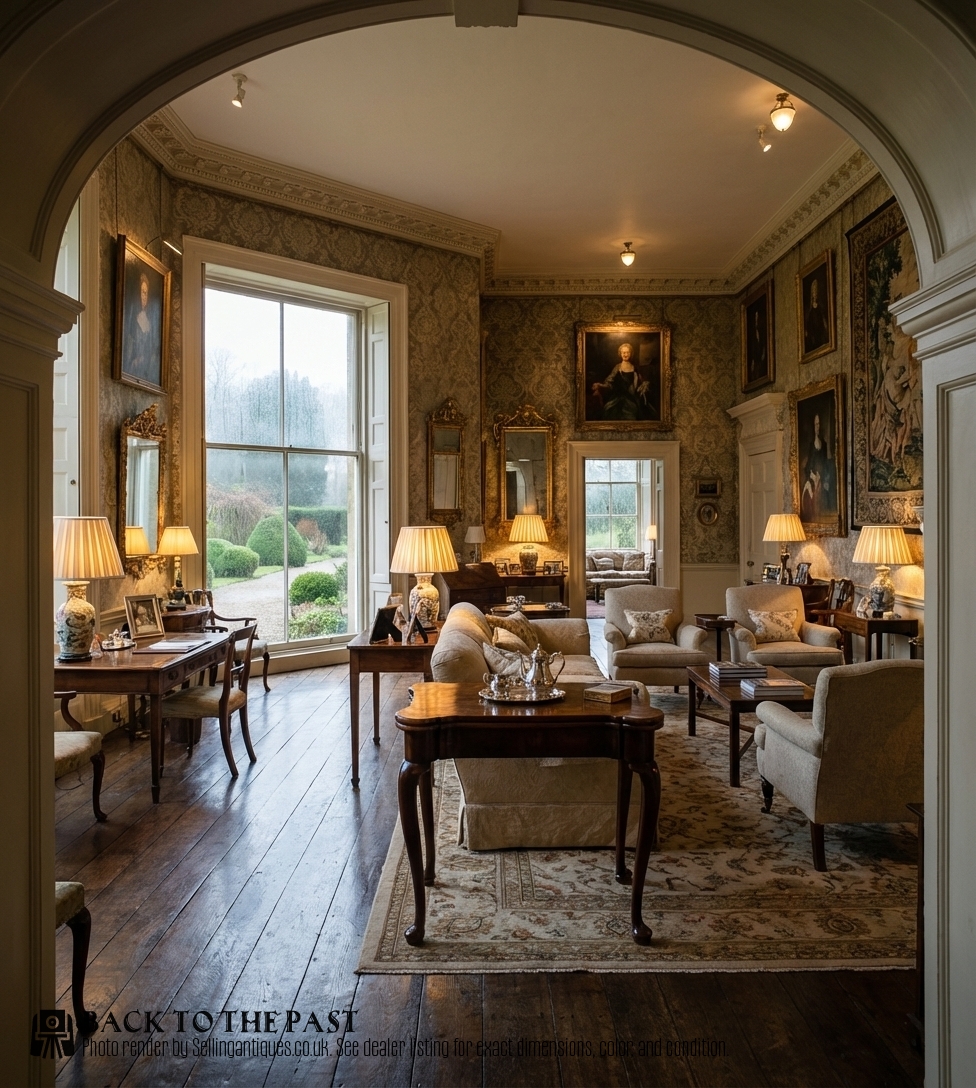
Georgian Mahogany Gaming Table
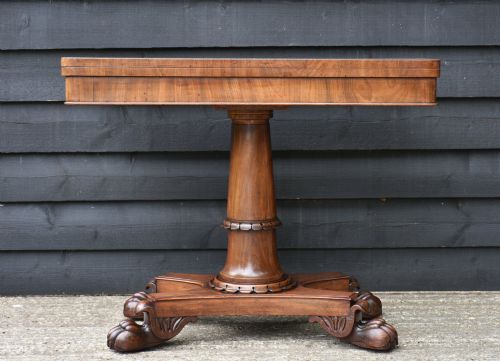
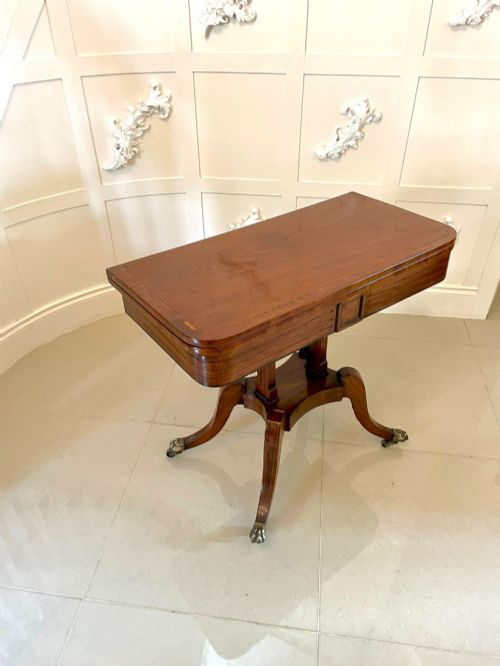
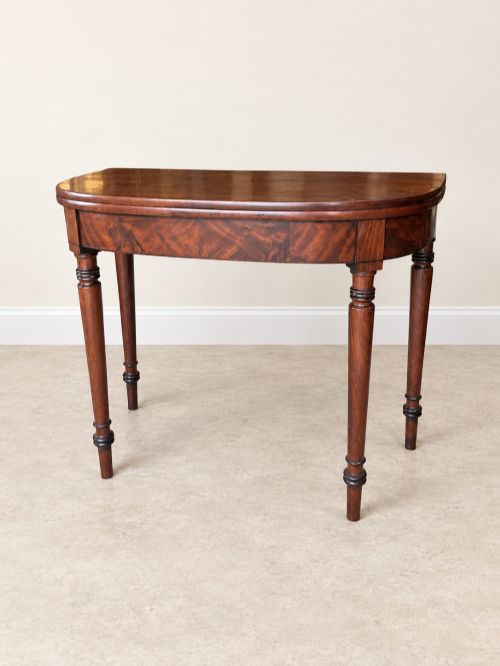
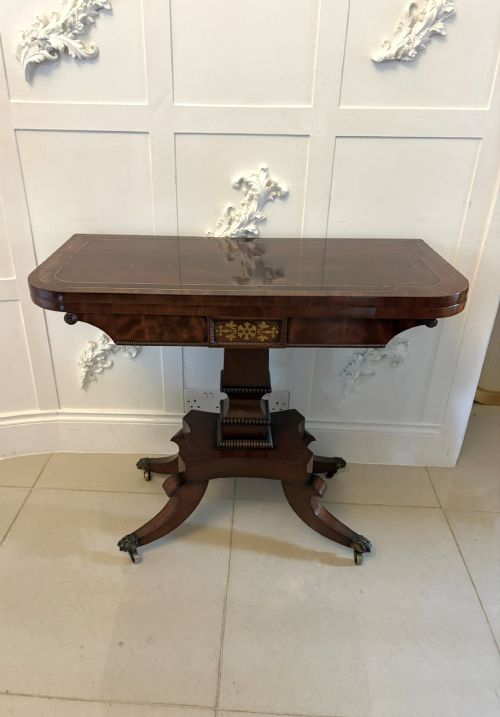
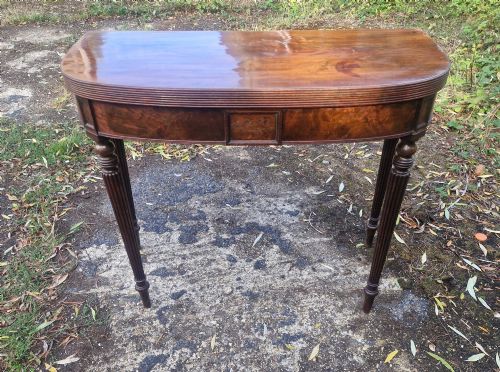
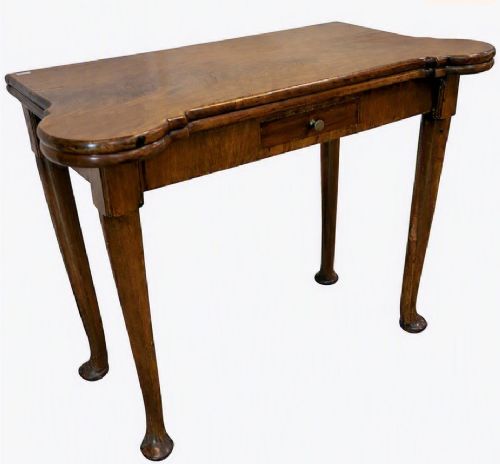
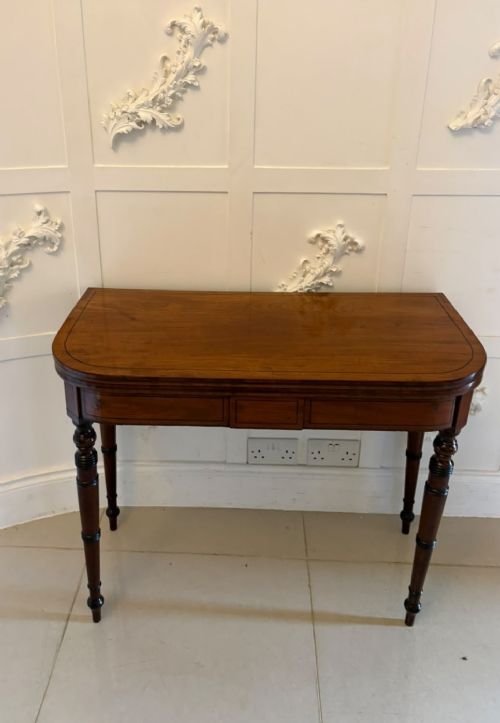
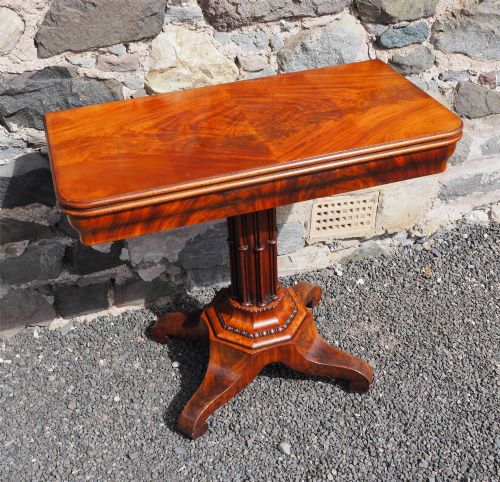
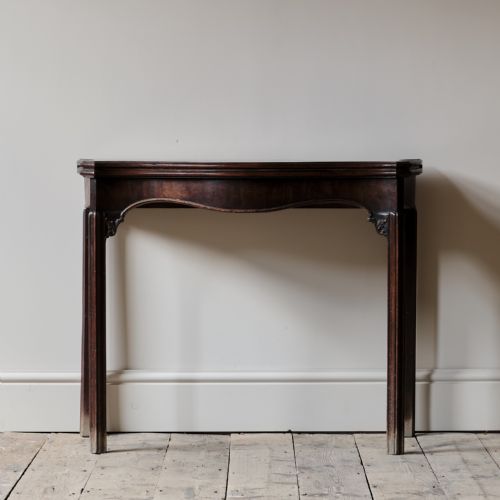
A georgian mahogany gaming table typically appears as a fold-over card table, a console, or a tea table, originating from the eighteenth and nineteenth centuries.
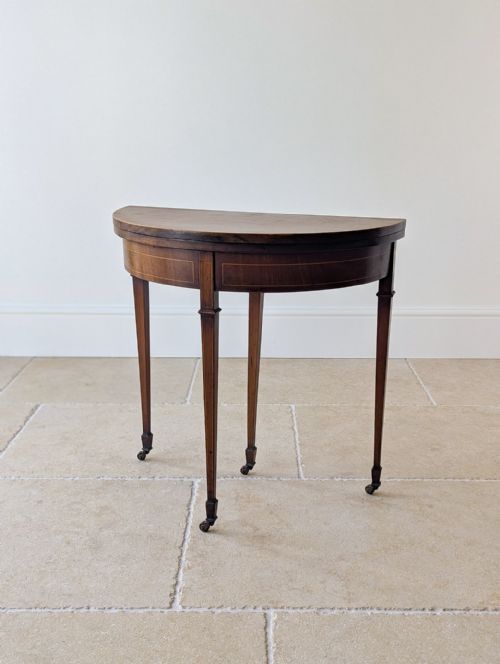
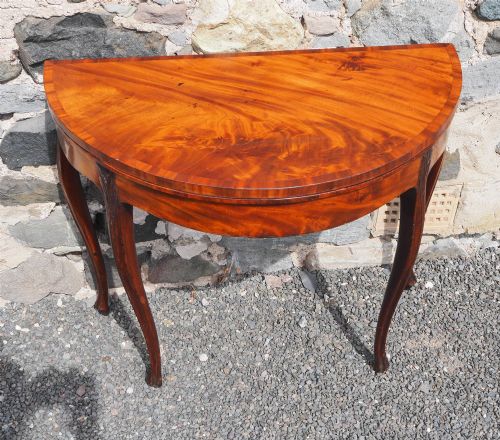
Makers of this period built these pieces in styles spanning George II, George III, Regency, and William IV, often featuring demilune or serpentine shapes.
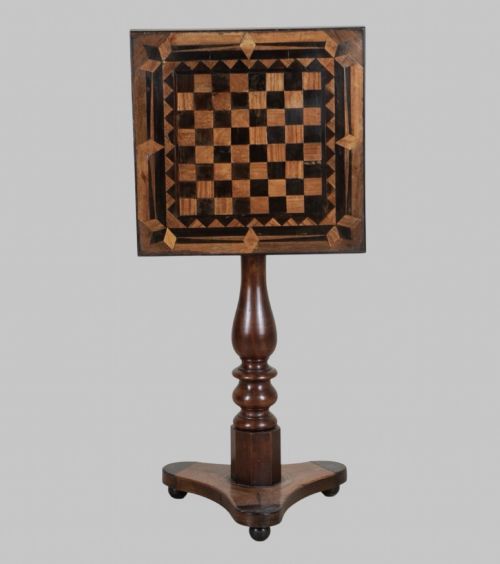
The evidence shows examples surfacing in formats such as concertina action tables and tripod tables with inlaid chess boards.
Materials and Construction
Cabinetmakers utilised solid mahogany and flame mahogany veneer, augmented by decorative details in satinwood, boxwood, walnut, and brass inlay.
Complex internal mechanisms such as concertina actions allowed folding tops to open securely for evening entertainment.
Some tables hide secret compartments beneath their folding tops, originally designed to store stray coins, counters, and elusive playing cards.
Judging Quality
The distinction between standard examples and superior pieces rests on the choice of timber figure, such as richly marked flame mahogany, and the crispness of any wood or brass inlay.
Original patination and the precise execution of serpentine fronts or demilune curves separate workshop standards from exceptional furniture.
Bruce & Burns of Edinburgh·Giles Grendey·Gillows
The Georgian Mahogany Gaming Table Glossary
- Concertina action
- A table frame expanding on a hinged wooden mechanism that supports all four corners when opened. This design provides superior stability during card play compared to swinging fly-legs.
- Demilune
- A half-moon shape used for console and card table tops. These pieces fit flat against a wall when closed.
- Serpentine
- A gently undulating curved front line found on finer tables of the period. This shape requires advanced woodworking skill to execute properly.
- Patination
- The surface sheen and colour developed by mahogany over centuries of exposure and polishing. Original patination indicates minimal chemical stripping.
Georgian Mahogany Gaming Table: Frequently Asked Questions
How did people use a georgian mahogany gaming table?
These tables served primarily for evening card games, social gatherings, and parlour pastimes. Owners kept them folded against a wall as side tables when not in use.
Opening the hinged top revealed a baize-lined surface designed for cards, dice, or chess. Some versions also functioned as tea tables during daytime hours.
How do I tell a George III table from a Regency one?
George III pieces often display restrained classical proportions, carved details, and serpentine or demilune forms associated with Chippendale and Hepplewhite styles. Mahogany grain selection remained paramount during this phase.
Regency examples tend to incorporate bold brass inlay, geometric stringing, and heavier pedestal bases or distinct leg profiles. Cabinetmakers of the Regency period favoured sharp contrast between dark mahogany and lighter woods.
What is a concertina action table?
A concertina action refers to an extendable frame that pulls outward symmetrically to support the unfolded top leaf on all four sides. This mechanical setup differs from standard tables that rely on a single swinging rear leg.
This construction distributed weight evenly and represented a more costly method of manufacture employed on higher-tier gaming furniture.
Where should I place a fold-over table in a modern room?
A closed demilune or rectangular fold-over table sits flat against a hallway or living room wall as a console or side table. This configuration occupies minimal floor space while displaying the figured mahogany top.
Pulling the table into the room and opening the leaf transforms the piece into a functional surface for games or display whenever guests arrive.