

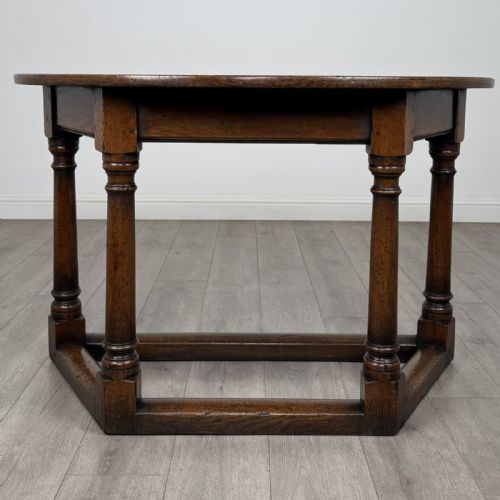
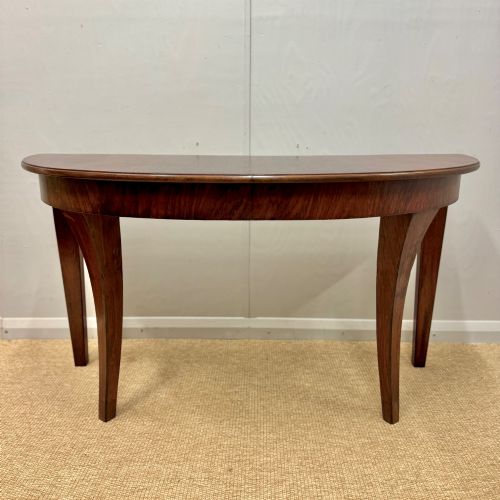
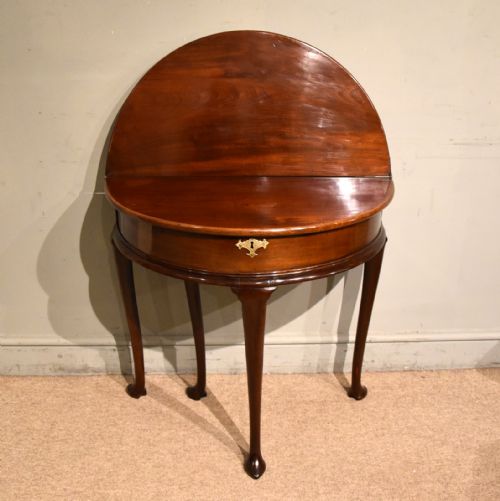


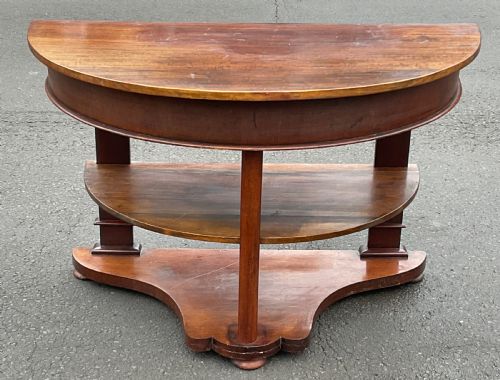


Semicircular Side Table
These semicircular side tables combine useful proportions with striking neoclassical lines, offering an elegant wall-hugging profile for a hallway or drawing room.
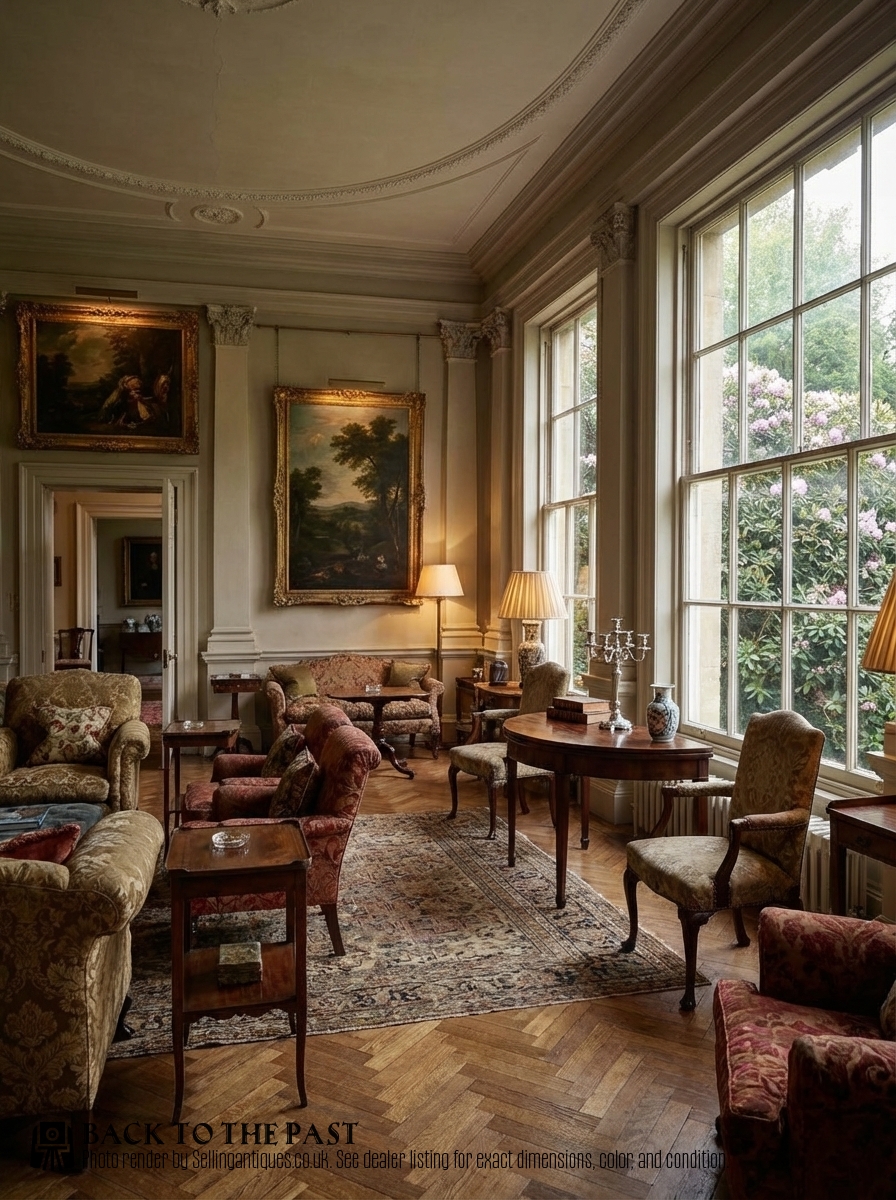
Semicircular Side Table
A semicircular side table provides a flat straight edge to sit against a wall while projecting outward on curved lines. These pieces typically take the form of console tables or fold-over tea tables, designed to stand neatly in halls or principal rooms without obstructing floor space.
The pieces appearing on this page span the eighteenth and nineteenth centuries, including Georgian, Victorian, and later periods. Makers drew upon neoclassical, Regency, Louis XVI, Gustavian, and Adam Revival styles to shape these versatile furnishings.
Buyers frequently encounter mahogany and oak examples alongside pieces rendered in rosewood, bleached mahogany, giltwood, and painted wood. Marble tops and marquetry embellishments also appear, linking these items to continental workshops and British cabinet makers alike.
How they were made
Cabinet makers constructed these tables using dense timbers such as mahogany, oak, and rosewood, often applying crossbanding and intricate inlay to the flat surfaces. The curved friezes and tops required precise timber selection and joinery to maintain stability across the sweeping semicircular profile.
Surface decoration ranges from gilded gesso on giltwood frames to delicate marquetry panels and painted wood finishes. Structural support is provided by slender legs, including concave and tapering forms that carry the weight of the timber and stone tops.
Semicircular Side Table Retail Price Guide 2026
Typical asking prices for semicircular side table among the pieces listed under this phrase on Sellingantiques today, from the lower quarter to the upper quarter. They describe what is for sale here now, not the wider market.
The listings here span the eighteenth and nineteenth centuries, featuring mahogany, oak, rosewood, and marble across neoclassical and Regency styles.
What varies in quality
The refinement of the timber selection and the crispness of the inlay or carving separate standard examples from superior pieces. Finer tables demonstrate meticulous attention to grain matching across the curved top and refined execution of neoclassical motifs.
Structural integrity and the retention of original materials dictate the standing of a table. Superior items maintain their original marble tops, gilding, or polished mahogany surfaces without heavy intervention.
The Semicircular Side Table Glossary
- Demi-lune
- A half-moon or semicircular shape typical of tables designed to stand flat against a wall. This profile became particularly popular during the eighteenth century for hall and console use.
- Console table
- A table supported by wall brackets or console legs, traditionally fixed or positioned against a wall. These pieces often served decorative purposes in formal reception rooms.
- Crossbanding
- A border technique where veneer is laid with the grain running perpendicular to the main surface. This frames the top of a table with a contrasting band of timber.
- Marquetry
- The art of applying decorative pieces of veneer to a structure to form intricate patterns and pictures. It is frequently seen on eighteenth and nineteenth-century Dutch and continental tables.
- Giltwood
- Timber that has been coated with a thin layer of gold leaf or gesso. This finish is characteristic of decorative neoclassical and revival frames.
Semicircular Side Table: Frequently Asked Questions
Where should I place a semicircular side table?
These tables suit hallways, narrow landings, and reception rooms where floor space is limited. Their flat back allows them to sit flush against a wall while the curved front softens room layouts.
They function well beneath mirrors or paintings, providing a surface for lamps or decorative objects without blocking movement through a doorway.
How do I identify a Georgian piece?
Georgian tables typically display dense mahogany construction, restrained classical proportions, and fine inlay work. Look for structural hallmarks of the eighteenth century in the drawer linings and timber grain.
Later Victorian interpretations often adopt heavier proportions or revival styles such as the Adam design, reflecting nineteenth-century manufacturing methods.
How do I care for polished wood surfaces?
Maintain timber surfaces by dusting with a soft, dry cloth and avoiding placement near direct heat sources or strong sunlight. These precautions prevent the wood from drying out and safeguard traditional finishes.
Period polishes or high-quality beeswax applied sparingly will help nourish mahogany and rosewood over time without building up heavy residues.