
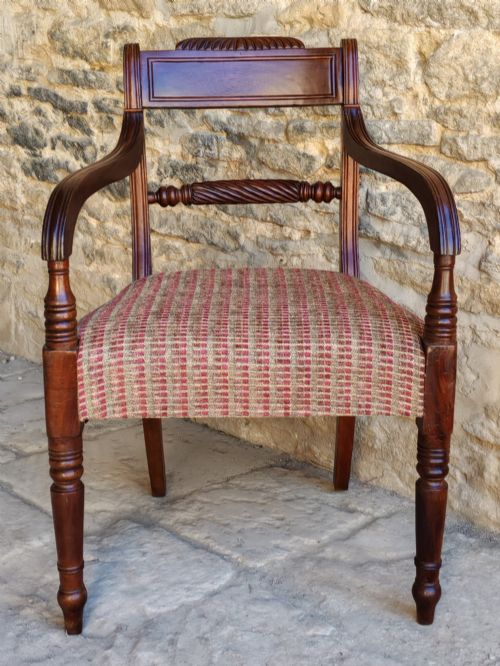
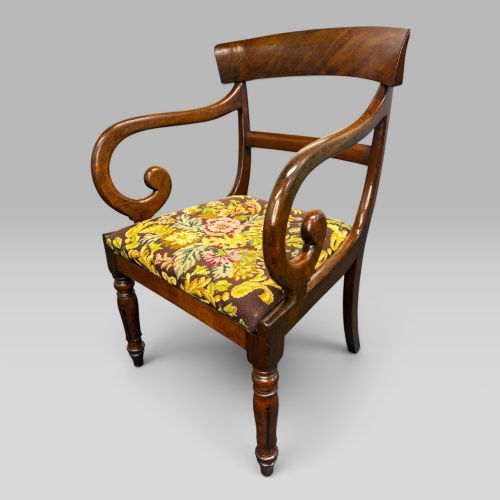
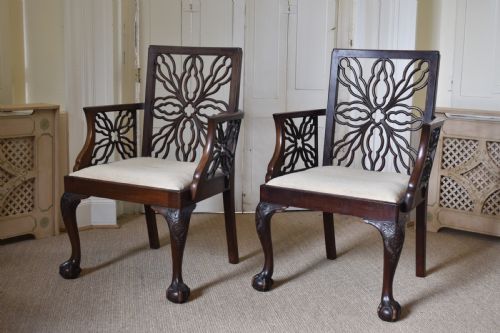
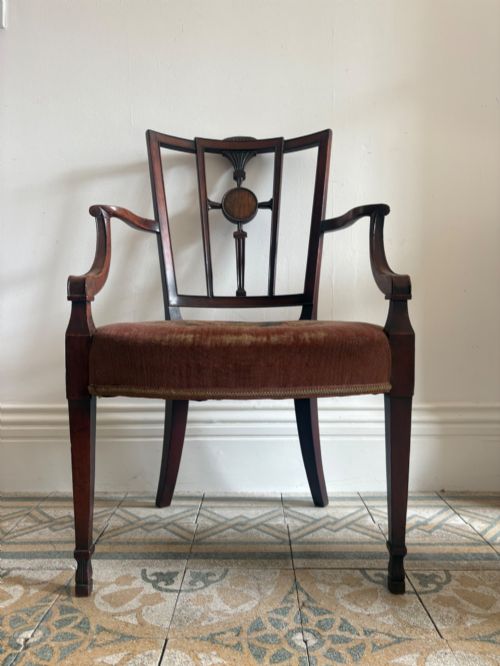
Georgian Mahogany Elbow Chair
A georgian mahogany elbow chair brings solid craftsmanship and rich timber tones into a room, offering both practical seating and architectural presence.
Georgian Mahogany Elbow Chair
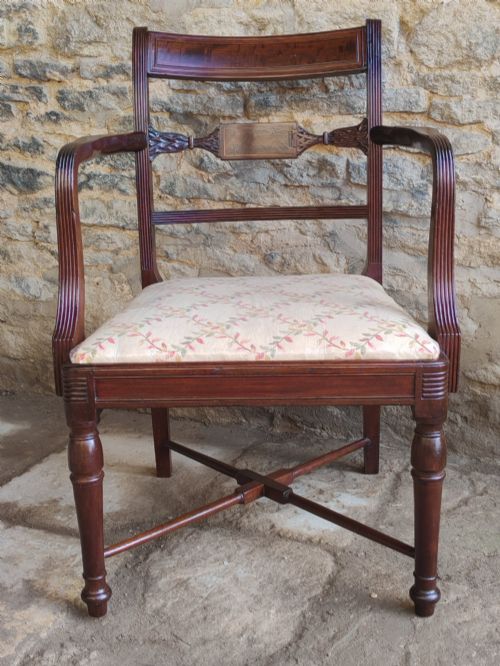
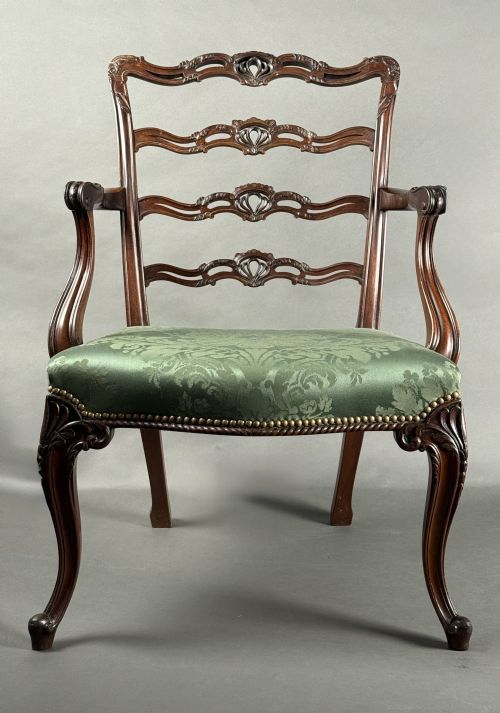
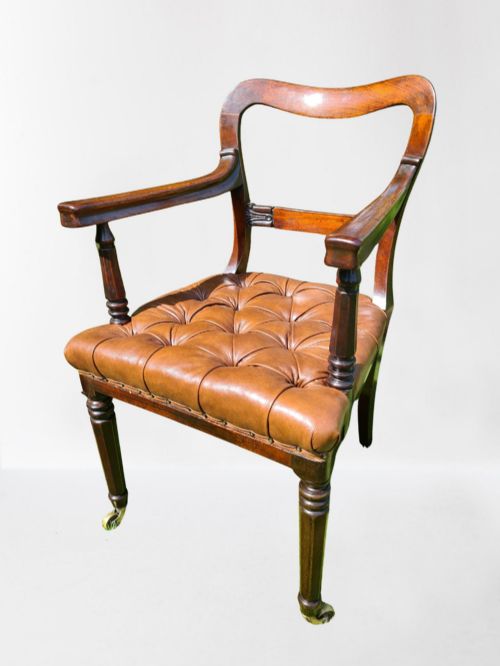
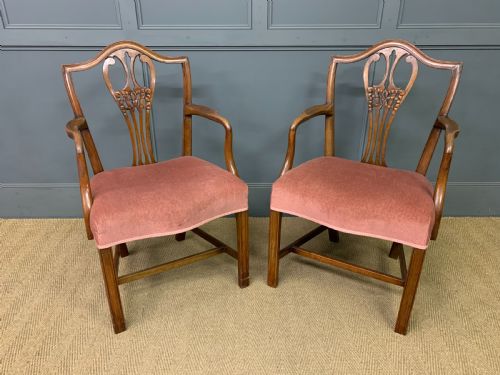
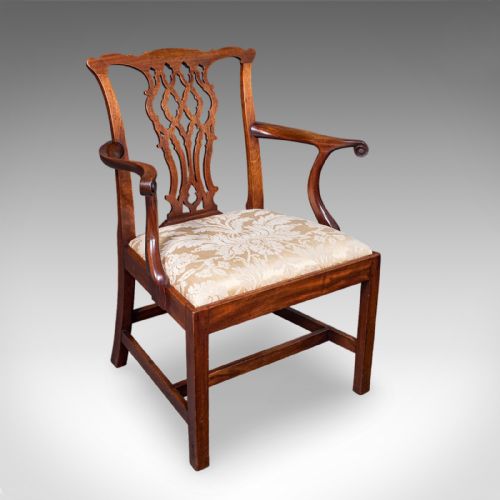
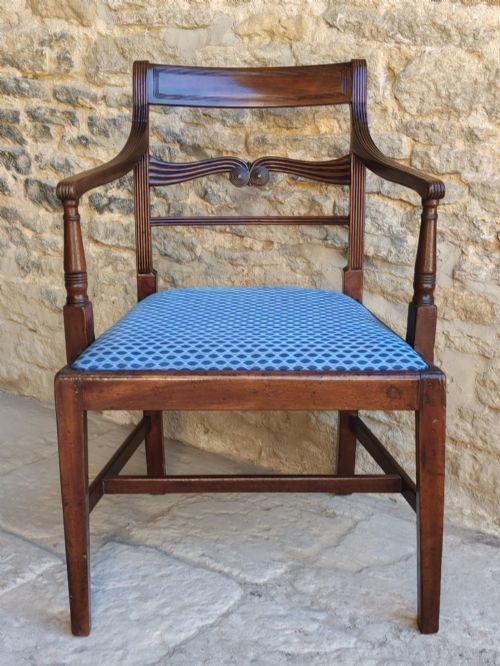
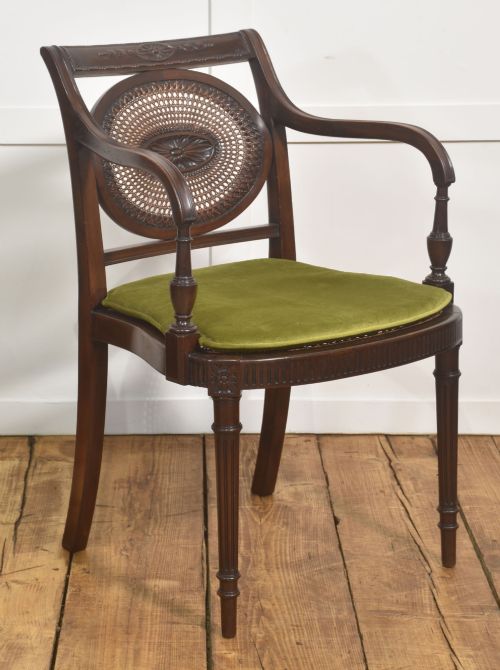
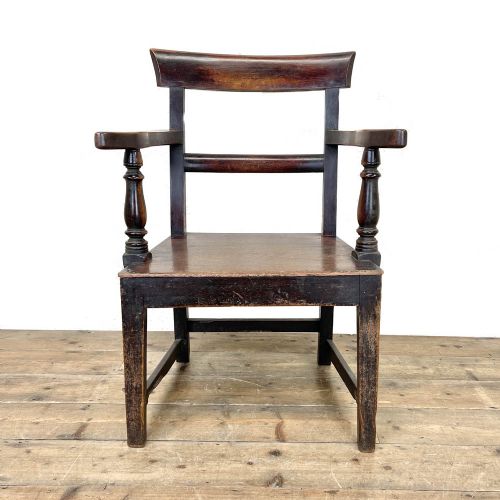
A georgian mahogany elbow chair functions as a substantial seat featuring integrated armrests, historically placed at the ends of dining tables or utilised as desk and library chairs. Buyers encounter forms ranging from authentic eighteenth-century examples to later revival interpretations produced around nineteen hundred.
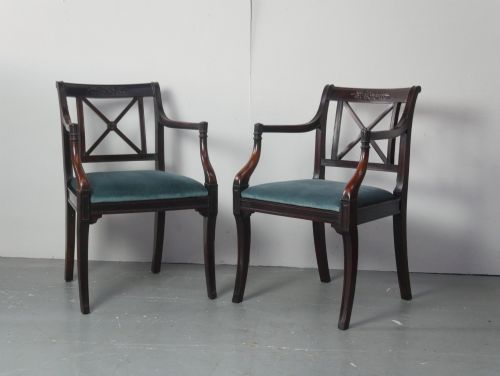
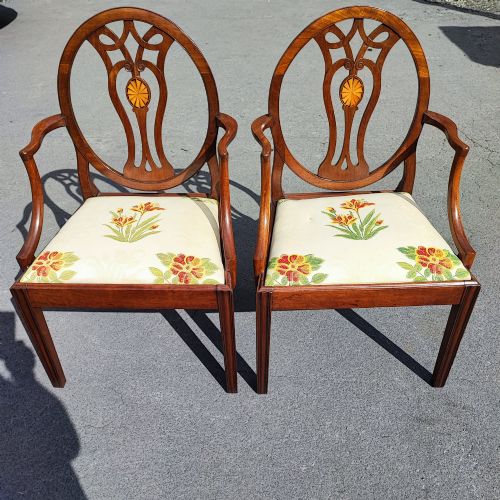
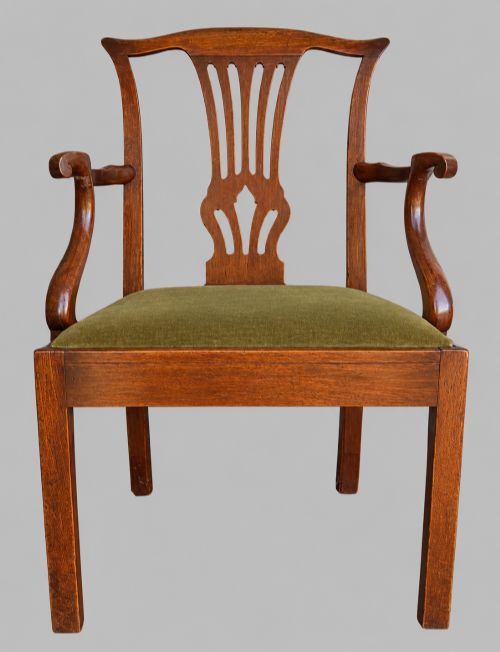
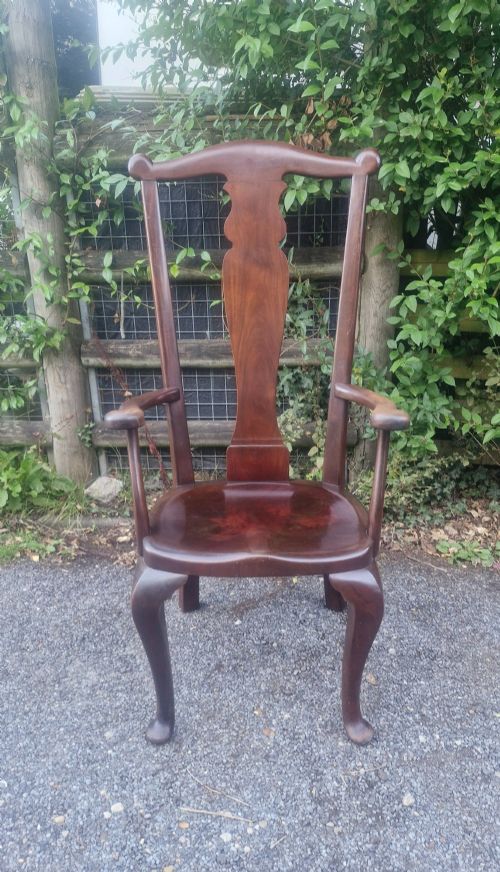
The selections span distinct stylistic phases including George III, Regency, and Chippendale designs. Common regional variations and stylistic revivals provide diverse carving depths and structural proportions across the listed inventory.
How They Were Made
Cabinetmakers built these frames primarily from dense, durable mahogany, sometimes incorporating secondary timbers for internal framework. Joinery relied on mortise and tenon construction, secured with pegged joints and hidden blocks to ensure long-term stability under daily use.
Surface decoration frequently involved precise hand-carving along splats and arm terminals, alongside contrasting inlay work utilising materials like rosewood or brass stringing. Seats were traditionally webbed and stuffed with natural fibres before receiving covers of leather, velvet, fabric, or cane.
One industrious gentleman apparently needed a chair robust enough for morning room reading, office work, and occasional library naps.
What Varies in Quality
The crispness of the hand-carved ornamentation distinguishes standard production from exceptional examples, as skilled artisans achieved deep relief work on crest rails and pierced splats. Timber selection also dictates grade, with figured mahogany grain patterns commanding greater visual depth.
Structural integrity depends on the original thickness of the arms and legs, where heavier scantling resists stress better than thinner stock. Preserved maker signatures or stamps, such as those from Gillows, elevate the historical standing of individual pieces.
Gillows·Waring & Gillow·Spillman & Co
The Georgian Mahogany Elbow Chair Glossary
- Carver
- An armchair designed with elbow supports, traditionally made to match a set of single dining chairs. These were positioned at the head of the table.
- Elbow chair
- A term for any chair constructed with armrests attached to the sides of the seat. They often served dual purposes in offices and morning rooms.
- Chippendale style
- A decorative vocabulary characterised by pierced splats, cabriole legs, and ball-and-claw feet. It draws inspiration from the published designs of Thomas Chippendale.
- Bar-back
- A chair back featuring horizontal shaped wooden slats resembling the top rail of a Windsor or Regency design. This configuration provides sturdy lumbar support.
- Drop-in seat
- A removable wooden frame upholstered separately and dropped into a ledge within the seat rails. This technique allowed for straightforward reupholstering without dismantling the frame.
Georgian Mahogany Elbow Chair: Frequently Asked Questions
How do I spot a genuine eighteenth-century piece?
Examine the timber underneath and inside the seat frame for tool marks, oxidation, and wood shrinkage consistent with age. Genuine period examples display hand-cut joinery rather than modern mechanical fasteners.
Compare the carving depth and secondary woods against documented pieces from the same decade. Subtle irregularities in symmetry often confirm manual rather than machine production.
Were these chairs meant for dining or working?
Elbow chairs served multiple domestic functions depending on their height and upholstery. Many acted as desk or library seats for reading and correspondence.
Others formed part of large dining suites, placed specifically at the table ends. Their sturdy construction allowed them to transition between offices, halls, and bedrooms.
How should I care for the mahogany and leather?
Maintain the timber by applying traditional wax polish sparingly to nourish the grain without building up heavy residue. Keep the furniture away from direct heat sources and strong sunlight to prevent timber splitting.
Condition leather seats with specialised balms to retain flexibility and prevent cracking. Gentle dusting with a dry cloth protects delicate surface patination.
What defines the Regency style in these chairs?
Regency pieces incorporate classical motifs influenced by ancient Roman and Greek archaeology. Expect to see sabre legs, brass inlay, and reeded frames.
Proportions became slightly more austere compared to earlier Georgian designs. Darker mahogany was frequently accented with contrasting brass stringing or rosewood roundels.