
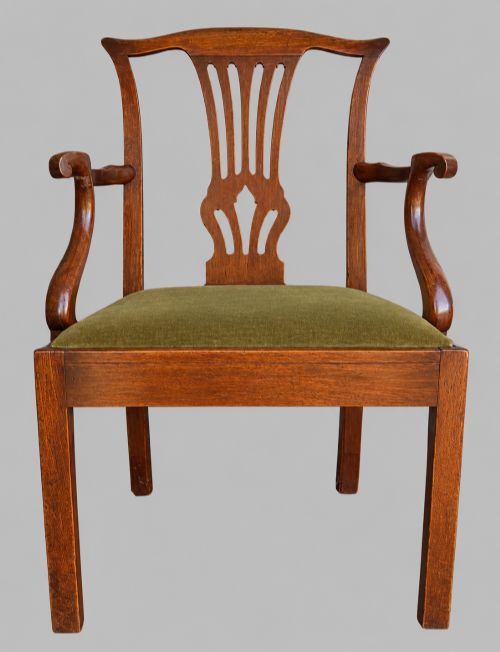
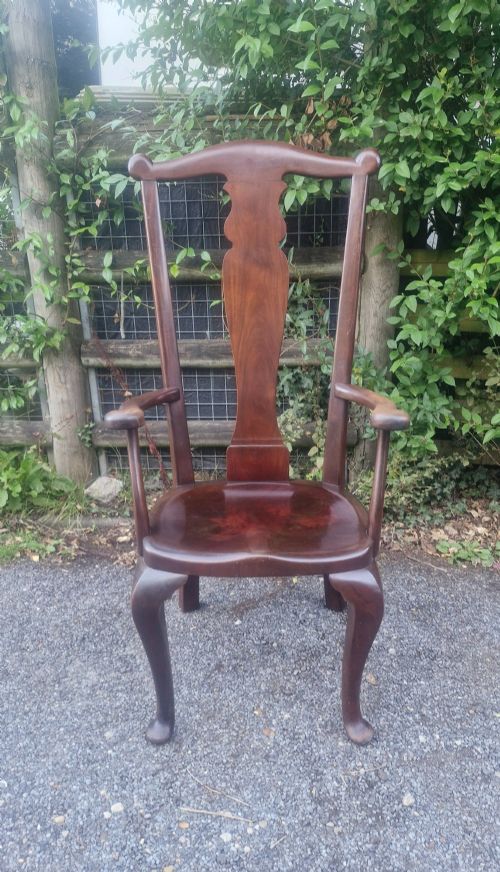
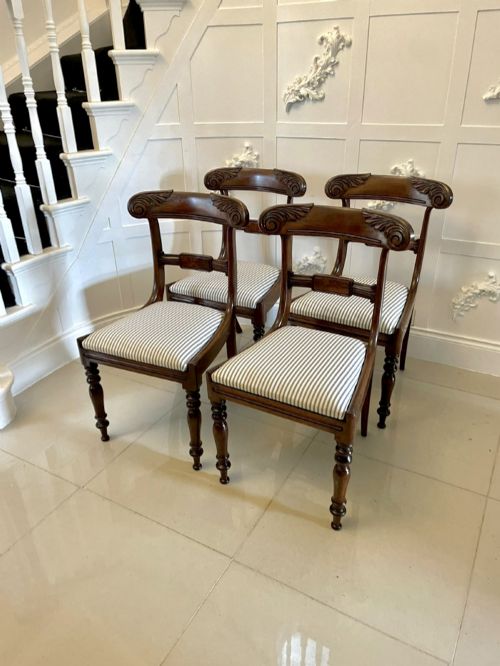
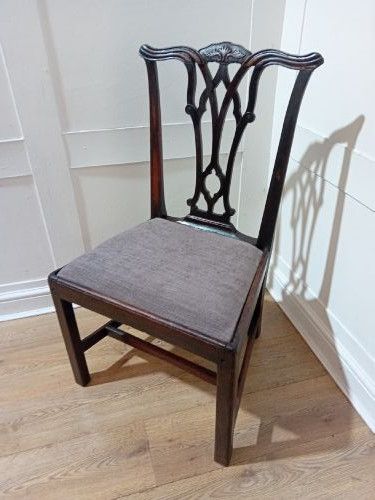


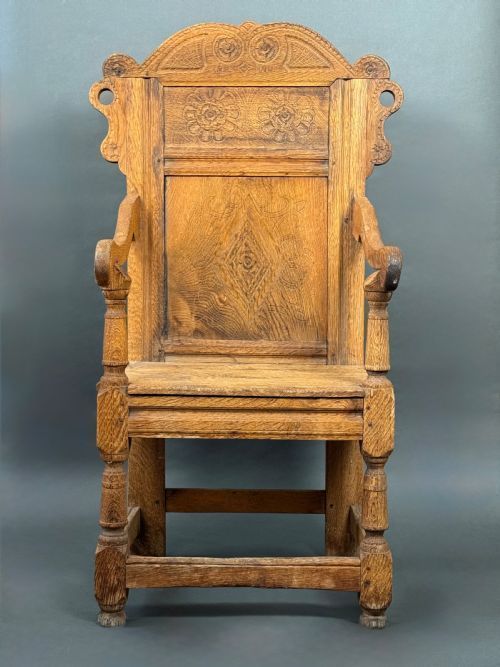
Georgian Carved Wooden Chair
A georgian carved wooden chair offers solid timber construction and distinct period proportion, drawing collectors who value domestic history and traditional craft.
Georgian Carved Wooden Chair
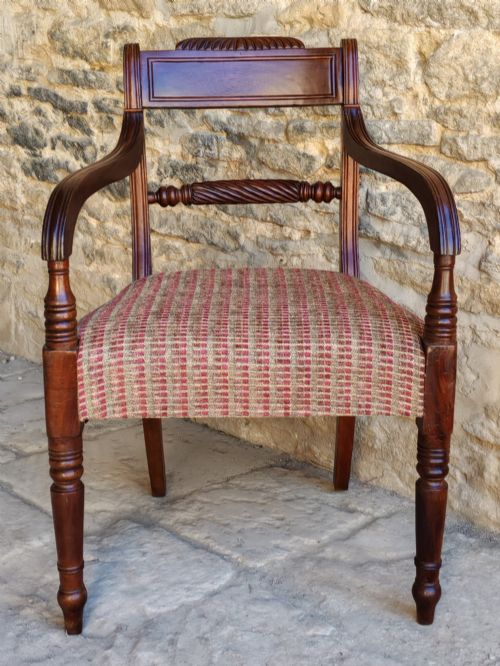
A georgian carved wooden chair encompasses seating furniture produced across the eighteenth and early nineteenth centuries, alongside later revivals. The selection on this page centres primarily on mahogany and oak dining chairs, armchairs, and hall chairs dating from the eighteenth century through the regency period.
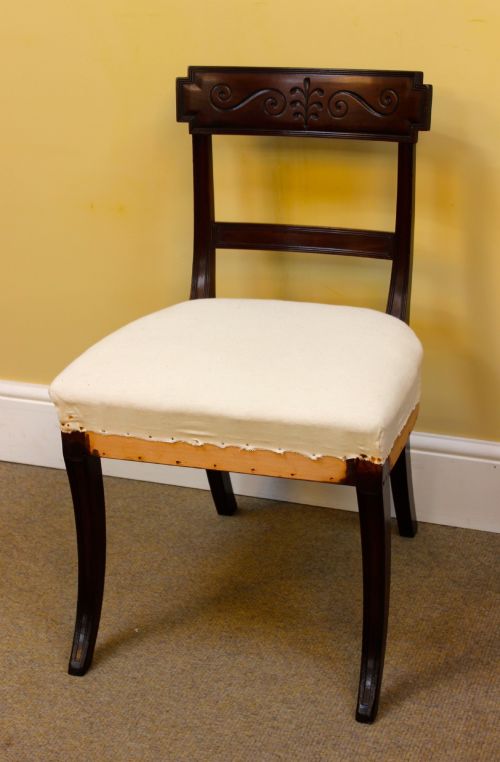
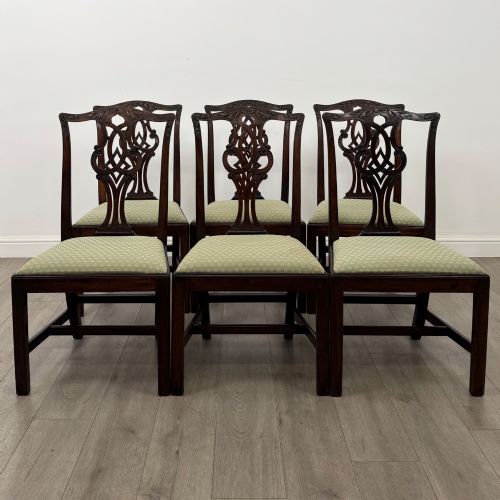
Buyers encounter single pieces, pairs, and larger sets intended for dining rooms, halls, and desks. Forms range from straightforward ladder-back and wainsot designs to elaborate chippendale, hepplewhite, and regency styles featuring brass inlay and turned elements.
Originating largely from English and Scottish workshops, these chairs reflect domestic requirements of their respective eras, spanning from rustic elm windsors to formal mahogany seating with upholstered or cane seats.
How they were made
Makers utilised dense hardwoods such as mahogany and oak, supplemented by elm and yew for specific regional forms like windsors. These timbers were shaped using hand tools, with joints secured by traditional pegging and mortise and tenon construction.
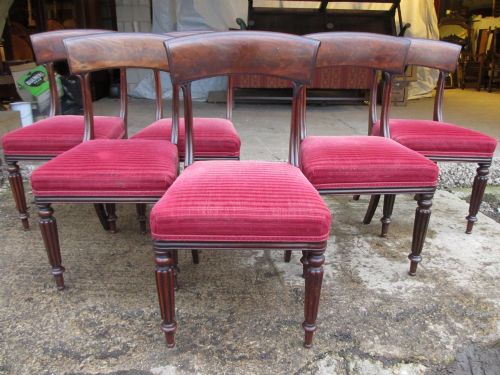
Surface enrichment relied on carved relief work, bobbin turning, and occasionally brass inlay rather than applied ornamentation. Upholstery materials included contemporary textiles, fabric, and velvet, fitted over webbing or cane bases.
Listings feature eighteenth century, nineteenth century, and regency periods, utilising mahogany, oak, elm, brass, and velvet.
What varies in quality
Quality rests in the crispness of the carved detail and the integrity of the timber framing. Superior examples display balanced proportions and precise joinery that remains stable without excessive modern intervention.
The choice of primary wood and the restraint or ambition of the design separate utilitarian seating from high-status furniture. Original surface patination and retention of early elements like cane or traditional upholstery ground the distinction between ordinary pieces and finer survivals.
The Georgian Carved Wooden Chair Glossary
- Carver
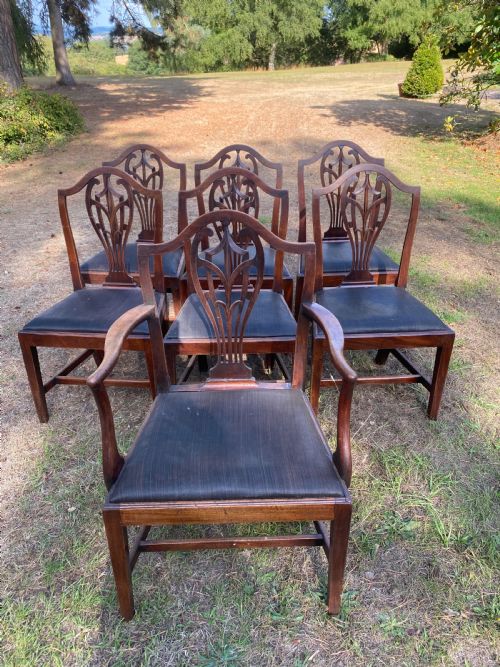
- An armchair, typically designed for the head of a dining table to match a set of side chairs. These often feature more generous proportions and open arms.
- Hall chair
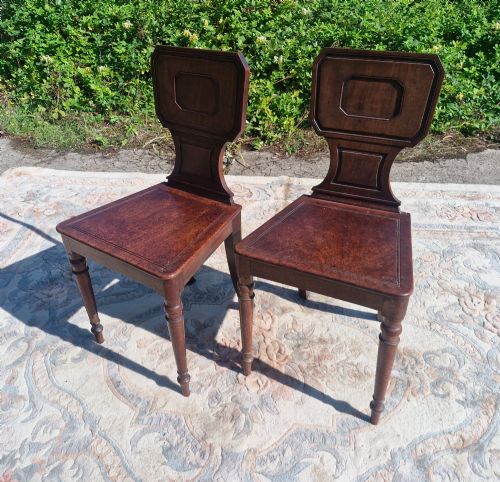
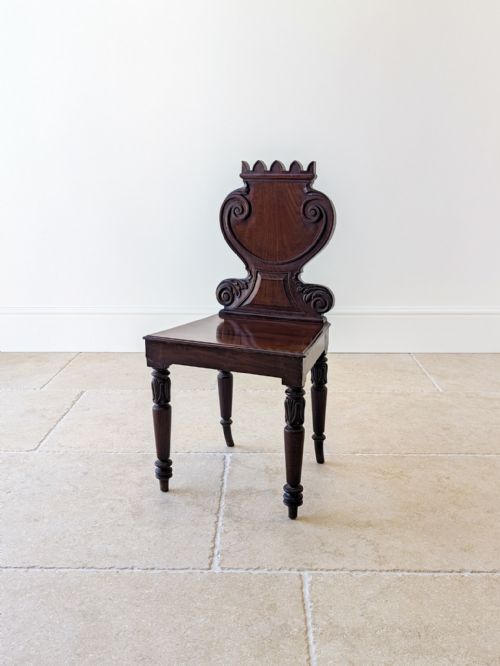
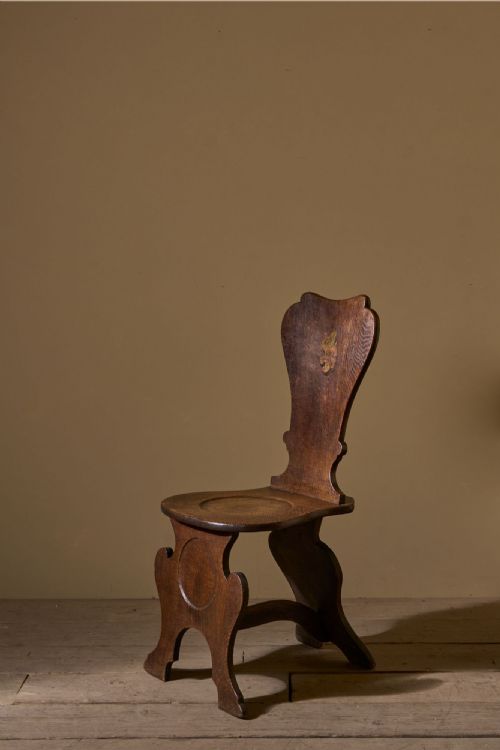
- A stiff wooden seat intended for an entrance hall, rarely upholstered and frequently featuring a painted or carved crest on a solid back.
- Windsor
- A traditional chair constructed with a solid wooden seat into which the legs and back spindles are directly bored and wedged. Regional examples often utilise elm or yew.
- Regency
- A style spanning the early nineteenth century, characterised by classical restraint, sabre legs, and occasional brass inlay inspired by ancient Roman and Greek forms.
- Chippendale
- A mid-eighteenth century design style associated with elaborate pierced splats, cabriole legs, and carved ornamentation influenced by Thomas Chippendale's published patterns.
Georgian Carved Wooden Chair: Frequently Asked Questions
How do I spot a genuine georgian carved wooden chair?
Examine the construction methods beneath the seat and around the joints for hand-cut tenons, pegging, and timber shrinkage appropriate to the eighteenth or early nineteenth century. Genuine pieces display natural wear patterns and a deep patination on the primary wood surfaces that modern reproductions struggle to replicate.
Compare the proportions and carved details against documented period examples, noting that regional variations and later revivals often exhibit stylistic tells specific to their actual date of manufacture.
Can I use these chairs for daily dining?
Most antique wooden dining chairs remain structurally sound for daily use provided the joints are stable and checked periodically by a conservator. Solid timber frames handle regular sitting well, though antique upholstery or delicate cane seats may require careful treatment or gentle weight distribution.
When seating guests, distribute chairs according to their individual sturdiness, keeping finer armchairs and delicate regency side chairs away from heavy daily wear if their joinery shows age.
What is the difference between a carver and a side chair?
A carver is an armchair designed specifically to accompany a set of dining chairs, featuring armrests to accommodate the host at the head of the table. Side chairs are narrower, armless seats intended to line the sides of the dining table.
In many antique dining sets, carvers share the identical back design and leg style as the surrounding side chairs but offer a wider, more accommodating seat base.
How do I care for antique mahogany and oak?
Maintain timber surfaces by dusting regularly with a soft, dry cloth and avoiding placement near direct heat sources or strong sunlight. Excessive warmth dries out old wood and causes shrinkage in the traditional joinery.
Apply a traditional beeswax polish sparingly only when the wood appears dry, buffing gently to preserve the natural lustre and historical patination built up over centuries.