
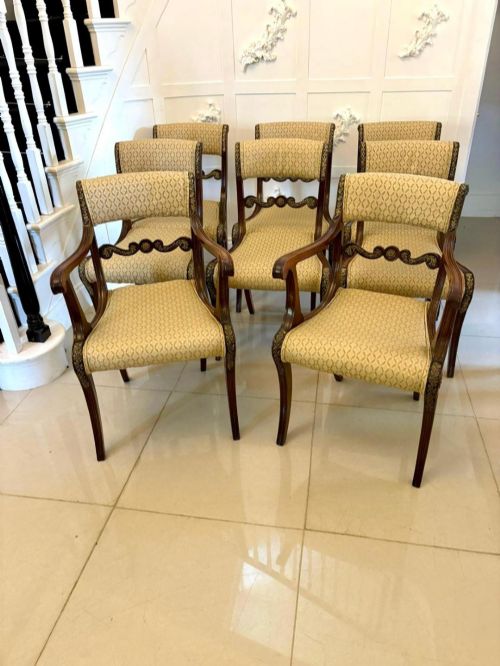
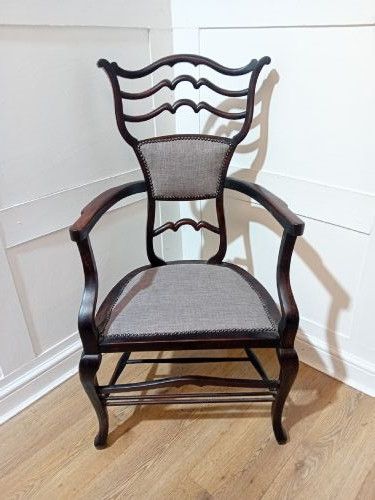
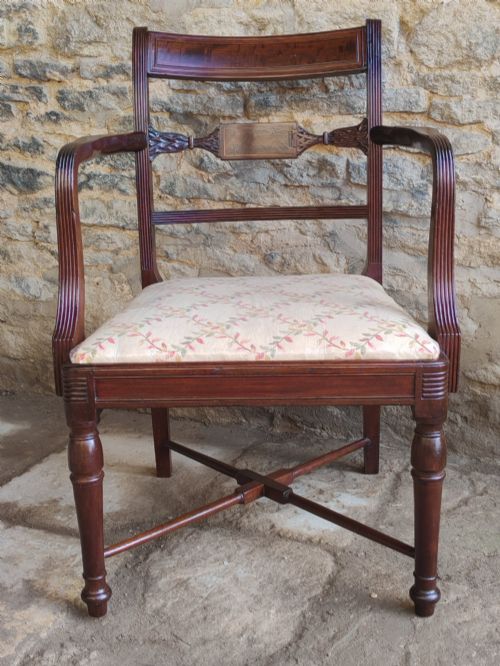

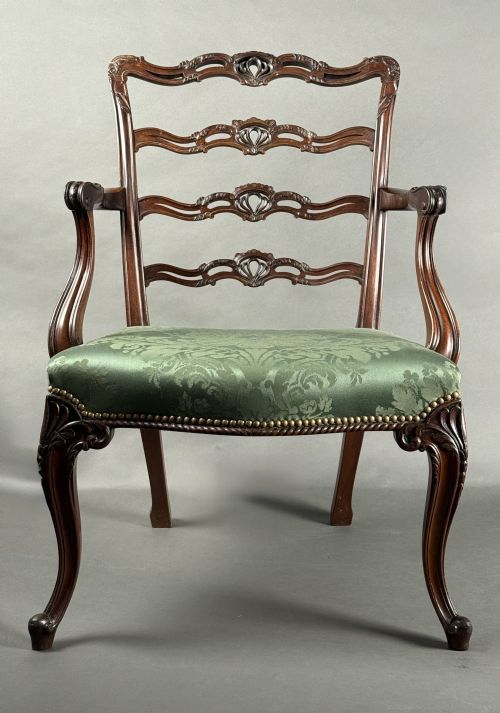
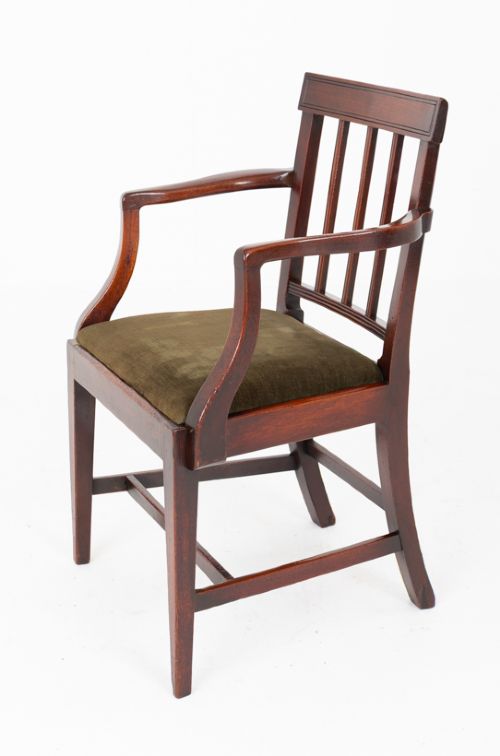
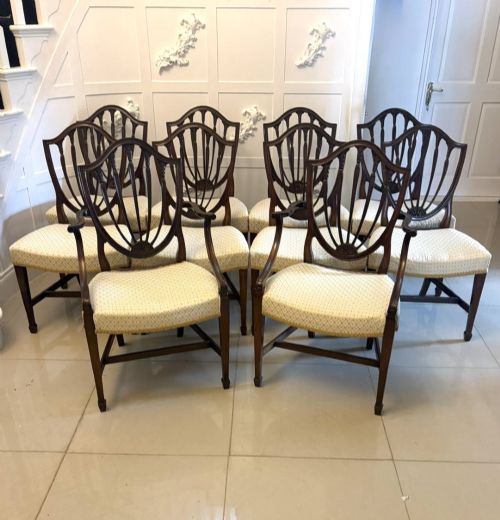
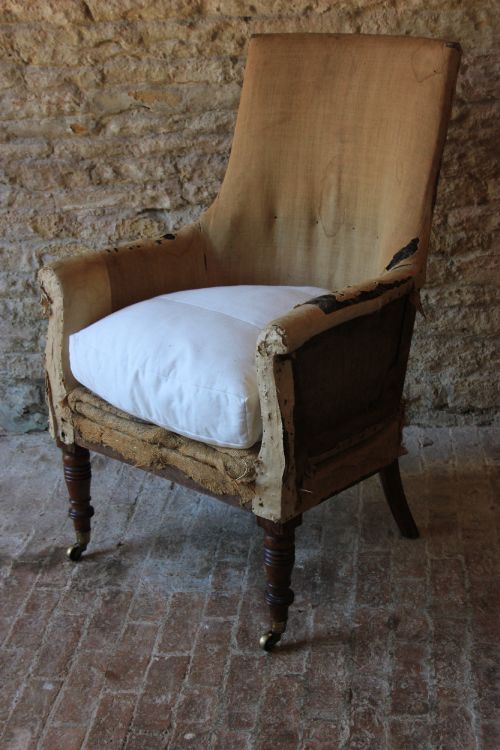
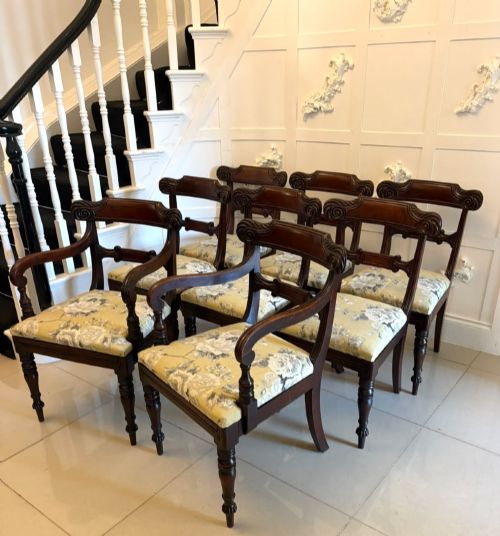
Period Mahogany Armchairs
Period mahogany armchairs bring solid timber grain and historic seating design straight into a room.
Period mahogany armchairs
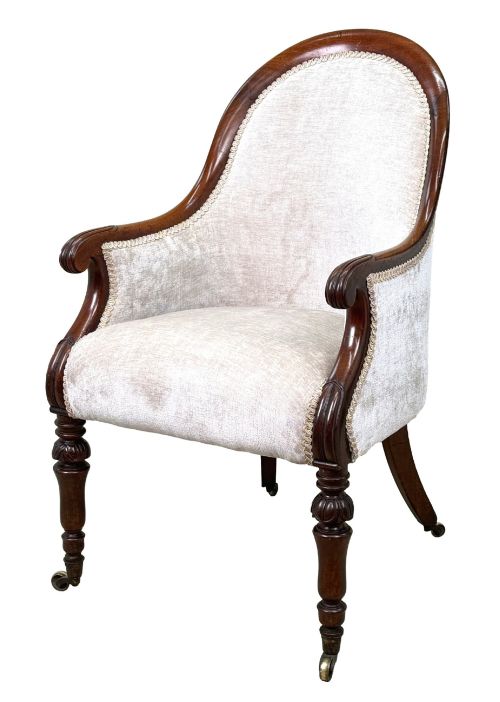
Period mahogany armchairs span the eighteenth century through to the Edwardian era, encompassing dining chairs, carvers, salon seats, and library armchairs. Buyers searching for period mahogany armchairs encounter designs ranging from formal Georgian and Hepplewhite styles to Victorian revivals and Edwardian club seating.
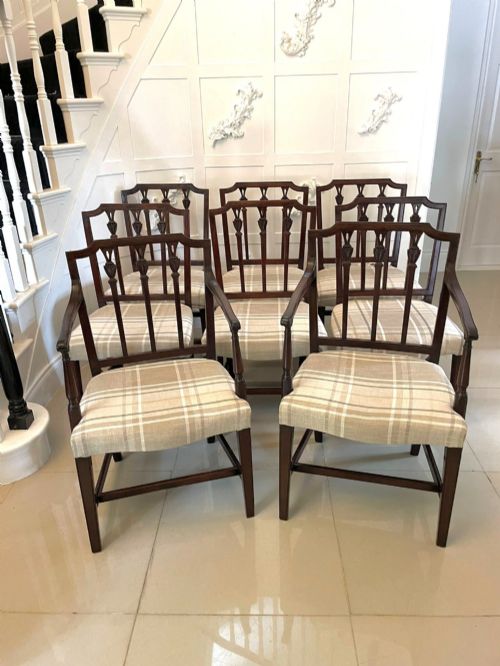
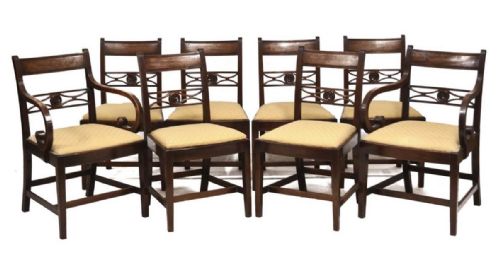
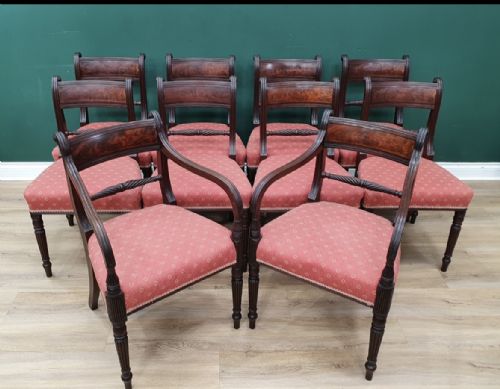
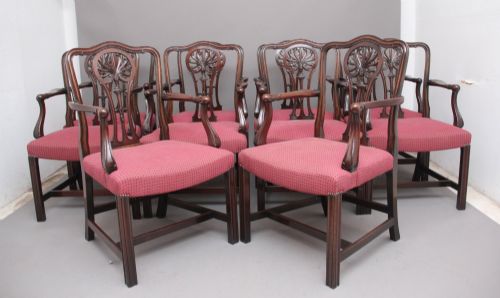
The selection includes matched sets of dining chairs featuring carvers alongside single chairs, as well as pairs of armchairs intended for libraries, drawing rooms, and studies. Pieces originate from English, Scottish, and French workshops, showing diverse regional interpretations of classic furniture forms.
Earlier examples display the proportions of the eighteenth century, while nineteenth-century pieces draw inspiration from Chippendale, Regency, and Empire designs. The survival of these armchairs in sets or pairs reflects their original domestic use around large dining tables and in formal reception rooms.
Materials and construction
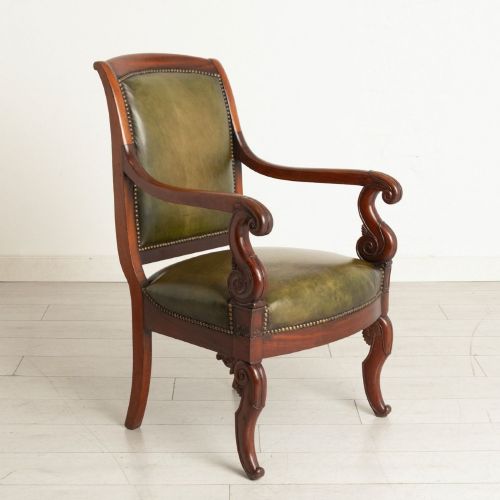
Makers utilised solid mahogany, including dense Cuban timber, alongside wood frames built to support daily use. Joinery techniques incorporated mortise and tenon frames, carved details, and occasional brass inlay or brass studs.
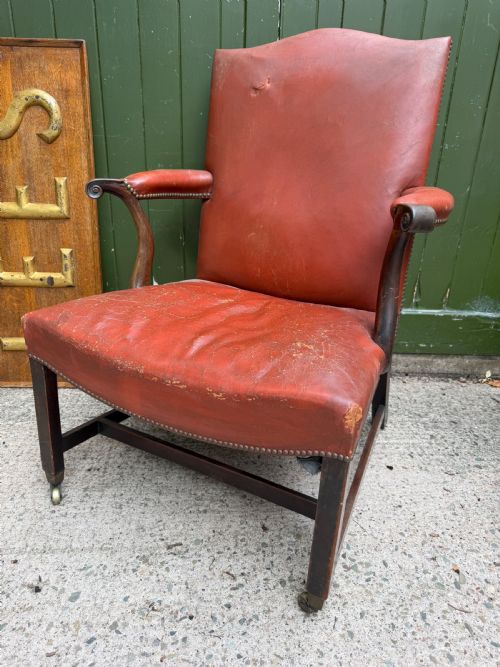
Upholstery materials recorded in the evidence include fabric, damask upholstery, and leather. Frame construction frequently involved carved mahogany show-wood, sabre legs, and structural reinforcement designed to endure.
Retail Price Guide 2026
Typical UK retail prices for period mahogany armchairs, calculated from the Sellingantiques database of over a million retail prices indexed since 2003. This retail price guide relies exclusively on Sellingantiques data; no external sources or auction records are used, so the figures do not describe the wider market.
Several armchairs retain their original leather and brass studding, ready for another century of afternoon reading.
Distinctions in quality
The refinement of carved ornament separates standard production from exceptional examples, with crisp detailing on arms, rails, and splats marking superior workshop output. Timber selection plays a role, where dense grain and rich figuring distinguish the best pieces.
Proportion and structural integrity define the upper tier of surviving seating. Pieces that retain their original timber colour, balanced frames, and harmonious upholstery schemes command greater attention from collectors.
Alfred Allen of Birmingham
The Period Mahogany Armchairs Glossary
- Carver armchair
- An armchair designed with open arms, traditionally placed at the heads of dining tables or used as a desk chair. These pieces match standard dining chairs in height and style while offering armrests.
- Chippendale revival
- A nineteenth-century or later style that copies the mid-eighteenth-century designs associated with Thomas Chippendale. These chairs feature characteristic carved mahogany splats, cabriole legs, and elaborate top rails.
- Sabre leg
- A concave-curving rear or front leg that tapers towards the foot, popular during the Regency period. This form draws inspiration from classical Greek and Roman furniture.
- Fauteuil
- An open-armed French armchair with an exposed wooden frame, typically upholstered on the seat and back. These pieces date from periods such as the Charles X and Empire eras.
- Damask upholstery
- A reversible figured fabric traditionally woven on a jacquard loom, used to cover the seats and backs of formal period chairs.
Frequently Asked Questions
How do I spot a Georgian armchair?
Georgian armchairs exhibit proportions and decorative motifs typical of the eighteenth century, such as shaped top rails and carved splats. They often utilise dense mahogany timbers and demonstrate joinery characteristic of the period.
Later revival pieces frequently copy these eighteenth-century forms but can be distinguished by timber seasoning, tool marks, and construction methods specific to Victorian or Edwardian workshops.
Where were mahogany armchairs placed?
These armchairs served multiple domestic functions in historic interiors, appearing around large dining tables as carvers paired with single chairs. They also stood in libraries, desks, and formal salons as reading or reception seats.
Library and desk armchairs provided sturdier support for working environments, while salon and club versions prioritised upholstered comfort for drawing rooms.
Are these chairs suitable for daily use?
Period mahogany armchairs are constructed from durable hardwoods designed for generations of domestic service. Their solid frames and traditional joinery allow them to function reliably in modern settings.
Routine care and appropriate placement away from direct heat sources help preserve the timber and nineteenth-century or modern upholstery.
What defines Regency mahogany design?
Regency period chairs often incorporate classical revival influences, featuring sabre legs, brass inlay, and elements drawn from ancient Roman and Greek archaeology. These pieces reflect the early nineteenth-century taste for clean lines and dark timber.
Makers combined mahogany with brass mounts or leather upholstery to create functional library and dining seating that departed from heavy eighteenth-century carving.