
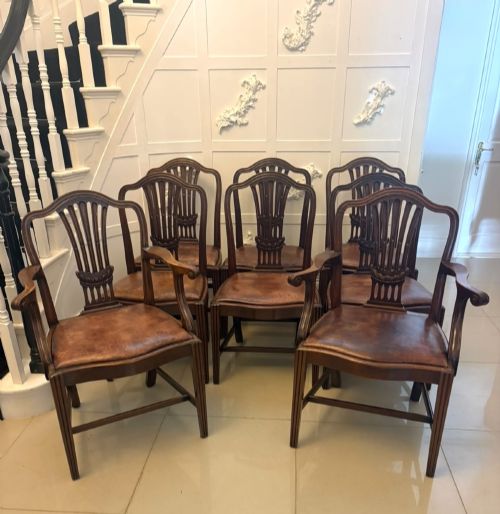
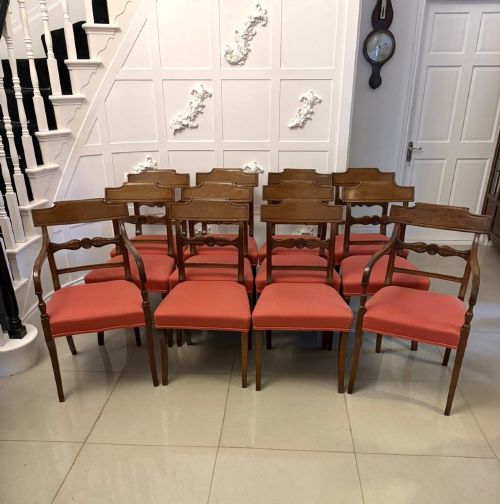
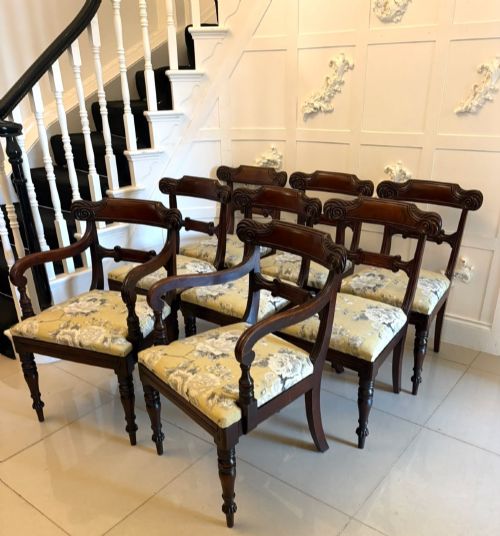
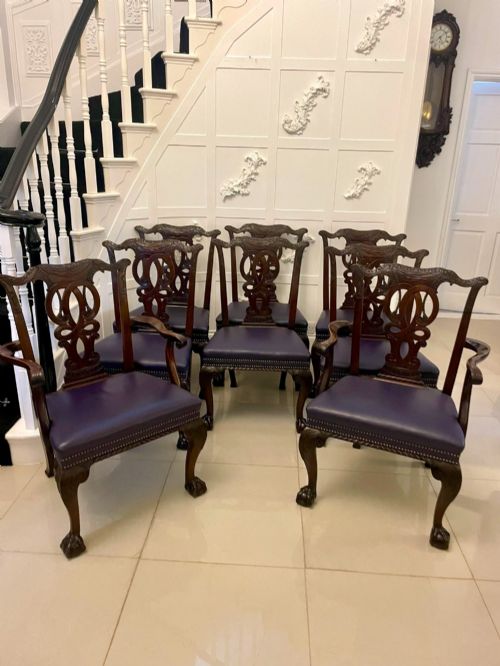
Traditional Dining Armchairs
Traditional dining armchairs anchor the table with timber and presence, built to seat the host or complete a matched set for long evenings.
Traditional Dining Armchairs
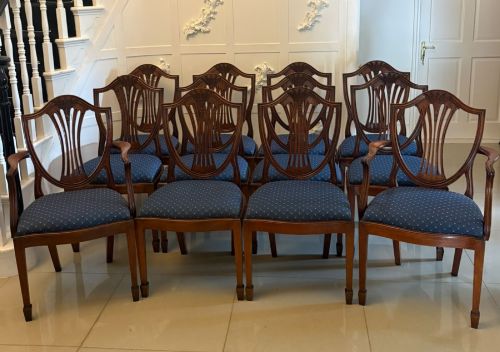
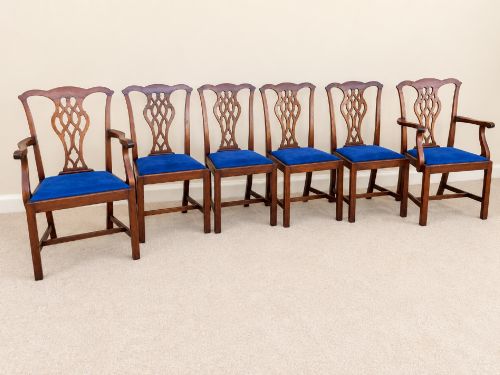
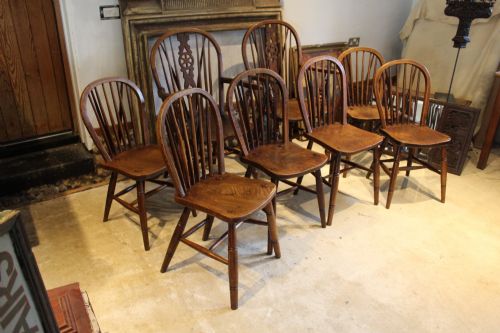
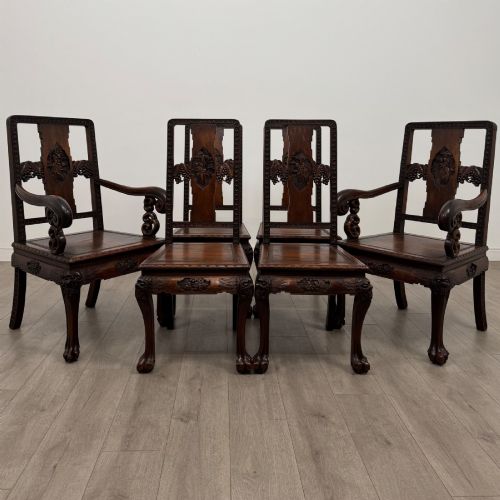
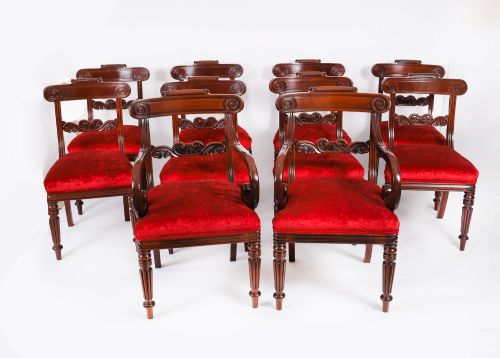
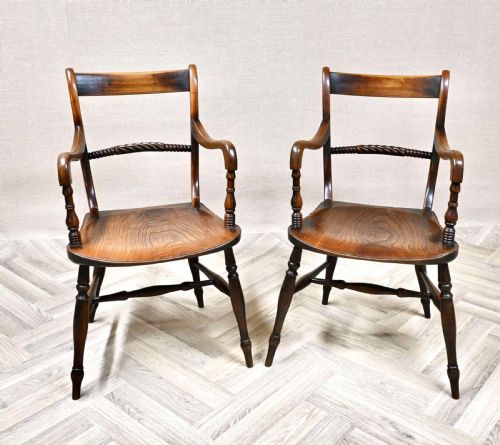
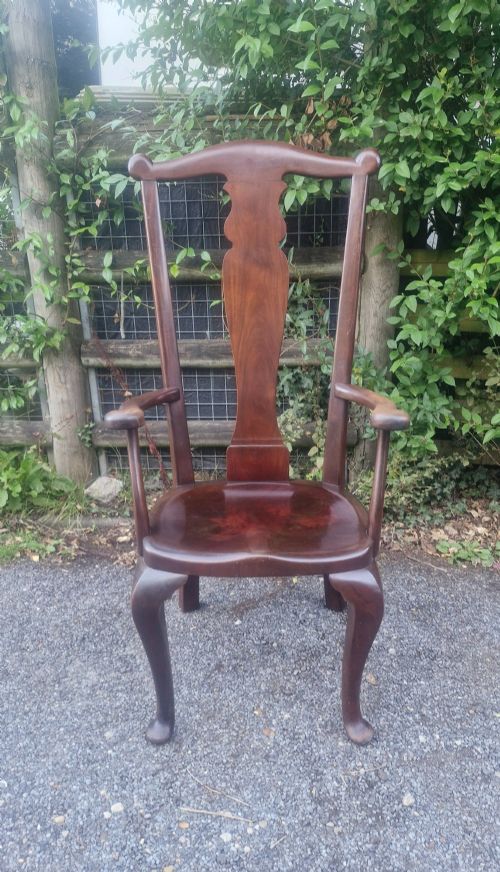
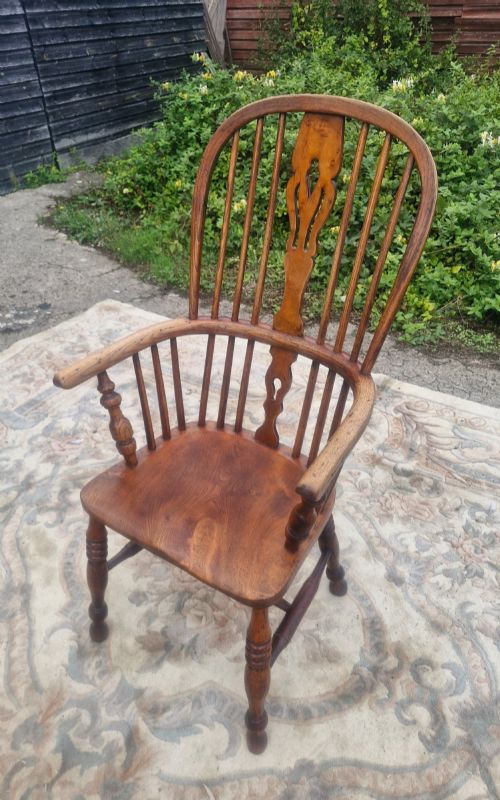
Traditional dining armchairs combine utility with formal or vernacular design, emerging most frequently here in mahogany, oak, ash, and elm. These seating options span centuries of craftsmanship, ranging from robust country Windsors to refined Georgian and Victorian carvers.
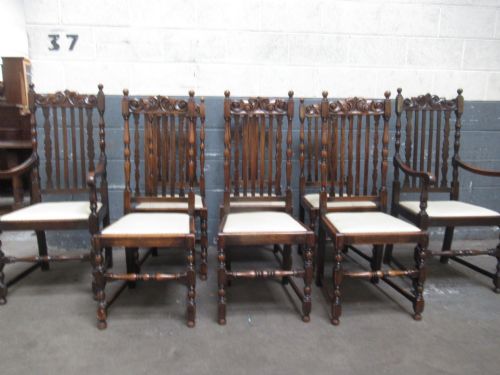
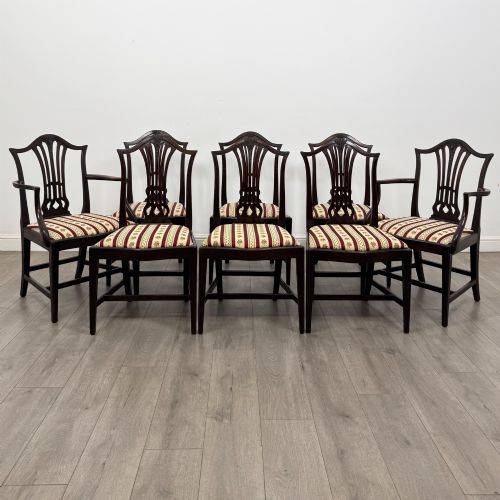
The selections available run from single statement pieces to large matching sets including carvers alongside side chairs. Buyers encounter everything from early oak wainscot forms to revival Chippendale styles and Edwardian iterations.
Originating largely from British cabinet-making traditions, these armchairs serve both daily family use and formal dining settings. The assortment draws heavily on 18th-century, 19th-century, and Edwardian periods, reflecting lasting demand for sturdy timber frames.
Materials and Construction
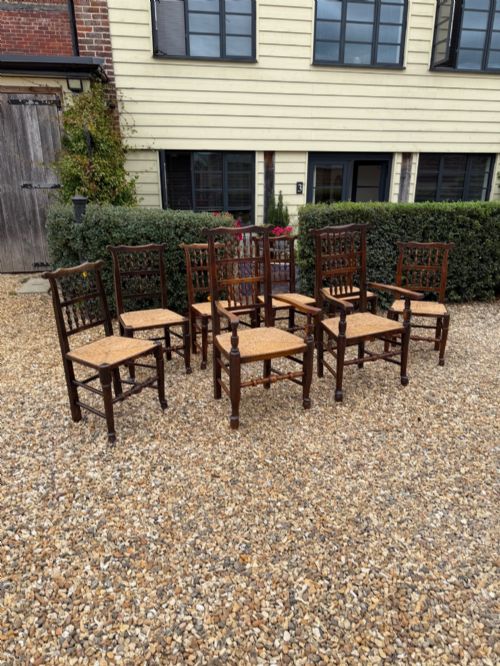
Cabinet makers built these frames using dense hardwoods like mahogany for formal urban pieces, alongside resilient country timbers such as elm, ash, and fruitwood for Windsor and ladder-back designs. Joinery relied on mortise and tenon techniques, creating robust arm attachments and stable underframes.
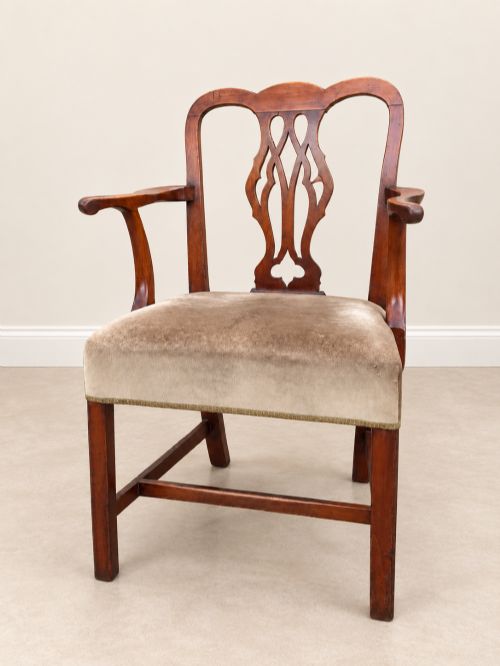
Surfaces often feature hand-carved details, pierced splats, or rope-twist motifs integrated directly into the timber. Upholstered variants incorporate traditional stuffing finished in leather, fabric, or velvet, secured with brass detailing.
Some provincial Windsor chairs carry the honest scars of centuries of kitchen table debates.
Assessing Quality and Execution
Excellence in these armchairs rests upon the crispness of carved splats, the natural figure of the mahogany or oak, and the integrity of the frame's joinery. Superior examples maintain original structural timber without excessive replacement of parts.
Subtle differences in proportion, such as the sweep of the open arms and the rake of the back legs, separate standard workshop output from exceptional commissions. Matching sets show uniform timber selection and consistent hand-finishing across every chair.
Howard and Sons·Warings·Maple and Co·Alfred Allen of Birmingham
The Traditional Dining Armchairs Glossary
- Carver
- An armchair designed to match a set of dining chairs, traditionally placed at the head of the table.
- Shield Back
- A chair back shaped like a heraldic shield, popular in Hepplewhite and late Georgian designs.
- Windsor
- A timber chair constructed with a solid contoured seat into which stick legs and a curved spindle back are wedged.
- Ladder Back
- A chair back featuring multiple horizontal arched slats rising between the upright posts.
- Wainscot
- An early heavy wooden armchair featuring panelled construction, solid armrests, and turned supports.
Traditional Dining Armchairs: Frequently Asked Questions
How do I mix carvers with side chairs?
Placing traditional dining armchairs at the heads of the table while surrounding the sides with matching armless chairs creates a balanced formal arrangement.
Ensure the timber tones and primary period styles align so the seating reads as a cohesive group.
What is the difference between a carver and an armchair?
In antique terminology, a carver specifically denotes an armchair made to accompany a matching set of dining chairs.
General armchairs might serve heavier desk duties or stand alone as occasional seating in a parlour.
Are these chairs suitable for daily dining use?
Solid timber frames joined with traditional methods offer exceptional strength for everyday meals.
Upholstered variants benefit from checking internal webbing and padding to ensure modern comfort.
How do I identify a revival style from an original period piece?
Revival pieces from the Victorian and Edwardian eras often utilise machine-assisted detailing alongside timber characteristics specific to the late nineteenth century.
Examining tool marks, secondary woods, and wear patterns helps clarify the true age of the frame.