
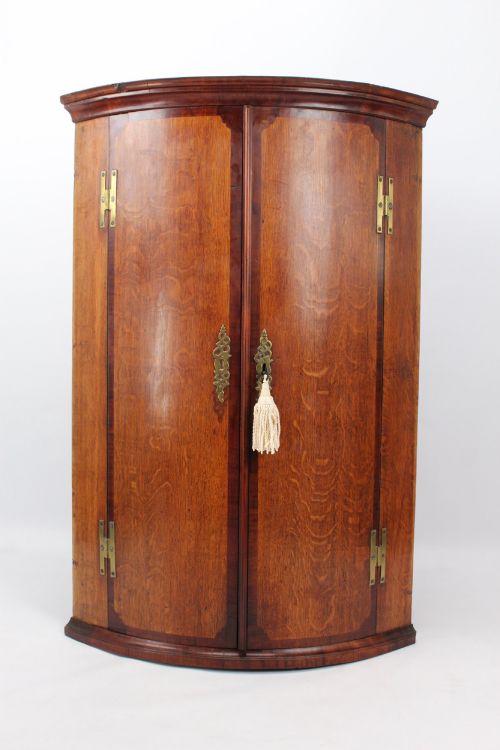
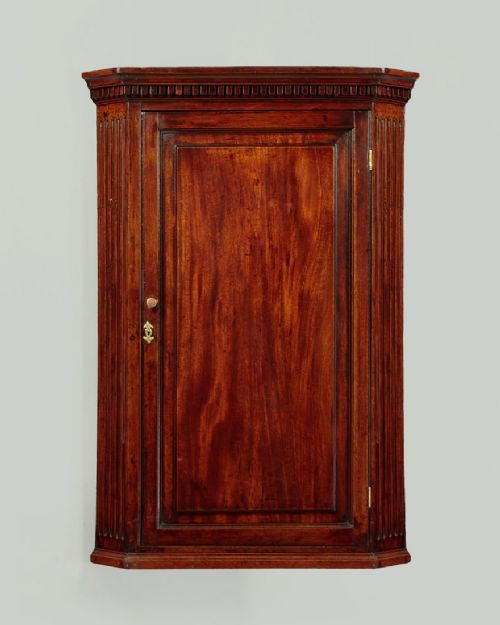

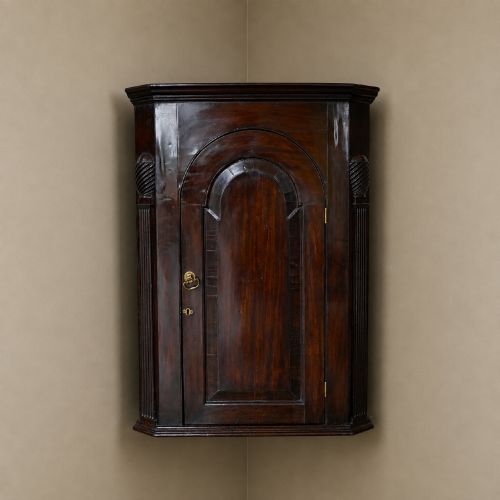
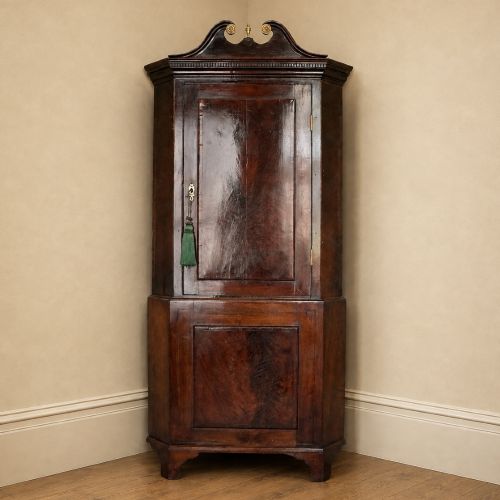
Georgian Mahogany Corner Cabinet
A georgian mahogany corner cabinet turns awkward room angles into purposeful display and storage space with understated architectural presence.

Georgian Mahogany Corner Cabinet
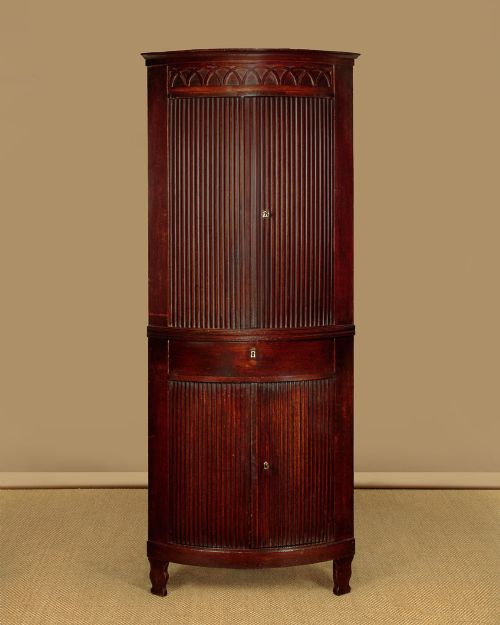
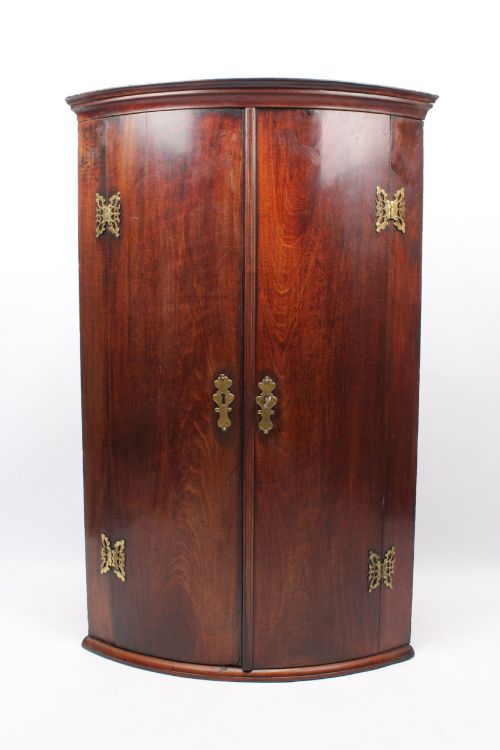
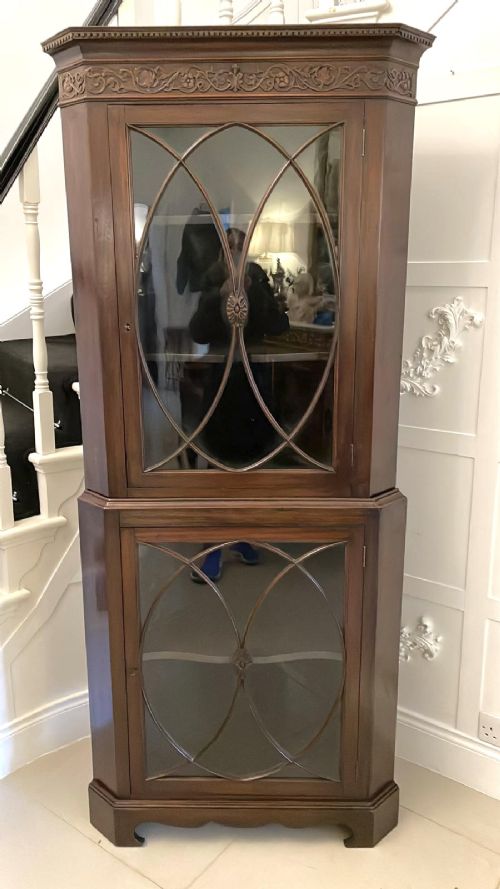
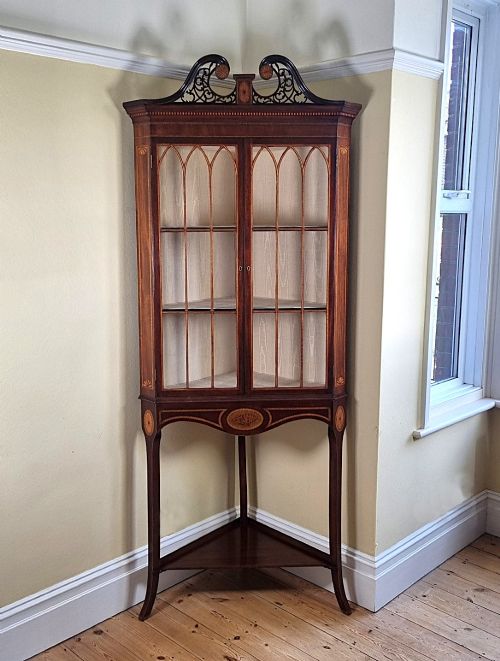
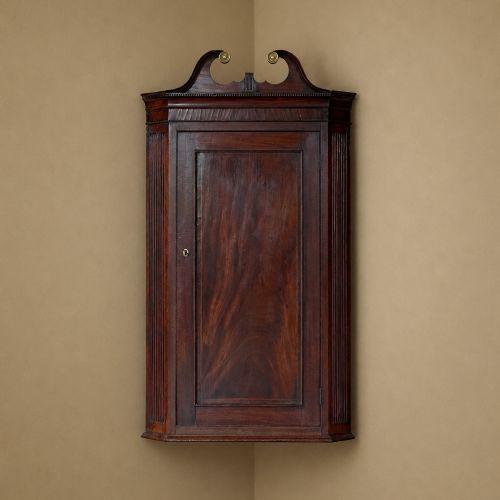
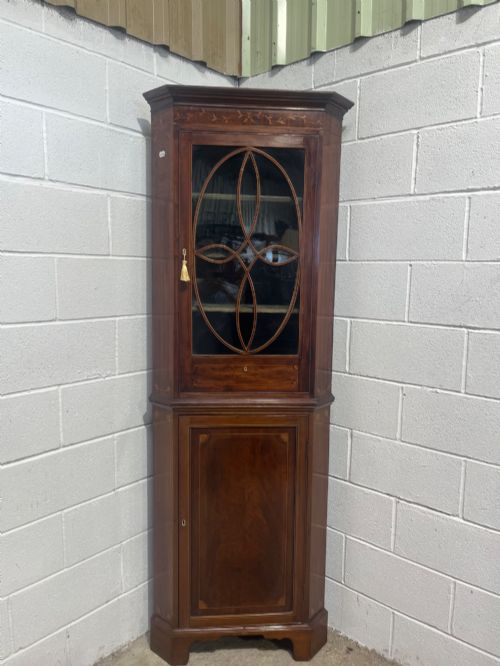
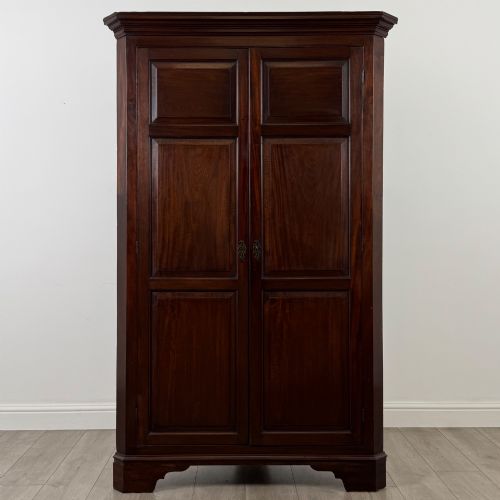
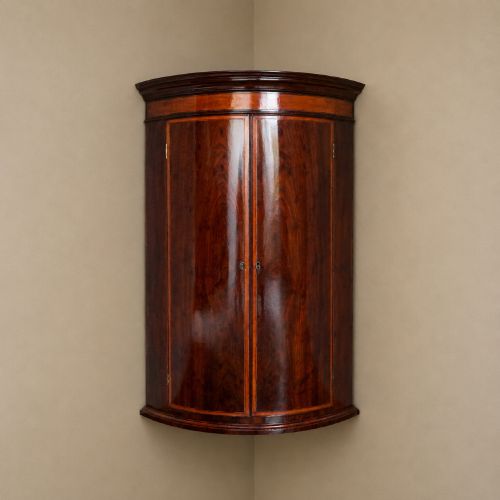
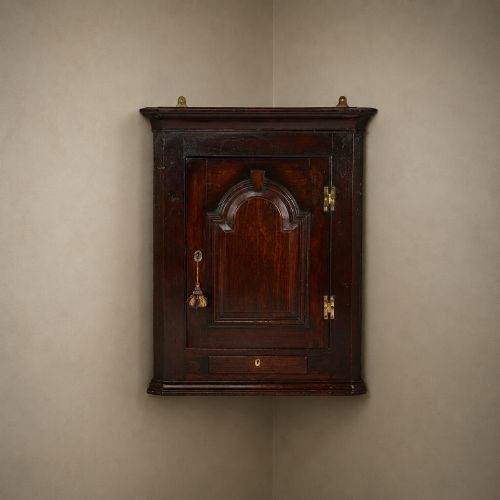
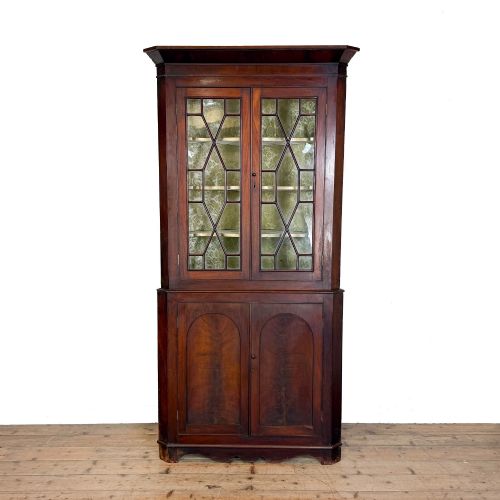
A georgian mahogany corner cabinet is designed to fit snugly into the ninety-degree junction of a room, transforming neglected space into a focal point. The evidence reveals forms ranging from modest wall-mounted hanging cupboards to towering double-height and floor-standing pieces.
Hanging versions fixed directly to the wall appear frequently, alongside standing cupboards and examples raised on distinct stands or legs. Makers of the period engineered these pieces to maximise interior capacity while projecting minimally into the floor plan of smaller domestic rooms.
How They Were Made
Cabinetmakers constructed these carcases primarily from dense mahogany, often reinforced with secondary timbers like oak for internal shelving and backboards. Selected cuts yielded rich grain patterns, including highly figured flame mahogany and plum pudding veneers.
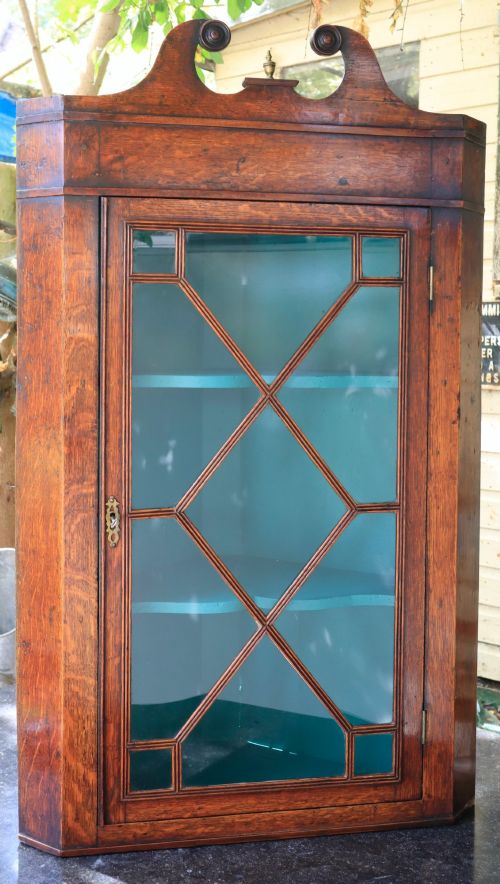
Surface enrichment relied on contrasting timbers such as satinwood, boxwood, and ebony for delicate stringing and inlay work. Glazed doors utilised astragal bars to divide the glass into geometric panes, while brass hinges, escutcheons, and working keys completed the hardware.
Georgian Mahogany Corner Cabinet Retail Price Guide 2026
Typical asking prices for georgian mahogany corner cabinet among the pieces listed under this phrase on Sellingantiques today, from the lower quarter to the upper quarter. They describe what is for sale here now, not the wider market.
Listings feature mahogany alongside oak, satinwood, and boxwood inlay across Georgian, Regency, and Edwardian periods.
What Varies in Quality
The selection of timber dictates the visual punch of the piece, with standard straight-grained mahogany sitting below richly figured flame or plum pudding surfaces. Subtle execution of satinwood and boxwood inlay elevates the decorative ambition of individual examples.
Architectural details such as broken arch pediments, refined cornice mouldings, and finely shaped astragal glazing bars separate utilitarian storage from exceptional cabinet work. Original brassware, tight joints, and well-preserved internal shelving further distinguish finer outputs.
The Georgian Mahogany Corner Cabinet Glossary
- Astragal glazed
- A method of securing small panes of glass within a door using thin moulded wooden strips. These bars form decorative intersecting geometric patterns across the front.
- Bow front
- A convexly curved cabinet face that swells outward from the corner walls. This curved profile softens the hard geometry of the room junction.
- Plum pudding mahogany
- A highly figured tropical timber showing swirling circular grain patterns resembling dark spots in a pudding. It comes from specific sections of the mahogany tree highly prized by period makers.
- Hanging cupboard
- A wall-mounted cabinet supported by internal brackets rather than resting on the floor. These items allowed clearance for furniture placed beneath them.
- Broken arch pediment
- A decorative architectural top feature where the upper cornice splits into opposing scrolled ends, sometimes centred by an urn or finial.
Georgian Mahogany Corner Cabinet: Frequently Asked Questions
How do I hang a wall cabinet?
Hanging models rely on sturdy internal fixing points or brackets secured directly into solid wall studs or masonry. Professional installation ensures the substantial weight of dense timber and glass is safely supported.
Because original hanging points may not align with modern wall construction, hidden metal battens or custom brackets provide secure support without altering the internal historic structure.
What is plum pudding mahogany?
Plum pudding mahogany is an unusually figured timber grain featuring clustered dark markings that resemble fruit in a traditional pudding. Cabinetmakers reserved this striking wood for the primary doors of important commissions.
Examining the grain under good light reveals the natural chatoyancy and depth characteristic of high-status eighteenth-century furniture surfaces.
How were corner cupboards used?
Domestic interiors utilised these fitted cabinets to store and display precious ceramics, glassware, and bottled spirits away from household traffic. The enclosed lower sections hid bulkier items while upper glazed doors exhibited best tableware.
Placing them in dining parlours or withdrawing rooms allowed hosts to showcase their refined tastes to visiting guests during tea and dinner services.
How do I spot a later revival piece?
Revival items produced around the late nineteenth or mid twentieth century often employ machine-cut joinery, standardised modern screws, and uniform secondary woods. Examining the backboards, drawer linings, and interior carcass construction helps reveal the true age.
Older eighteenth-century originals display hand-planed surfaces, irregular dovetails, and signs of structural evolution consistent with period hand tool use.