
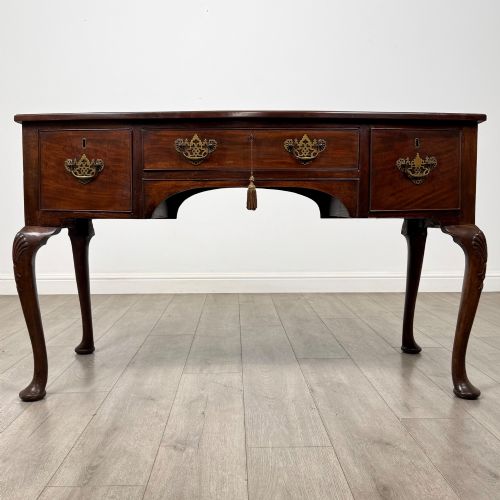
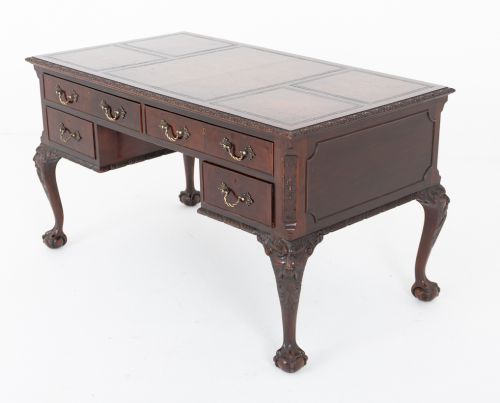
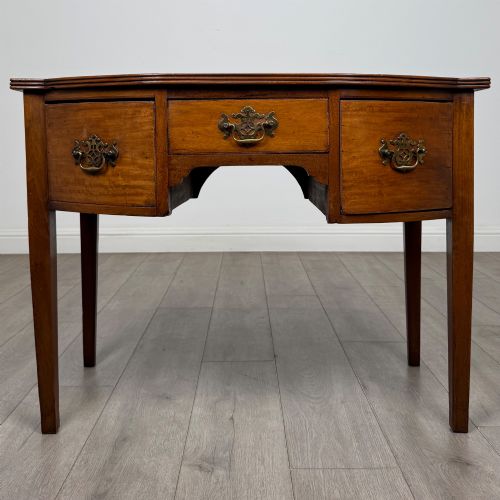
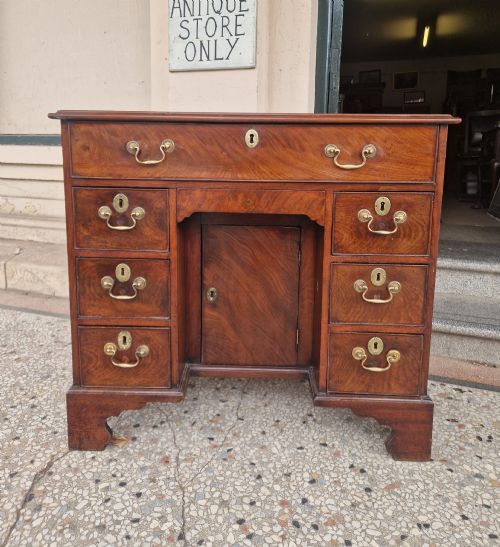
Georgian Kneehole Writing Table
A georgian kneehole writing table is a compact pedestal desk built for correspondence and paperwork, offering drawers flanking a central recess.
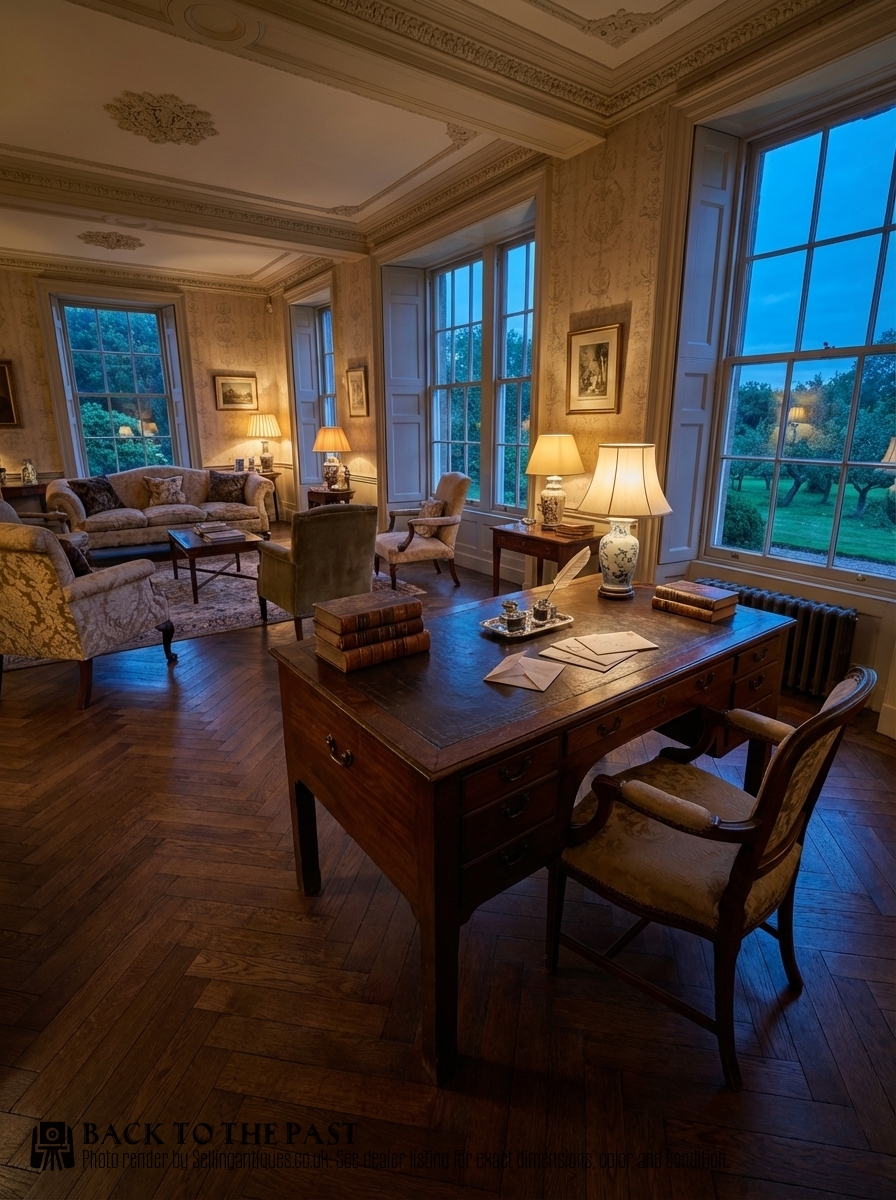
Georgian Kneehole Writing Table
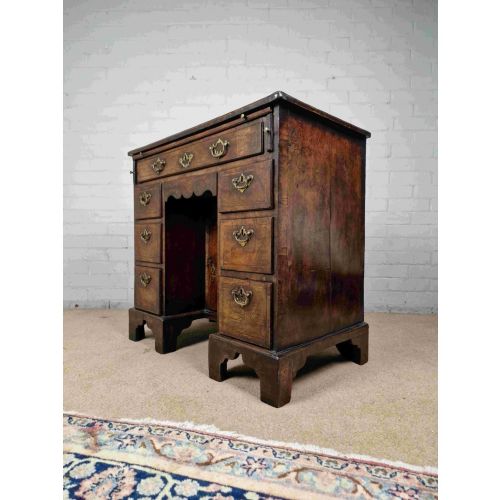
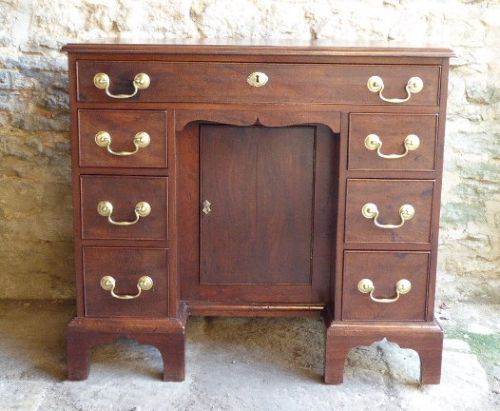
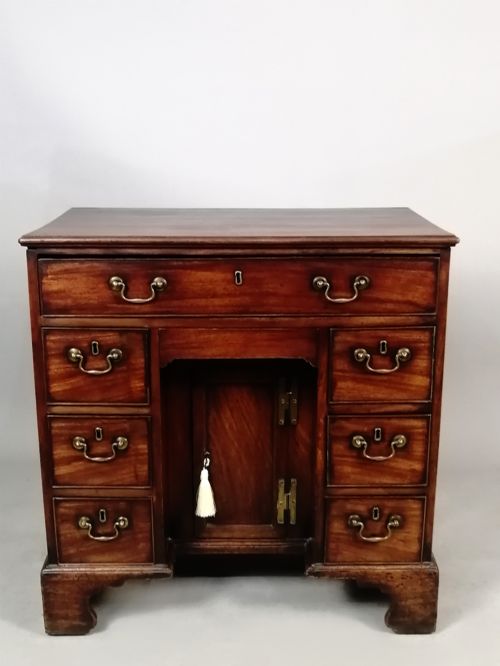
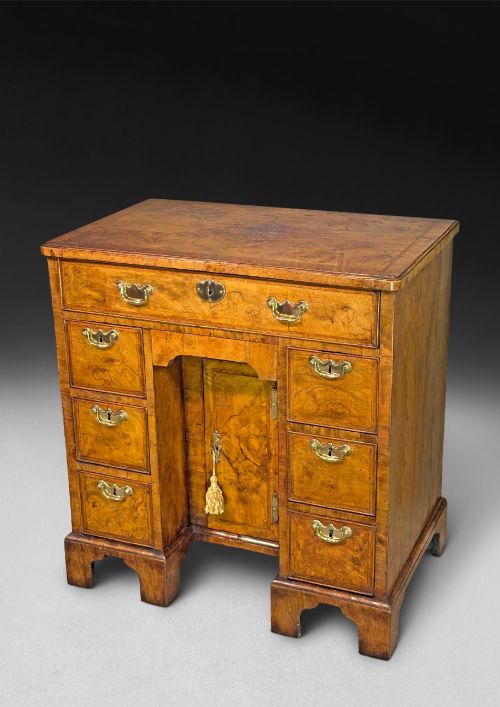
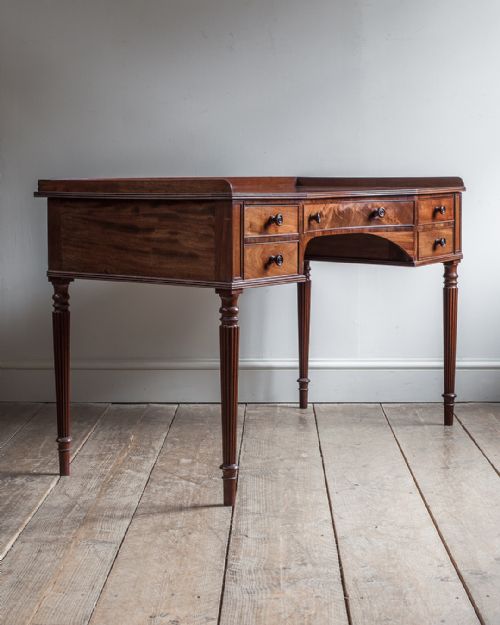
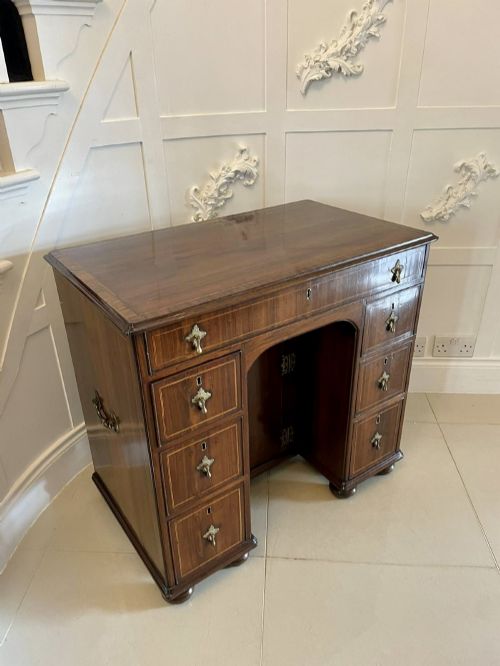
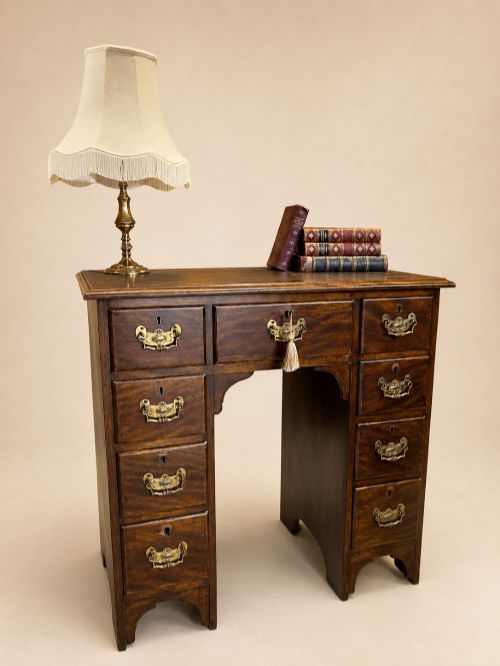
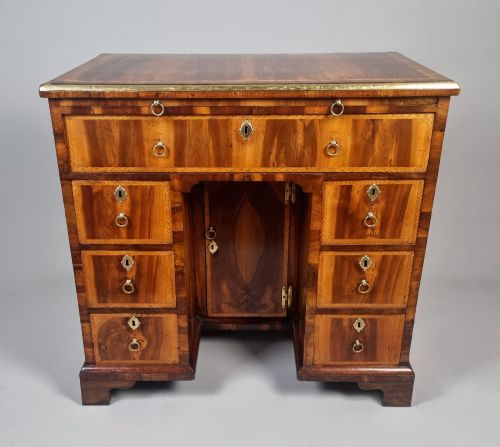
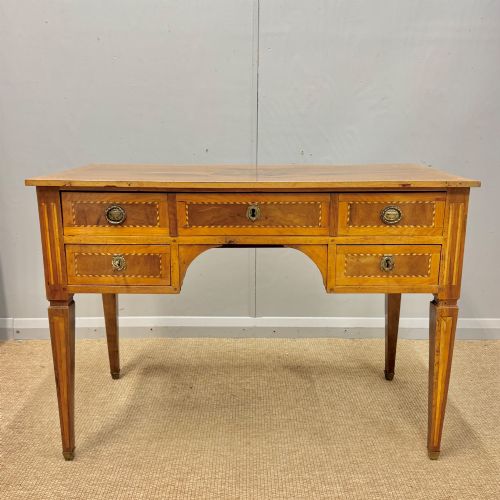
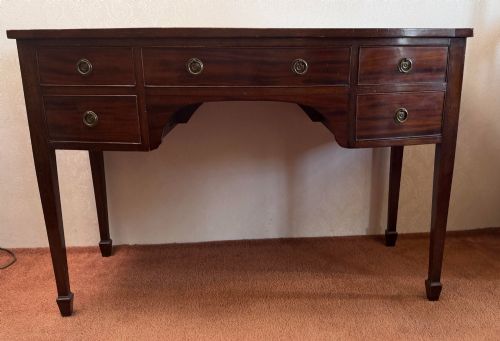
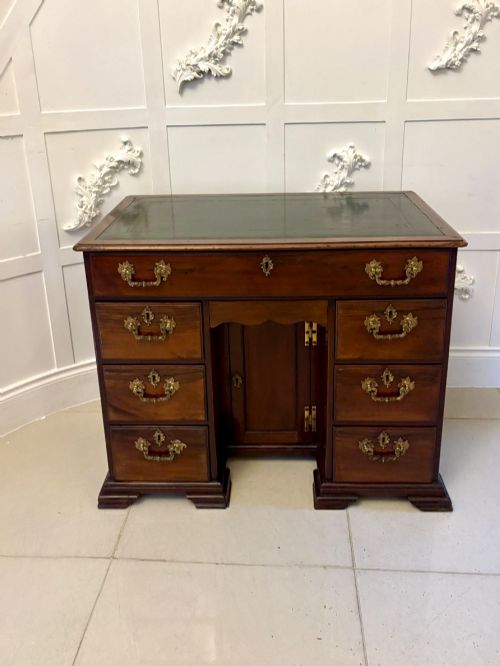
A georgian kneehole writing table is fundamentally a pedestal desk or dressing table designed with a central recessed kneehole, frequently incorporating a concealed drawer or cupboard door within the arch. These forms appear predominantly across the eighteenth century in Georgian, George II, and George III periods, alongside later nineteenth century revivals and Edwardian interpretations.
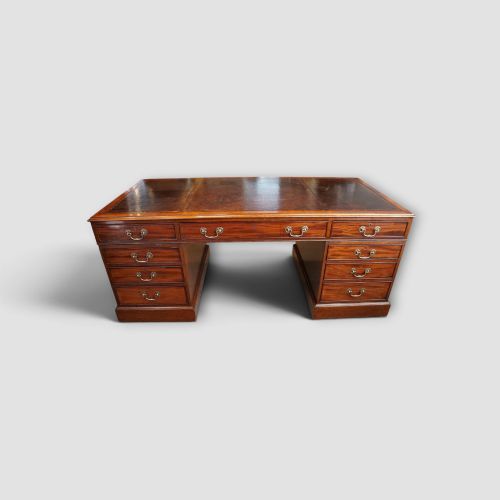
The pieces on this page span walnut, mahogany, and yew wood constructions, often presenting compact proportions suited to domestic studies and bedrooms. Examples range from early walnut and burr elm desks to mahogany Chippendale style variations and later Edwardian writing tables.
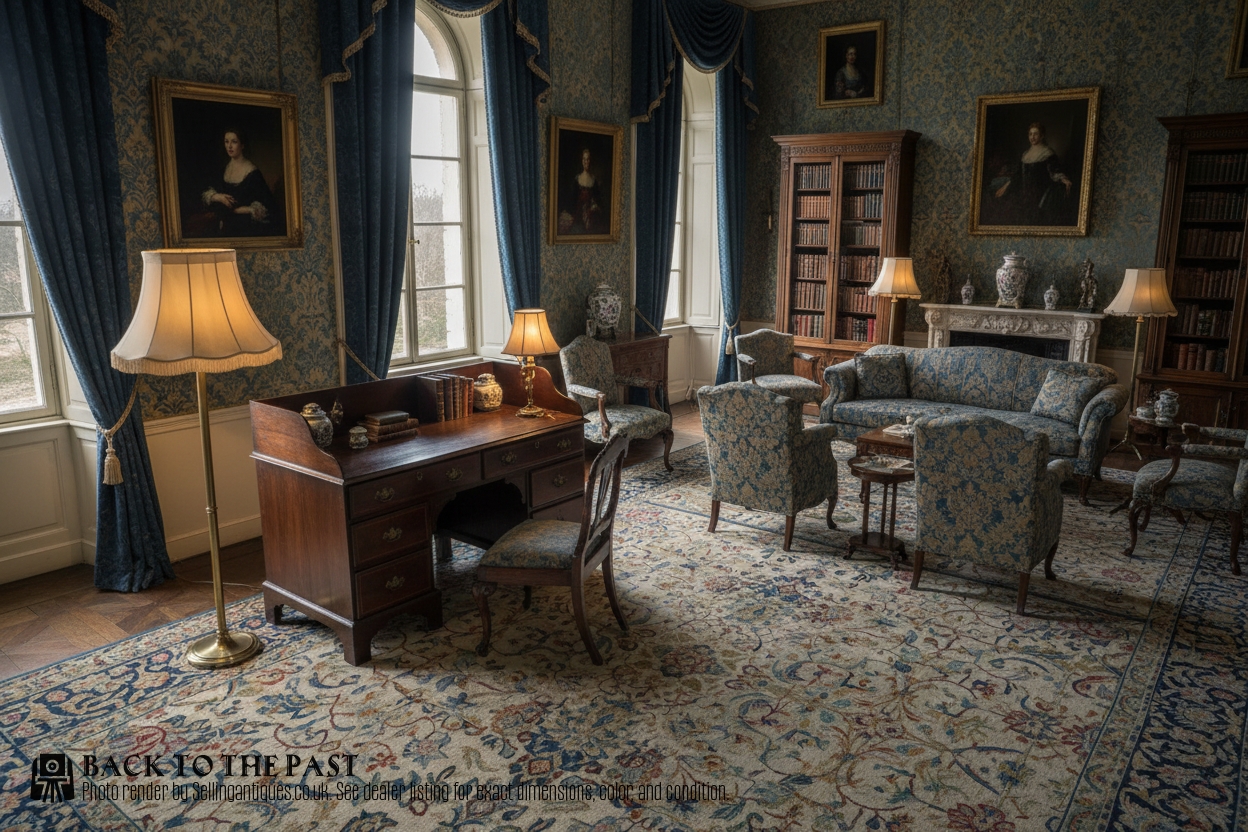
Materials and construction
Makers utilised solid timbers and figured veneers such as mahogany, walnut, burr walnut, and yew wood over secondary woods like oak and pine. Surfaces were frequently fitted with leather writing inserts, while brass hardware including handles and escutcheons secured the drawer construction.
Joinery techniques involved fine dovetailing for the drawer boxes and framing to support heavy pedestal carcases. Cabinetmakers applied flame mahogany veneer and marquetry decoration to enhance visual depth on primary display surfaces.
Listings feature eighteenth century walnut and mahogany alongside nineteenth century Victorian and Edwardian revival interpretations.
Craftsmanship and preservation
Quality rests in the selection of figured timber veneers, such as fiddleback walnut or burr elm, matched symmetrically across the drawer fronts and top. The crispness of carved details in styles like Chippendale or Queen Anne further separates standard workshop output from finer cabinet work.
Originality of surface finish and hardware plays a decisive role in preservation. Pieces retaining their original brass handles, locks, and patinated timber surfaces hold greater integrity than those subjected to modern restoration or replaced components.
The Georgian Kneehole Writing Table Glossary
- Kneehole
- A recessed central space beneath a desk or dressing table designed to accommodate the user's legs while seated. This architectural arrangement allows drawers to flank the opening on both sides.
- Pedestal desk
- A freestanding desk comprising two supporting banks of drawers with a central passage between them. The top rests directly upon these twin pedestals.
- Burr walnut
- A distinctive wood grain obtained from walnut tree growths, producing intricate swirling patterns. Cabinetmakers prize this material for high-status eighteenth century drawer fronts.
- Lowboy
- A small side table featuring one or more rows of drawers beneath the work surface. These forms often precede or parallel the development of the kneehole desk.
Georgian Kneehole Writing Table: Frequently Asked Questions
What is a kneehole writing table?
A kneehole writing table is a pedestal desk featuring a central recessed space flanked by banks of drawers, designed for writing and storage.
These compact tables originated in the eighteenth century and served dual purposes as writing desks and dressing tables.
How do I identify a Georgian desk?
Georgian desks are identified by eighteenth century timber selections like mahogany and walnut, traditional dovetail joinery, and period brass hardware.
Stylistic markers include bracket feet, cockbeaded drawer edges, and proportions characteristic of George II and George III eras.
Were these tables used for writing or dressing?
Historical examples functioned as both writing desks and dressing tables depending on the internal drawer configuration and fitted compartments.
Some iterations include a central top drawer adapted with a sliding writing surface or mirror arrangements for grooming.
What woods were used in these tables?
Cabinetmakers primarily used mahogany, walnut, and yew wood, often enhanced with figured veneers like burr walnut and flame mahogany.
Secondary structural timbers beneath the show surfaces typically include oak, pine, and deal.