
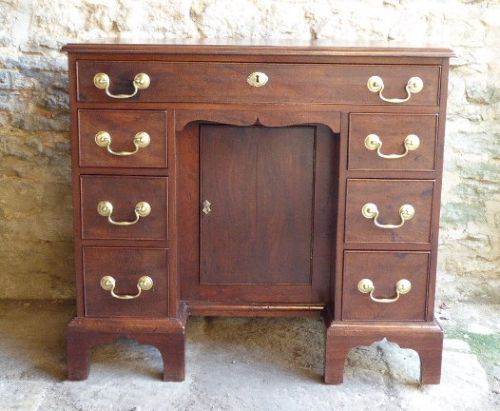
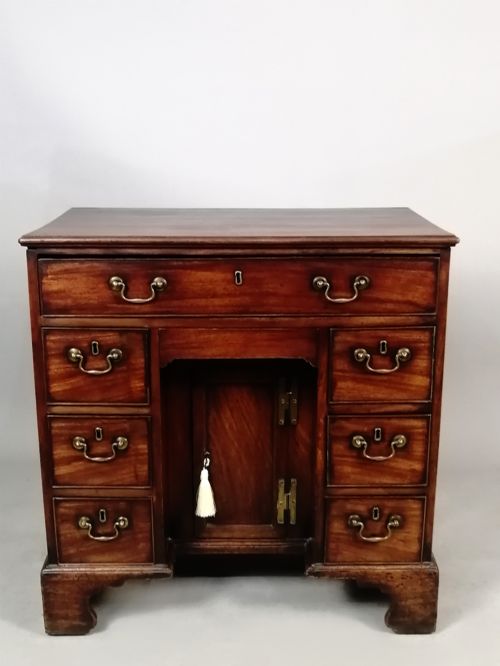
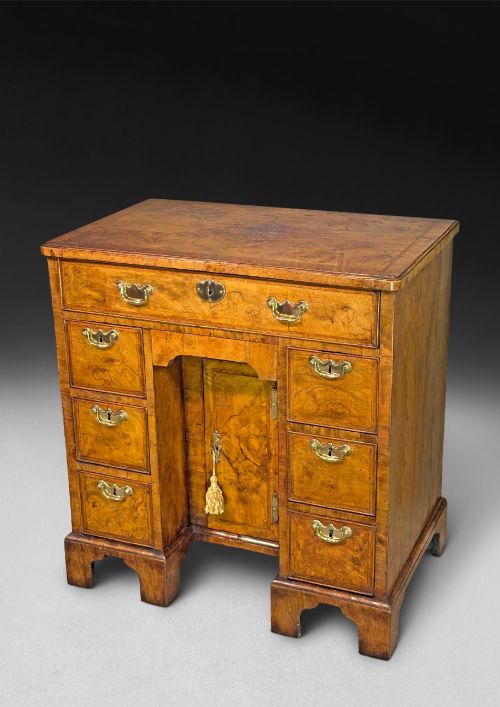
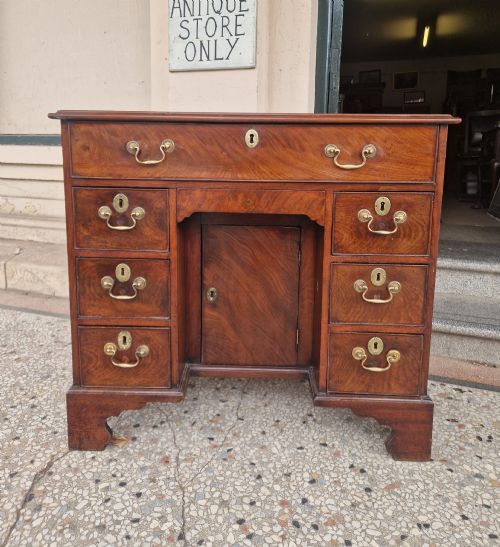

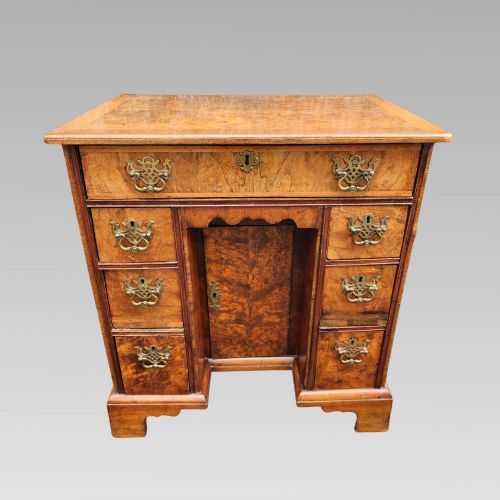


Georgian Kneehole Cupboard Desk
A georgian kneehole cupboard desk brings compact symmetry and hidden drawers to a room, offering a structured surface for correspondence.
Georgian Kneehole Cupboard Desk
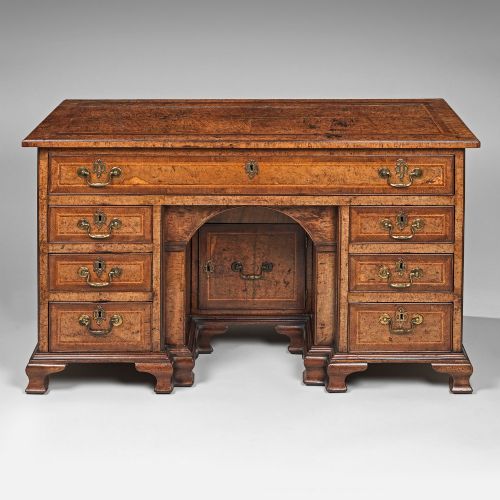
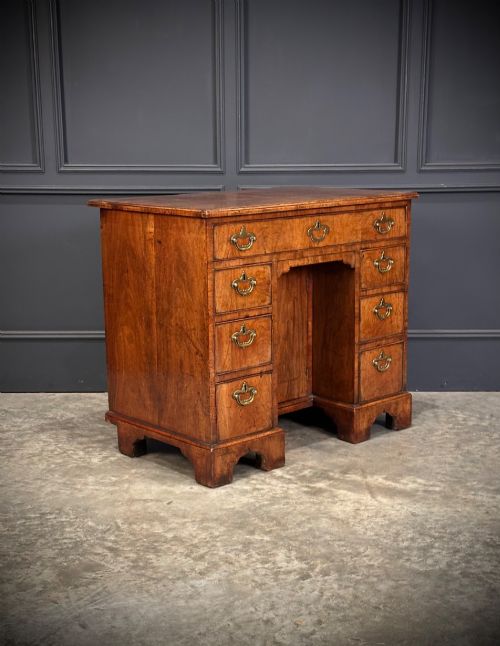
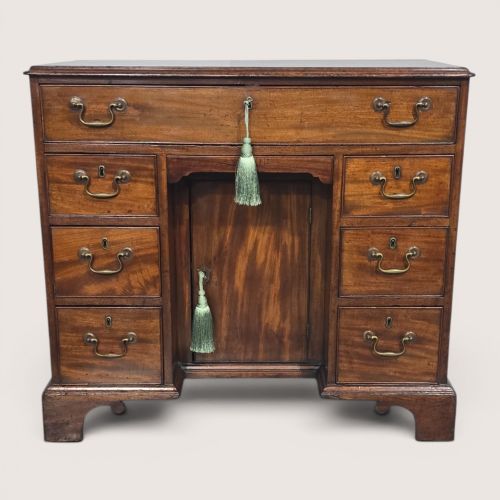
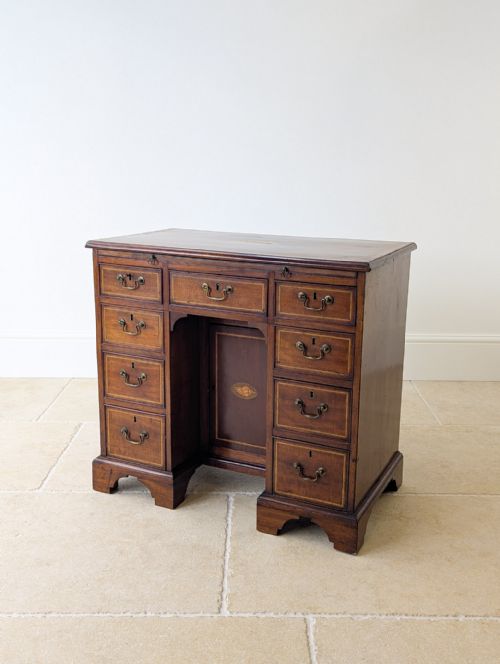
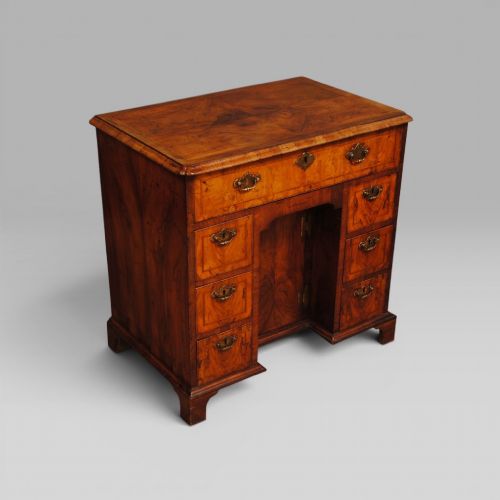
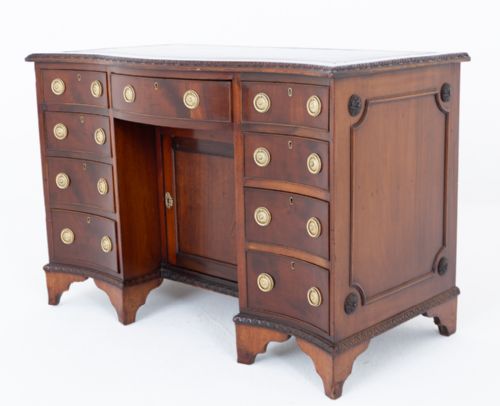
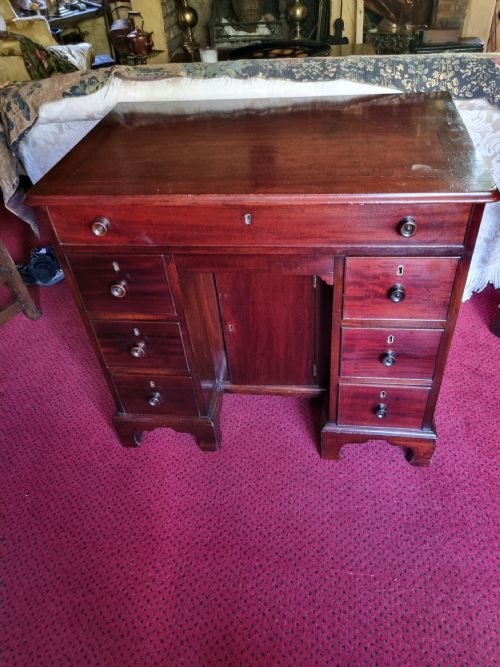
A georgian kneehole cupboard desk is a compact writing table designed with a central recessed kneehole that typically conceals a small cupboard door or drawer, flanked by banks of smaller drawers. These pieces emerge primarily from the eighteenth century, spanning periods from Queen Anne through George III, and often double as dressing tables.
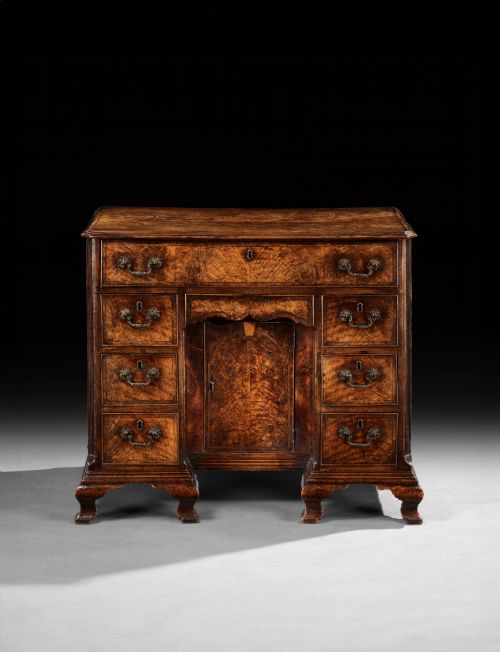
Most examples found on this page consist of mahogany or walnut timbers, sometimes showcasing figured veneers, burr elm, or yew. The form balances formal architectural proportions with domestic utility, making them suitable for smaller studies and reception rooms.
The buyer meets variations ranging from small provincial walnut desks to larger mahogany iterations with serpentine fronts or fitted interiors. While many date to the Georgian era, later nineteenth and twentieth-century interpretations in the George II style also appear among the offerings.
How they were made
Cabinetmakers constructed these desks using dense timbers like mahogany, walnut, and oak, frequently applying finely grained veneers such as burr walnut, fiddleback walnut, or satinwood to the primary surfaces. Crossbanding and featherbanding often outline the drawer fronts, framing the grain with contrasting strips of wood.
Brass hardware, including drop handles and escutcheons, secures the drawer fronts and cupboard doors, while secondary woods like pine or oak line the internal carcase and drawer boxes. Joinery relied on hand-cut dovetails for the drawers and pegged mortise and tenon joints for the structural frames.
Listings feature eighteenth-century and nineteenth-century pieces constructed from mahogany, walnut, burr elm, oak, and satinwood.
What varies in quality
The sophistication of the timber selection dictates much of the visual distinction, separating plain stock from pieces utilising highly figured burr elm, fiddleback walnut, or Cuban mahogany. The crispness of the featherbanding and the finesse of the crossbanded borders reveal the cabinetmaker's level of skill.
Proportion and internal arrangement also distinguish the range, particularly where fitted interiors retain their original compartmentalisation behind the central kneehole cupboard door. The integrity of the secondary timbers and the retention of period brass hardware further separate standard examples from finer works.
Grendy
The Georgian Kneehole Cupboard Desk Glossary
- Kneehole
- A recessed space beneath the central section of a desk or dressing table, allowing the user to sit close to the writing surface.
- Crossbanding
- A strip of veneer applied to the edges of a surface so that the grain runs perpendicular to the main panel, creating a bordered frame.
- Featherbanding
- A delicate inlay technique using small veneers cut to form a herringbone pattern, commonly found edging eighteenth-century drawer fronts.
- Fiddleback
- A type of figured wood grain displaying undulating transverse ripples that resemble the back of a violin.
- Serpentine
- A curved line that undulates outward in the centre and inward at the sides, often seen on eighteenth-century desk fronts.
Georgian Kneehole Cupboard Desk: Frequently Asked Questions
What is inside the central kneehole?
The central recess typically contains a small cupboard door that opens to reveal a concealed shelf or compartment. In some instances, a shallow hidden drawer sits directly above this cupboard space.
Historically, this central enclosure provided privacy for personal papers or dressing accessories, separating the kneehole desk from standard pedestal tables.
Were these desks used for writing or dressing?
They served dual purposes as both writing tables and dressing desks depending on the owner's daily requirements. The surface provided space for correspondence while the arrangement of small drawers stored cosmetics, inkwells, and documents.
Many period examples appear in inventories as dressing tables, reflecting the fluid domestic habits of the eighteenth century.
How do walnut and mahogany desks differ?
Walnut desks generally date from the earlier part of the eighteenth century, spanning the Queen Anne and George I periods. These pieces frequently feature figured veneers, burr elm, or featherbanded borders.
Mahogany examples become more common toward the middle and end of the eighteenth century under George II and George III. They rely on the dense, rich grain of the solid timber or Cuban mahogany veneers for their visual impact.
Where should I place a kneehole desk?
Because these desks are finished on all sides or designed with finished backs, they suit placement against a wall or freestanding within a room. Their compact footprint allows them to fit into smaller studies, libraries, or bedrooms where a large partner's desk would overwhelm the floor space.
Pairing them with a low antique chair ensures comfortable clearance for the kneehole recess.