
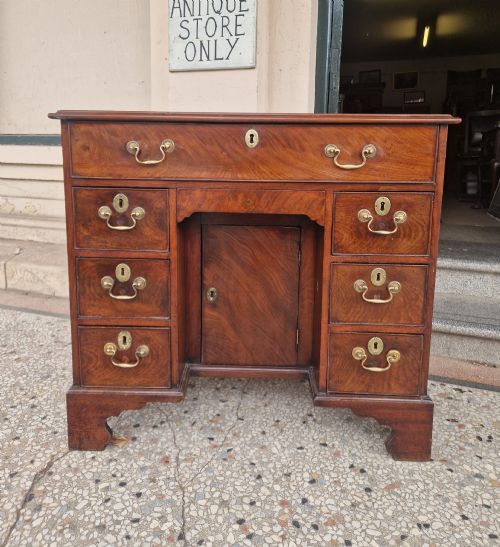
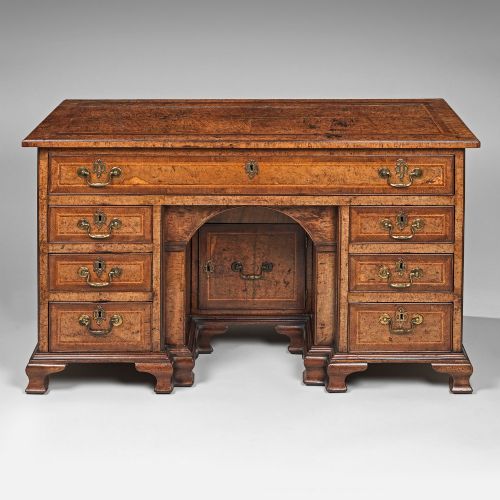
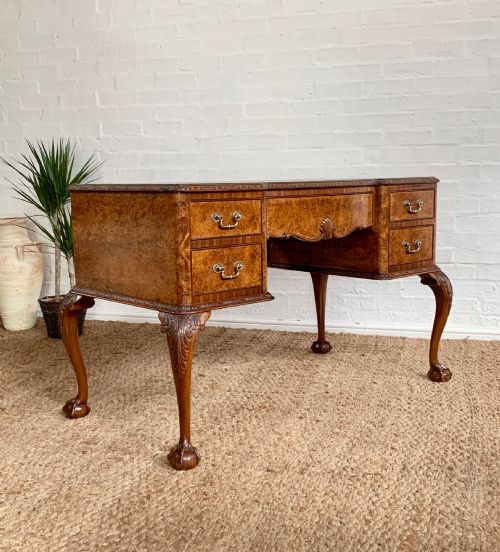

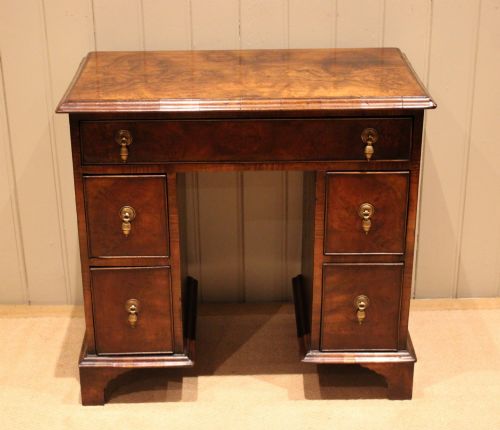
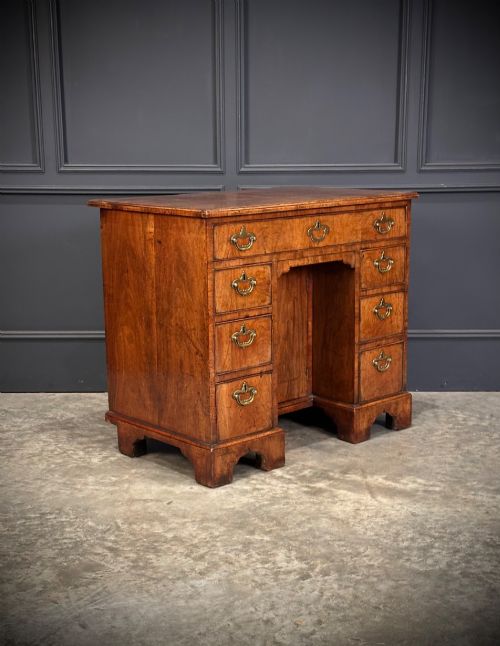
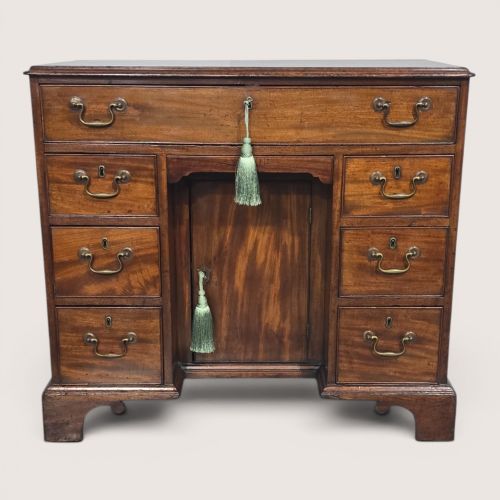
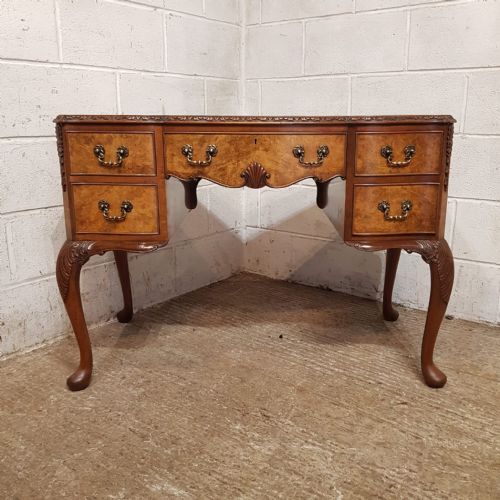
Georgian Kneehole Bureau
A georgian kneehole bureau or desk provides compact writing storage with concealed drawers, offering a neat centrepiece for a traditional study.
Georgian Kneehole Bureau
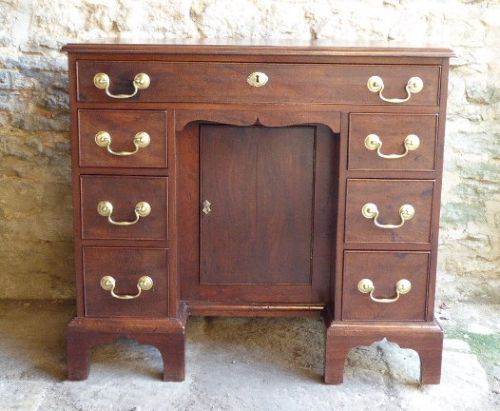
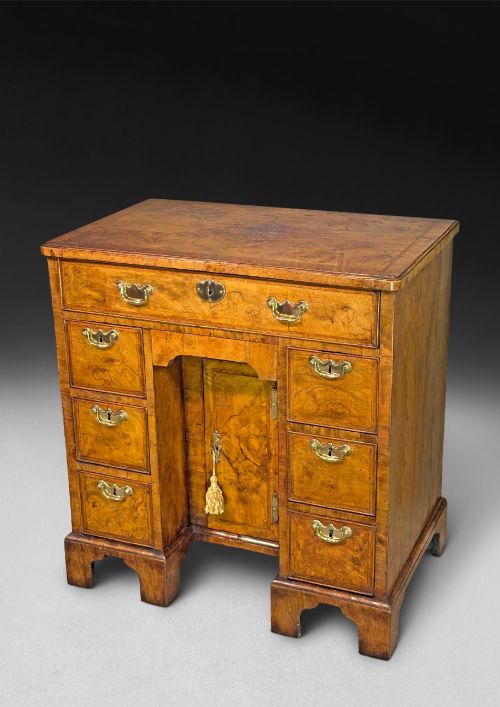
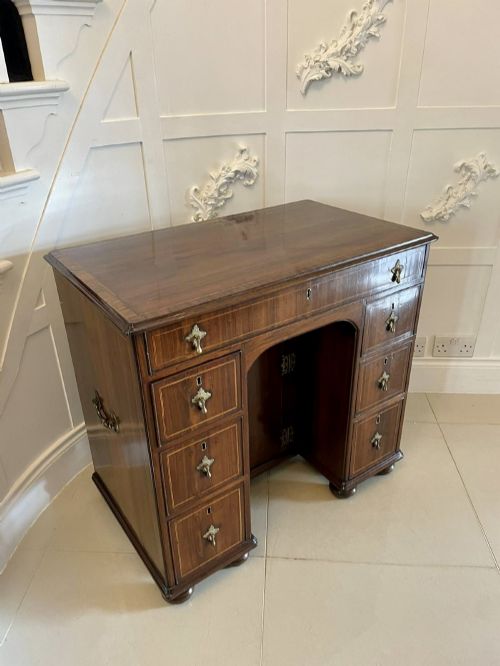
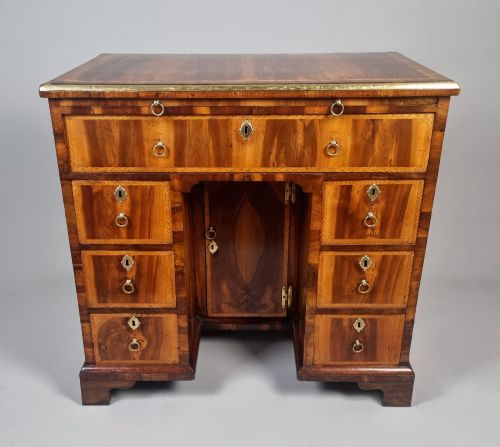
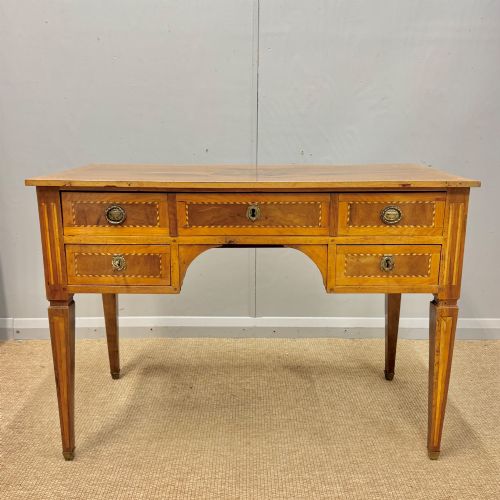
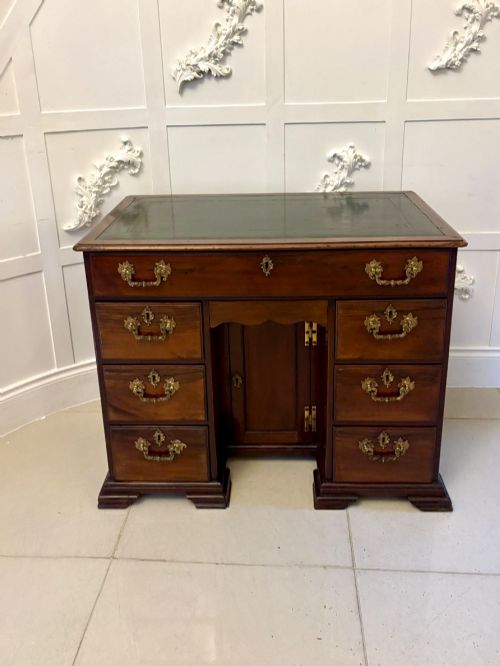
A georgian kneehole bureau brings together pedestal desks and writing tables originating primarily in the eighteenth century. These pieces feature a central recessed cupboard flanked by banks of small drawers, designed for domestic correspondence and estate management.
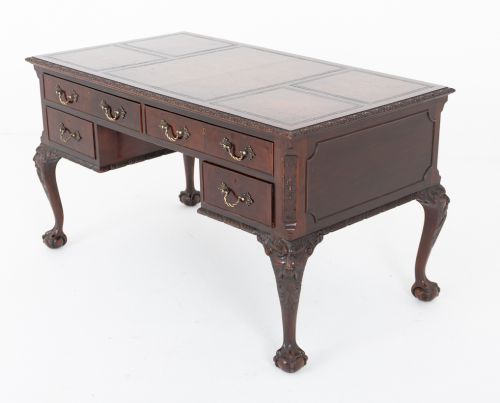
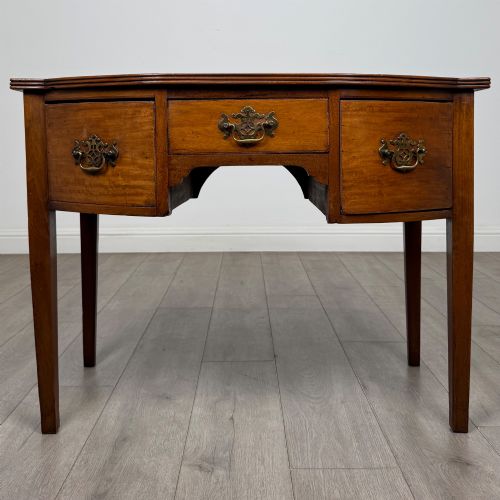
The versions most frequently met on this page span the reigns of George I, George II, and George III, alongside later revival pieces from the twentieth century. They manifest as mahogany, walnut, and yew wood writing desks, dressing tables, and occasional bureau bookcases.
Makers and craftsmen of the period constructed these items to serve dual purposes as writing surfaces and dressing tables. Smaller proportions and fitted interiors distinguish genuine period examples from later interpretations.
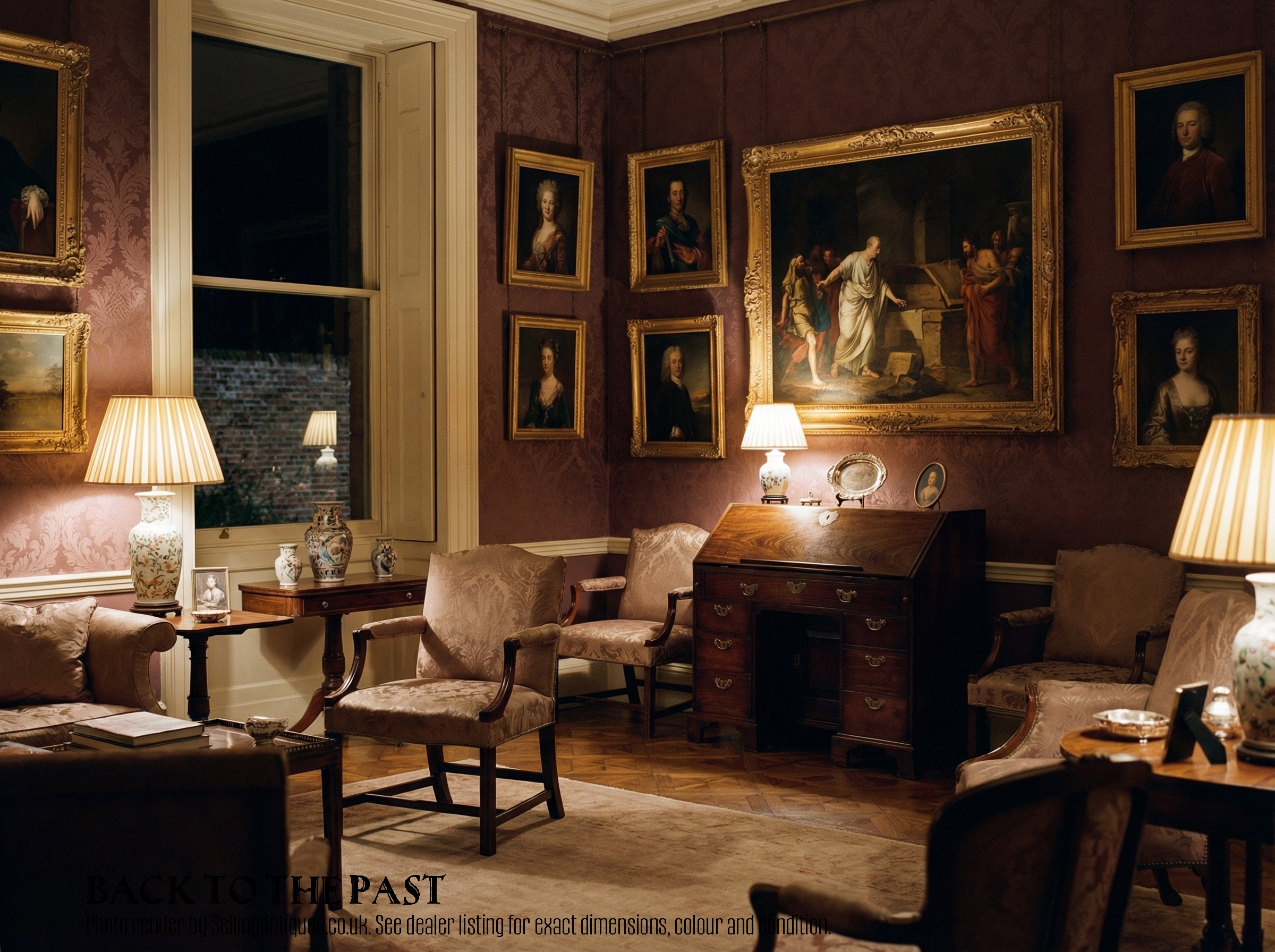
What varies in quality
The selection of timber veneer dictates much of the visual appeal, with highly figured burr walnut or fiddleback grain commanding greater appreciation than plain planks. Original brasses and untouched surface patination elevate an example above those with replaced hardware or stripped finishes.
Proportion and structural harmony separate superior cabinet work from utilitarian alternatives, particularly in the treatment of the central kneehole recess and secret compartments. Subtle inlay work, crossbanding, and well-executed cockbeading around the drawers demonstrate the artisan's attention to detail.
Georgian Kneehole Bureau Retail Price Guide 2026
Typical asking prices for georgian kneehole bureau among the pieces listed under this phrase on Sellingantiques today, from the lower quarter to the upper quarter. They describe what is for sale here now, not the wider market.
Listings feature eighteenth century walnut and mahogany alongside twentieth century revival pieces, demonstrating enduring demand for compact kneehole forms.

Maples of London
The Georgian Kneehole Bureau Glossary
- Kneehole
- A recessed space beneath the desk top designed to accommodate the user's legs when seated. This arrangement allows banks of small drawers to flank either side.
- Bureau
- A sloping writing flap that opens to reveal a fitted interior of pigeon holes and small drawers. Many examples combine this feature with a central kneehole configuration.
- Crossbanding
- A narrow strip of veneer applied to the border of a drawer front or table top so that the grain runs at right angles to the surrounding surface. This technique frames the primary timber.
- Fiddleback
- A type of wood figure, commonly found in walnut, displaying undulating ripples resembling the back of a violin. Craftsmen prized this decorative grain for principal display surfaces.
- Escutcheon
- A protective plate surrounding a keyhole, usually cast in brass. Period examples often feature finely chased designs that match the drawer handles.
Georgian Kneehole Bureau: Frequently Asked Questions
How do I spot a genuine eighteenth century piece?
Examine the construction methods visible within the drawer linings, looking for hand-cut dovetails and timber shrinkage appropriate to the age. Original brass fixings and old wax patination further support a period attribution.
Compare the secondary woods used in the interior partitions with known examples from the same stylistic era. Consistency between the primary display timbers and internal framing confirms the piece's integrity.
Were these used for writing or dressing?
Many kneehole forms served both functions, operating as writing tables by day and dressing tables when paired with a mirror. The central cupboard often concealed washing basins or chamber pots in earlier variants.
Fitted interiors with small drawers and pigeon holes accommodated letters and writing implements. The presence of a leather writing surface points towards desk use rather than dressing.
What is the difference between walnut and mahogany versions?
Walnut pieces generally date from the earlier reigns of Queen Anne and the first Georges, displaying warmer tones and decorative figuring like burr or fiddleback. They require careful placement away from direct sunlight and dry heat.
Mahogany examples became prevalent later in the eighteenth century, offering greater structural stability and a deeper reddish hue. These items often feature Chippendale influence or cleaner geometric lines.
How do I care for the leather writing surface?
Keep the tooled leather away from extreme temperature fluctuations and moisture to prevent cracking or warping. Gentle dusting with a dry cloth maintains the surface without stripping the gold tooling.
Apply neutral leather dressings sparingly if the material shows signs of dryness. Avoid using modern chemical cleaners that might dissolve the historic finish.