
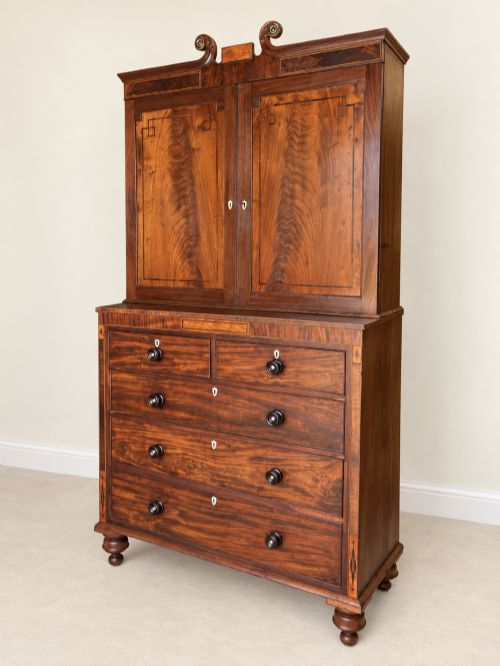
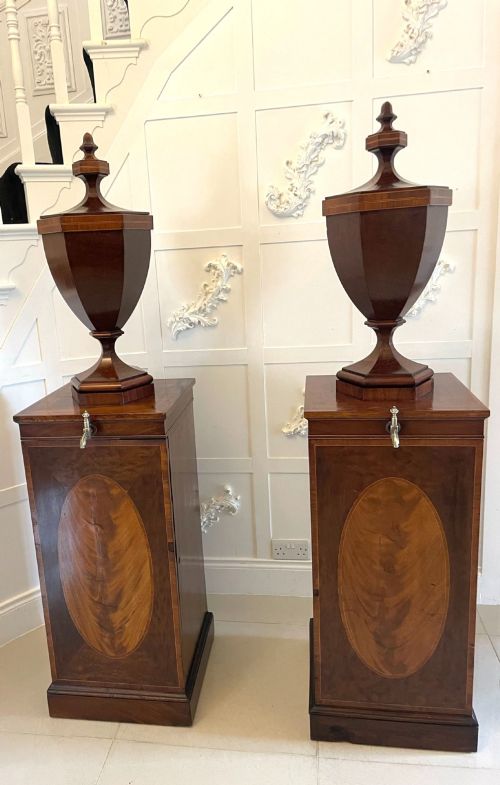
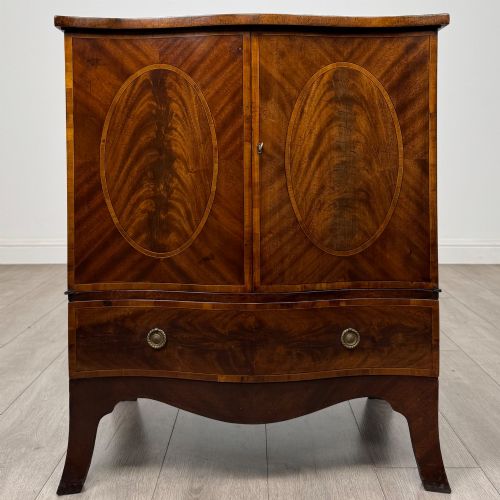
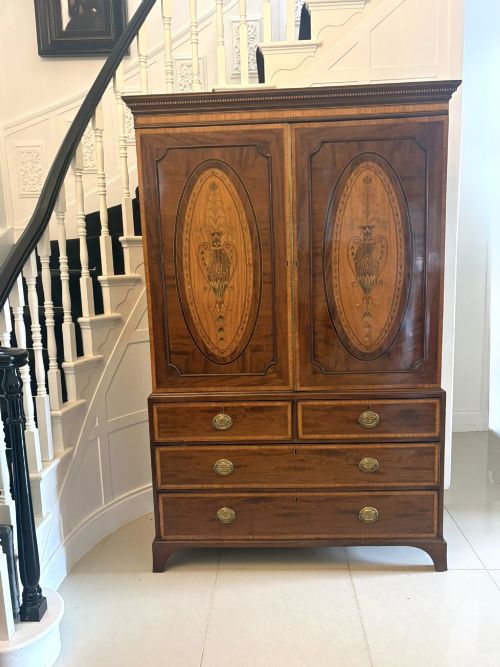
Georgian Inlaid Mahogany Cupboard
A georgian inlaid mahogany cupboard brings warmth and formal utility to a room through rich timber and delicate contrasting stringing.
Georgian Inlaid Mahogany Cupboard
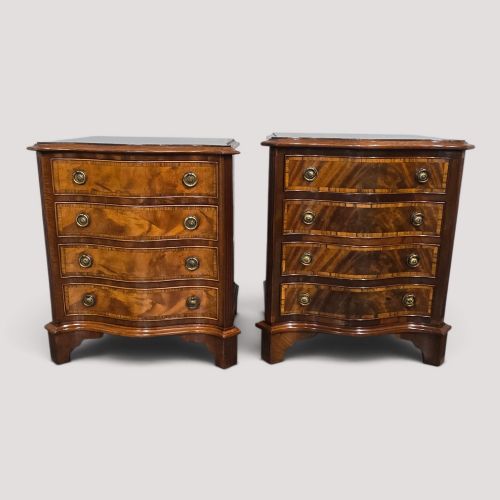
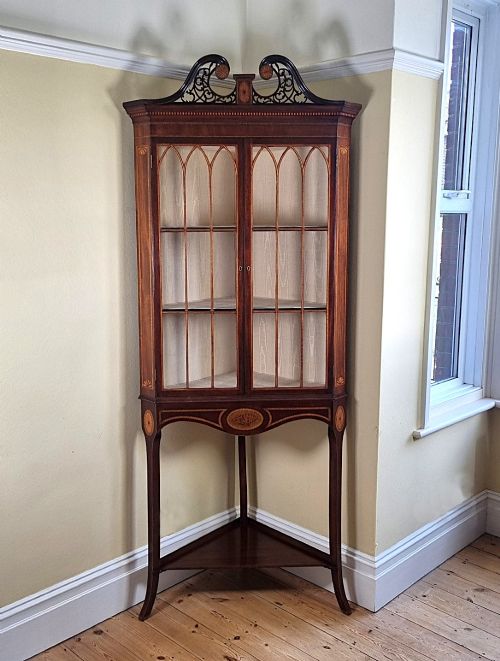
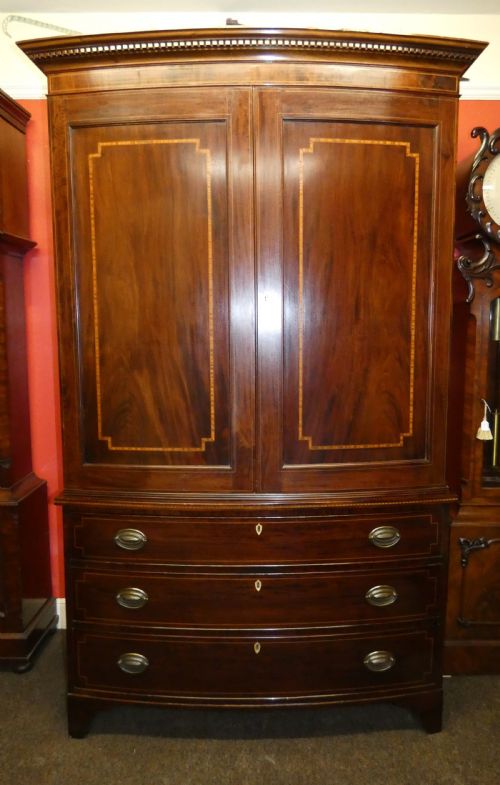
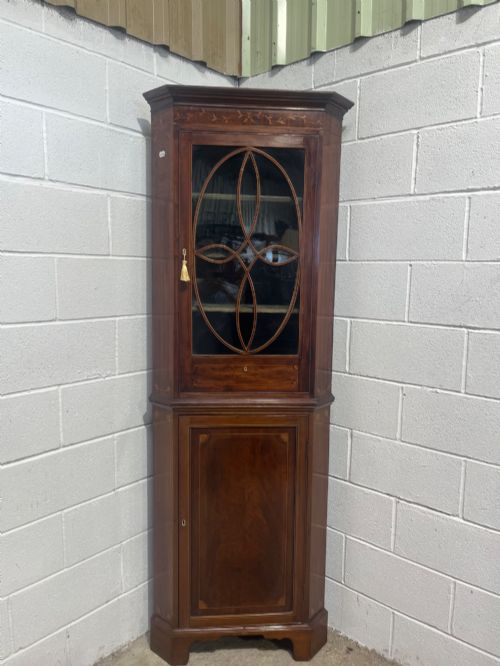
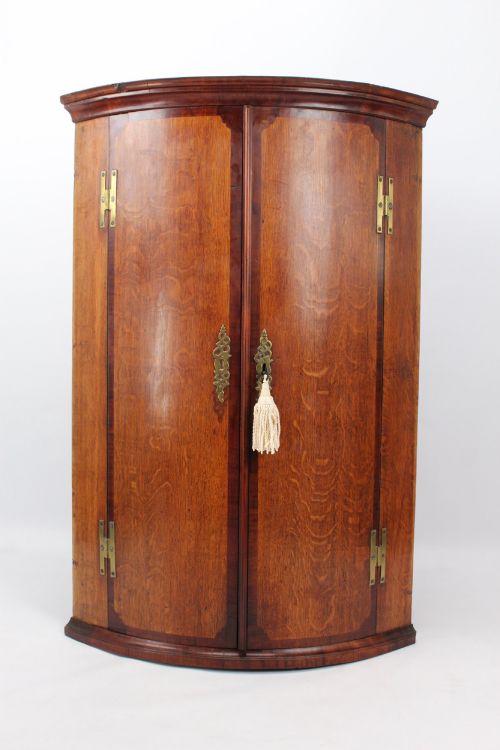
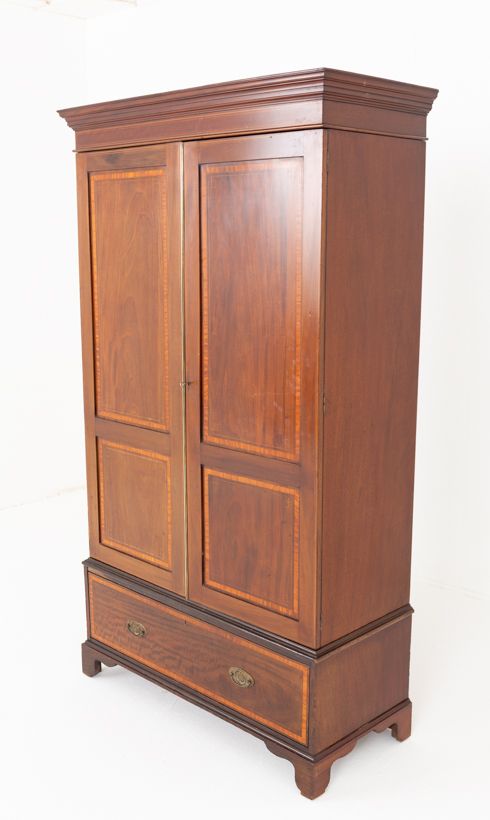
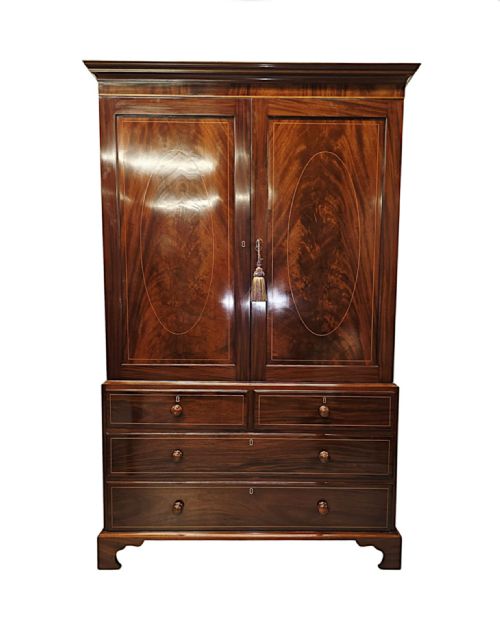
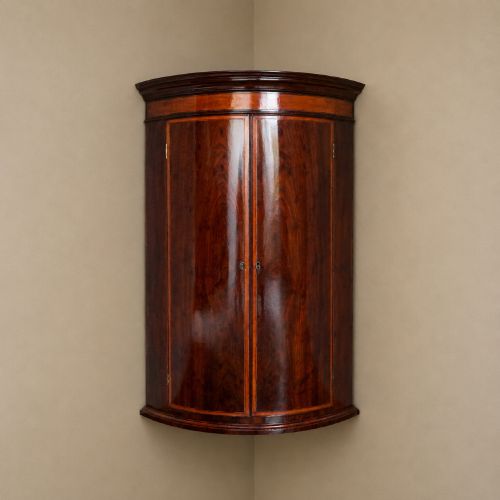
A georgian inlaid mahogany cupboard encompasses a variety of storage furniture designed for the home, ranging from floor-standing corner units and bedside cabinets to large linen presses and bookcase combinations. When exploring this selection, a buyer encounters numerous hanging and standing corner cupboards alongside tall wardrobe presses from the eighteenth and nineteenth centuries.
The aesthetic bridges several eras, drawing heavily on Georgian and Regency design principles while including later Edwardian revivals and twentieth-century interpretations. These pieces serve practical functions in modern interiors just as they did centuries ago, offering concealed storage paired with decorative surface grain and marquetry details.
Materials and construction
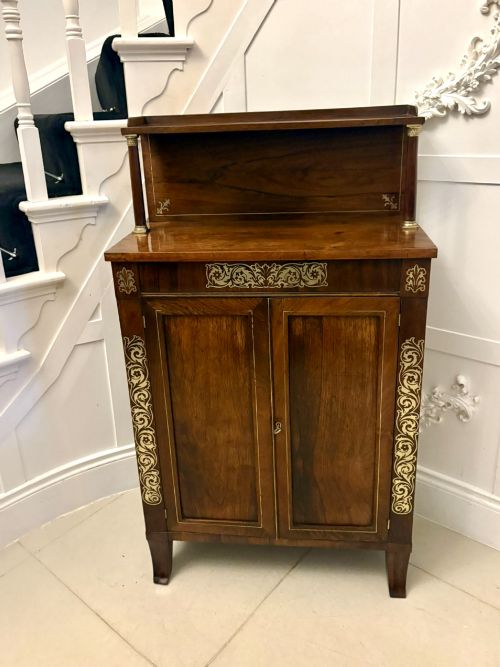
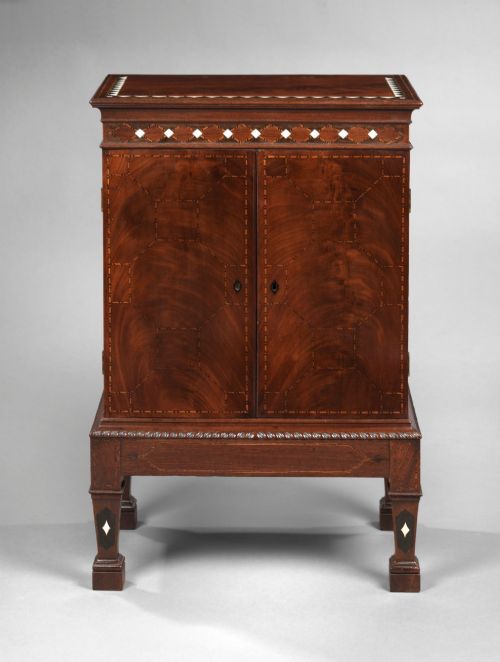
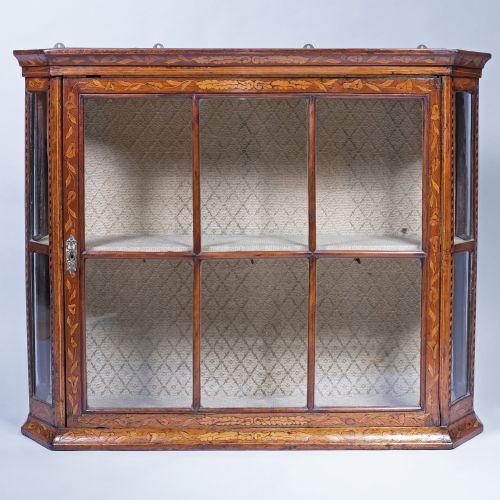
Cabinet makers utilised dense primary timbers, notably flame and plum pudding varieties of mahogany, paired with secondary woods like oak. Surfaces were enhanced through contrasting inlay and marquetry work utilising satinwood, boxwood, and ebony to create geometric borders or floral motifs.
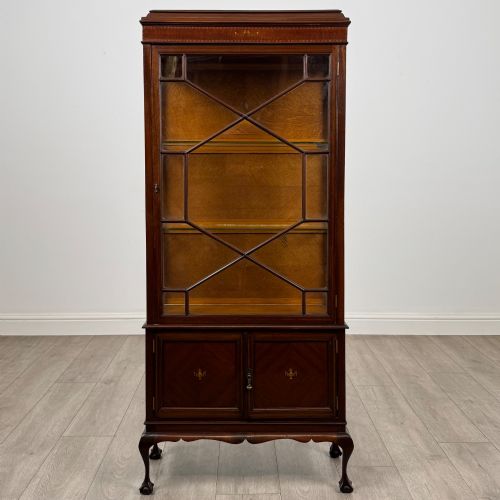
Structural hardware relied on brass fixtures, including hinges, escutcheons, and campaign details, complementing the warm tones of the polished wood. Glazed doors incorporate delicate astragal bars, while smaller items often feature bracket feet or tray tops.
Listings feature items spanning from the eighteenth-century Georgian period through Victorian and Edwardian revivals up to the 1960s.
Distinguishing craftsmanship
The distinction between standard utility items and superior examples lies in the selection of the timber veneer and the precision of the marquetry. Finer pieces display matched flame mahogany grains and intricate, tightly fitted boxwood stringing rather than painted substitutes.
Structural integrity and original hardware also determine merit. Retaining period brass fittings, functioning locks with original keys, and undisturbed secondary woods elevate a piece well above later revivals or heavily restored examples.
Maple and Co
The Georgian Inlaid Mahogany Cupboard Glossary
- Marquetry Inlay
- Decorative patterns formed by fitting small pieces of veneer into prepared recesses of the primary wood. This technique creates pictorial or geometric designs using contrasting timbers such as satinwood and boxwood.
- Bow Front
- A convex curved front facade popular in Georgian cabinet making. This shape softens the corners of rooms and creates a graceful profile on corner cupboards and chests.
- Linen Press
- A large double-door storage piece featuring sliding trays or shelves in the upper section for textiles, above a base configured with drawers. These tall items often double as wardrobes.
- Astragal Bar
- A slender wooden moulding used to divide panes of glass within a cabinet door. Fine examples feature narrow, hand-profiled bars that maximise light penetration.
- Bracket Foot
- A simple architectural foot supporting the base of a cabinet, shaped from a single block of wood meeting at a mitred corner.
Georgian Inlaid Mahogany Cupboard: Frequently Asked Questions
How do I date a georgian inlaid mahogany cupboard?
Dating relies on examining construction methods, timber choice, and the style of the inlay work. Eighteenth-century pieces typically exhibit hand-cut dovetails, oak secondary woods, and subtle satinwood stringing rather than machine-cut joints or heavy brass plaques.
Revival pieces from the Edwardian era or the 1920s often replicate earlier George III or Sheraton proportions, but internal timber milling marks and cleaner, newer interior linings usually reveal their later manufacture.
Are corner cupboards practical for modern rooms?
Corner cupboards utilise unused wall angles efficiently, making them ideal for smaller spaces or rooms where floor area is at a premium. They provide generous vertical storage without protruding too far into the living space.
Both wall-hanging and floor-standing variants fit snugly into awkward corners, offering secure shelving behind panelled or glazed doors to keep interiors tidy.
How should I maintain mahogany furniture?
Maintenance requires keeping the timber away from direct heat sources and strong sunlight, which can dry out the wood and fade the rich polish. Regular dusting with a dry, soft cloth preserves the natural sheen.
Applying a traditional beeswax polish sparingly helps nourish the grain and protects the surface from minor scuffs, maintaining the depth of the mahogany over time.