
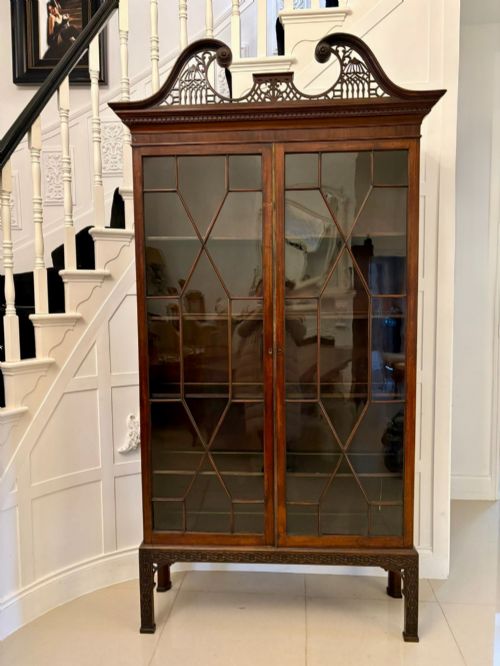
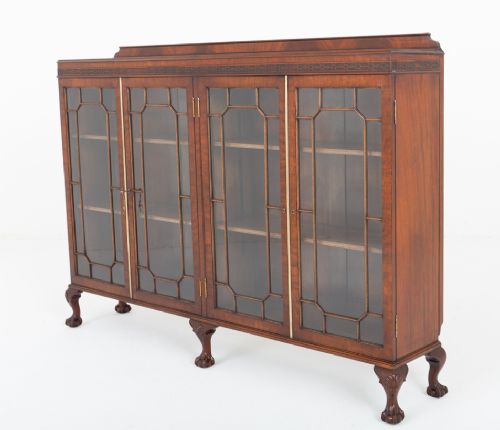
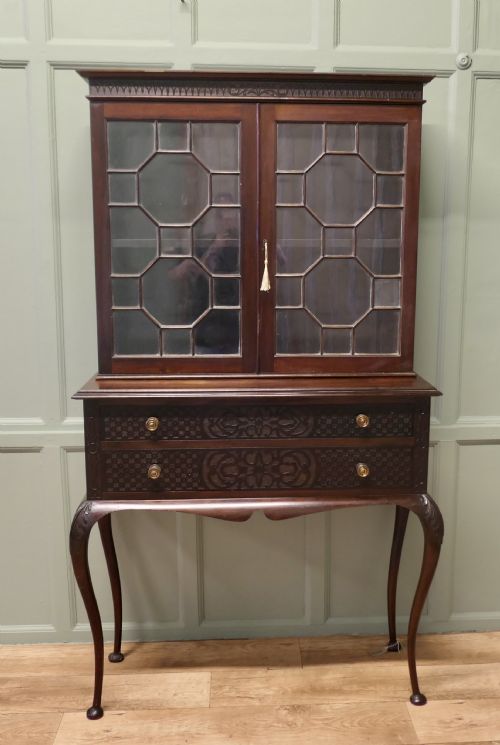
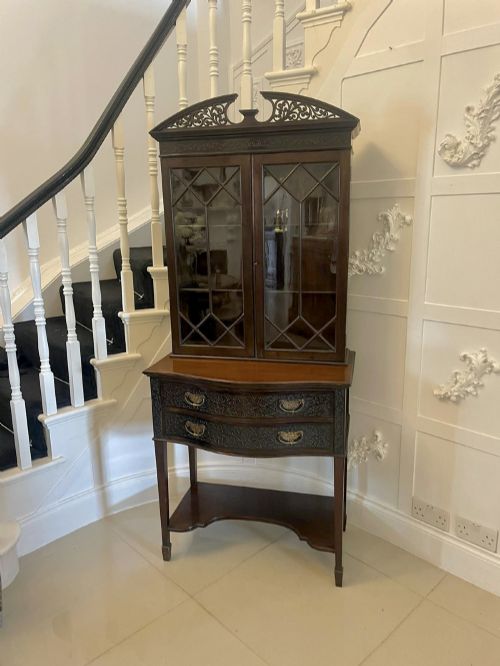
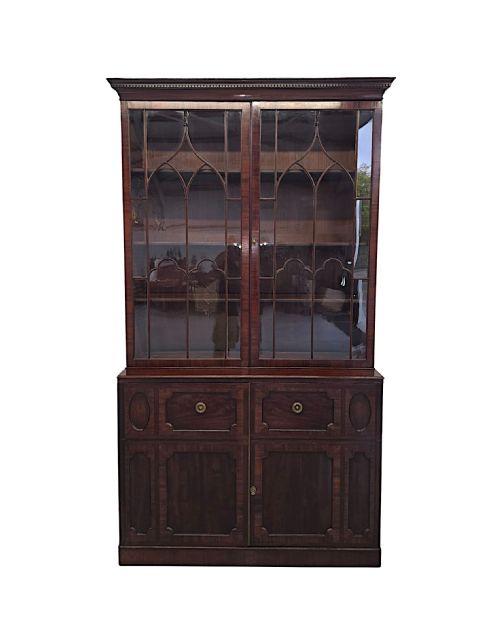
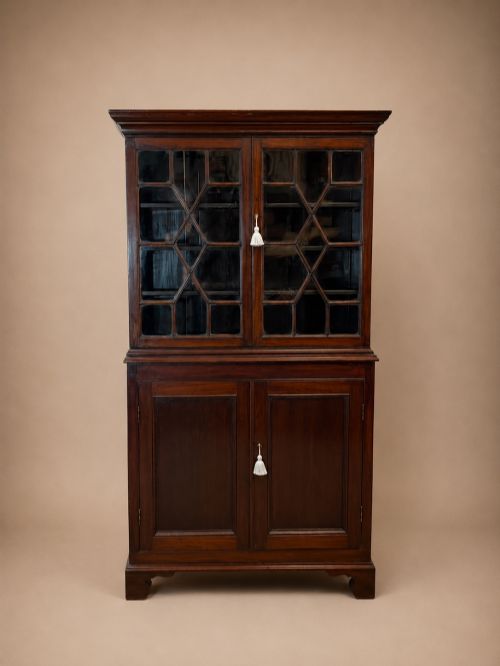
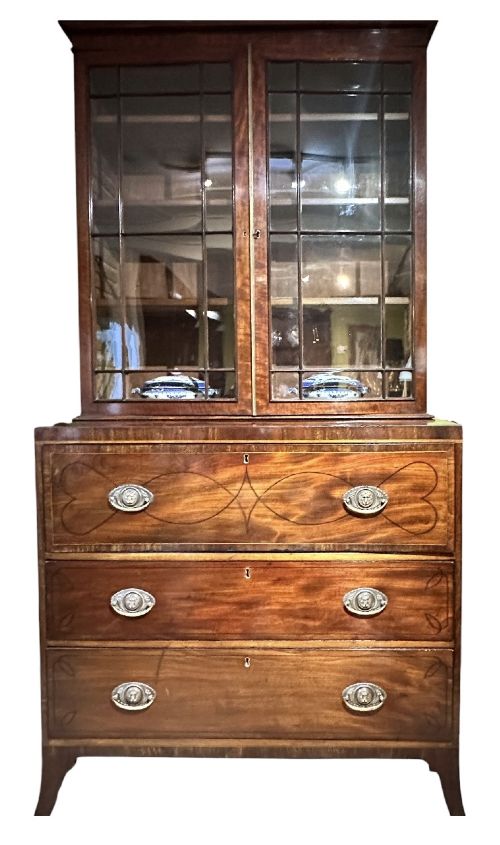
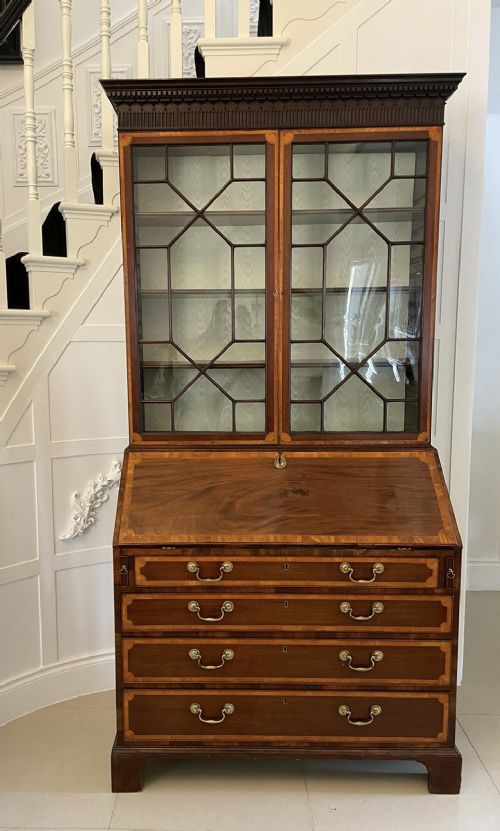
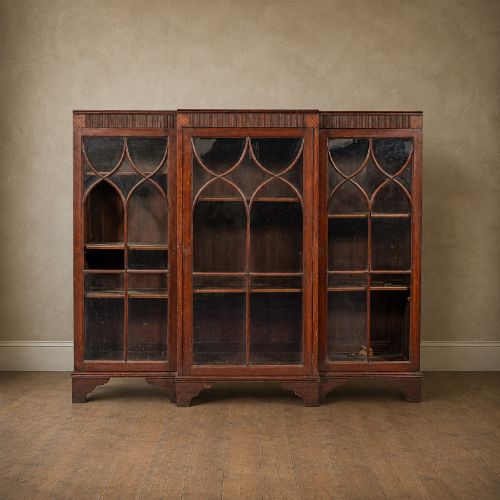
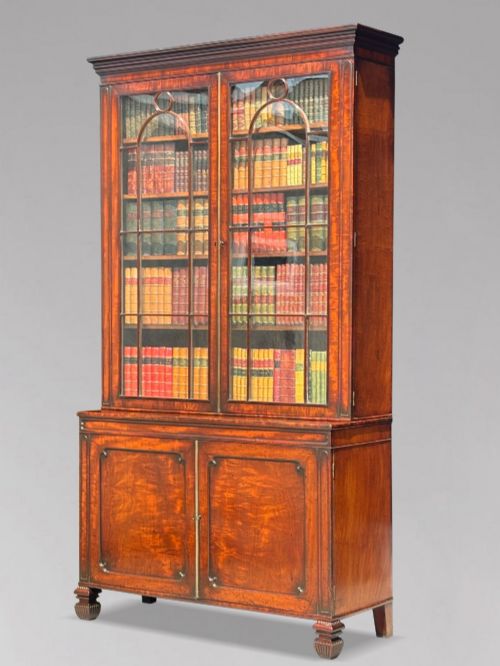
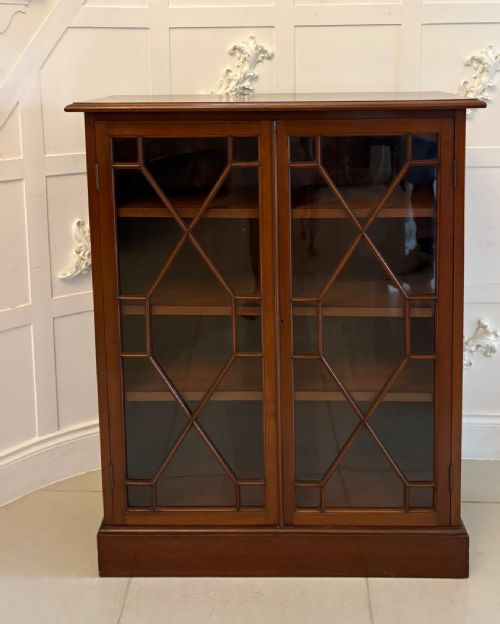
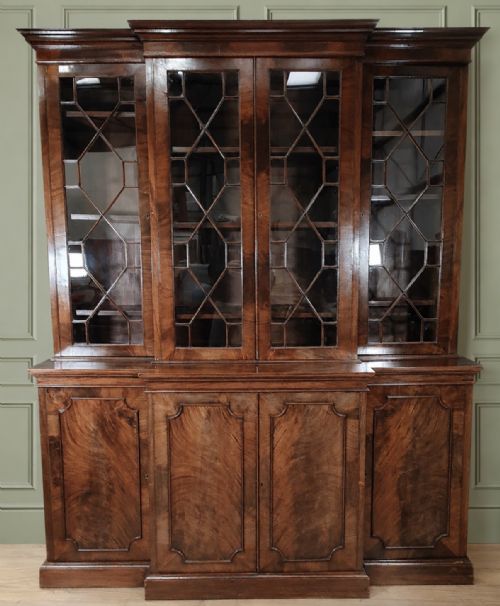
Astragal Door Mahogany Bookcase
An astragal door mahogany bookcase brings together fine timber and geometric glazing bars to organise a room.
Astragal Door Mahogany Bookcase
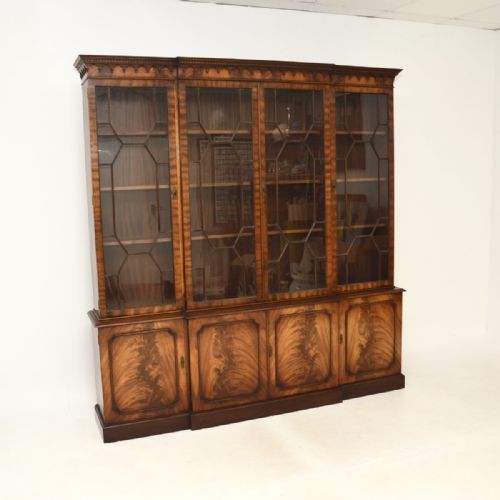
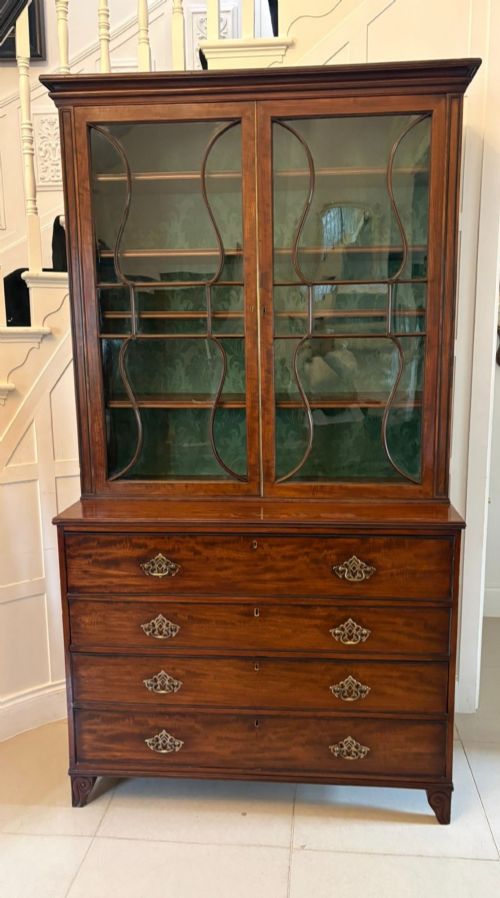
An astragal door mahogany bookcase is a tall storage piece designed to hold volumes behind individual glass panes held together by wooden mouldings. When you search for this phrase, you find pieces originating from the Georgian, Regency and Victorian periods, as well as Edwardian and later revivals.
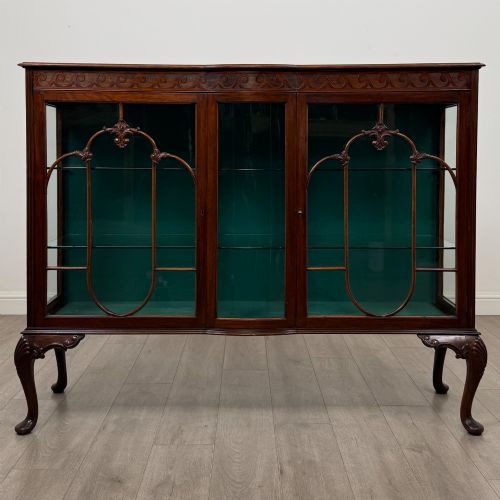
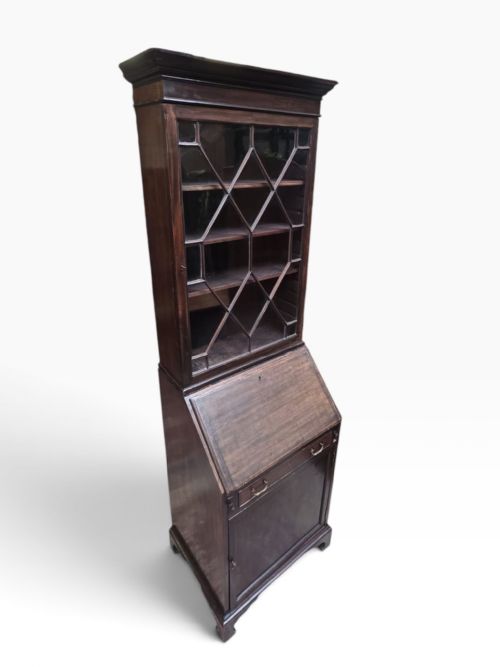
The most common formats on this page include large breakfront library pieces, bureau bookcases with fitted writing desks, and slim display cabinets. These pieces often feature glass doors above enclosed cupboards or drawers, providing both display space and concealed storage.
Materials and construction
Cabinet makers utilised solid and figured mahogany timber, often pairing it with satinwood inlay, brass hardware and glass panels. The glazing bars, known as astragals, are shaped by hand to create intricate geometric patterns across the doors.
Interiors frequently incorporate fitted writing drawers with pigeonholes, adjustable wooden shelving and panelled backboards. Construction methods rely on traditional joinery, dovetail drawers and structural carcases built to support heavy volumes.
Several bureau bookcases still retain secret compartments hidden behind miniature pigeonhole drawers for confidential paperwork.
What separates the grades
The standard of quality depends upon the selection of figured mahogany timber and the crispness of the carved details or inlaid decoration. Breakfront proportions and the delicacy of the astragal glazing bars distinguish ambitious cabinet work from simpler utilitarian storage.
Superior examples show careful attention to internal fittings, such as fitted secretaire drawers with secret compartments and original brass handles. The integration of complex architectural cornices and proportioned lower cabinets indicates the hand of a skilled workshop.
Tudor & Burrey·Wylie and Lochhead·Maple & Co.
The Astragal Door Mahogany Bookcase Glossary
- Astragal
- A small moulding profile used on cabinet doors to hold individual panes of glass in a grid pattern. These bars divide the glazed area into decorative geometric shapes.
- Breakfront
- A piece of furniture where the central section projects forward from the flanking wings. This architectural arrangement creates depth and shadow on large library bookcases.
- Secretaire
- A desk disguised as a drawer that drops open to reveal a fitted interior of small drawers and pigeonholes. It provides a writing surface without interrupting the exterior lines of the bookcase.
- Satinwood inlay
- Contrasting pale timber inserted into the mahogany surface in linear or floral patterns. This decorative technique highlights the borders and panels of Edwardian and Georgian pieces.
Astragal Door Mahogany Bookcase: Frequently Asked Questions
How do I date an astragal door mahogany bookcase?
Dating relies on architectural proportions, timber grain, and the thickness of the glazing bars. Georgian examples tend to show lighter construction and hand-cut astragals, while Edwardian pieces often incorporate revival styles and machine-finished mouldings.
Examining the internal drawer construction and secondary timbers provides further clues to the exact manufacturing decade.
Can the shelves be adjusted?
Many period bookcases feature fixed wooden shelving supported by fixed wooden bearers or traditional slotted battens. Later Victorian and Edwardian variations sometimes introduce adjustable brass rack strips.
Buyers should check individual listings to confirm whether shelves remain fixed or offer height adjustment.
What is a bureau bookcase?
A bureau bookcase combines a shelved upper cabinet with a fold-down writing flap at desk height. The drop-front reveals an interior arrangement of small drawers and pigeonholes for correspondence.
This form served as a combined study and library unit in homes from the Georgian era onwards.
How should I care for mahogany furniture?
Mahogany benefits from stable room temperatures away from direct sunlight and heat sources to prevent timber splitting. Regular dusting with a soft, dry cloth preserves the polished surface.
Occasional application of appropriate wax polish maintains the lustre of the timber without building up heavy residues.