



Bow Fronted Pot Cupboard
A bow fronted pot cupboard delivers compact bedside storage with the curved elegance of the Georgian and Edwardian eras.
Bow Fronted Pot Cupboard
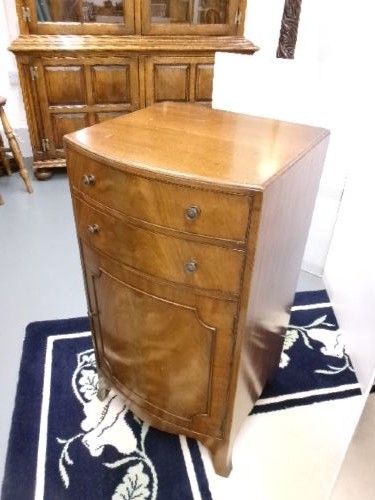
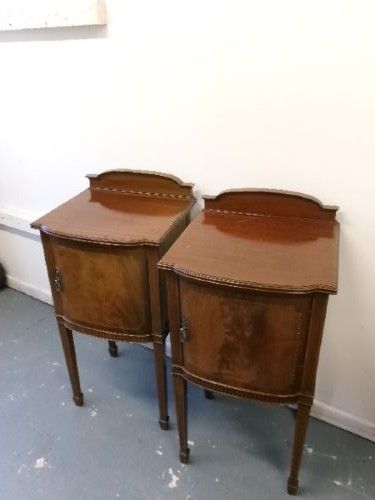
A bow fronted pot cupboard is a compact bedside cabinet designed to conceal a chamber pot or provide discreet storage, featuring a curved front that softens the bedroom corner. The pieces seen on this page span the Georgian, Victorian, and Edwardian periods, offering functional utility alongside period charm.
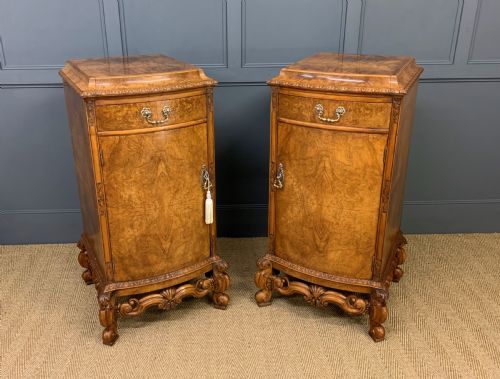
Buyers are most likely to encounter mahogany and burr walnut examples, often standing on slender legs or enclosed pedestals. These cabinets appear under various names including bedside tables, side cabinets, and pedestal cupboards, reflecting their adaptability over the centuries.
The George III and Sheraton Revival versions demonstrate the enduring popularity of the curved silhouette, combining understated practicality with refined proportions. Each cabinet brings historical character to modern interiors while serving a straightforward domestic purpose.
How they were made
Cabinet makers constructed these cupboards using solid timbers like mahogany, oak, and pine as a structural base, applying fine veneers such as burr walnut, flame mahogany, and satinwood to the visible exterior surfaces. This technique created rich grain patterns on the curved doors and top panels.
Decorative detailing relies on contrasting stringing and inlay using boxwood and ebony, complemented by cast brass handles and hinges. Joinery techniques ensured the curved front frame maintained its shape and stability over decades of daily use.
Bow Fronted Pot Cupboard Retail Price Guide 2026
Typical asking prices for bow fronted pot cupboard among the pieces listed under this phrase on Sellingantiques today, from the lower quarter to the upper quarter. They describe what is for sale here now, not the wider market.
What varies in quality
Quality rests in the selection of the timber veneers and the precision of the curved front construction, where master makers achieved seamless integration between the doors and the frame. Superior examples display carefully matched grain patterns across the bow front, creating a coherent visual flow.
Refinement in the secondary details, such as delicate boxwood inlay, original brass hardware, and well-executed internal joinery, separates standard utility items from distinguished pieces of furniture.
The Bow Fronted Pot Cupboard Glossary
- Bow front
- A convex curved front profile that projects outward, characteristic of much Georgian and Sheraton Revival case furniture. This shape softens harsh room angles and creates a dynamic play of light across the wood grain.
- Pot cupboard
- A small bedside cabinet originally designed to house a chamber pot behind a closed door. These items evolved into general bedside storage as domestic plumbing arrangements changed.
- Commode
- A term historically used for a decorative bedside cabinet or chest with enclosed storage. In the context of these listings, it frequently describes pieces with cupboard doors or drop-front compartments.
- Stringing
- Thin lines of contrasting wood inlay used to outline panels, drawers, and table tops. It adds geometric definition and highlights the contours of the cabinet.
- Burr walnut
- A highly figured wood harvested from the wart-like growths on walnut trees, prized for its swirling patterns. Cabinet makers utilised it as a veneer on statement pieces to create striking visual texture.
Bow Fronted Pot Cupboard: Frequently Asked Questions
What is a bow fronted pot cupboard used for today?
These cabinets serve as practical bedside tables or small side cabinets in contemporary bedrooms and living spaces. Their enclosed storage keeps small items neatly out of sight.
The compact footprint allows them to fit easily into tight corners or narrow spaces beside a bed.
How do I date a Georgian pot cupboard?
Dating relies on examining the construction methods, timber choices, and secondary woods like oak or pine used inside the cabinet. Georgian pieces from the George III period often feature hand-cut dovetails and specific aesthetic proportions.
Hardware placement and the style of the legs also offer reliable clues to the manufacturing decade.
Are these cupboards stable on uneven floors?
Most antique cabinets feature four distinct legs or a pedestal base designed for level placement on traditional floors. Slight adjustments using discreet glides can help stabilise them on modern surfaces.
The sturdy timber construction generally ensures a solid and reliable stance.