
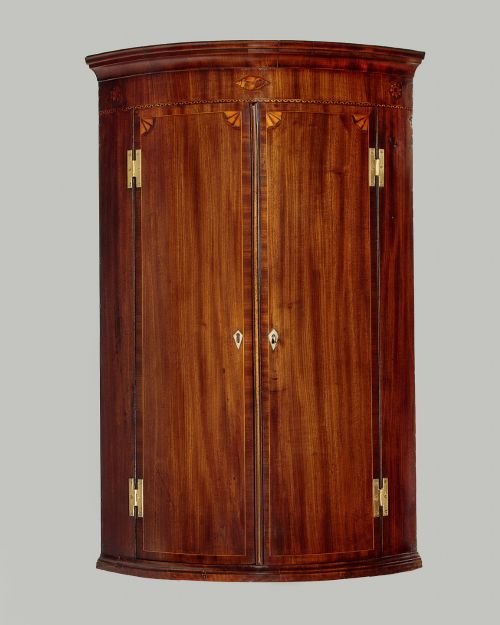
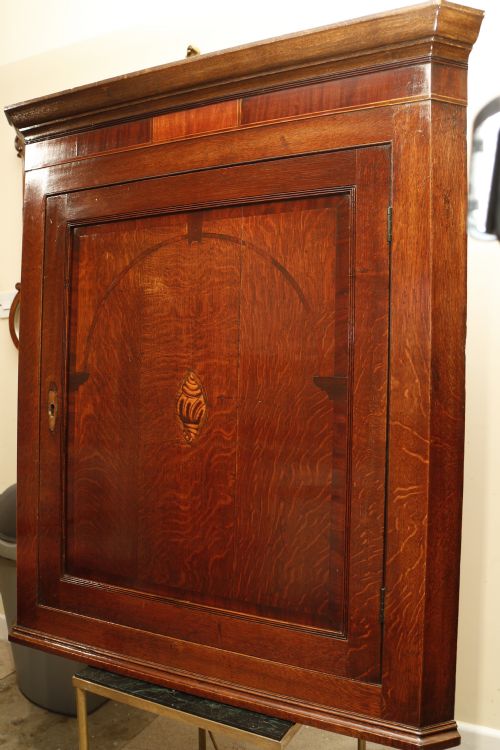
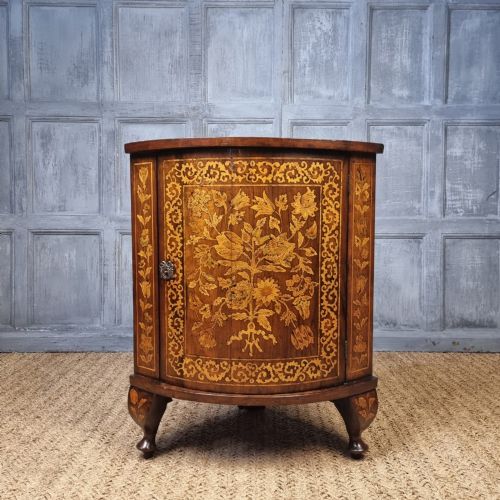
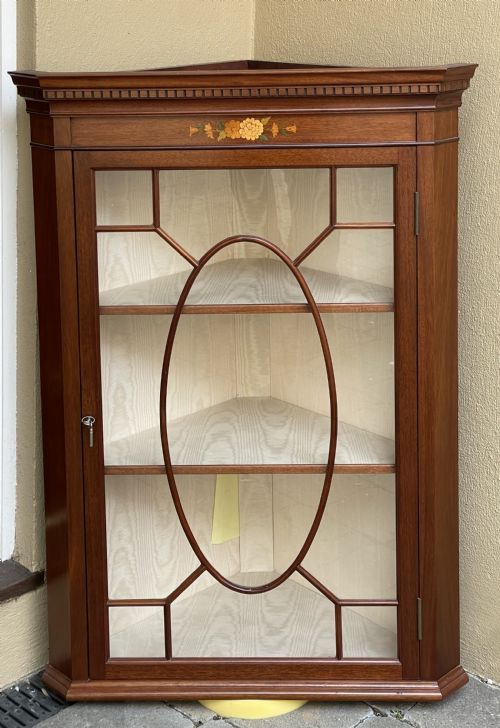


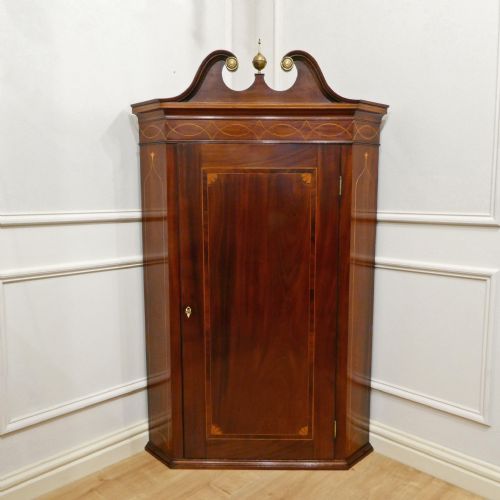
Georgian Inlaid Corner Cabinet
A georgian inlaid corner cabinet turns awkward room angles into focal points while hiding away everyday clutter in period style.
Georgian Inlaid Corner Cabinet
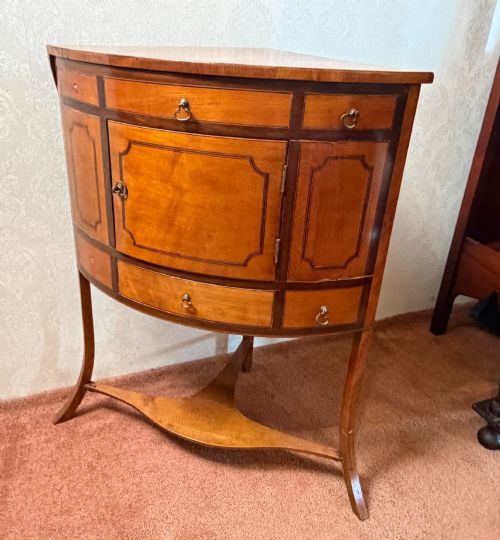
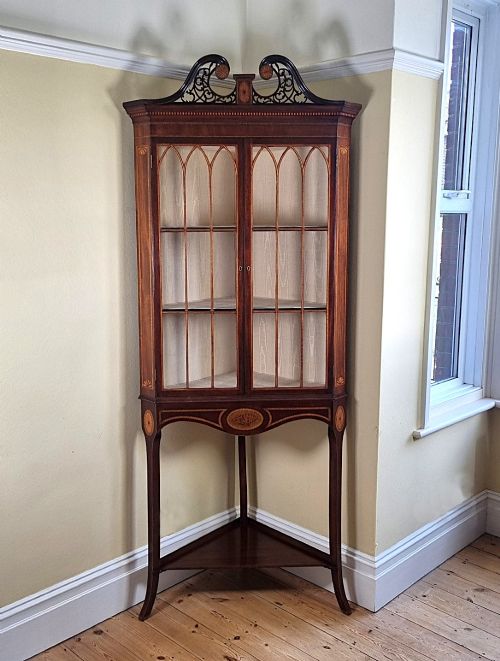
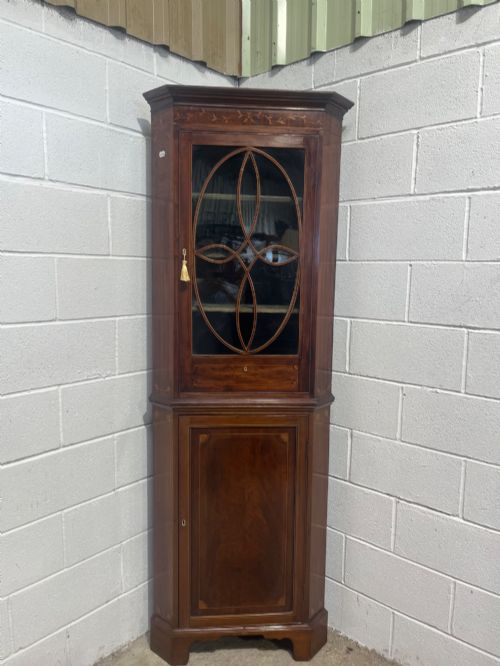
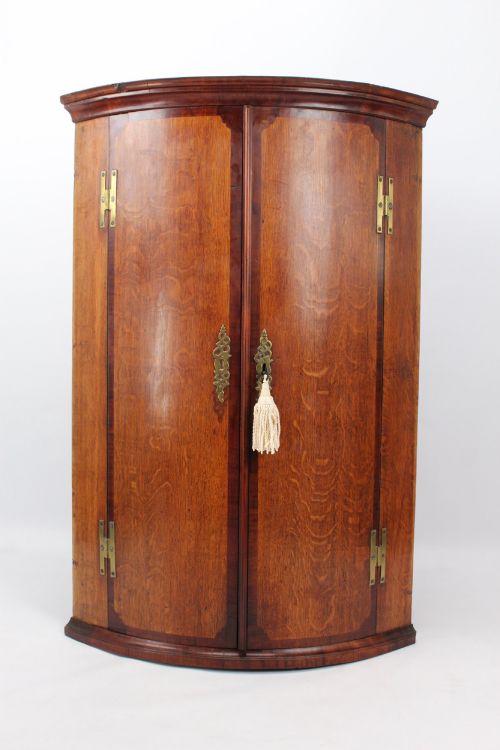
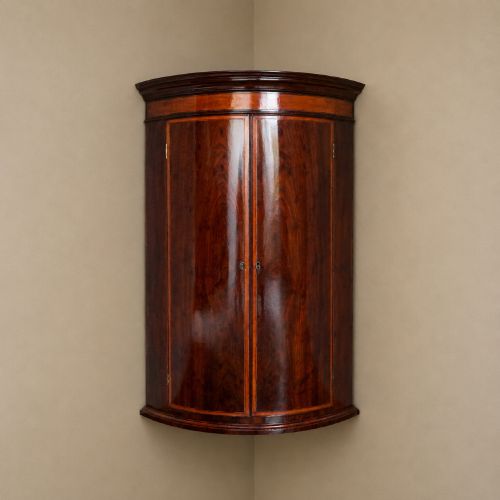
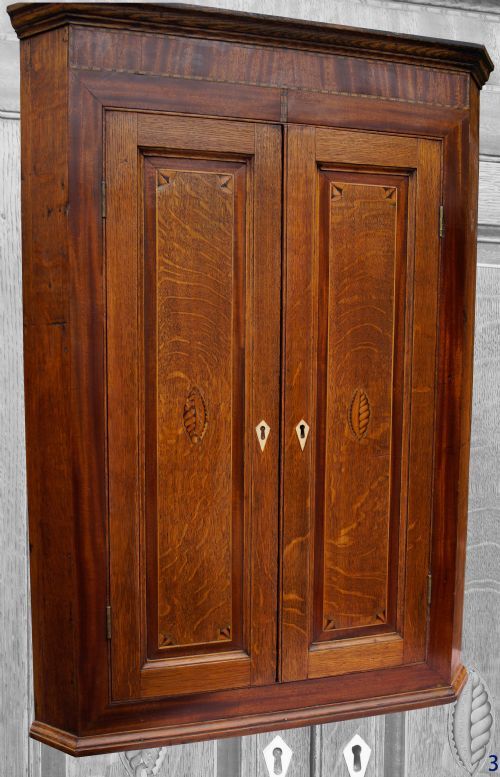
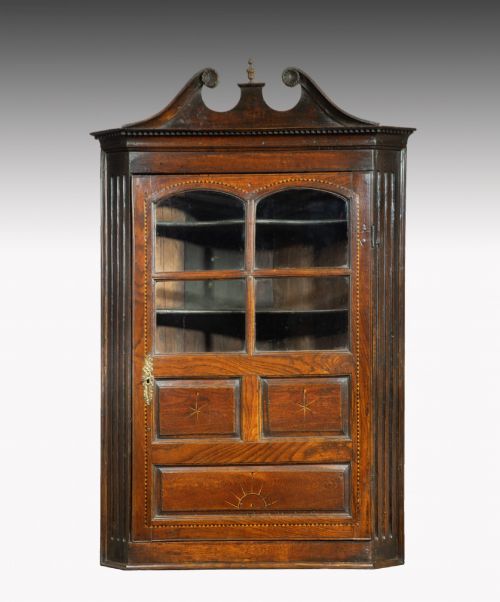
A georgian inlaid corner cabinet occupies the junction of two walls, making practical use of dead space in domestic rooms. These pieces appear primarily as hanging wall units, floor-standing cupboards, and two-part designs on stands.
The material record spans the eighteenth and nineteenth centuries, with later revivals appearing in Edwardian and mid-century formats. Oak and mahogany dominate the offerings, occasionally supplemented by walnut and elm.
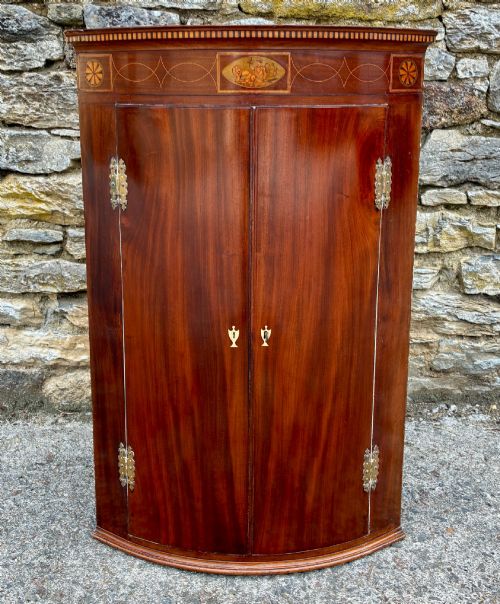
Front profiles vary between flat elevations, bow fronts, and barrel shapes that curve smoothly into the room. Interiors typically feature shaped shelving for display or storage, enclosed by single or double doors.
Materials and Technique
Cabinet makers built carcasses primarily from dense timbers such as mahogany and oak, often applying figured veneers to the exterior surfaces. Crossbanding and stringing in contrasting woods like boxwood and satinwood provide linear definition around door panels and cornices.
Inlay techniques incorporate marquetry motifs, floral details, and geometric lines set flush into the primary wood. Secondary elements include brass H-hinges, key escutcheons, and glazed doors divided by timber astragals.
Georgian Inlaid Corner Cabinet Retail Price Guide 2026
Typical asking prices for georgian inlaid corner cabinet among the pieces listed under this phrase on Sellingantiques today, from the lower quarter to the upper quarter. They describe what is for sale here now, not the wider market.
Some eighteenth-century examples doubled as washstands, proving that eighteenth-century corners worked hard before they looked pretty.
Distinctions in Execution
Quality rests on the selection of timber and the precision of the cabinet work. Finer examples display carefully chosen wood grain, such as plum pudding mahogany or burr walnut, matched across the door panels and front elevation.
The refinement of the inlay work distinguishes workshop standards. Crisp, tightly fitted stringing and delicate marquetry demonstrate greater skill than broader, simpler decorative banding.
The Georgian Inlaid Corner Cabinet Glossary
- Bow front
- A convex curved cabinet facade that projects outward into the room. This shape softens the hard angles typical of corner furniture.
- Crossbanding
- A strip of veneer applied to the border of a panel where the grain runs perpendicular to the main surface. It frames the central wood figure.
- Astragal
- A narrow wooden moulding used to divide panes of glass within a cabinet door. These strips form structural grids that hold individual glass segments.
- Escutcheon
- A protective plate surrounding a keyhole. They are frequently cast in brass and integrated into the door design.
- Marquetry
- Decorative patterns formed by fitting together thin veneers of various coloured woods. It creates pictorial or ornamental designs on flat surfaces.
Georgian Inlaid Corner Cabinet: Frequently Asked Questions
How do I hang a wall cabinet safely?
Wall-hanging corner cupboards require secure fixing to solid masonry or internal wall studs using appropriate heavy-duty brackets. Given the weight of dense timbers like mahogany and oak, professional installation ensures the piece remains stable.
Interior fixing points inside the cabinet frame distribute the load evenly against the walls. Checking the alignment of the doors before final tightening prevents the timber frame from twisting.
What is the difference between hanging and floor-standing models?
Hanging models mount directly to the wall to free up floor space, while floor-standing versions rest on bracket feet or dedicated stands. Standing variants often provide greater internal capacity, sometimes featuring two-part construction.
Ceiling height and floor area usually dictate the choice between the two formats. Both styles utilise corner spaces effectively while offering enclosed shelving.
How do I identify a George III piece?
George III pieces date from the mid to late eighteenth century and are characterised by refined proportions and specific timber choices. They frequently feature flame mahogany, subtle boxwood stringing, and traditional brass hardware.
Construction methods inside the cabinet, such as hand-cut dovetails on internal drawers and secondary softwood framing, offer further clues to their period of origin.
Where should I place a corner cabinet?
These cabinets suit dining rooms, hallways, or living spaces where standard rectangular furniture leaves awkward gaps. Their angled backs fit flush into ninety-degree junctions.
Placing them away from direct sunlight and heat sources protects the timber veneers and polished finishes from drying out over time.