


Georgian Enamel Glass
Georgian enamel glass brings remarkable polychrome detail and delicate opacities to eighteenth-century drinking vessels and decorative boxes.
Georgian Enamel Glass
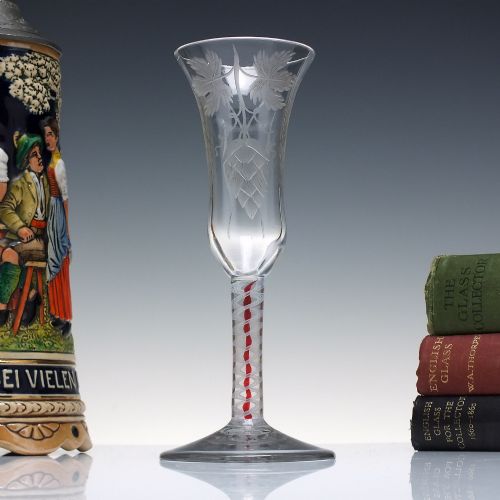
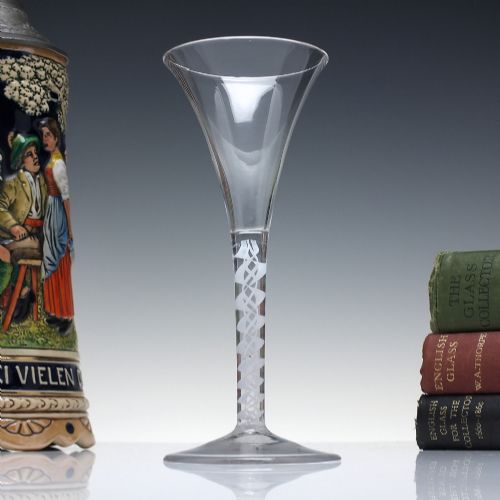
When you search for georgian enamel glass, you encounter sophisticated drinking vessels and small decorative containers originating primarily in the eighteenth century. The selection ranges from clear lead glass wine and ale glasses decorated with opaque white twist stems to painted decanters, flasks and cream jugs.
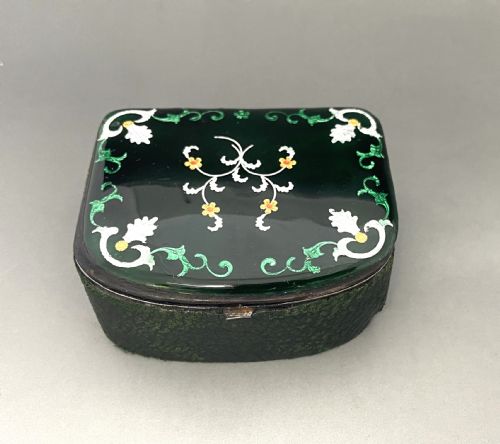
Drinking glasses dominate the selection, particularly wine and ale glasses featuring opaque twist stems and moulded ogee bowls. Alongside these glassware pieces, the category encompasses small storage items including Bilston enamel patch boxes, scent bottle etuis and trinket boxes.
How they were made
Maker's methods combined lead glass and lead crystal manufacturing with surface painting and enamelling techniques. Artisans formed clear and coloured glass bodies before applying white enamel and polychrome pigments directly to the surface.
Stemware production involved drawing complex opaque twists within lead glass columns, whilst decorative boxes utilised enamel fused to metal bases alongside fitted glass inserts.
Listings for georgian enamel glass include lead crystal drinking vessels, opaline decanters, and Bilston enamel patch boxes from the eighteenth century.
What varies in quality
Quality rests upon the crispness of the enamel painting and the complexity of the glass formation. Finer pieces demonstrate precise brushwork on polychrome enamelling and immaculate clarity within the lead crystal or opaline glass bodies.
The degree of preservation in hand-painted motifs and the structural integrity of integrated metal fittings and glass components distinguish standard examples from superior specimens.
Beilby
The Georgian Enamel Glass Glossary
- Opaque twist
- A stem form found on eighteenth-century drinking glasses containing white or coloured enamel threads spun within clear lead glass. This technique gained popularity across English glasshouses during the mid-eighteenth century.
- Ogee bowl
- A bell-shaped drinking vessel bowl with an S-curve profile curving out at the rim. This contour appears frequently on Georgian wine and ale glasses.
- Bilston enamel
- Enamel painted on metal containers produced in Staffordshire during the Georgian period. These small boxes and scent bottles often incorporate hinged metal mounts.
- Flute-moulded
- A surface pattern of vertical concave channels pressed or blown into the glass body. This treatment adds texture and light reflection to drinking vessel bowls.
- Etui
- A small ornamental case designed to hold implements such as tweezers or small scent bottles. Georgian examples frequently combined enamel work with fitted glass components.
Georgian Enamel Glass: Frequently Asked Questions
How do I identify a genuine Georgian glass?
Examine the weight, pontil mark on the base, and metal composition of the piece. Eighteenth-century lead glass possesses a distinctive heft and ring when struck gently.
Look for tool marks and surface wear consistent with age, alongside the specific form of stems and bowl mouldings typical of the period.
Were these painted glasses used daily?
Most surviving drinking glasses and enameled pieces served functional roles at dining tables and social gatherings of the period. Wealthy households utilised them for wines, ales and cordials.
Decorative boxes and scent bottles functioned as personal accessories kept on dressing tables or carried in pockets.
How should I clean enameled glass?
Clean these delicate items by hand using lukewarm water and mild soap. Avoid harsh scrubbing or abrasive materials that might damage the painted enamel surface.
Dry the pieces immediately with a soft cloth to protect both the glass and any integrated metal mounts.
What is an opaque twist stem?
An opaque twist stem contains threads of white or coloured enamel encased within the clear lead glass stem. Glassmakers created these patterns by manipulating hot glass rods before drawing and twisting them.
This method replaced earlier baluster styles and defined mid-eighteenth-century English drinking vessel design.