



Cobalt Blue Sugar Bowl
These cobalt blue sugar bowl pieces bring rich colour and classic form to the table, offering a striking display of deep blue glass and ceramic craft.
Cobalt Blue Sugar Bowl
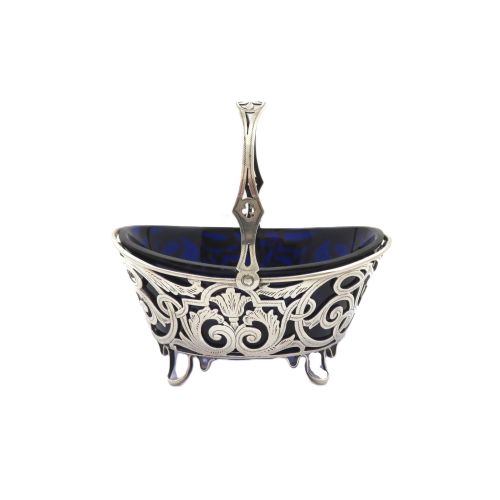
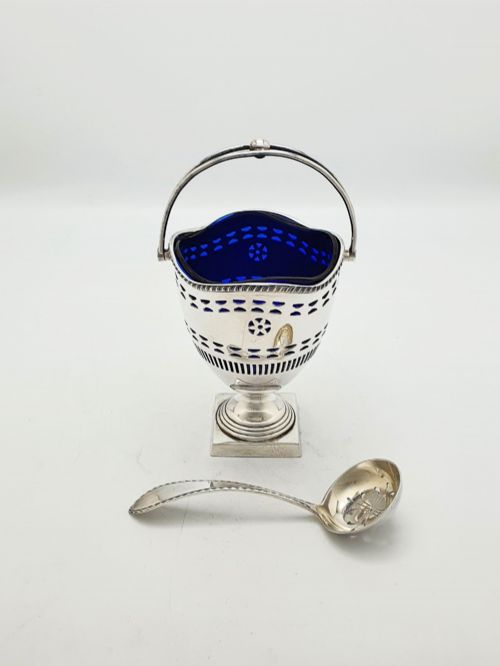
When you search for a cobalt blue sugar bowl, you encounter a variety of forms spanning the eighteenth century through to the early twentieth century. These items include freestanding glass bowls, fitted silver baskets with liners, and lidded porcelain sugar boxes.
The pieces on this page draw from periods including Georgian, Regency, Victorian, and Edwardian styles. Alongside dedicated sugar bowls and baskets, you also find paired cream jugs, tea sets, and sucriers with distinct blue decorations.
Makers and origins range from Worcester porcelain to Bristol glass and Royal Crown Derby. Each piece reflects the formal dining habits of its era, combining utility with decorative presence on the tea table.
How they were made
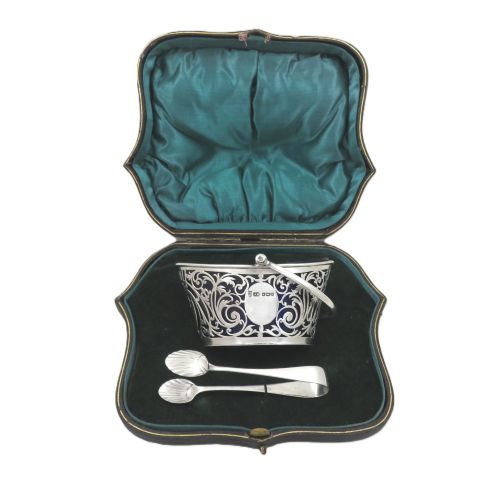
Glass pieces utilise deep cobalt colouring within blown or moulded forms, sometimes paired with silver plate, sterling silver, or pierced metal frames. Silver baskets frequently incorporate swing handles, cast floral motifs, and fitted glass liners.
Ceramic examples employ porcelain and bone china bodies, decorated with hand-painted details, blue and white transfer printing, or Imari patterns. Gold leaf and enamel accents sometimes highlight the glazed surfaces of these tea wares.
Some sugar baskets arrive with cases so snug they look like they were tucked into bed by a very fussy Victorian.
What varies in quality
Quality reveals itself in the depth of the cobalt hue and the crispness of the surrounding metalwork or painted decoration. Pierced silver and silver plate show varying degrees of fineness in their piercing work, cast handles, and structural joints.
Ceramic pieces differ in the precision of their hand-painted brushwork and the preservation of any accompanying gold leaf or enamel details. The presence of matching liners, lids, or original fitted cases distinguishes the most complete examples.
Aldridge & Green·Royal Crown Derby·Royal Davenport·Ridgway
The Cobalt Blue Sugar Bowl Glossary
- Sucrier
- A sugar bowl or sugar box with a cover, commonly found in tea sets from the eighteenth and nineteenth centuries.
- Pierced silver
- Metalwork decorated by cutting or piercing open patterns through the silver sheet, often seen on sugar baskets to reveal the coloured glass liner within.
- Wrythen
- Twisted or spiral moulded glass or ceramic ribbing, frequently seen in Georgian tableware.
- Imari
- A decorative style inspired by Japanese export wares, featuring iron red, cobalt blue, and gold highlights on porcelain.
- Liner
- A removable glass insert made to sit inside an open metal basket, protecting the silver frame from moisture and staining.
Cobalt Blue Sugar Bowl: Frequently Asked Questions
What is a cobalt blue sugar bowl?
A cobalt blue sugar bowl is a tableware item intended for serving sugar during tea or dining, made either from deep blue glass or from ceramic materials featuring blue decoration.
These pieces range from open glass bowls and silver-framed baskets to lidded porcelain boxes produced across the Georgian, Victorian, and Edwardian eras.
How were glass liners used?
Glass liners were fitted inside pierced silver or silver plate baskets to hold loose sugar securely without direct contact with the metal frame.
This combination allowed makers to create lighter, decorative openwork silver designs while keeping the interior functional and easy to clean.
How do I identify a Georgian piece?
Georgian pieces often display characteristic period forms such as wrythen moulded glass, hand-painted Bristol blue surfaces, or delicate silver piercing.
Examining the manufacturing techniques, handle construction, and decorative motifs helps distinguish eighteenth-century items from later nineteenth-century revivals.
Are these pieces part of tea sets?
Some pieces are found as standalone items, while others were originally created as part of larger matching tea sets or paired cream jug and sugar bowl combinations.
Complete sets or matched duos reflect the formal tea service traditions of the Regency and Victorian periods.