



Blue Glass Tableware Set
A blue glass tableware set brings deep colour to the dining table, combining precious metal frames with vibrant liners designed for salt, mustard and sugar.
Blue Glass Tableware Set
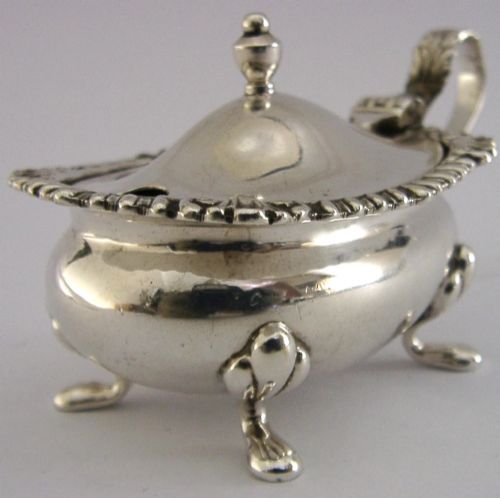
A blue glass tableware set comprises functional dining vessels such as salt cellars, mustard pots, cruet sets, sugar baskets and cream jugs. These pieces combine fitted glass liners or vessels with supportive frames made from sterling silver or silver plate.
The objects span multiple periods, ranging from Georgian hand-painted Bristol blue vessels to Victorian pierced silver designs, Edwardian cased sets and Art Deco condiment collections. Buyers on this page are most likely to encounter Edwardian and Art Deco silver-framed salts and condiment sets.
Originating primarily from English workshops, these tableware items reflect changing dining rituals across the nineteenth and twentieth centuries. The combination of reflective silver and cobalt glass remains the defining characteristic across all listed forms.
Materials and construction methods
Makers shaped the glassware using traditional blowing and moulding techniques to fit specific metal frames, producing rich cobalt and Bristol blue tones. Glass liners required exact dimensions to sit securely inside openwork silver frames or plated stands.
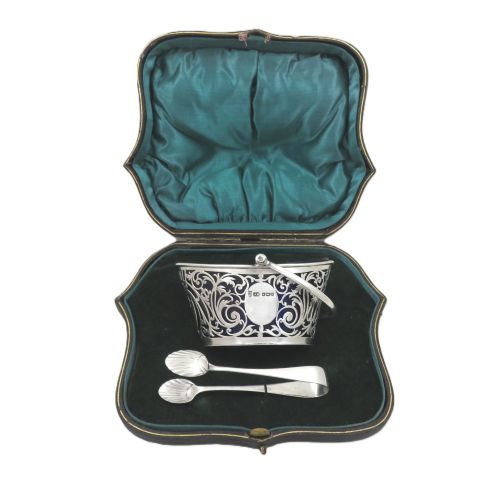
Metal components involved sterling silver or silver plate, often formed through piercing, casting and hand-painting. Velvet linings occasionally appeared inside presentation cases accompanying cased Edwardian sugar baskets and condiment sets.
Some sugar baskets came with tiny fitted velvet beds inside leather cases, treating humble sugar crystals like crown jewels.
Distinctions in quality and execution
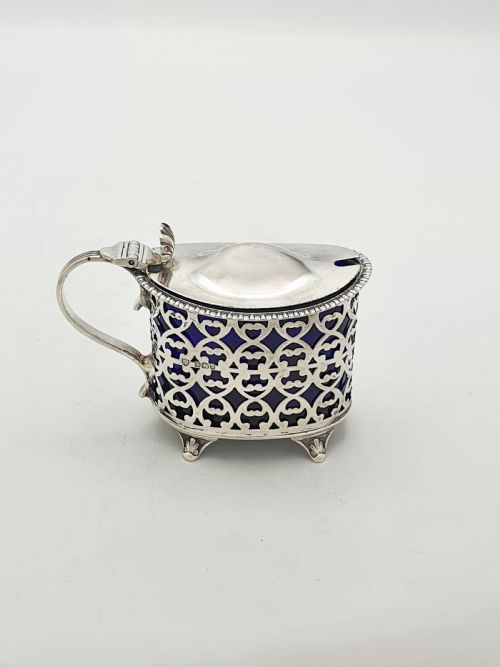
Quality rests upon the crispness of metalwork, from pierced Victorian mustard pots to geometric Art Deco cruet frames, alongside the depth and clarity of the blue glass. Heavier silver gauges and crisp hallmarks indicate superior workshop standards.
Preservation of the original glass liner within its matched silver or plated mount dictates the desirability of a set. Hand-painted decoration on Georgian pieces introduces another layer of artisanal skill.
William Neale
The Blue Glass Tableware Set Glossary
- Salt cellars
- Open vessels used for holding dry salt at the dining table before the widespread adoption of modern shakers. They frequently require fitted glass liners to protect the metal frame.
- Cruet sets
- Matching collections of bottles or containers for condiments such as oil, vinegar, salt and pepper housed within a central stand. They often feature silver plate frames and coloured glass components.
- Mustard pot
- A small covered jar designed to hold prepared mustard, usually supplied with a matching spoon and a contrasting glass liner. These often date from the Victorian and Edwardian periods.
- Sugar basket
- A swung-handle vessel used for serving granulated or lump sugar, frequently lined with blue glass to highlight the pierced silverwork of the body.
Blue Glass Tableware Set: Frequently Asked Questions
What pieces belong in a condiment set?
A condiment set typically includes mustard pots, salt cellars and sometimes pepper shakers or cream jugs grouped together in a silver or silver-plated frame.
These collections were arranged on dining tables to serve multiple seasonings and sauces during formal meals.
How do I clean blue glass liners?
Wash the glass liners gently in warm, soapy water using a soft cloth to protect the surface from scratching. Avoid harsh abrasives or soaking metal mounts alongside the glass.
Dry the components thoroughly before placing them back into their silver or plated frames.
Are replacement glass liners available?
Finding exact period replacements for broken glass liners requires searching specialist antique dealers who stock spare parts. Dimensions must match the frame precisely to sit correctly.
Original liners featuring bubbles or tool marks from early manufacture are preferred by collectors.
How do I date silver cruet sets?
Dating relies heavily upon the assay office hallmarks stamped into the sterling silver frames, which indicate the exact year of production. Stylistic markers such as Edwardian pierced work or Art Deco geometric lines also help determine the era.
Silver-plated items usually rely on design style and registration marks rather than official date letters.