



Antique Blue Glass Set
An antique blue glass set brings rich cobalt, Bristol and peacock tones to the table, uniting glass and silver in functional service.
Antique Blue Glass Set
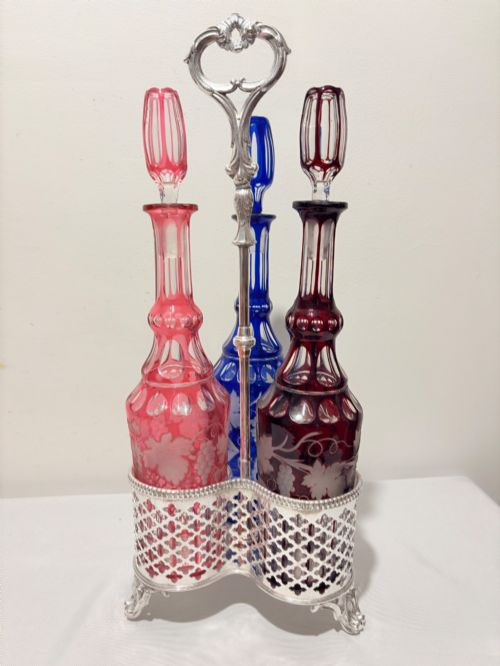
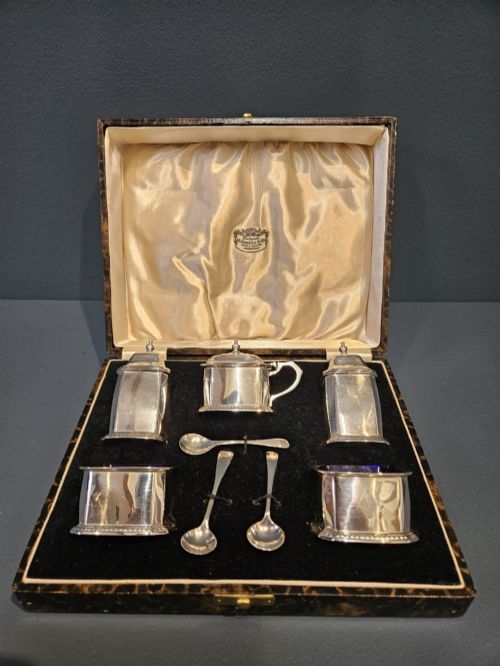
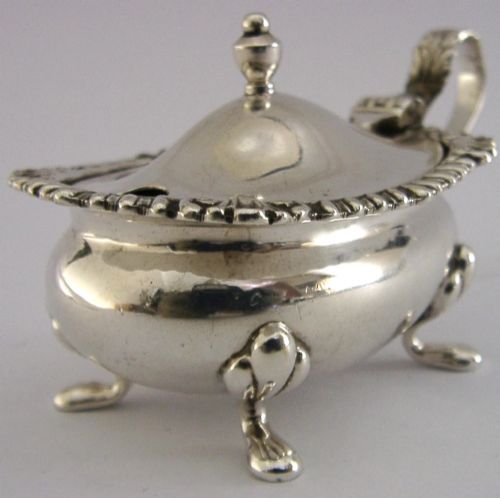
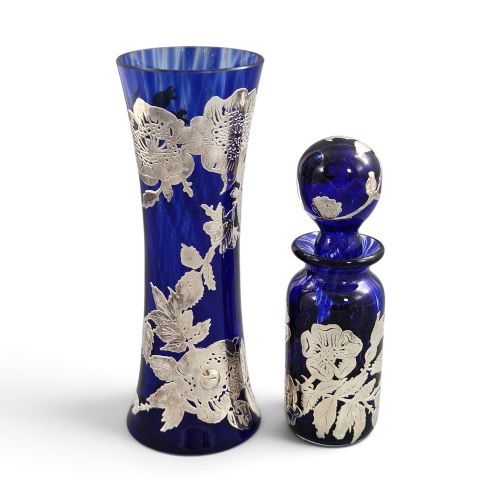
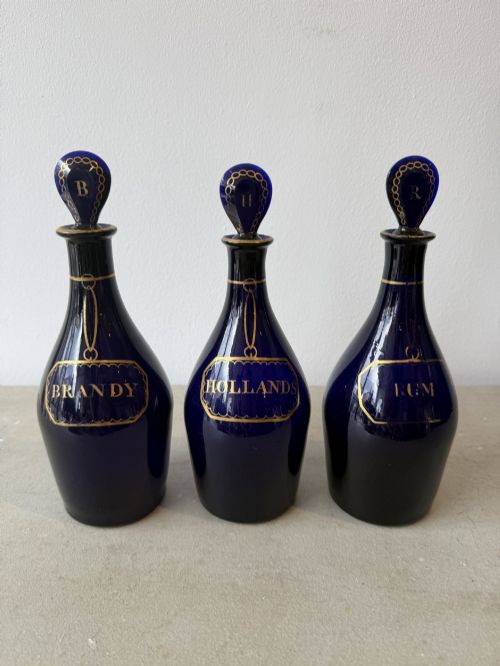
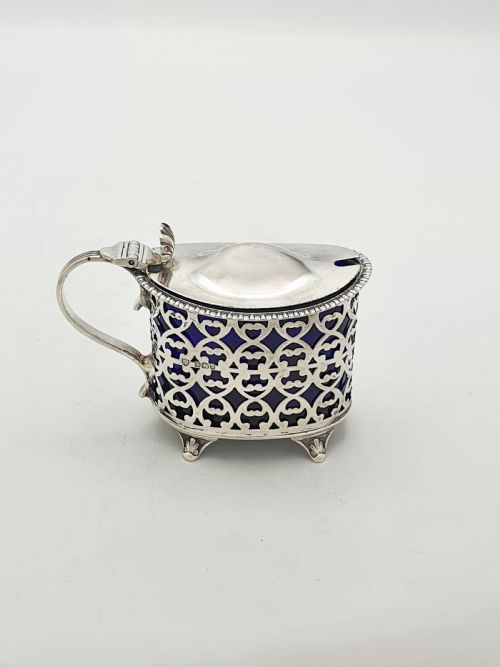
When you search for an antique blue glass set, you encounter matched groupings designed for dining, dressing and display. The most common forms on this page are salt cellars, cruet sets, mustard pots and decanters.
These collections span multiple eras, with Georgian, Victorian, Edwardian and Art Deco examples appearing regularly. Many incorporate precious metals alongside the vibrant glass vessels.
Sets frequently pair deep blue glass liners with sterling silver or silver plate frames, though standalone glassware collections also emerge. They range from small table condiments to larger vanity and travelling sets.
What varies in quality
The standard depends on the crispness of the silversmith's work and the depth of colour in the glass body. Thicker, hand-blown glass with rich saturation sits at the upper end of the scale.
Completeness defines the higher tier, particularly when original glass liners remain intact within matched silver frames. The precision of hand-gilding, enamelling and surface hand-painting also separates standard production from finer output.
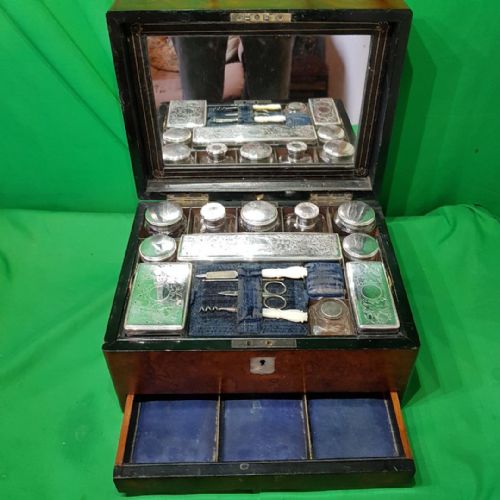
A travelling lady required burr walnut, silver and velvet just to face the morning.
Goldsmith & Silversmith's·William Neale·William Neale & Son·Emmy Seyfried·Moser·Rene Lalique·Sabino
The Antique Blue Glass Set Glossary
- Bristol Blue
- A deep cobalt glass traditionally associated with the Bristol area during the Georgian period. It frequently appears on decanters, wine glasses and cream jugs.
- Salt Cellar
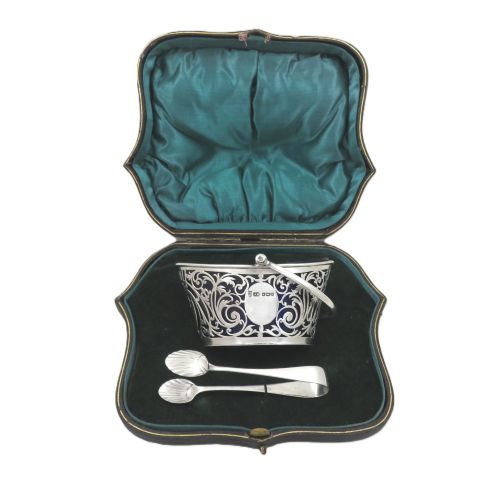
- An open vessel used to hold salt at the dining table, often lined with blue glass and paired with miniature spoons. These are frequently found in matched sets of four.
- Cruet Set
- A matched assemblage of bottles or containers holding condiments like mustard, oil and vinegar. They are usually held within a silver or silver-plated frame.
- Liner
- A removable glass insert designed to sit inside an open metal salt cellar or mustard pot to protect the metal from corrosive contents. They are commonly made of cobalt or opaline glass.
- Paste
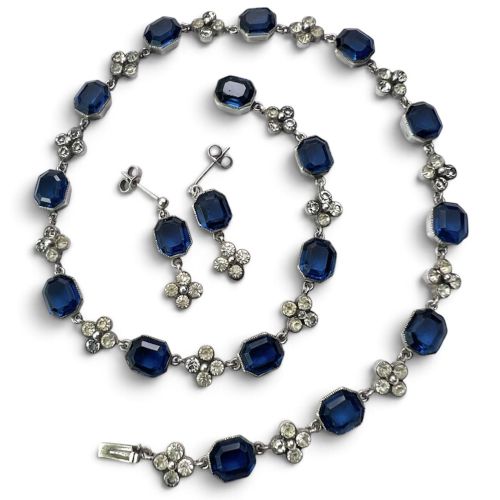
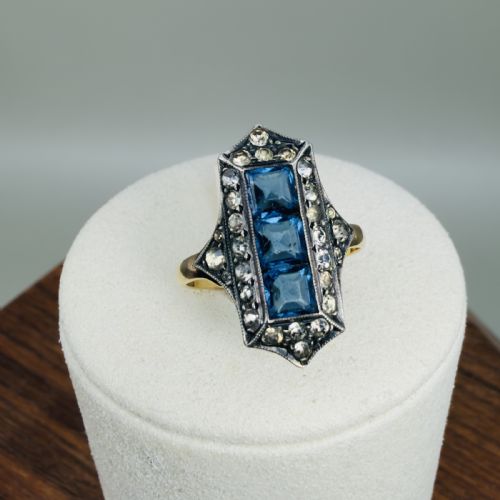
- Faceted glass or lead crystal cut and polished to imitate gemstones in jewellery and decorative items. It is often set alongside silver in period accessories.
Antique Blue Glass Set: Frequently Asked Questions
How do I clean antique blue glass?
Wash the glass gently in warm, soapy water using a soft cloth, avoiding harsh abrasives that might damage the surface or gilding.
Keep metal frames separate during cleaning to protect sterling silver or silver plate from moisture damage.
Were these sets used daily?
Many cruet sets, salt cellars and mustard pots saw regular service on dining tables for formal meals and daily dining.
Dressing boxes and vanity sets served personal grooming routines in the bedroom or during travel.
How do I date a silver mounted set?
Check the metal components for official silver hallmarks, which indicate the exact year and assay office of manufacture.
Compare the silhouette and decorative style, such as Georgian cut glass or Art Deco geometric framing, with the period of the hallmarks.
Can I use these sets today?
Open salt cellars and cruet bottles function well for modern dining when handled with care during dinner parties.
Vanity boxes and decanters continue to serve their original purpose for display and storage in the home.