
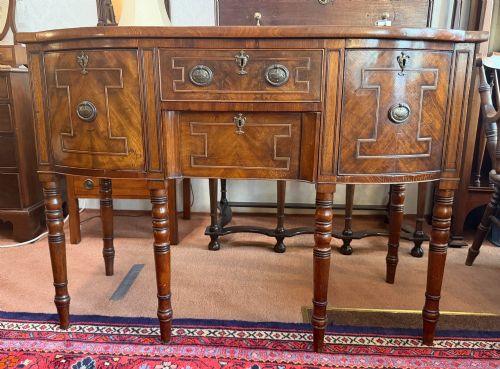
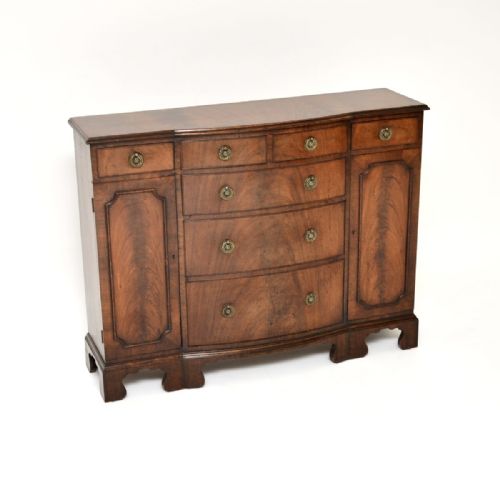
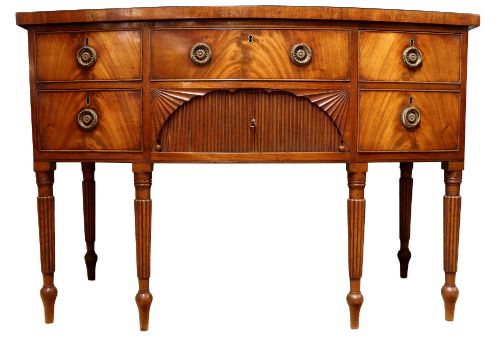
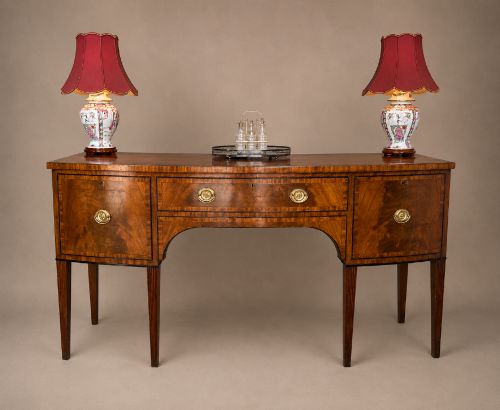
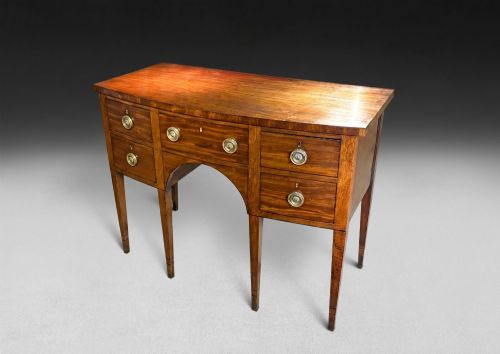
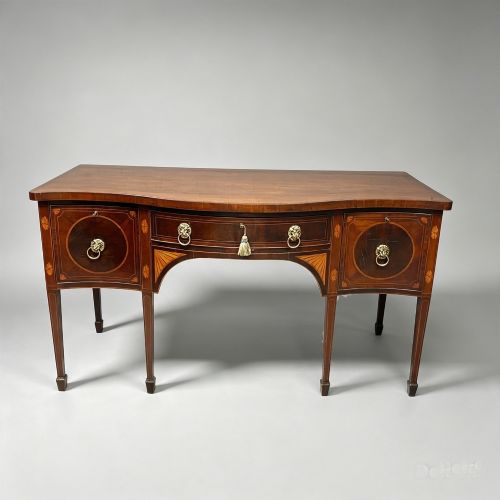
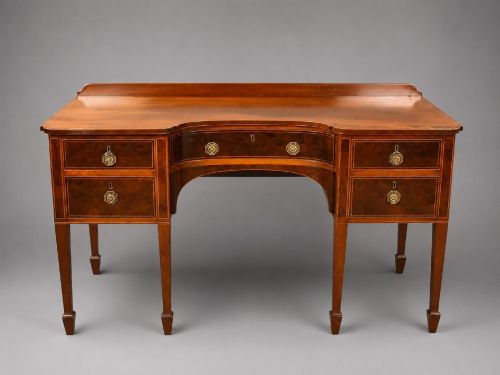
Georgian Dining Sideboard
A Georgian dining sideboard is a substantial timber serving piece designed for the formal dining room, prized for rich mahogany surfaces and refined inlay.
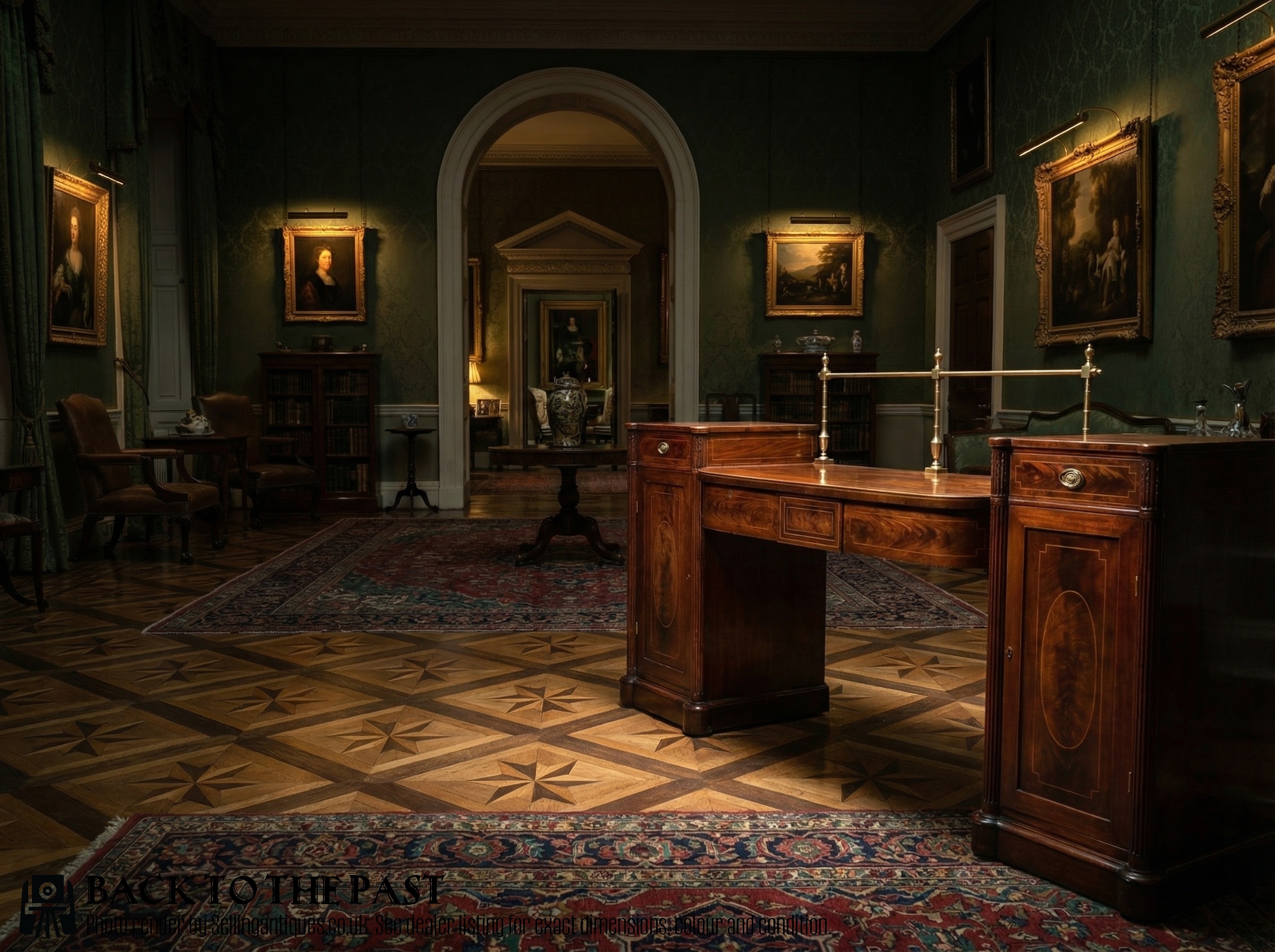
What They Are
A georgian dining sideboard is a substantial timber serving piece designed for the formal dining room, intended for the display of plate and the storage of dining paraphernalia during meals.
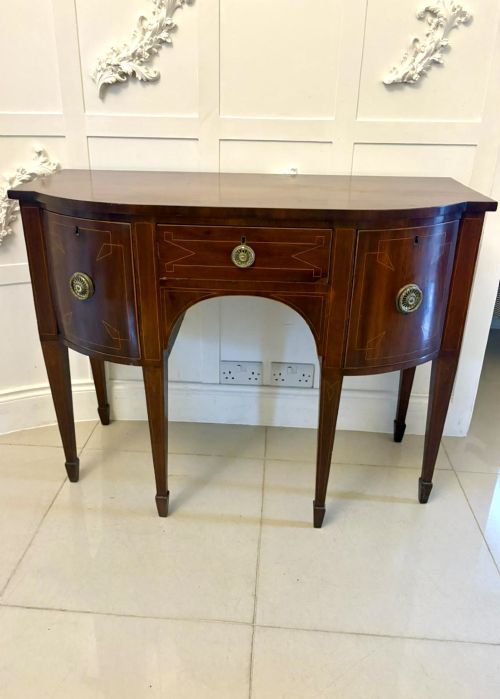
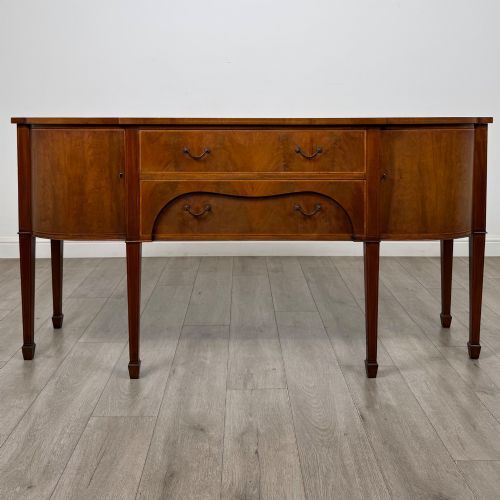
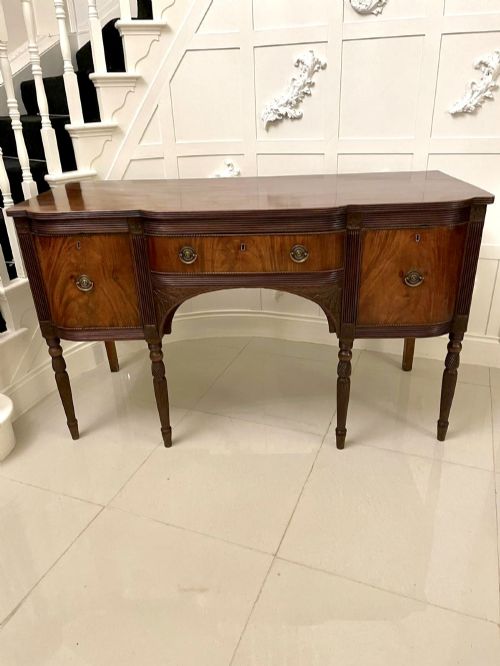
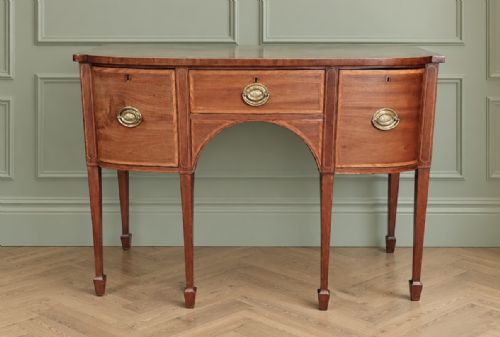
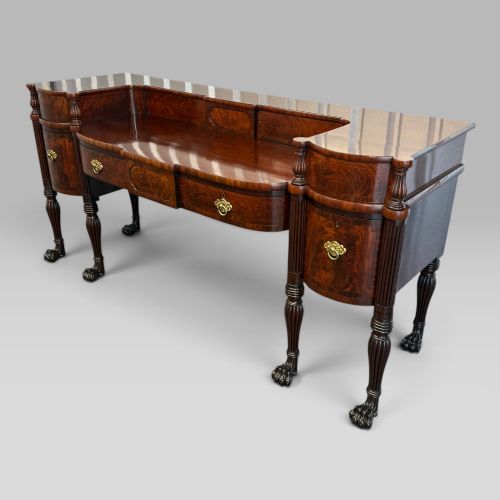
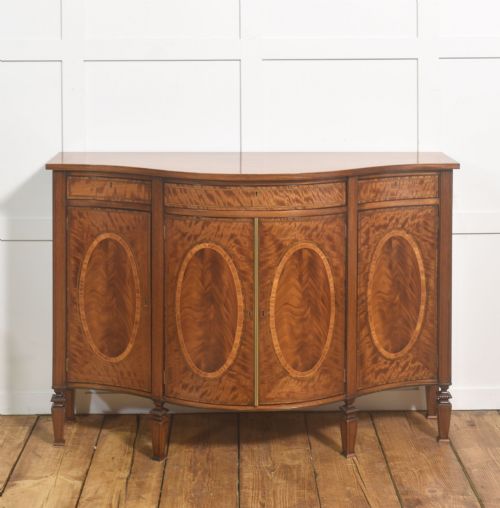
The pieces listed here date from the Georgian era, including George III and late Georgian periods around eighteen hundred, manifesting in forms such as serpentine fronted sideboards and pedestal sideboards.
These servers range from expansive pedestal designs to smaller serpentine examples, all originating from the eighteenth and early nineteenth centuries.

How They Were Made
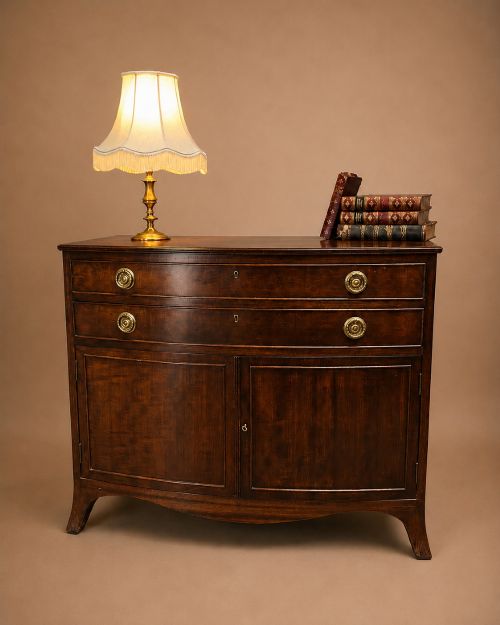
Cabinet makers utilised solid mahogany and figured mahogany wood veneer over secondary timbers, constructing carcases designed to withstand heavy domestic use in grand dining spaces.
Surfaces were embellished with delicate stringing and contrasting decorative elements utilising boxwood and satinwood, whilst brass hardware supplied structural handles and mounts.
Retail Price Guide 2026
Typical UK retail prices for georgian dining sideboard, calculated from the Sellingantiques database of over a million retail prices indexed since 2003. This retail price guide relies exclusively on Sellingantiques data; no external sources or auction records are used, so the figures do not describe the wider market.
Current listings span the Georgian period, including specific dates from the eighteenth century up to eighteen hundred and ten.
What Varies in Quality
The upper tier of these pieces displays superior timber selection, where highly figured mahogany and precise boxwood or satinwood inlay articulate the serpentine or straight fronts with distinct visual harmony.
Construction fidelity dictates value, separating standard utility pieces from exceptional cabinet work through the precision of joinery, the integrity of the wood veneer, and the quality of the original brass fittings.
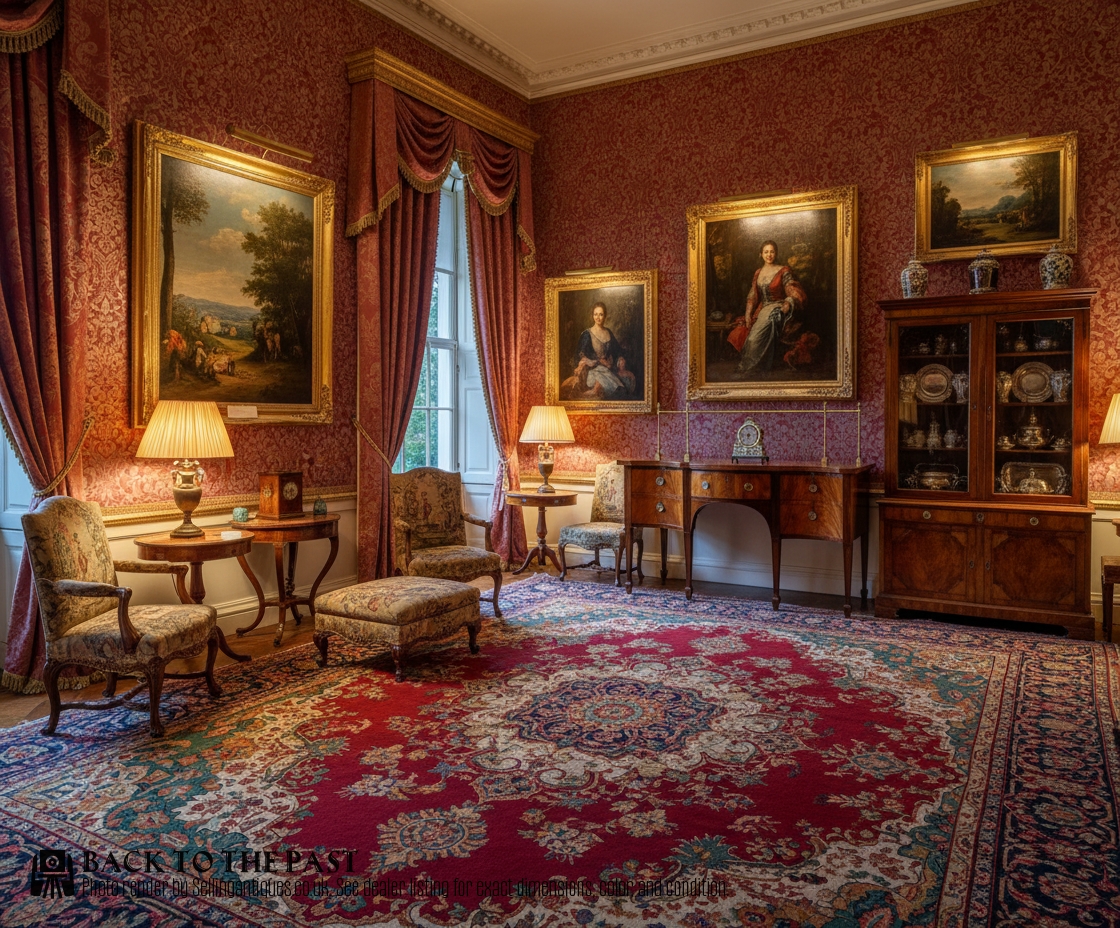
The Georgian Dining Sideboard Glossary
- Serpentine
- A curved front shape featuring a convex centre flanked by concave ends, common on finer eighteenth century boards.
- Pedestal sideboard
- A form consisting of two separate pedestals joined by a central serving table or board, typical of the late Georgian period.
- Veneer
- A thin layer of figured wood applied over a secondary timber base to create decorative grain patterns across large drawer fronts.
- Inlay
- A technique of embedding contrasting woods such as boxwood and satinwood into the primary mahogany surface to form linear patterns.
Frequently Asked Questions
What is a georgian dining sideboard?
A georgian dining sideboard is a large timber serving furniture piece produced during the eighteenth and early nineteenth centuries for formal dining rooms.
These servers provide surface space for food and storage for dining utensils within deep drawers and cupboards.
How do I identify a george iii sideboard?
George III pieces date from the reign of that monarch, spanning the second half of the eighteenth century up to eighteen hundred.
They frequently display straight or serpentine mahogany fronts with subtle boxwood and satinwood stringing rather than heavy Victorian carving.
What is a pedestal sideboard?
A pedestal sideboard is a distinct late Georgian form comprising two distinct cabinet pedestals flanking a central serving table.
This layout appeared around eighteen hundred and offered grand proportions suited to spacious dining apartments.
What woods were used for these sideboards?
Cabinet makers relied primarily on mahogany, utilising both solid timber and figured wood veneer for the visible exterior surfaces.
Details and contrasting stringing were added using lighter timbers such as boxwood and satinwood alongside brass hardware.