
Georgian Dining Room Buffet
A georgian dining room buffet serves as the structural heart of a traditional dining space, offering both imposing presence and practical storage for silver and linen.
Georgian Dining Room Buffet
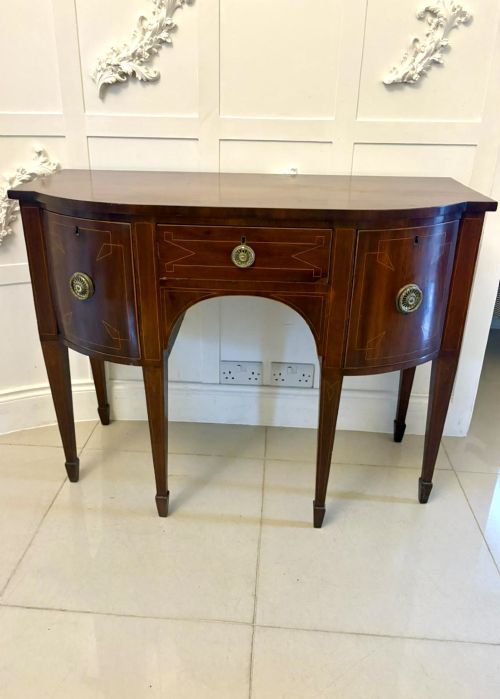
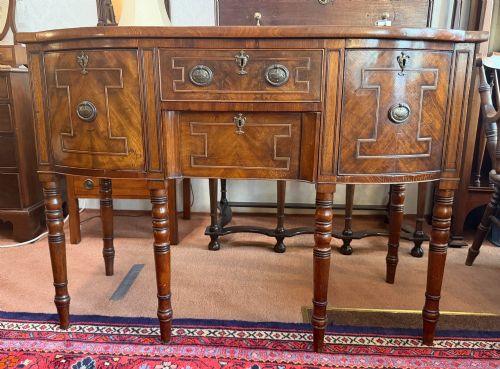
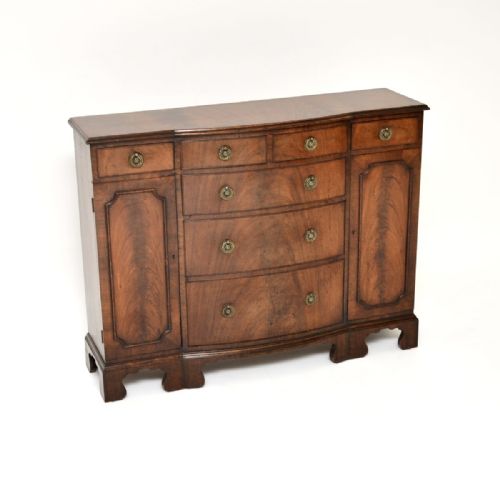
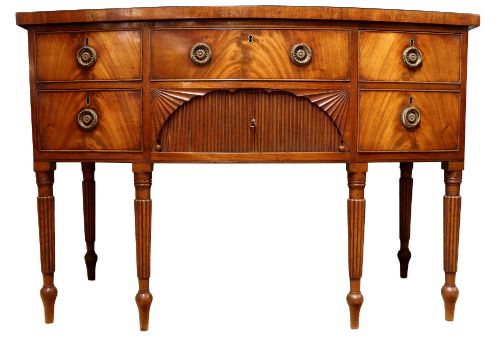
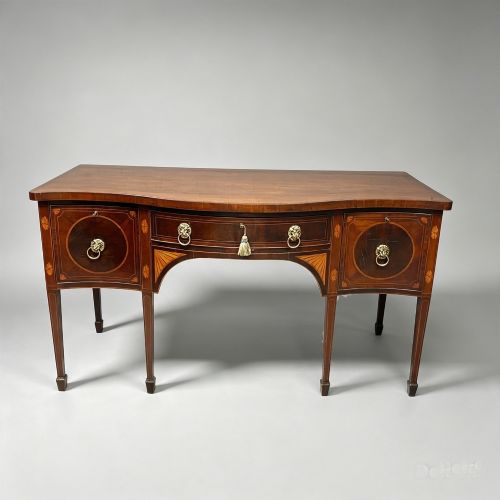
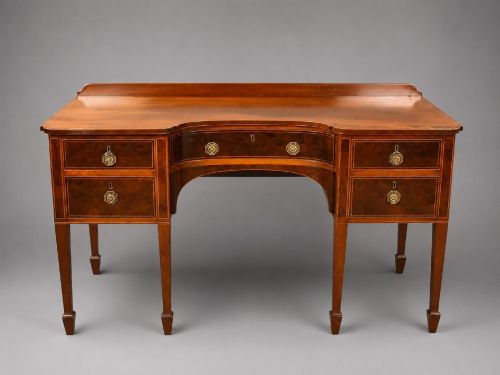
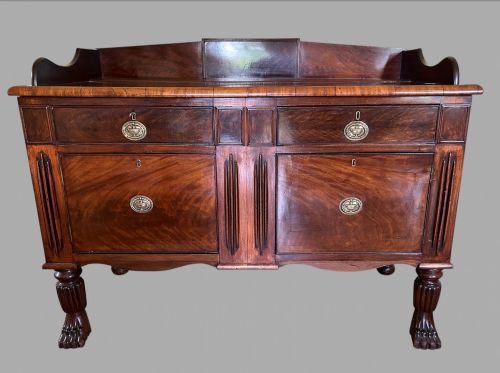
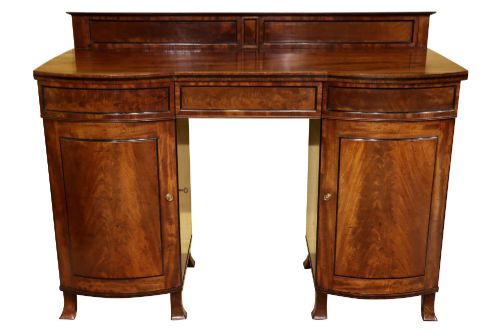
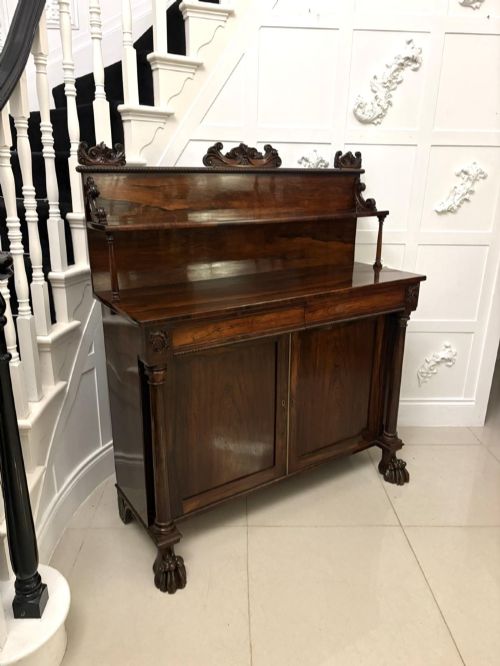
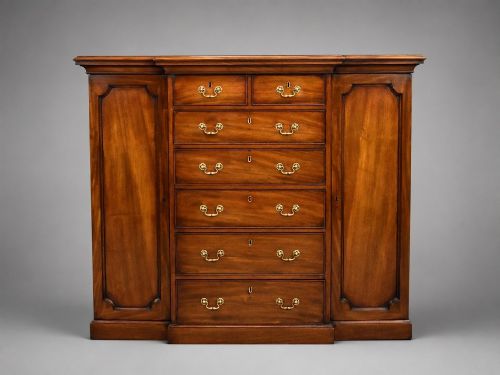
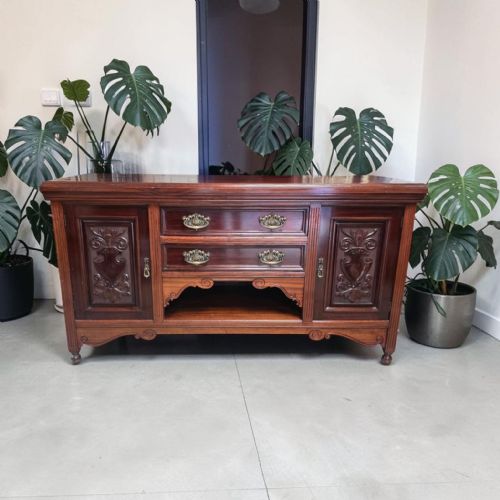
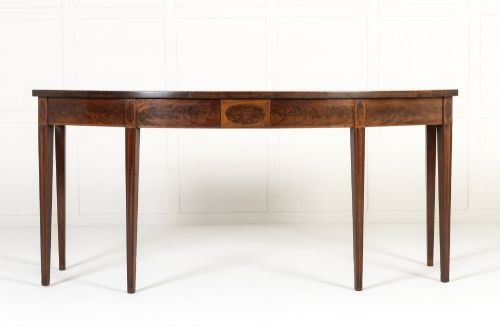
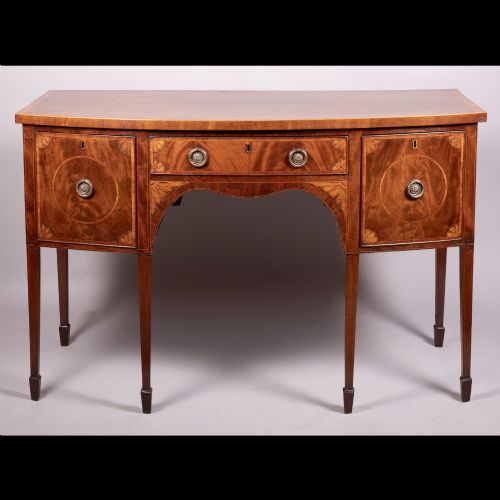
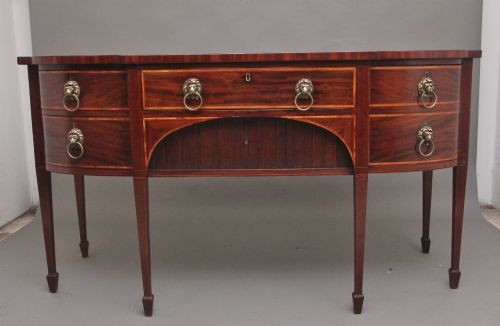
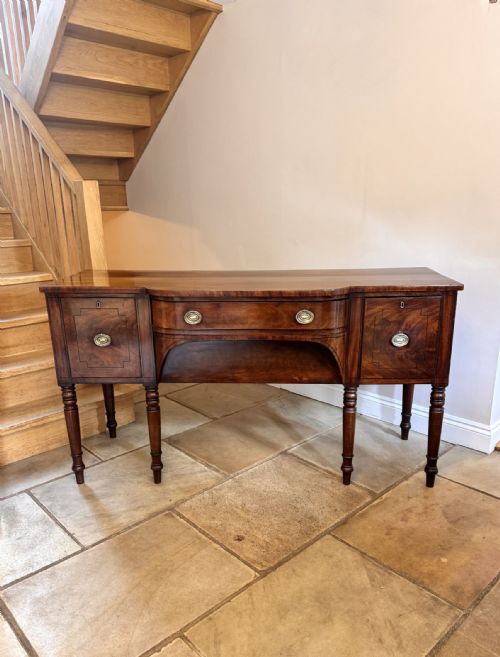
A georgian dining room buffet encompasses large dining room case pieces designed for serving and storage, most frequently encountered here as sideboards, serving tables, and pedestals. The selection spans the eighteenth century through the georgian and regency periods, with later revival pieces appearing alongside period originals. Bow-front and breakfront configurations dominate the forms, providing varied surface contours and internal cupboard space.
Makers working within these styles drew on pattern books from notable designers, producing pieces with straight, bow, or serpentine fronts. Regional variations emerge in Scottish examples and pieces influenced by Hepplewhite or Sheraton designs. Buyers encounter everything from compact serving tables to massive breakfront sideboards fitted with cellarets and drawers.
Materials and Techniques
Construction relies heavily on solid mahogany and flame mahogany veneer, chosen for rich grain patterns and structural stability. Workshops applied contrasting stringing and banding in satinwood, boxwood, and ebony to outline drawers and top surfaces. Brass fittings such as handles, lion-mask ring pulls, and inlay strips add metallic contrast to the timber.
Cabinetmakers shaped curved fronts using steam-bent wood or built-up laminates faced with carefully matched veneers. Drawers feature hand-cut dovetail joints, reflecting period joinery standards. Carved details such as fluted legs, paterae, and spade feet are integrated directly into the solid mahogany frames.
Craftsmanship and Proportion
Distinction across the range rests on timber selection and the precision of the cabinetwork. Superior pieces display book-matched flame mahogany veneers with continuous grain flow across multiple drawers and doors, whereas simpler items utilise plain stock timber. The crispness of inlaid boxwood and satinwood stringing separates standard workshops from master cabinetmakers.
Proportion and architectural harmony dictate the visual weight of each buffet. Finer examples maintain balanced drawer scales and refined leg turning or tapering, while lesser items can appear heavy-handed or awkwardly proportioned. The integration of original brass hardware and secondary woods further defines the tier of manufacture.
M. D. Miller and Sons·Gillows
The Georgian Dining Room Buffet Glossary
- Bow-front
- A cabinet front that curves outward in a convex arc. This shape softens the linear geometry of a dining room and creates deeper central storage compartments.
- Breakfront
- A piece of furniture where the central section projects forward from the flanking outer sections. It creates a pronounced architectural hierarchy across the front elevation.
- Serpentine
- A front contour characterised by a concave central section flanked by convex curves, or vice versa. This complex shaping requires advanced woodworking skill.
- Stringing
- Thin strips of contrasting wood inlaid into grooves on the surface of a piece. It creates delicate linear borders around drawer fronts and tabletops.
- Cellaret
- A compartment or lined drawer within a sideboard designed to hold wine bottles upright. They often feature lead lining for ice and drainage.
Georgian Dining Room Buffet: Frequently Asked Questions
What is the difference between a buffet and a sideboard?
In period furniture terminology, these terms often overlap to describe dining room serving furniture. Buffets typically emphasise lower storage and serving space, while sideboards frequently incorporate specific drawer layouts for cutlery and bottle storage.
Both forms developed to meet the demands of formal dining, though sideboards more commonly feature pedestals or cellarets. The distinction depends largely on regional naming conventions rather than strict structural differences.
How do I identify a genuine georgian piece?
Authentic period pieces show construction methods consistent with eighteenth-century workshop practices, including hand-cut dovetailing and secondary woods like oak or pine inside drawers. Examining the timber patination and the integration of veneers reveals the age of the piece.
Revival pieces from later periods often mimic these proportions but utilise machine-cut elements and modern adhesives. Comparing the hardware fixing methods and secondary framing helps clarify the date of manufacture.
How do I care for a mahogany buffet?
Maintain the finish by keeping the timber away from direct heat sources and strong sunlight, which can dry out the mahogany and fade the veneer. Regular dusting with a soft, dry cloth preserves the wax polish without building up residue.
Apply a quality beeswax polish sparingly when the wood appears dry to maintain the natural lustre of the grain. Avoid using silicone-based sprays that penetrate the timber pores and damage the historic finish.
Where should I place a large breakfront buffet?
Position the piece against a substantial dining room wall where its length and architectural projection can be appreciated without blocking circulation paths. Ensure there is adequate clearance for opening drawers and cupboard doors fully.
Because these items are heavy, place them on level flooring away from damp exterior walls to protect the underlying timber structure and veneer stability.