
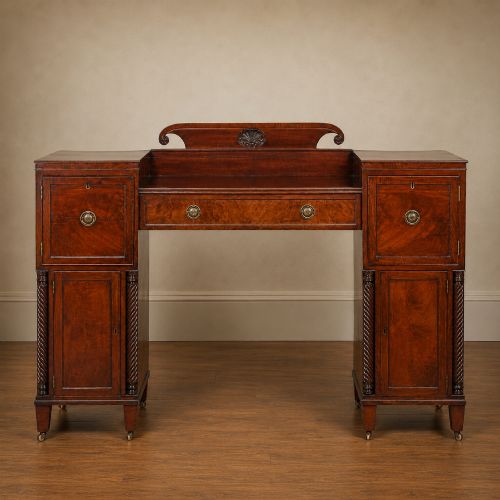
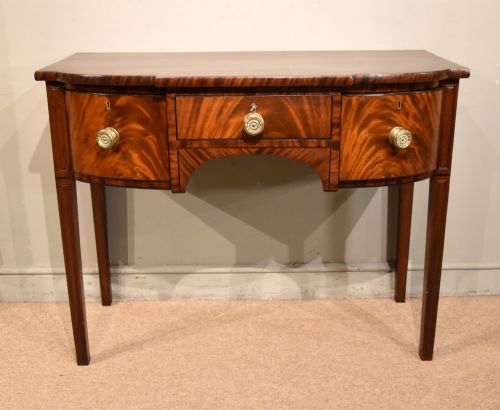
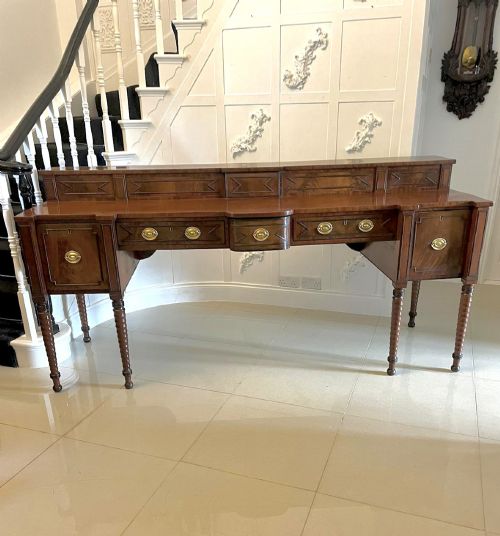
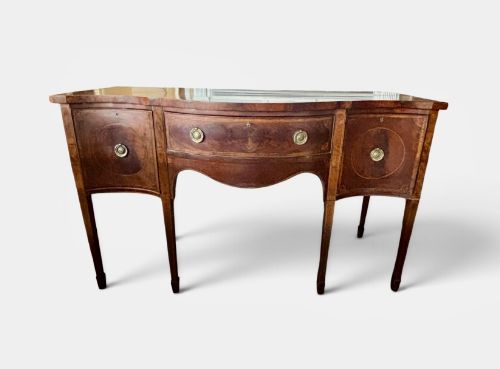
Brown Mahogany Dining Server
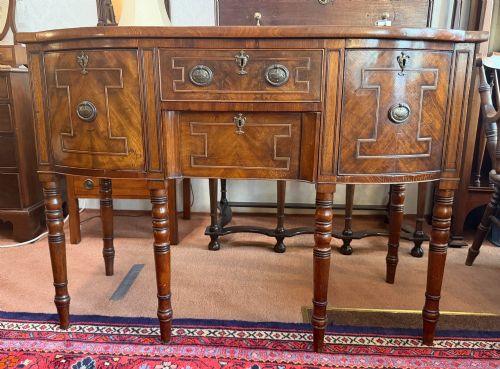
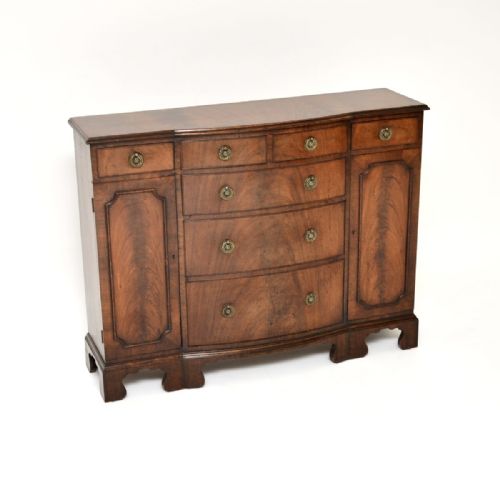
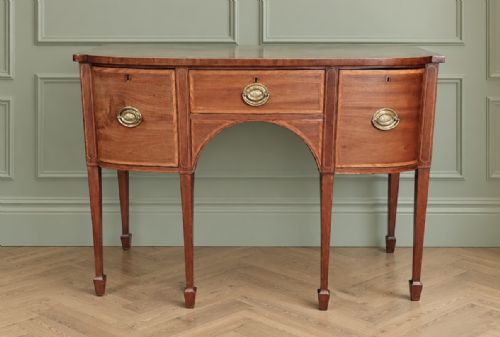
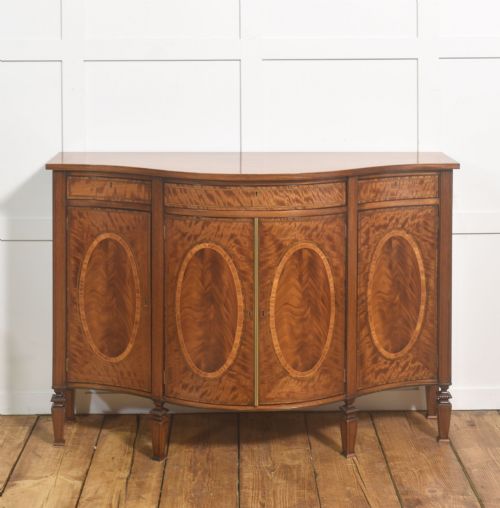
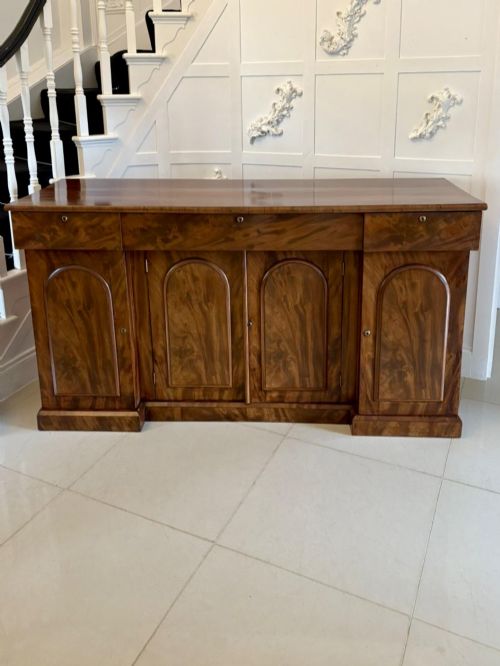
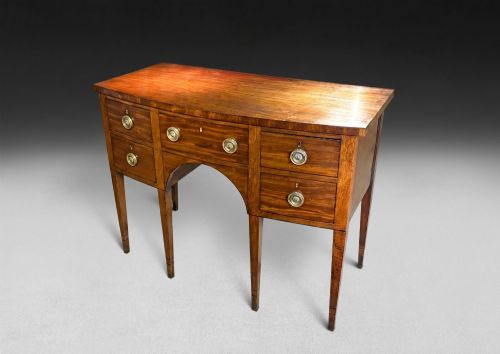
These brown mahogany dining server pieces are formal dining room storage furniture designed to hold tableware and food.
Brown Mahogany Dining Server
A brown mahogany dining server is a large storage piece used in dining rooms for serving food and storing silver, linen, or glassware. When searching this phrase, buyers encounter various forms including sideboards, side tables, and chiffoniers from different periods.
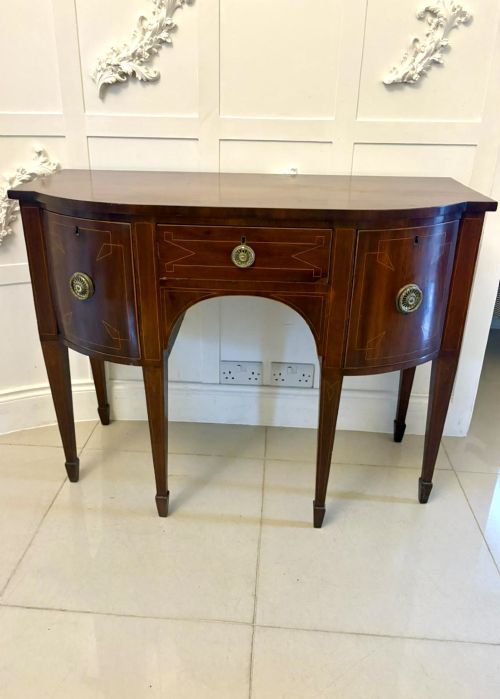
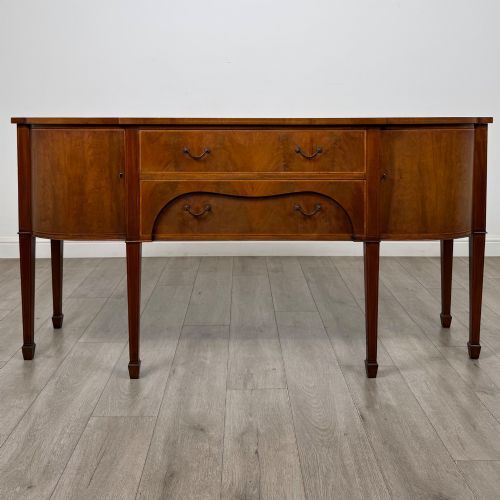
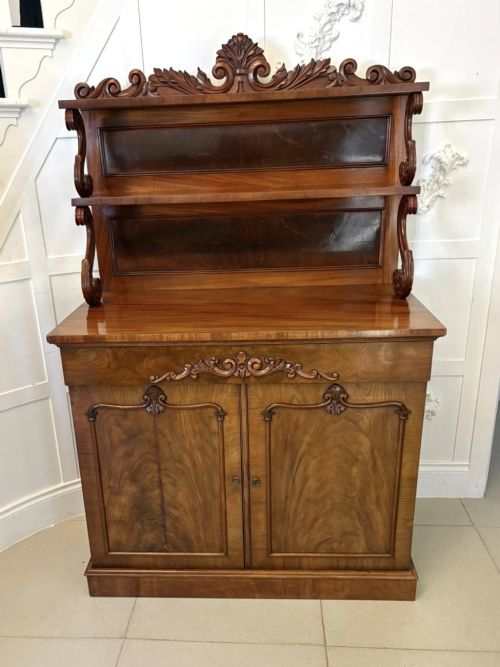
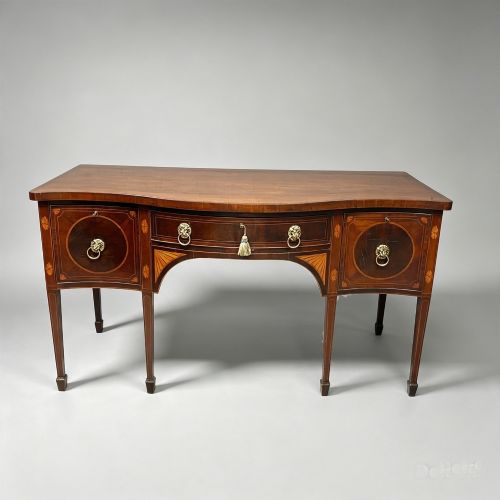
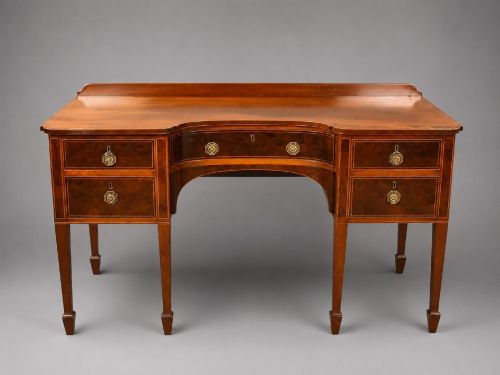
The pieces on this page span several eras including the Georgian, Regency, and Victorian periods, alongside later Sheraton Revival and Edwardian interpretations. Sideboards dominate the selection, appearing in straight, bow-front, serpentine, and breakfront shapes.
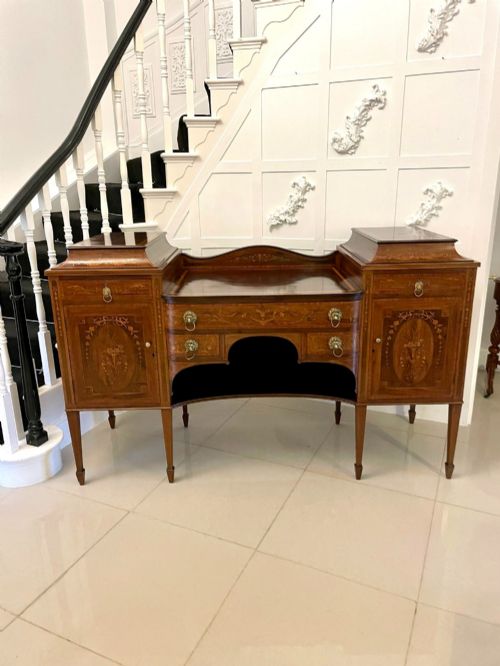
Origins range from eighteenth-century workshops to early twentieth-century makers, with many items reflecting classic British cabinet-making traditions. Buyers will find both large pedestal or stage-back formats and smaller compact servers suited to modern dining spaces.
How they were made
Cabinet makers built these servers primarily using solid mahogany and flame mahogany veneer over secondary timbers such as oak, applying boxwood and satinwood inlay or crossbanding for contrast. Brass handles and fittings complete the structural composition of the drawers and cupboards.
Techniques relied on precise timber selection to highlight the natural grain patterns, particularly figured mahogany and flame veneers. Inlaid borders, marquetry, and curved bow-front or serpentine construction required advanced joinery skills to shape the solid wood and veneers harmoniously.
Materials span solid mahogany, flame mahogany veneer, oak, brass, boxwood, and satinwood inlay.
What varies in quality
Quality differences emerge in the selection of the timber, particularly the depth and movement of the figured mahogany or flame veneer used on the primary surfaces. Superior examples demonstrate expert book-matching and careful alignment of decorative boxwood and satinwood inlay.
Construction standards also distinguish higher-tier pieces, visible in the precision of the curved bow-front or serpentine framework and the neatness of internal drawer linings. Original brass hardware and well-preserved structural integrity elevate a piece above standard utility items.
Hewetsons London·M D Miller and Sons Nottingham
The Brown Mahogany Dining Server Glossary
- Bow-front
- A convex, curved cabinet front that projects outward in an arc. This shape gained popularity during the Georgian and Regency periods to soften linear room geometry.
- Serpentine
- A furniture front characterised by a wavy contour, having a convex centre flanked by concave ends. It represents a high level of cabinet-making skill.
- Crossbanding
- A strip of veneer applied perpendicularly to the grain of the main surface, often framing the drawer fronts or top board. It creates a neat visual border.
- Chiffonier
- A small sideboard or low cupboard equipped with shelves or drawers, developed during the nineteenth century. It serves dining and living spaces alike.
- Marquetry
- Decorative patterns formed by inserting pieces of contrasting veneer into a solid wood ground. It depicts floral or geometric designs.
Brown Mahogany Dining Server: Frequently Asked Questions
What is a brown mahogany dining server used for?
These servers provide essential storage in a dining room for plates, cutlery, and serving dishes during meals. The top surface also acts as a convenient staging area for food service.
Historically, larger variations accommodated elaborate dining rituals, while smaller servers suit contemporary dining spaces for everyday storage and display.
How do I date a brown mahogany sideboard?
Dating relies on stylistic clues such as the silhouette, leg shape, and decorative inlay techniques characteristic of specific eras like the Georgian or Regency periods. Straight lines often point to earlier or classical revivals, whereas sweeping curves define late eighteenth and early nineteenth-century designs.
Examining internal construction methods and secondary woods like oak provides further confirmation of the manufacturing decade.
What is the difference between a sideboard and a server?
The terms are often used interchangeably, though traditional servers can be lighter side tables or smaller cabinet formats designed specifically for presenting dishes. Sideboards generally incorporate more extensive enclosed cupboard space and multiple drawers.
Both types share the primary function of assisting with dining room organisation and meal hospitality.
How do I care for a mahogany surface?
Maintenance requires keeping the wood away from direct heat sources and strong sunlight to prevent the mahogany and its veneers from drying out or fading. Regular dusting with a soft, dry cloth preserves the polished finish.
Occasional application of appropriate wax polish nourishes the timber and maintains its deep brown lustre without building up heavy residues.