

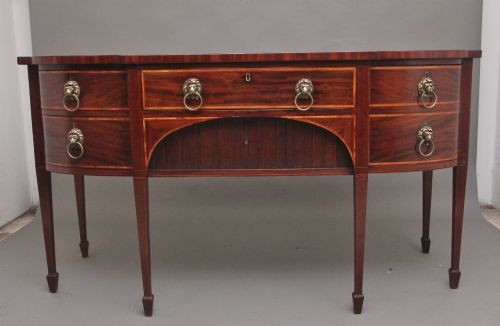
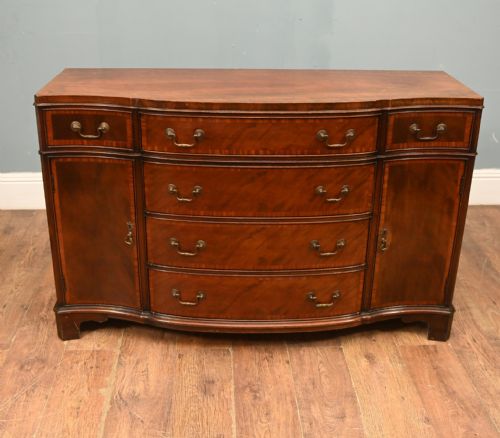
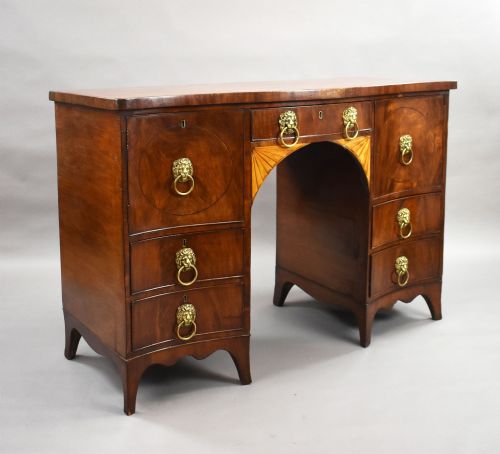
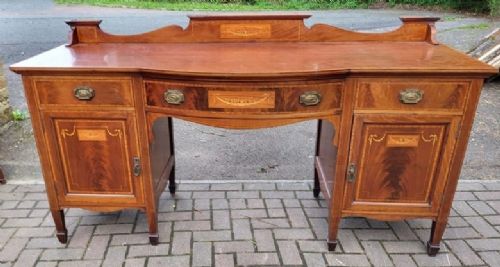


Georgian Inlaid Buffet Cabinet
When you want a georgian inlaid buffet cabinet, you are looking at substantial dining furniture that brings fine timber and precise contrasting stringing into a room.
Georgian Inlaid Buffet Cabinet
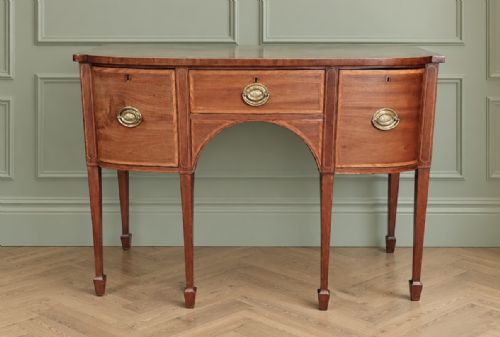
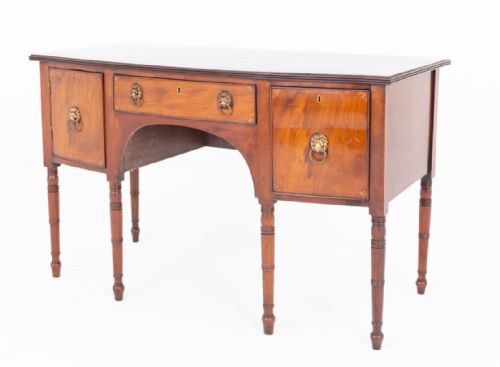
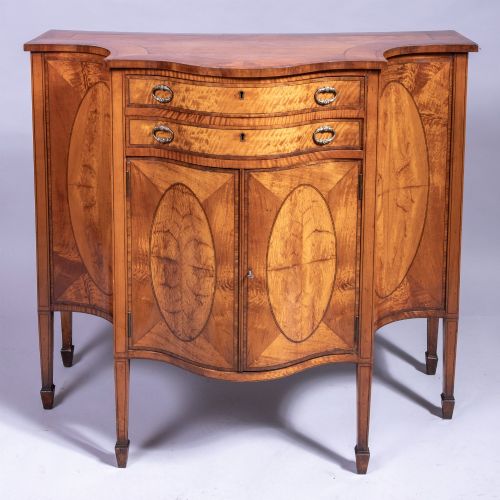
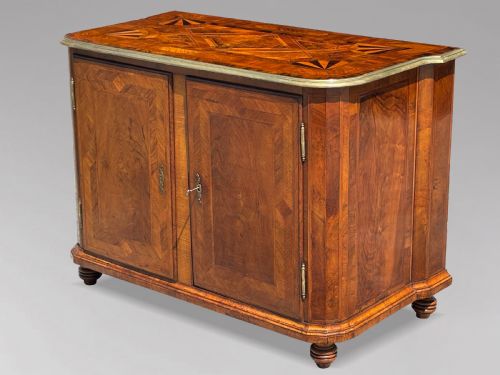
A georgian inlaid buffet cabinet typically presents as a sideboard or dresser base designed for the dining room to serve food and store tableware. The examples here span periods from the eighteenth century through to later revivals, bringing formal storage into domestic spaces.
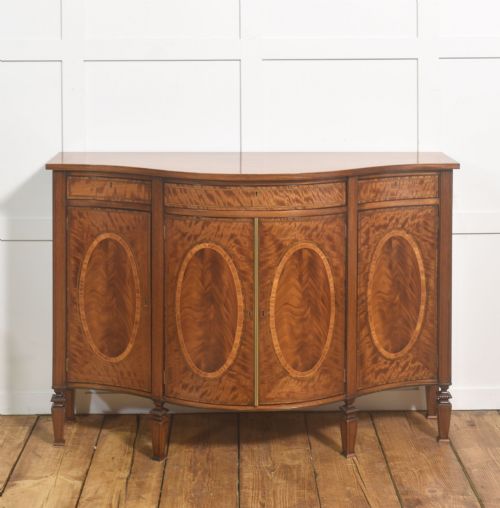
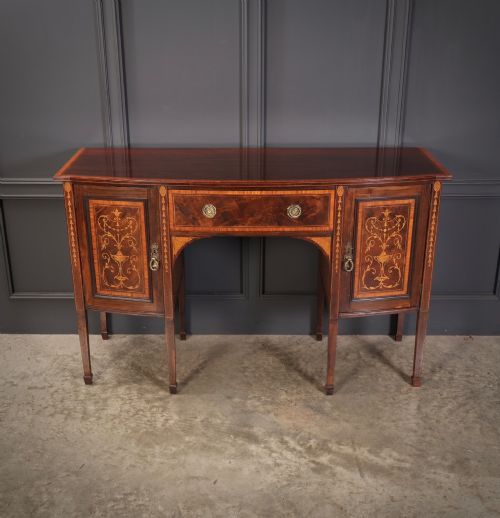
Most pieces meet the eye as mahogany carcasses shaped with bow-fronts or serpentine curves, fitted with cupboards and drawers. Makers shaped these silhouettes to soften the rigid lines of the dining room while offering practical deep storage.
Origins stretch from authentic eighteenth-century workshops to Edwardian and Sheraton revival periods. Buyers find both genuine period pieces and later interpretations sharing the same vocabulary of brass fittings and inlaid borders.
Timbers and decorative techniques
Makers constructed these carcasses primarily from solid mahogany and flame mahogany veneers, selected for deep grain movement. Oak frequently appears in secondary framing and drawer linings.
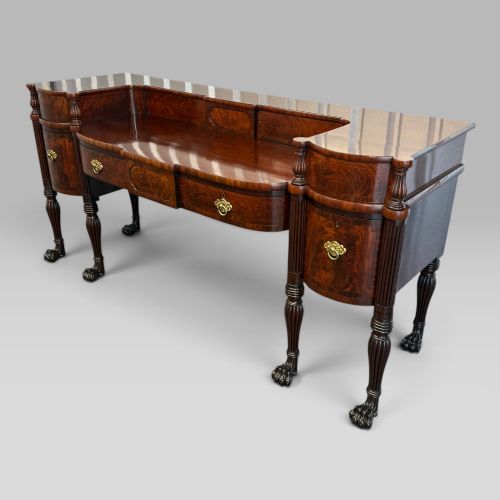
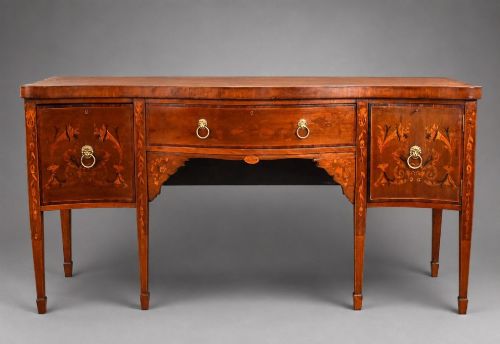
Surface ornament relies on contrasting wood inlay, utilising satinwood, boxwood, and rosewood to form geometric lines, fans, and urns. Brass handles and lion paw feet provide structural hardware and decorative contrast.
Some sturdy specimens stand upon six carved lion paw feet, ensuring the dining room sideboard maintains a suitably regal stance.
Distinctions in construction and design
The sophistication of the marquetry and the choice of timber figure set the tier of the piece. Selected flame mahogany veneers paired with intricate satinwood and boxwood stringing denote greater ambition than plain timber surfaces.
Structural harmony defines the better examples, where serpentine or bow fronts demand exacting carpentry in the curved drawer fronts and door frames. Hardware integration, from original brass pulls to carved lion paw feet, indicates the original workshop investment.
The Georgian Inlaid Buffet Cabinet Glossary
- Bow-front
- A cabinet front that curves outward in a convex arc, softening the linear geometry of the dining room. This shape requires advanced timber bending or shaping techniques.
- Serpentine front
- A shaped furniture front featuring a convex centre flanked by concave ends, creating a flowing movement across the facade. It marks more complex joinery than a straight or simple curved front.
- Flame mahogany
- A distinct grain pattern derived from the branch junctions of the mahogany tree, resembling flickering flames. Cabinet makers prized this timber for central door panels and drawer fronts.
- Stringing
- Thin strips of contrasting wood inlaid into channels cut into the primary timber surface. It outlines panels and borders to frame the grain.
- Marquetry
- Decorative patterns formed by fitting together small pieces of tinted woods, veneers, and shell into a veneer ground. This technique creates pictorial or geometric tableaus across drawer fronts and tops.
Georgian Inlaid Buffet Cabinet: Frequently Asked Questions
What is a georgian inlaid buffet cabinet used for?
These pieces served dining rooms as servers for dishes and storage for linens and cutlery.
Today they function as credenzas and sideboards in living spaces or dining rooms, providing deep drawer and cupboard capacity.
How do I identify a revival piece?
Revival items often date from the late nineteenth or early twentieth century, showing crisp machine-cut inlay and lighter secondary woods.
They emulate eighteenth-century proportions but display the cleaner interior construction methods typical of later workshops.
What woods are typical for these cabinets?
Mahogany forms the primary carcass and structural body, frequently enhanced with flame veneers for visual depth.
Satinwood, boxwood, and rosewood provide the contrasting light and dark tones used in the inlay work.
How should I care for the timber surface?
Keep the wood away from direct heat sources and strong sunlight to prevent the mahogany veneers and delicate inlay from drying out.
Apply traditional beeswax periodically to maintain the lustre of the polished surface without building up synthetic residues.