


Antique Scottish Dining Sideboard
An antique scottish dining sideboard is a substantial serving piece built for grand Scottish dining rooms, offering deep storage and imposing presence.
Antique Scottish Dining Sideboard
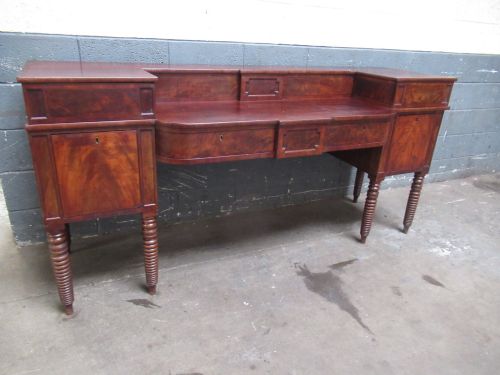
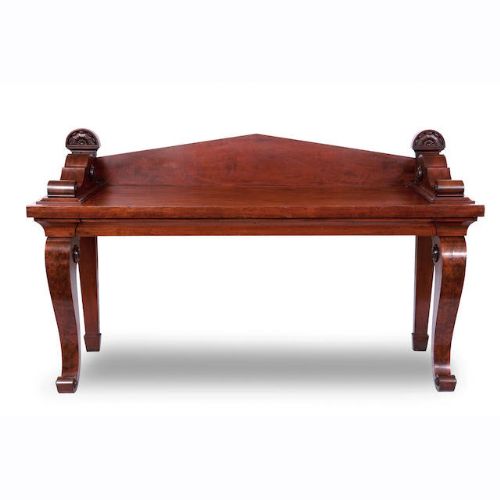
When you search for an antique scottish dining sideboard, you encounter large serving tables and buffets originating from Georgian, Victorian, and later periods. These substantial pieces served a practical role in formal dining rooms, providing surfaces for carving and storage for silver and linen.
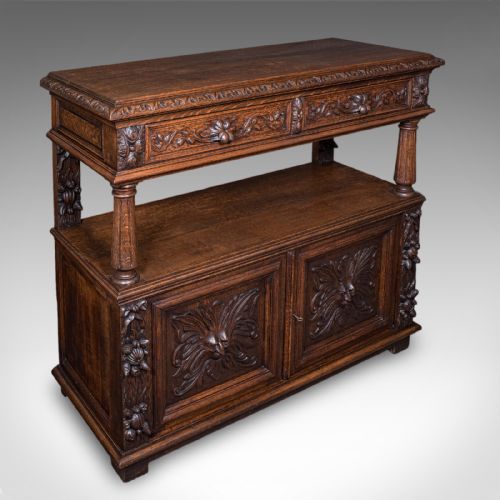
Examples span from George III and Regency styles up to later Gothic Revival interpretations and workshop commissions. Each piece reflects the evolving architectural tastes of Scottish homes while retaining a dedication to functional storage and display.
How they were made
Cabinetmakers constructed these sideboards using solid mahogany, oak, and flame mahogany veneer applied to sturdy carcases. Selected sections of timber were chosen for their dramatic figure, giving the drawer fronts and stage-backs a striking visual depth.
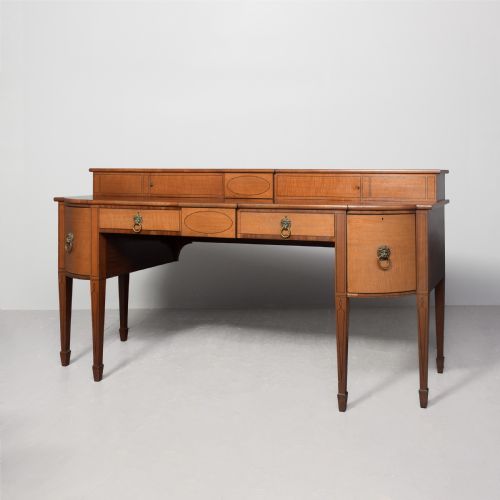
Detailing often included fine boxwood inlay and contrasting stringing, alongside functional brass hardware such as handles and drawer pulls. Joinery was robustly executed to support the heavy daily use expected in a busy dining room.
Materials appearing across the inventory include solid mahogany, flame mahogany veneer, oak, satinwood inlay, boxwood inlay, and brass hardware.
What varies in quality
The distinction between standard examples and the finest pieces lies in the selection of the timber veneers and the crispness of the cabinetwork. Superior sideboards feature matched flame mahogany grains that flow seamlessly across multiple drawers and doors.
Quality also shows in the subtlety of the inlay work and the architectural ambition of the form, such as stage-backs with tiered display shelves or sophisticated bowfront curves. Well-executed secondary woods and original brass fittings indicate a higher standard of original workshop production.
Whytock and Reid·James Mein of Kelso
The Antique Scottish Dining Sideboard Glossary
- Stage-back
- A raised tier at the back of a sideboard used for displaying serving silver or plates. This feature adds vertical height and architectural presence to the piece.
- Bowfront
- A convex, curved front section that projects outward in a smooth arc. This shape softens the room's angles and allows for deeper central drawer capacity.
- Flame mahogany
- A highly figured veneer cut from where a branch joins the main trunk, showing a flickering flame pattern. Cabinetmakers reserved this prized timber for the most prominent surfaces.
- Boxwood inlay
- Narrow strips or decorative motifs of pale boxwood contrasted against a darker wood background. This technique defines drawer borders and panel outlines with geometric precision.
- Serving table
- A long, elegant form designed specifically for food presentation before carving. These tables often feature fewer drawers than a full sideboard but maintain an emphasis on leggy elegance.
Antique Scottish Dining Sideboard: Frequently Asked Questions
How do I use a sideboard today?
These pieces function brilliantly in modern dining rooms or large hallways for storing tableware, linens, and glassware. The top surface provides an ideal platform for serving food or displaying lamps and decorative objects.
The deep drawers and cupboards easily accommodate modern dining accessories while bringing historical character into the room. Their substantial proportions mean they anchor a large wall space with natural authority.
How do I spot a stage-back sideboard?
Look for the tiered wooden gallery rising above the main flat surface at the rear of the top board. This superstructure often includes small shelves or raised ledges.
It distinguishes many regional Scottish designs from standard flat-topped serving pieces, offering extra vertical display space that was historically used for platters.
What is flame mahogany?
Flame mahogany is a decorative wood veneer named for the fiery, undulating patterns visible in the grain. It is sliced from specialised sections of timber where the grain twists and turns.
Craftsmen arranged these veneers symmetrically on drawer fronts to create striking visual movement and depth that catches the light.
How do I tell Georgian from Victorian pieces?
Georgian pieces generally lean toward classical restraint, proportion, and refined inlay work, often featuring tapered legs or bowfronts. Victorian examples frequently display heavier proportions, darker finishes, and architectural revival influences like Gothic details.
Examining the secondary timbers inside the drawers and the style of the hardware helps confirm the manufacturing era.