
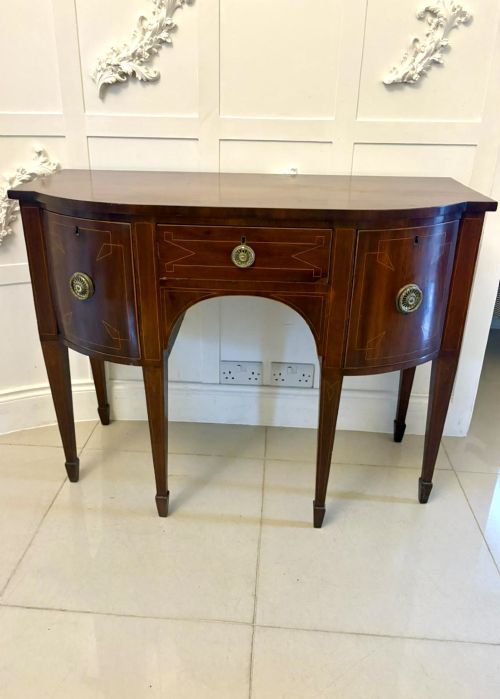
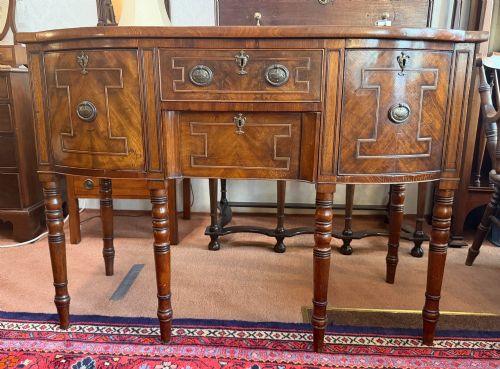
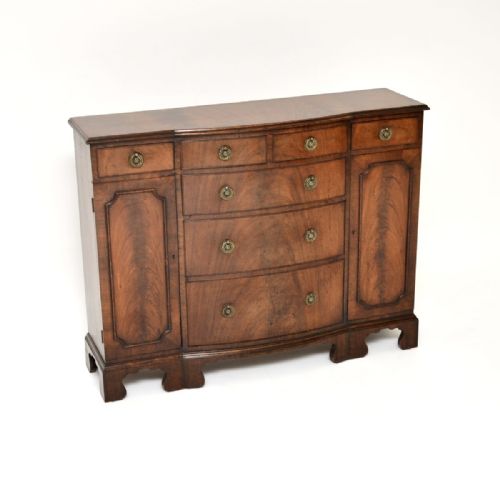
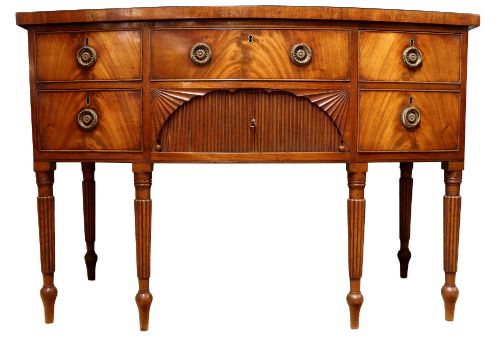
Georgian Dining Room Credenza
A georgian dining room credenza brings architectural presence to a formal interior, serving as a substantial storage piece built to anchor a dining space.
Georgian Dining Room Credenza
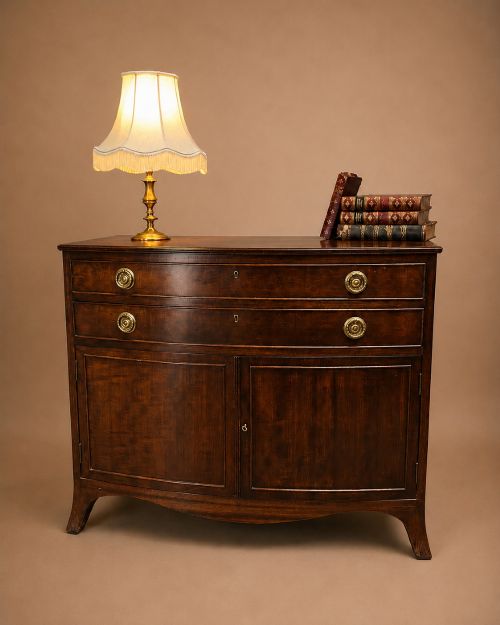
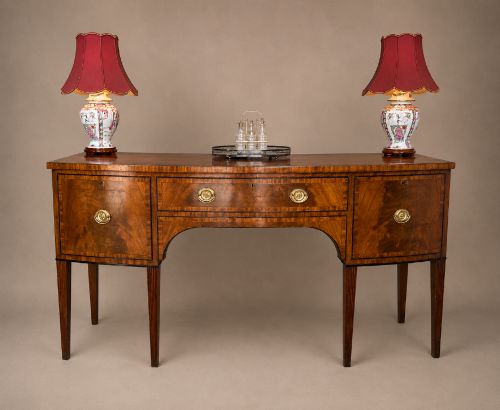
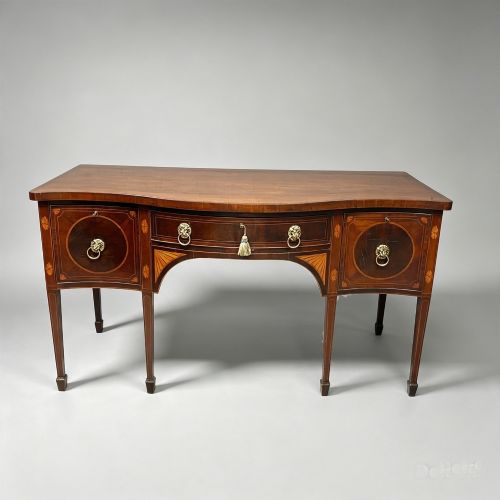
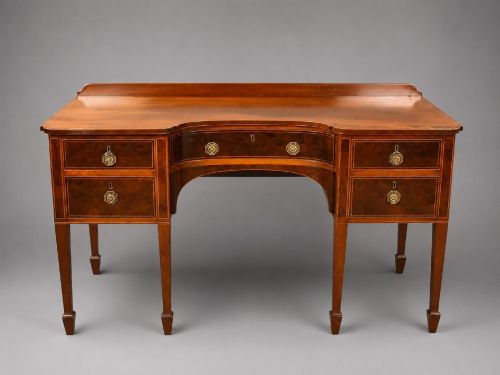
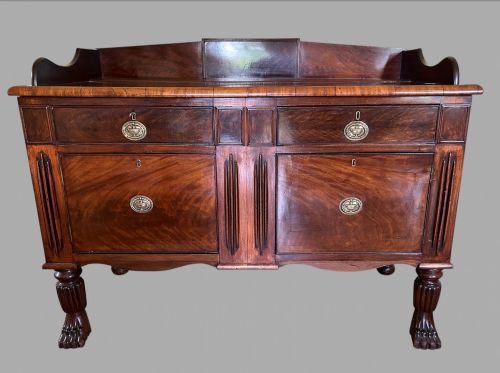
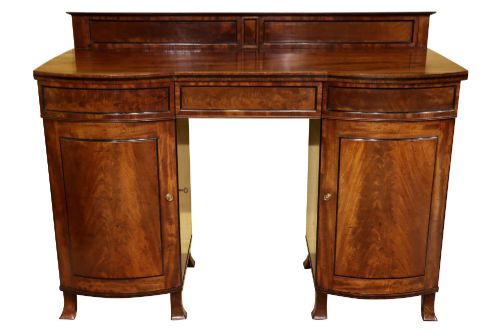
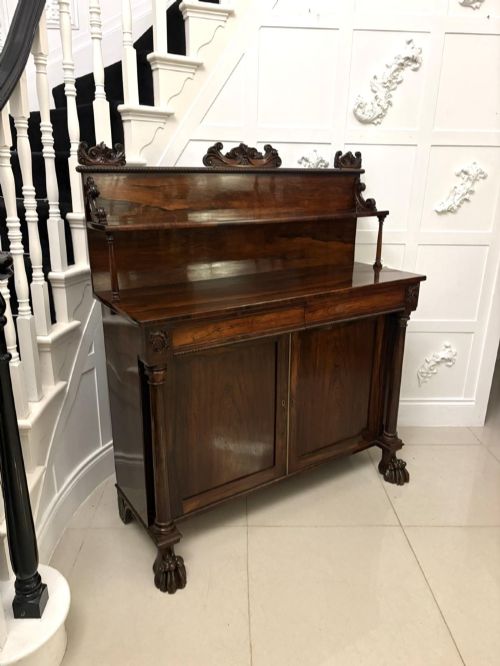
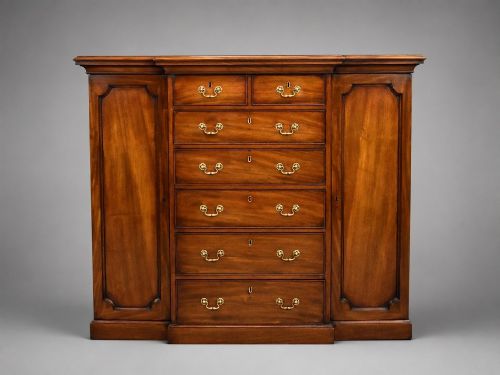
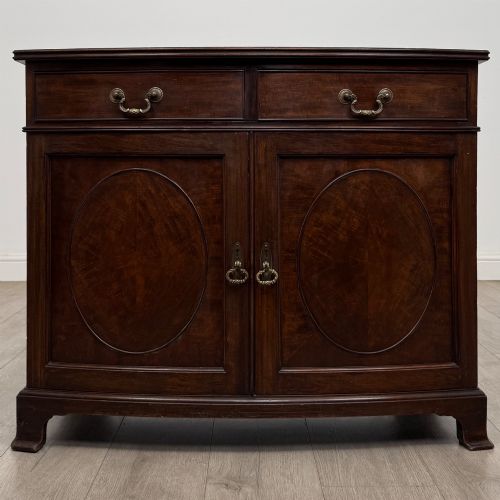
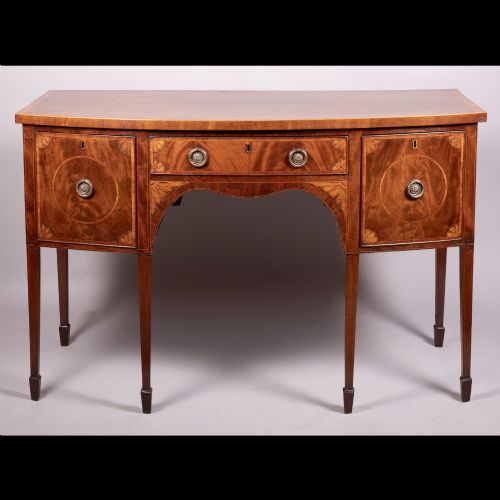
A georgian dining room credenza encompasses formal dining furniture such as sideboards, bow-front cabinets, and pedestal servers originating primarily from the eighteenth and nineteenth centuries. These pieces reflect the architectural proportions of the Georgian, Regency, and George III periods, designed specifically to organise dining room silver and linen.
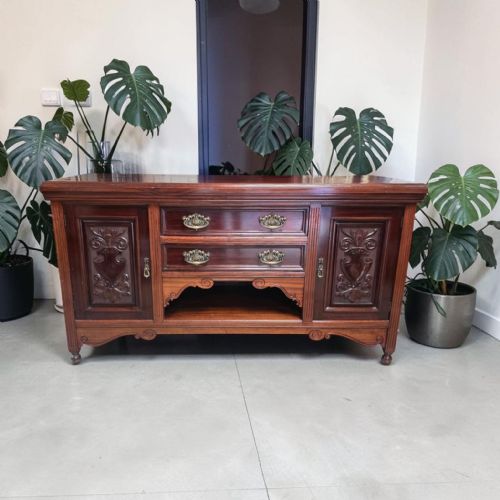
The versions most commonly encountered on this page span genuine Georgian and Regency examples alongside later Edwardian and revival interpretations. Makers of these later periods replicated the classic serpentine and bow-front shapes, ensuring the traditional dining room form remained accessible.
Materials and Construction
Cabinet makers built these pieces using solid mahogany and flame mahogany veneer, chosen for deep grain patterns and structural stability. Workshops applied contrasting details in boxwood, satinwood, and ebony to outline drawers and doors with precise geometric borders.
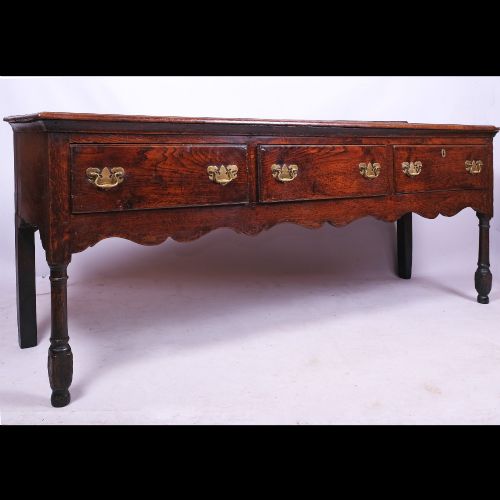
Makers incorporated functional brass hardware, including ring pulls and escutcheons, alongside specialist joinery for curved bow-front and breakfront configurations. Structural support relied on sturdy leg arrangements, ranging from simple six-legged designs to elaborate pedestal bases.
Georgian Dining Room Credenza Retail Price Guide 2026
Typical asking prices for georgian dining room credenza among the pieces listed under this phrase on Sellingantiques today, from the lower quarter to the upper quarter. They describe what is for sale here now, not the wider market.
Listings feature mahogany, satinwood, and flame mahogany veneer, alongside decorative inlays in boxwood and ebony.
Evaluating Quality
Quality rests upon the selection of timber and the precision of the cabinet work, particularly where veneers meet curved surfaces. Superior pieces display book-matched flame mahogany and crisp, unblemished stringing in satinwood or boxwood.
The refinement of the proportions and the integration of hardware distinguish finer examples from standard production. Artisans who invested time in hand-carving or delicate brass inlay produced items with enduring architectural harmony.
M. D. Miller and Sons·Gillows
The Georgian Dining Room Credenza Glossary
- Bow-front
- A cabinet front that curves outward in a convex arc. This shape softens the rigidity of formal dining room furniture while increasing internal storage capacity.
- Serpentine
- A front contour characterised by a convex centre flanked by concave curves. It requires exceptional skill in woodworking to achieve precise alignment.
- Breakfront
- A large piece where the central section projects forward from the flanking cabinets. This configuration creates visual depth and architectural hierarchy.
- Inlay
- A decorative technique where contrasting woods like satinwood or boxwood are fitted flush into the primary timber. It defines panel borders and tabletop edges.
- Pedestal sideboard
- A form featuring distinct side pedestals connected by a central counter or table section. It represents a grander scale often found in Regency dining rooms.
Georgian Dining Room Credenza: Frequently Asked Questions
How do I style a credenza in a modern dining room?
Pair the dark mahogany timber with neutral wall colours to let the grain stand out. Place large ceramic lamps or silver serving trays on the surface to balance the scale of the piece.
Keep surrounding furniture simple to avoid visual clutter. Use the interior cupboards to store modern tableware while maintaining the historical character of the room.
What is the difference between a sideboard and a credenza?
Traditional British dining room pieces usually take the form of sideboards or servers designed specifically for dining service. Credenza terminology often overlaps with these low storage cabinets depending on regional usage.
Examine the internal depth and drawer configurations to understand how the piece functioned in a formal nineteenth-century dining space.
How do I care for antique mahogany wood?
Dust the surface regularly with a soft dry cloth to prevent grit accumulation. Avoid placing the timber in direct sunlight or near heat sources to prevent the veneer from drying out.
Apply high-quality beeswax occasionally to nourish the grain and maintain a natural sheen. Avoid silicone-based sprays that can damage antique finishes over time.
Can I use a dining room credenza in a hallway?
The shallow depth of bow-front and serpentine designs makes them suitable for wide hallways or living rooms. They provide practical surface space and concealed storage without blocking walkways.
Ensure the clearance allows doors and drawers to open fully in a tighter space. Measure the floor area carefully before placing a large breakfront or pedestal model outside the dining room.