


Georgian Timber Credenza
A georgian timber credenza brings the stately presence of eighteenth and nineteenth-century dining rooms into a modern interior through rich mahogany and fine craftsmanship.
Georgian Timber Credenza
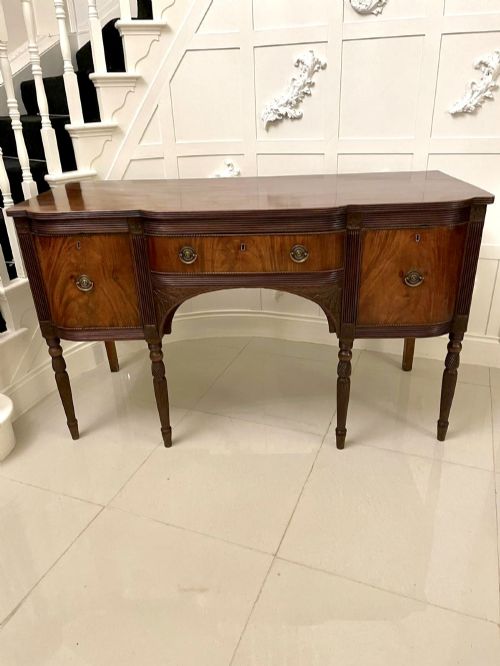
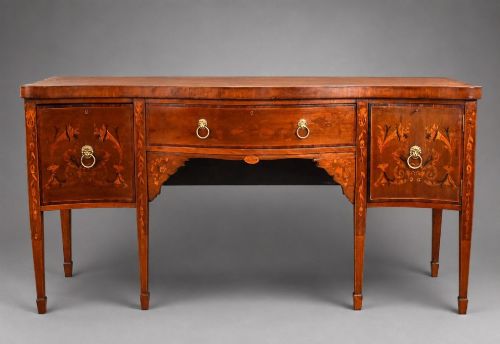
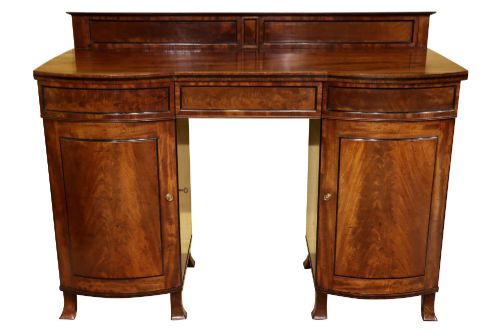
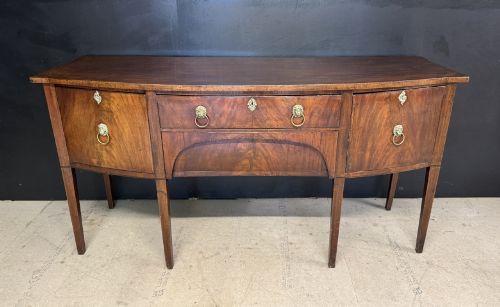
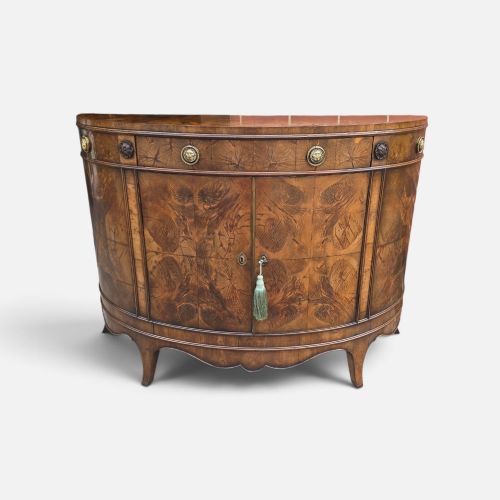
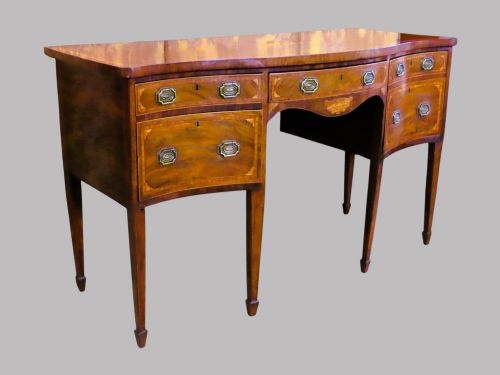
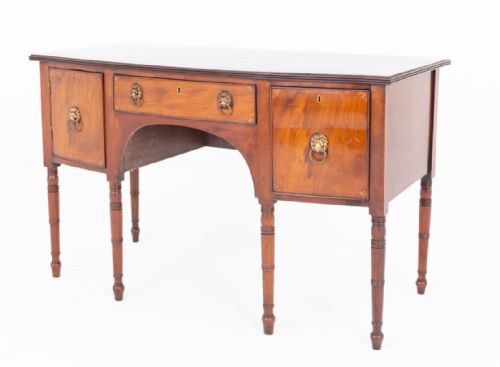
When you search for a georgian timber credenza, you encounter a selection of substantial serving furniture, sideboards, and commodes originating primarily from the Georgian, Regency, and Edwardian periods. The pieces on this page mostly manifest as mahogany bow front and serpentine sideboards, alongside occasional demi-lune cabinets and English country house dresser bases.
Makers of the period designed these items to anchor formal dining spaces, offering generous surface areas for serving and deep cabinetry for storage. You will find that proportion and silhouette dictate the character of each example, ranging from straight-fronted serving tables to sweeping curved fronts.
The selection reflects both formal urban cabinet-making and vernacular English country traditions. While traditional Georgian proportions dominate, related Edwardian interpretations also appear across the listings.
Materials and construction
Cabinet-makers relied heavily on solid mahogany and flame mahogany veneer, often enhanced by contrasting boxwood inlay and satinwood details. Structural elements frequently incorporate secondary timbers like pine and oak, providing robust internal support beneath decorative hardwood surfaces.
Surfaces demonstrate sophisticated techniques such as stringing, banding, and book-matching veneers to accentuate natural timber grains. Drawer linings, brass hardware, and hand-cut dovetails reveal the meticulous joinery standard of eighteenth and nineteenth-century workshops.
Some clever sideboards feature hidden cellarette drawers lined to keep your vintage port cool against the timber.
Distinctions in quality
The degree of refinement in timber selection separates standard pieces from exceptional ones, particularly where highly figured flame mahogany, burr yew, or burr elm veneers are employed. Finer examples display continuous grain patterns across drawer fronts and harmonious alignment of boxwood inlay.
Structural integrity and the survival of original brass handles or mounts heavily influence the standing of an item. Subtle details like the crispness of edge moulding, the execution of serpentine curves, and the tightness of dovetail joints mark the work of superior cabinet-makers.
The Woodworkers Ltd, Kilkenny
The Georgian Timber Credenza Glossary
- Serpentine
- A front contour characterised by a convex central section flanked by two concave curves, creating a fluid and rhythmic movement across the width of the piece.
- Bow front
- A convex, outward-curving front profile popular in late eighteenth and nineteenth-century case furniture to soften rigid room angles.
- Demi-lune
- A half-moon shape used for table and cabinet tops, often paired with matching commodes or side cabinets designed to fit snugly against walls.
- Stringing
- Fine, contrasting strips of wood inlaid into shallow channels on the surface of furniture to create delicate borders and geometric patterns.
Georgian Timber Credenza: Frequently Asked Questions
How do I spot an 18th-century piece?
Examine the secondary timbers inside the drawers and carcass, such as oak or pine, which show hand-planed surfaces and traditional joinery methods unique to the period.
Look closely at the patination and the way the timber has aged naturally over centuries, as authentic pieces display subtle wear patterns that modern replicas cannot replicate.
Where were these cabinets used originally?
These items stood primarily in formal dining rooms and grand halls, serving as functional sideboards to hold silver platters, glassware, and wine during large gatherings.
Servants utilised the deep cupboards and drawers for storing banquet necessities, making these cabinets the administrative heart of the dining room.
How do I care for antique mahogany?
Keep the timber away from direct sunlight and sudden temperature shifts to prevent the dry air from cracking the delicate veneers and boxwood stringing.
Apply high-quality beeswax sparingly and buff gently with a soft cloth to maintain the deep lustre without building up heavy chemical residues.
Can I use a sideboard in a hallway?
The shallow depth of bow front and serpentine sideboards makes them remarkably versatile for narrow entrance halls and living spaces as statement console surfaces.
They provide useful surface space for correspondence and decorative objects while introducing historic character and practical storage to non-dining areas.