





Georgian Delftware Platter
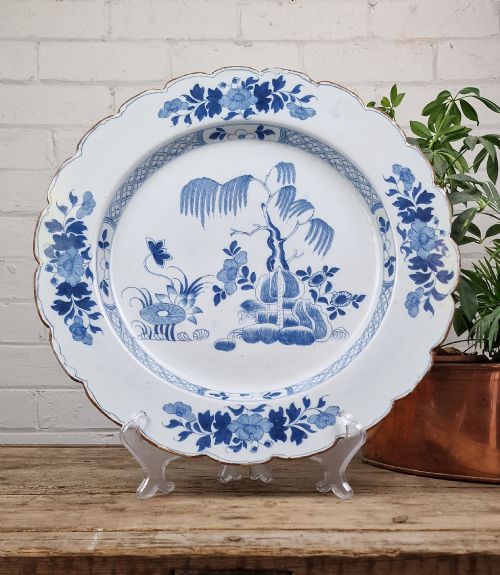
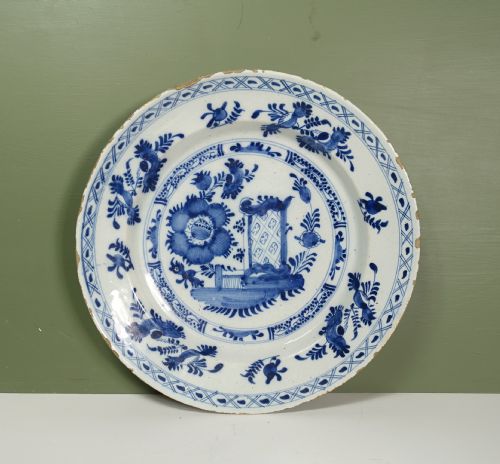
A georgian delftware platter brings eighteenth-century tin-glazed earthenware directly to the table, offering collectors bold hand-painted cobalt and polychrome decoration.
Georgian Delftware Platter
A georgian delftware platter is a large serving piece or charger produced during the eighteenth century in tin-glazed earthenware. These heavy ceramic vessels were made primarily for display or service in English households.
The pieces on this page span the mid-eighteenth century, showcasing characteristic English production centres such as Bristol alongside broader eighteenth-century forms. Collectors frequently encounter large decorative chargers decorated in traditional blue and white schemes or polychrome palettes.
The forms range from broad decorative chargers to substantial platters and plates. Their origins reflect eighteenth-century English ceramic traditions rooted in Dutch Baroque and Chinoiserie styles.
How they were made
Makers shaped these earthenware bodies by hand before applying an opaque tin glaze that created a smooth, whitish canvas for decoration. Potters then painted directly onto this absorbent unfired glaze using cobalt pigment and other mineral colours.
The painted pieces underwent high-temperature firing to fuse the metallic pigments into the liquid tin glaze. This traditional technique produced the characteristic soft surface depth found across eighteenth-century English delftware.
Listings feature decorative chargers and plates produced in English workshops, including Bristol examples.
What varies in quality
Quality rests upon the clarity and control of the hand-painted brushwork across the tin-glazed surface. Crisp cobalt pigment application and balanced polychrome details distinguish superior decorative chargers from simpler examples.
The overall preservation of the tin glaze and the stability of the earthenware body dictate the condition standard. Large chargers with minimal surface disruption retain the strongest visual presence.
The Georgian Delftware Platter Glossary
- Tin-glazed earthenware
- Earthenware pottery covered with a white tin-oxide glaze that provides an opaque ground for painted decoration. This porous ceramic body formed the foundation of eighteenth-century delftware production.
- Charger
- A large decorative plate or platter intended primarily for display on dining room walls or sideboards. These substantial pieces dominate eighteenth-century ceramic collections.
- Cobalt pigment
- A metallic colourant used to create deep blue painted designs on ceramic glazes. It remains stable under high kiln temperatures.
- Polychrome
- Decoration utilising multiple colours rather than a single hue like blue and white. Eighteenth-century examples often combine yellow, green, and red pigments.
- Dutch Baroque
- An artistic style influencing European decorative arts through dramatic forms and ornament. Its aesthetic echoes appear in early delftware patterns.
Georgian Delftware Platter: Frequently Asked Questions
Were these platters used for food?
Large chargers and platters served both functional dining roles and decorative display purposes in period homes. Their tin-glazed surfaces accommodated food service despite their decorative prominence.
Collectors today primarily exhibit them on walls or dressers to protect the delicate earthenware body.
How do I date an 18th century charger?
Dating relies on stylistic markers, potting characteristics, and historical context from the eighteenth century. Blue and white schemes and polychrome palettes often align with specific decades like 1750.
Examination of the earthenware fabric and tin glaze helps confirm eighteenth-century origins.
What colours appear on these platters?
Blue and white remains the most frequent colour scheme, utilising cobalt pigment on a white tin glaze. Polychrome versions introduce additional mineral colours.
These varied palettes reflect Georgian Chinoiserie and broader eighteenth-century decorative trends.