





Georgian Delftware Charger Plates
Georgian delftware charger plates bring vibrant tin-glazed earthenware into interiors with broad, hand-painted bowls dating from the eighteenth century.
Georgian Delftware Charger Plates
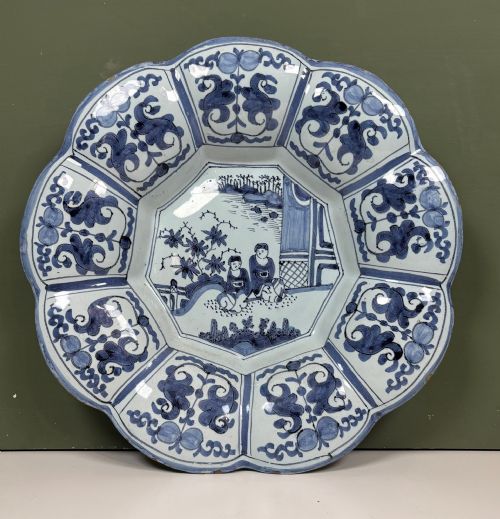
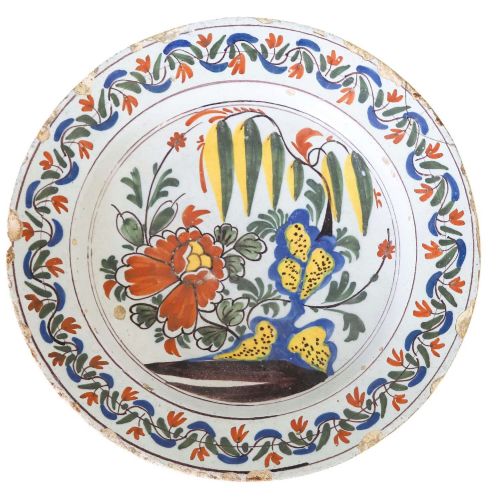
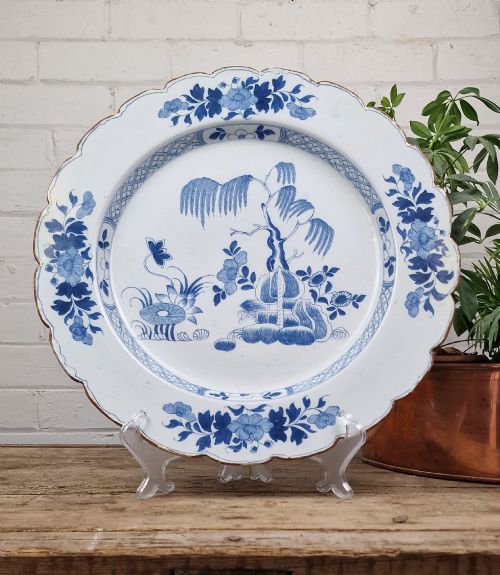
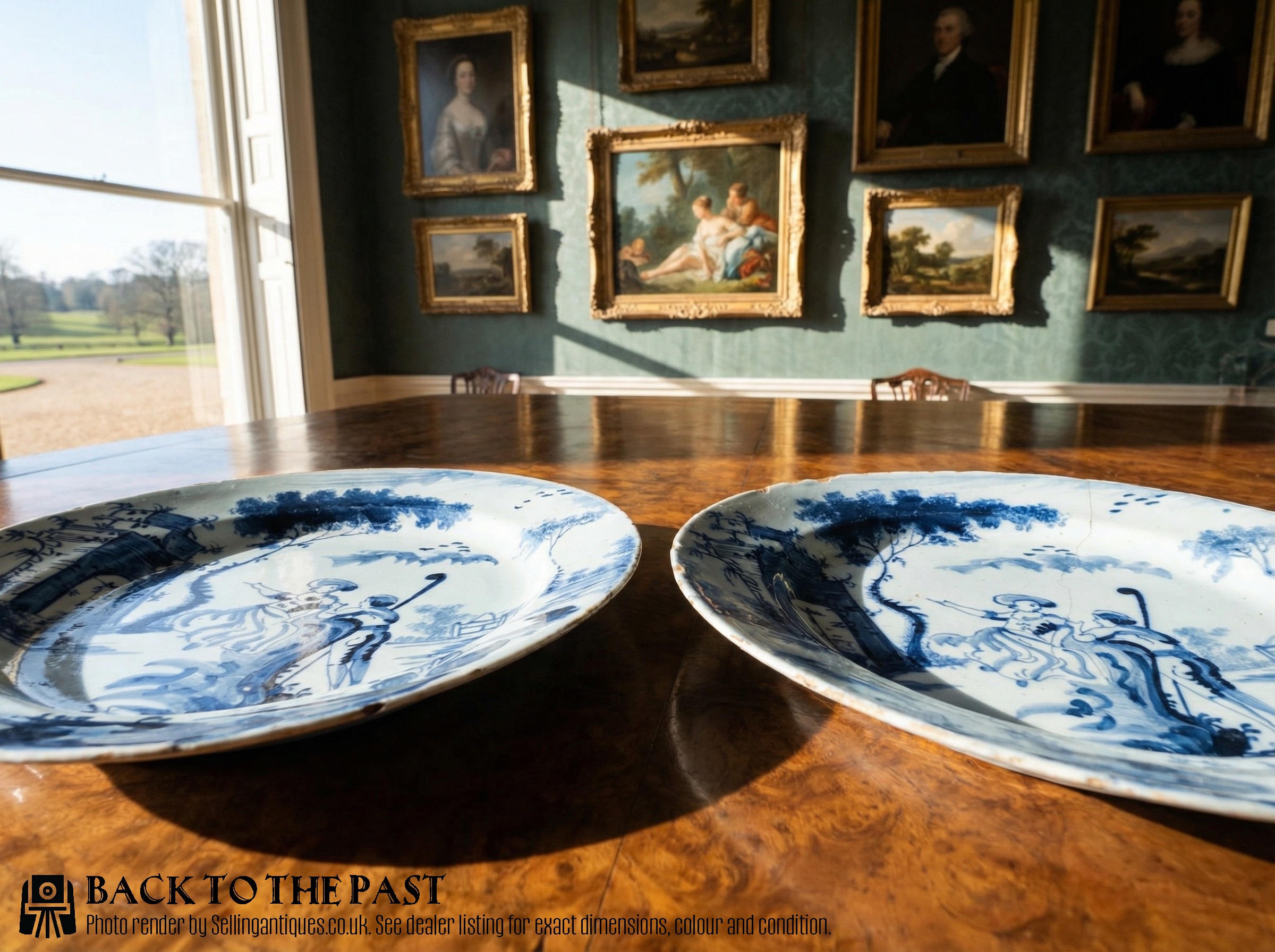
When you search for georgian delftware charger plates, you are looking at eighteenth-century earthenware dishes and large chargers designed primarily for decorative display. The pieces on this page span the eighteenth century, including specific dates around seventeen fifty and seventeen sixty, originating from English and Dutch kilns.
The forms range from large chargers and platters to smaller plates and dishes, featuring both blue and white and polychrome decoration. You will frequently encounter English delft chargers alongside Dutch pieces, reflecting the widespread production of tin-glazed ceramics during the period.
How they were made
Makers formed these pieces from ceramic earthenware, coating the unfired clay in an opaque tin glaze that provided a smooth, white surface for painting. Artisans then applied designs directly onto this porous glaze using cobalt pigment, cobalt oxide, or broader polychrome palettes.
The pieces were subsequently fired in kilns, causing the metallic oxides to fuse into the glaze and produce the characteristic glossy finish seen on eighteenth-century delftware chargers and plates.
Georgian Delftware Charger Plates Retail Price Guide 2026
Typical asking prices for georgian delftware charger plates among the pieces listed under this phrase on Sellingantiques today, from the lower quarter to the upper quarter. They describe what is for sale here now, not the wider market.
What varies in quality
The distinction between standard examples and superior pieces rests on the execution of the hand-painted decoration, such as intricate floral motifs or chinoiserie scenes. Stronger pieces display confident brushwork and precise control over the cobalt or polychrome pigments across the tin glaze.
Proportion and scale also influence the character of each charger, with larger, deeply potted plates commanding attention through their substantial presence and well-preserved glaze surfaces.
Bristol Delft·Lambeth Delft
The Georgian Delftware Charger Plates Glossary
- Charger
- A large decorative plate or dish, typically intended for display on a wall or dresser rather than for daily dining use.
- Tin glaze
- An opaque white ceramic glaze containing tin oxide, which forms the smooth background canvas for hand-painted decoration.
- Polychrome
- A style of decoration utilising multiple colours rather than a single pigment like blue and white.
- Chinoiserie
- European artistic styles reflecting Chinese motifs and decorative themes, popular on eighteenth-century ceramics.
- Earthenware
- Porous pottery fired at lower temperatures, forming the basic body material for all delftware plates and dishes.
Georgian Delftware Charger Plates: Frequently Asked Questions
How were charger plates used?
These large dishes were traditionally displayed on sideboards, dressers, or walls to demonstrate household status and taste.
In contemporary spaces, they function effectively as decorative wall art or centrepiece display items.
Are these plates safe for food?
Eighteenth-century tin-glazed earthenware is porous and fragile, making modern culinary use entirely impractical.
Enjoy these historic pieces strictly as decorative objects rather than tableware.
How do I date a delft plate?
Dating relies on stylistic analysis of the hand-painted motifs, glaze characteristics, and potting techniques typical of the eighteenth century.
Specific production traits often align with known periods from English and Dutch workshops.
What is the difference between delft and delftware?
The terms are frequently used interchangeably to describe tin-glazed earthenware produced in England, Holland, and beyond during the eighteenth century.
Both refer to the same ceramic tradition of opaque white glazes painted with cobalt or polychrome colours.