


Georgian Cutlery Case
These georgian cutlery case pieces are solid timber containers designed to store fine dining implements safely, prized for their traditional craftsmanship and rich cabinet timber.
Georgian Cutlery Case
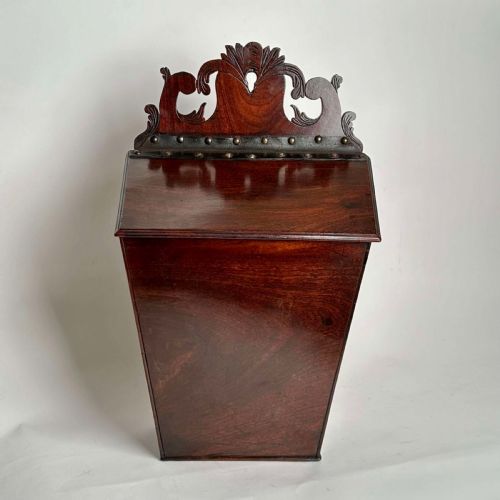
A georgian cutlery case typically presents as a sloping wooden box designed to hold individual knives, forks and spoons upright or neatly racked within. These items emerge from periods spanning the eighteenth century alongside later nineteenth and twentieth century examples.
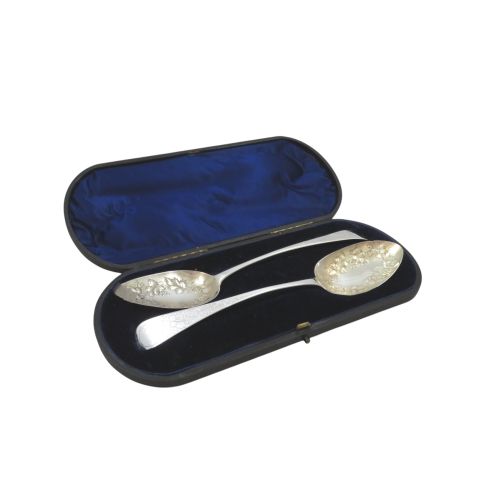
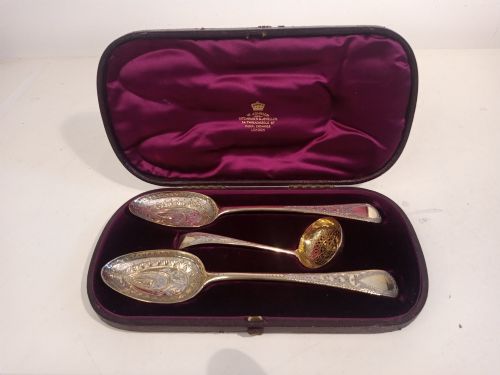
Buyers encounter various forms ranging from traditional slope-front knife boxes to campaign sets and fitted silver cases. The selection includes standalone mahogany boxes as well as complete sets housing sterling silver flatware.
The primary forms adhere to classic domestic dining requirements of their era, often utilising rich timbers like mahogany complemented by boxwood inlay. Each piece reflects the functional storage needs of grand dining rooms.
Materials and construction
Makers constructed these pieces predominantly from solid mahogany, frequently embellishing surfaces with delicate boxwood inlay to create geometric and decorative borders. Cabinetmakers shaped the timber into distinctive sloping lids and serpentine fronts.
Interiors often feature fitted compartments lined with velvet or silk to protect sterling silver flatware and cutlery. Brass fittings such as hinges, escutcheons and carrying handles provide both structural integrity and functional contrast to the dark wood.
Metal components include cast sterling silver and Sheffield plate for the implements housed inside, alongside durable base metals for internal mechanisms. Artisans balanced sturdy exterior cabinetry with delicate internal textile linings.
Listings feature mahogany, sterling silver, velvet, brass, silk, satinwood and boxwood inlay across multiple periods.
Assessing quality and finish
Quality rests upon the selection of cabinet timber, where dense grain figures in the mahogany and precise execution of the boxwood inlay distinguish superior items. The crispness of the serpentine curves and the symmetry of the sloping lid reflect the maker's skill.
Internal condition dictates value, particularly the survival of original silk or velvet linings and intact wooden dividers. Complete sets possessing matching sterling silver flatware alongside the fitted case represent higher craftsmanship levels.
Hardware integrity matters significantly, with original brass handles and working locks providing markers of authenticity. Superior pieces retain their structural balance and tight joinery without warping across the timber panels.
John Locker·P A W Bateman
The Georgian Cutlery Case Glossary
- Mahogany
- A durable tropical hardwood valued for its rich reddish-brown colour and fine grain, frequently utilised for furniture and decorative boxes throughout the eighteenth and nineteenth centuries.
- Boxwood inlay
- A decorative technique involving contrasting pale wood inserted into recesses of a darker timber base to form geometric patterns and decorative borders.
- Escutcheon
- A protective plate surrounding a keyhole, usually cast in brass and fitted to the front of a wooden box or cabinet door.
- Sterling silver
- An alloy containing a high proportion of pure silver combined with other metals to ensure durability, commonly marked with hallmarks indicating origin and date.
- Sheffield plate
- A composite material made by fusing a thin sheet of silver to a thicker copper base, developed in the eighteenth century for tableware and hardware.
Georgian Cutlery Case: Frequently Asked Questions
What is a georgian cutlery case?
A georgian cutlery case is a specialised wooden container designed to hold dining knives, forks and spoons securely on a sideboard or dining table. These wooden boxes typically feature a sloping lid and fitted internal partitions.
Cabinetmakers built them to protect polished steel and silver implements from tarnishing in damp dining rooms. They remain popular decorative accessories for traditional interiors.
How do I date a cutlery case?
Dating relies upon examining the timber grain, construction joints, brass hardware and overall stylistic proportions of the piece. Eighteenth-century examples often display deep mahogany patination and dovetail construction.
Interior linings and fitted layouts also offer clues regarding the period of manufacture. Hallmarks on any enclosed silver items provide precise calendar years.
Were these boxes meant for travel?
Standard dining room knife boxes remained stationary furniture pieces placed on sideboards during formal meals. Campaign versions were built specifically for travel with folding or compact implements.
Stationary boxes prioritised display and capacity over portability. Campaign sets utilised robust cases designed to withstand movement.
How should I clean the interior velvet?
Velvet and silk linings require gentle dusting with a soft brush rather than liquid cleaning agents. Moisture can damage fragile historic textiles and warp the underlying wooden structure.
Preserving original linings maintains the historical integrity of the piece. Professional textile conservators should handle severe degradation.