


Georgian Cut Glass Bottle
A georgian cut glass bottle brings heavy brilliance and hand-cut facets to the table, offering a tangible connection to early dining and dressing traditions.
Georgian Cut Glass Bottle
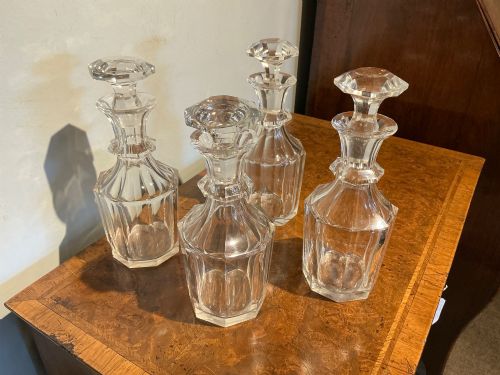
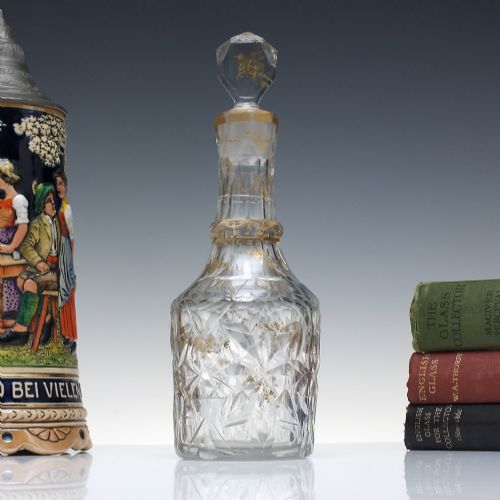
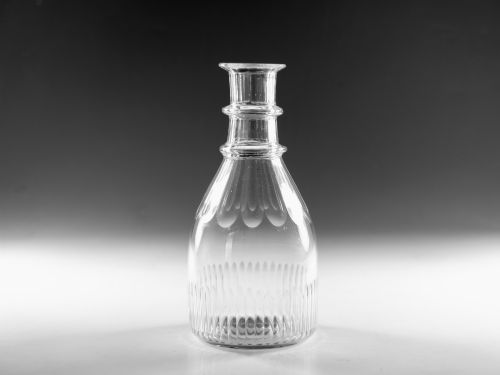
A georgian cut glass bottle encompasses a variety of vessel forms designed for serving, storing, or personal use, spanning decanters, carafes, cruet bottles, scent flasks, and inkstands.
The pieces appearing most frequently on this page belong to the Georgian and Regency periods, alongside later 19th-century interpretations sharing the same heavy glass vocabulary.
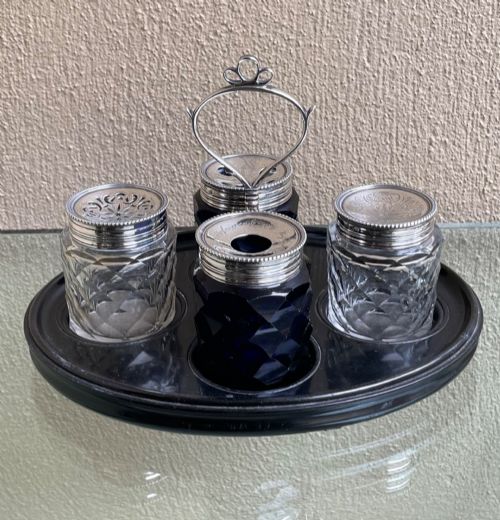
Buyers encounter individual serving bottles alongside multi-bottle cruet sets fitted into silver-mounted frames or ebonised stands.
How they were made
Craftsmen shaped heavy lead crystal and glass through blowing before applying deep wheel cuts to form facets, flutes, and ring necks.
Metal mounts, stands, and labels incorporate sterling silver, silver plate, Old Sheffield Plate, and gold leaf, frequently carrying full hallmarks and maker marks.
Bottles occasionally turn up labelled for anchovy sauce, proving that Georgian dining involved condiments far more surprising than simple oil and vinegar.
What varies in quality
The clarity and weight of the lead crystal distinguish finer examples from standard glass, dictating how the material catches light across its cut surfaces.
Precision in the hand-cutting of facets and the integrity of accompanying silver mounts or fitted stands separate standard production from exceptional workshop output.
James Giles·Charles Thomas Fox·Hester Bateman·Jonathan Douglas·Matthew Linwood
The Georgian Cut Glass Bottle Glossary
- Decanter
- A vessel intended for holding and serving wine or spirits, typically fitted with a stopper. Georgian examples often display neck rings and heavy cut facets.
- Cruet set
- A matched collection of glass bottles or casters held in a metal or wooden stand for condiments at the dining table.
- Lead crystal
- Glass containing lead oxide that increases weight, refractive index, and clarity. This heavy material allows for deep, sharp wheel-cutting.
- Old Sheffield Plate
- A composite material made by fusing a thin sheet of silver to a copper core. It predates electroplating and appears on 18th- and 19th-century cruet frames.
- Atelier
- A workshop or studio where skilled artisans produce decorative works. The term often connects specific decorated glass to known hands like James Giles.
Georgian Cut Glass Bottle: Frequently Asked Questions
How do I use a georgian cut glass bottle today?
These bottles serve effectively for decanting wine, holding bath oils, or displaying as standalone decorative objects on sideboards and dressing tables.
Care should be taken to hand wash them gently without harsh abrasives to preserve the clarity of the lead crystal and any associated silver mounts.
How do I tell a georgian cut glass bottle from later copies?
Examine the base for a polished pontil mark and feel the weight of the lead crystal, which is typically heavier than standard Victorian glass.
Look closely at the hand-cut facets, which display subtle irregularities absent in machine-moulded modern reproductions.
What is the difference between a decanter and a cruet bottle?
Decanters are standalone vessels intended for pouring wine or spirits, often featuring multiple neck rings and stoppers designed for bulk serving.
Cruet bottles are smaller vessels meant to hold condiments like oil, vinegar, or sauces, usually housed together within a portable frame.
Are silver mounts and labels original to the glass?
Many silver collars, stoppers, and labels bear contemporary hallmarks that match the estimated manufacturing period of the glass body.
Matching hallmarks on silver frames and accompanying bottle mounts provide clear evidence of a unified set dating back to the late 18th or early 19th century.