
Cut Lead Crystal
These heavy, refractive items known as cut lead crystal bring genuine weight and brilliance to any table or sideboard.
Cut Lead Crystal
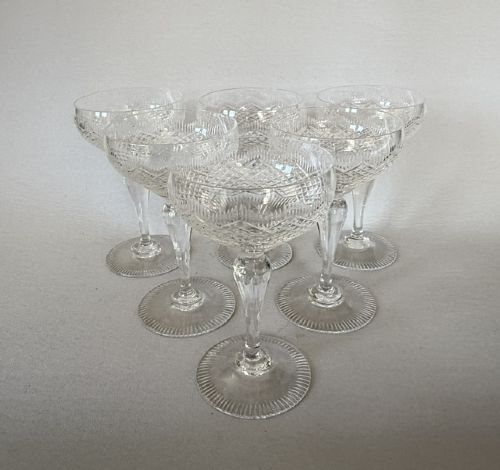
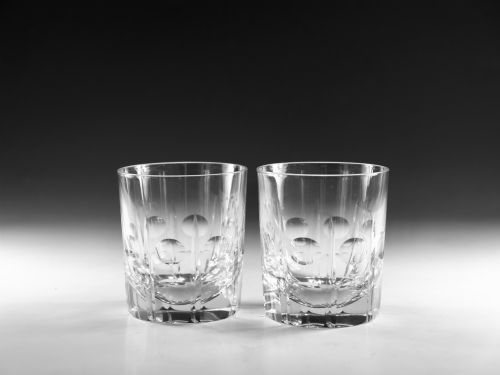
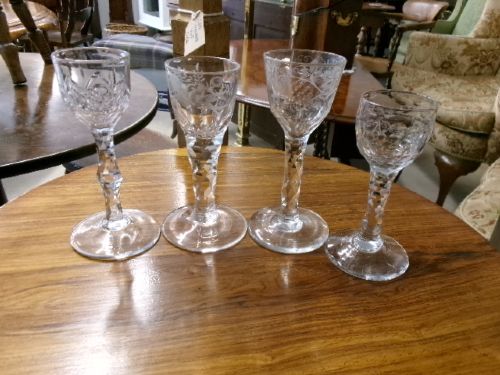
Cut lead crystal pieces encompass a broad range of functional and decorative tableware, from tall decanters and water jugs to delicate drinking glasses and centrepieces. When exploring this selection, buyers frequently encounter heavy Victorian rummers, Georgian tumblers, and Edwardian decanters designed for daily service or display.
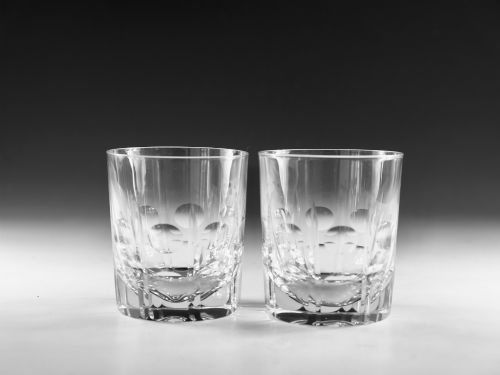
The objects span multiple eras, including Georgian, Regency, Victorian, and Edwardian periods, alongside later twentieth-century lighting and vessels. Forms range from practical whiskey tumblers and salt cellars to elaborate table lamps and lidded butter dishes.
English and Irish production dominates the historical record, though continental European makers also appear with specialised coloured pieces. Each item reflects the prevailing aesthetic of its decade, shifting from deep Georgian hobnail cutting to refined Edwardian proportions.
How they were made
Makers produced these objects using heavy lead glass or crystal glass, which allowed artisans to cut deep facets, pillars, and prisms into the material. The high lead content yielded a softer metal that accepted wheel-cutting and engraving more readily while increasing optical brilliance.
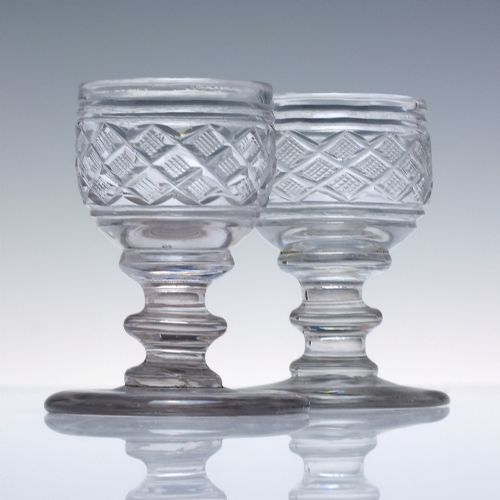
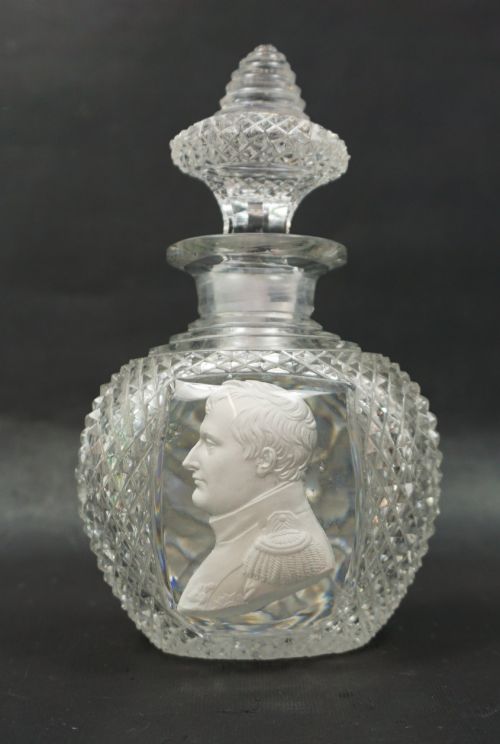
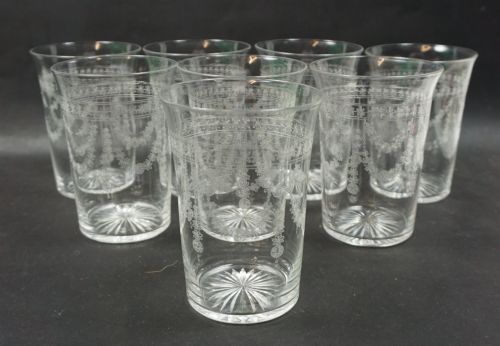
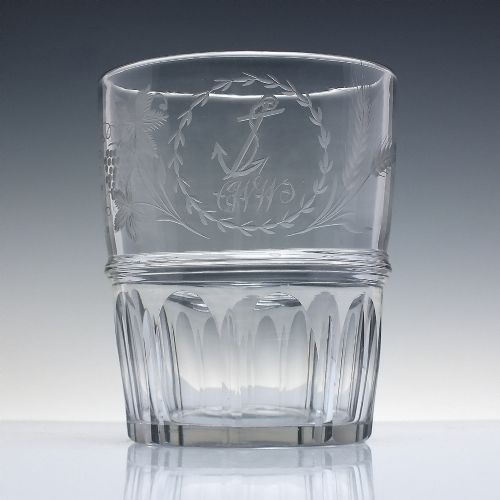
Craftsmen applied various cutting techniques, such as blaze, hobnail, and facet cutting, to create intricate patterns that caught and reflected light from every angle. Additional decoration included acid etching and sulphide inserts, depending on the period and the workshop.
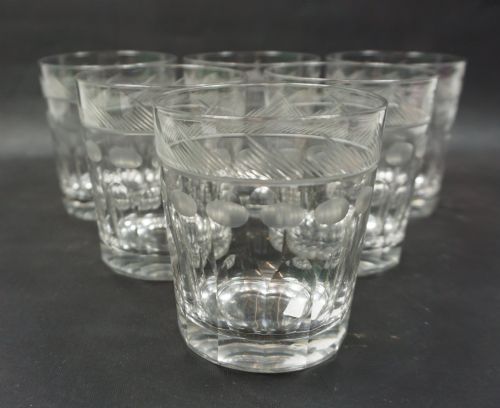
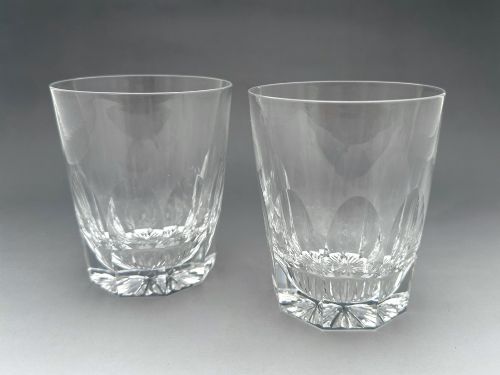
Current listings feature diverse forms spanning Georgian decanters, Victorian rummers, Edwardian water jugs, and twentieth-century mushroom lamps.
What varies in quality
Quality rests in the crispness and depth of the cutting, where sharp, cleanly defined facets separate superior examples from softer, worn pieces. The weight and clarity of the base metal also dictate the overall standard of the vessel.
Proportion and symmetry distinguish finer decanters, rummers, and table lamps, alongside the complexity of the decorative scheme, such as multi-tiered cutting or combined engraving and acid etching.
Stuart Crystal·Val St Lambert·Charles Graffart·Joseph Simon
The Cut Lead Crystal Glossary
- Hobnail cut
- A pattern of raised, pointed square-ended knobs resembling the hobnails used in heavy boots. This style creates intense light refraction across early nineteenth-century surfaces.
- Rummer
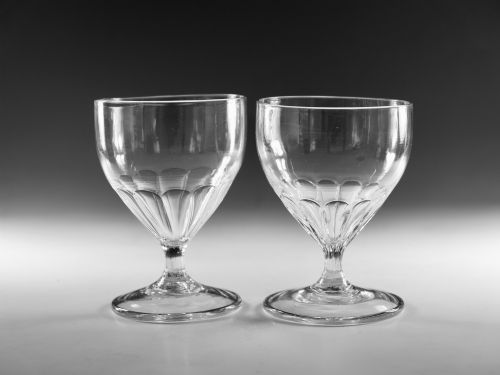
- A large, heavy-stemmed drinking glass popular for ale, wine, or punch during the Georgian and Victorian eras. These robust vessels often featured sturdy foot bases and cut bowls.
- Pillar and prism
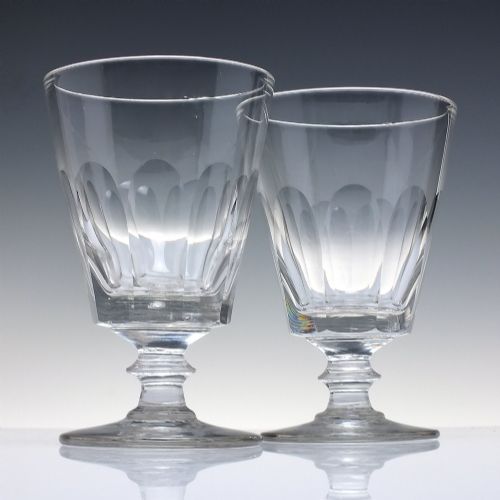
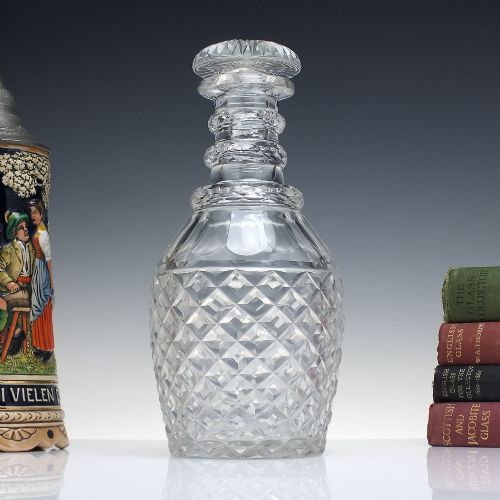
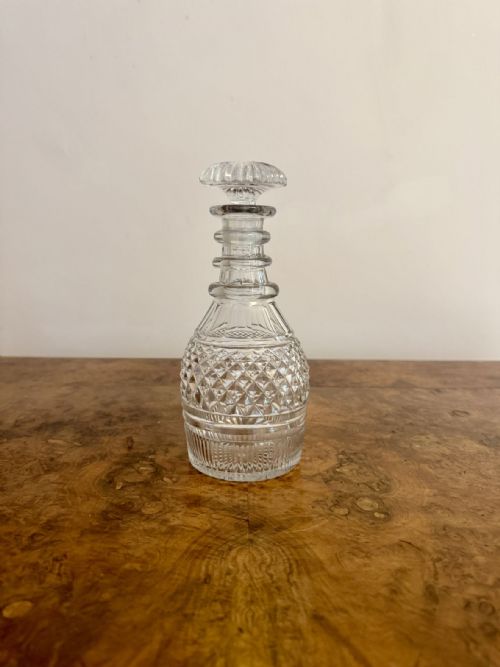
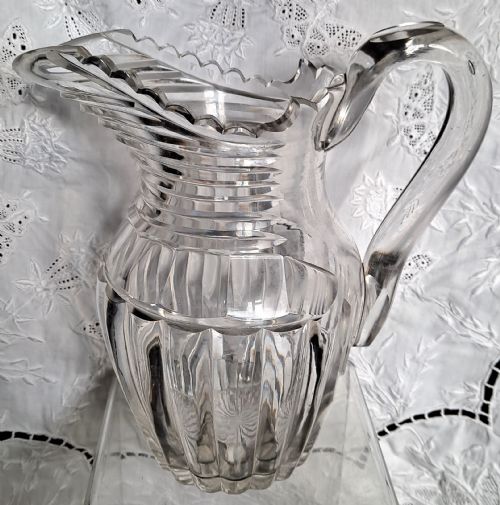
- Architectural linear cutting applied to the bodies of decanters and jugs. The vertical facets mimic classical columns to catch light effectively.
- Sulphide
- A small white ceramic cameo embedded within the clear glass body during manufacture. These portrait plaques appeared frequently on mid-nineteenth-century scent bottles and paperweights.
- Bonbonniere
- A decorative lidded vase or jar intended for holding sweets or confits. Edwardian examples often display delicate cutting and tall proportions.
Cut Lead Crystal: Frequently Asked Questions
How do I identify a Georgian decanter?
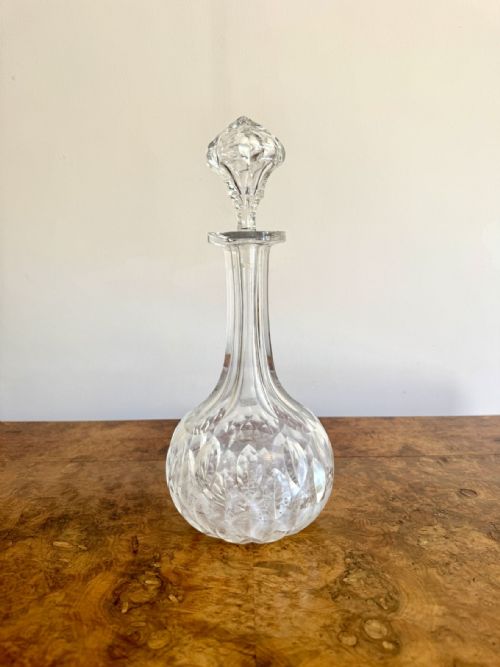
Georgian decanters generally feature thick, heavy lead glass with deep hand-cut flutes, pillar patterns, or planetary rings around the neck. They often accompany distinct three-ring or faceted stoppers that were individually ground to fit each specific bottle.
Base wear provides another reliable indicator, showing fine, irregular scratches accumulated over centuries of handling. The metal itself may display a slightly darker tone and minor inclusions unique to early glasshouses.
What is a rummer used for?
Rummers served as everyday drinking vessels for hearty beverages such as ale, cider, and punch in eighteenth and nineteenth-century households. Their generous bowl capacity and sturdy stems made them practical for family dining rooms and taverns alike.
Unlike delicate wine flutes, these thick-walled glasses were built to withstand regular use and frequent washing. Collectors today often assemble sets of these substantial pieces for modern table service.
Are lead crystal lamps safe to use?
Vintage and antique crystal table lamps employ standard electrical wiring that may require updating for modern safety compliance. A qualified electrician can easily replace cord sets while preserving the original brass fittings and glass bodies.
The heavy lead composition provides a stable base that supports twin-bulb or single-bulb configurations securely. These lamps bring ambient, refractive light to side tables when fitted with appropriate contemporary shades.