
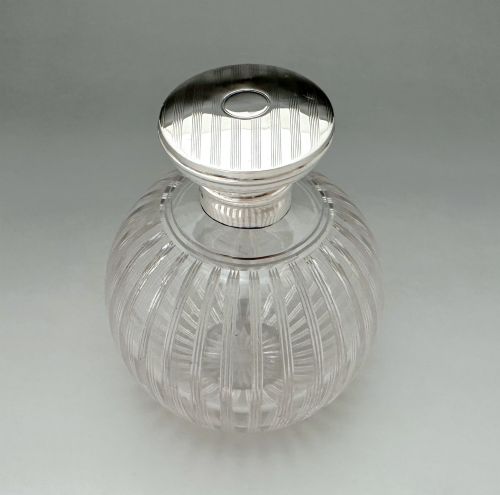


Fluted Cut Glass Decanter
These fluted cut glass decanter pieces combine brilliant optical clarity with tactile vertical facets, offering timeless elegance for serving spirits and wine.
Fluted Cut Glass Decanter
A fluted cut glass decanter is a serving vessel designed for holding wine, spirits, or perfumes, characterised by vertical parallel grooves cut into the body. These pieces range from Georgian and Regency examples to Victorian and Edwardian iterations.
The most common versions met on this page include Victorian and Edwardian glass decanters, alongside Regency pieces featuring traditional three-ring necks. Alongside standard decanters, buyers encounter specialised forms such as cologne and perfume bottles, claret jugs, and spirit flasks.
Origins span the nineteenth and early twentieth centuries, with material combinations frequently incorporating sterling silver or silver plate mounts. These functional vessels reflect domestic entertaining habits across successive historical periods.
How they were made
Makers shaped these objects using high-lead crystal and standard glass, applying wheel-cutting techniques to carve deep vertical flutes into the hardened surface. This reduction process created sharp facets designed to refract light through the vessel walls.
Metalwork components such as silver mounts and collars were separately cast or fabricated, then securely fitted to the glass necks. Workshops utilised sterling silver and silver plate for stoppers, collars, and hinged mounts on items like spirit flasks and claret jugs.
Listings feature lead crystal, cut glass, sterling silver, and silver plate across Victorian, Edwardian, and Regency periods.
What varies in quality
Quality in a fluted cut glass decanter rests upon the crispness of the wheel-cut facets and the weight of the material. Superior pieces display deep, sharp fluting that catches the light cleanly, whereas lesser examples feature shallow or rounded cutting.
The clarity of the glass itself and the presence of integrated metalwork, such as solid silver mounts or hallmarked collars, elevate the stature of an individual piece. Proportion, balance, and the inclusion of matching stoppers further distinguish finer specimens from standard utility items.
Hukin & Heath
The Fluted Cut Glass Decanter Glossary
- Flutes
- Vertical parallel grooves cut into the body of the glass. These channels enhance the refraction of light and provide a secure grip.
- Lead crystal
- Glass containing a high proportion of lead oxide. This composition increases weight, brilliance, and softness for deep cutting.
- Silver gilt
- Silver covered with a thin layer of gold. This treatment provides a rich decorative finish on mounts and hardware.
- Claret jug
- A vessel specifically formed for serving red wine. These pieces often incorporate hinged metal lids and spouts.
- Stopper
- The glass or metal plug that seals the neck of the decanter. Original matching stoppers are a key consideration for collectors.
Fluted Cut Glass Decanter: Frequently Asked Questions
How do I date a fluted cut glass decanter?
Dating relies on stylistic clues such as neck rings, cutting depth, and the shape of the body. Georgian and Regency pieces often feature distinct neck rings and hand-blown pontil marks.
Victorian and Edwardian examples introduce machine-aided precision and are frequently accompanied by silver mounts bearing assay office hallmarks and date letters.
Are these decanters safe for holding wine?
Most antique glass decanters remain entirely suitable for serving wine and spirits today. The primary consideration is ensuring the interior is clean and free from stubborn residue.
Lead crystal vessels should not be used to store liquids for extended periods, but serving wine during a meal poses no risk.
What is a three ring decanter?
A three ring decanter is a style characteristic of the Regency period featuring three prominent horizontal glass bands encircling the neck. These rings provided a secure grip for pouring when hands were wet.
They serve as a reliable indicator of early nineteenth-century manufacture when paired with appropriate body proportions.
How should I clean my decanter?
Cleaning requires warm water and mild detergent, avoiding harsh abrasives that might scratch the exterior cut glass. Specialised bottle brushes help reach interior base sediment safely.
Silver mounts require careful polishing with a dedicated cloth to prevent cleaning agents from contacting the glass.