

Clear Crystal Spirit Decanters
Clear crystal spirit decanters hold spirits for the table, combining weight and refractive brilliance that collectors prize for everyday service and display.
Clear Crystal Spirit Decanters
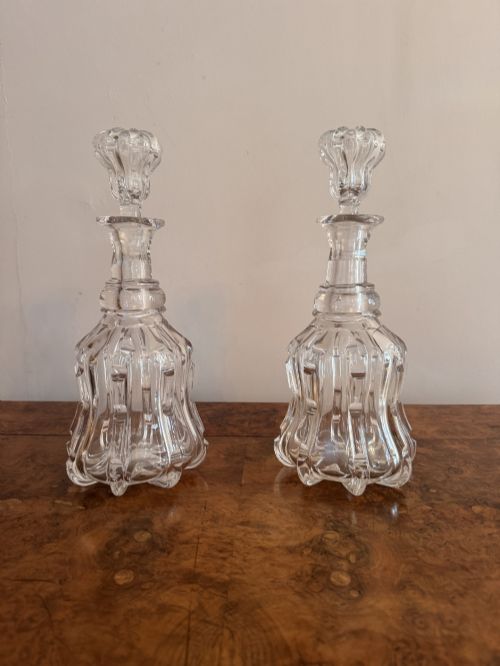
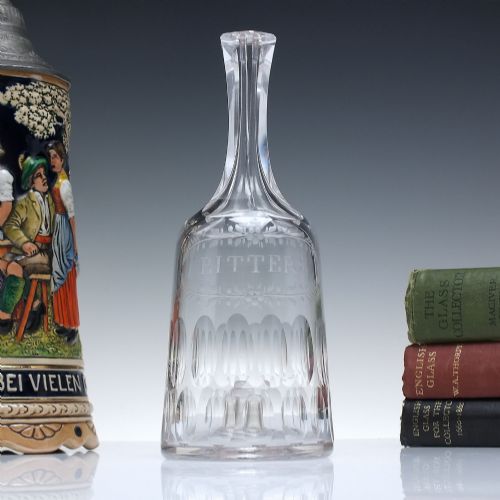
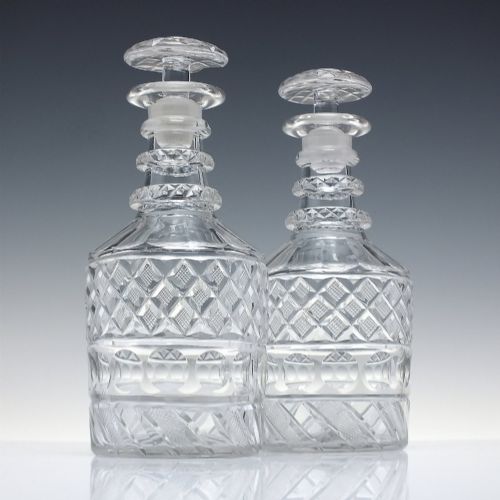
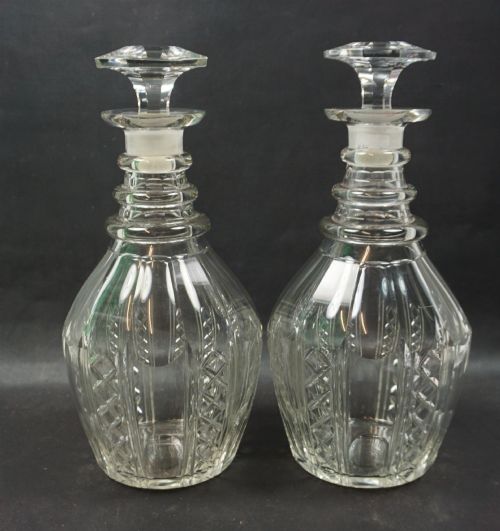
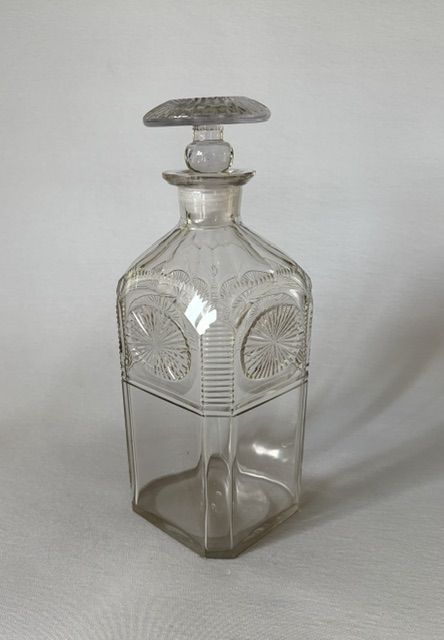
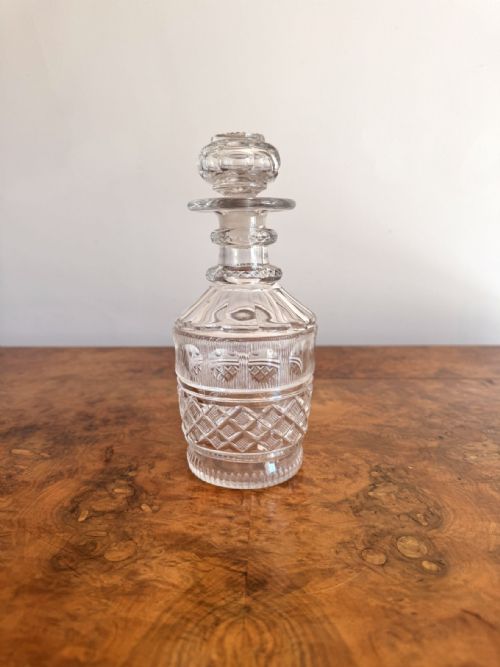
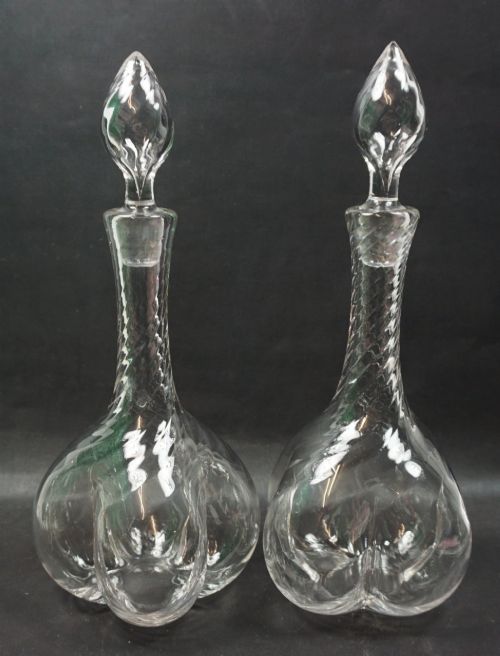
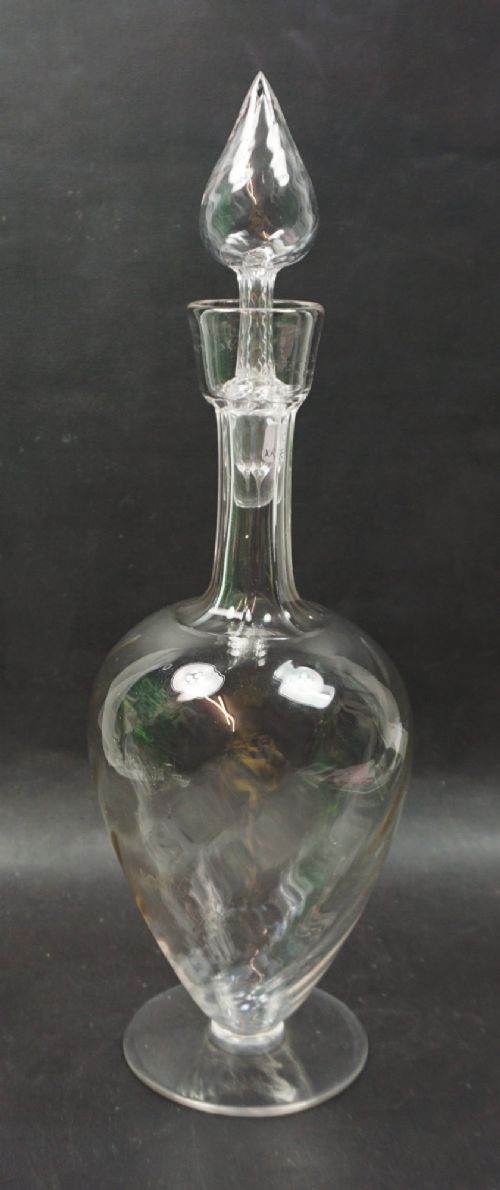
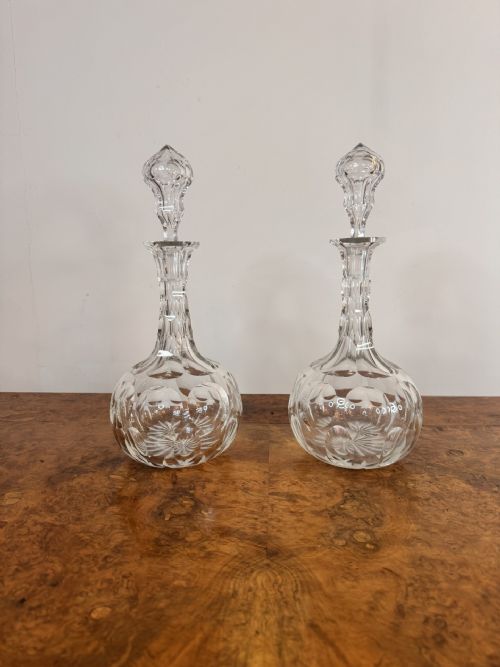
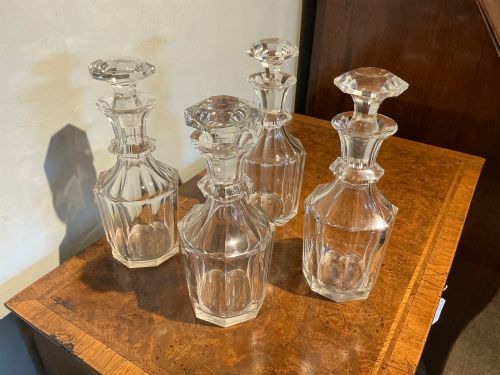
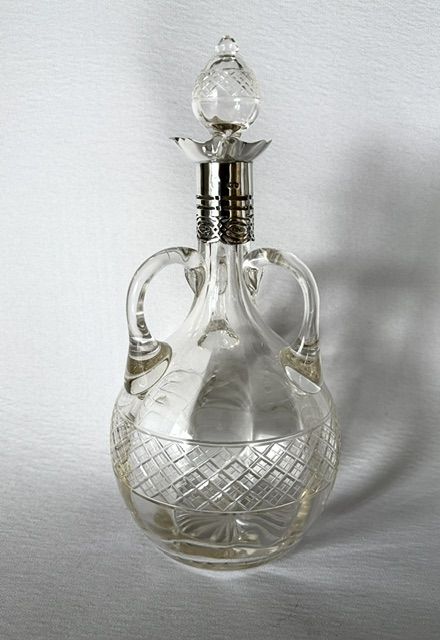
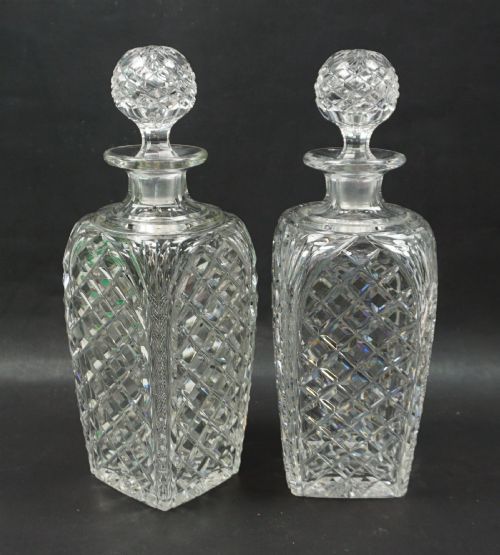
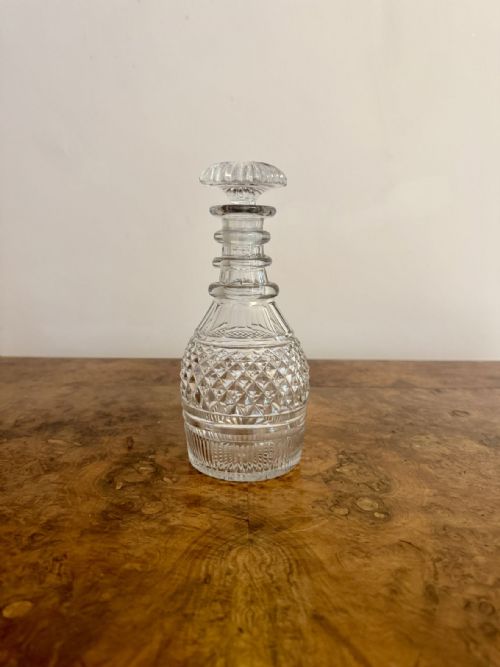
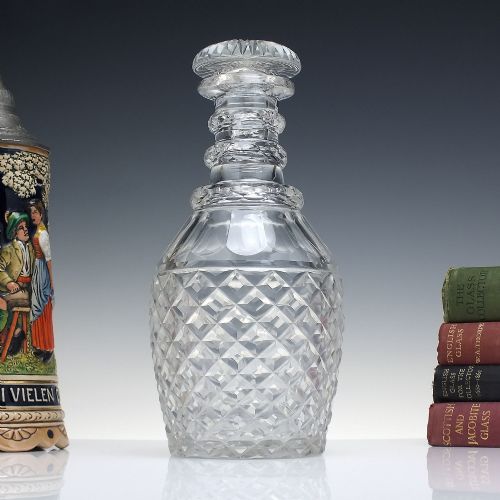
Clear crystal spirit decanters span periods from the Georgian era through the Victorian period, Edwardian years, and into Art Deco design. Buyers encounter shapes ranging from ovoid and shoulder forms to square section tapered profiles and bell shaped vessels.
The selection includes matched pairs alongside single bottles and larger decanter sets complete with matching glasses. These vessels served port, whisky, rum, bitters, claret, and liqueurs at the dining table and sideboard.
Materials and cutting
Maker operations utilised heavy lead glass, lead crystal, and clear glass shaped through blowing and pressing before undergoing extensive surface modification. Craftsmen applied deep wheel cutting, facets, and delicate hand engraving to create light refraction.
Certain pieces incorporate silver mounts fitted directly to the neck or pourer, combining metalwork with heavy crystalline bodies. Production methods evolved from eighteenth century sugar loaf and mallet silhouettes toward geometric twentieth century cutting.
Clear Crystal Spirit Decanters Retail Price Guide 2026
Typical asking prices for clear crystal spirit decanters among the pieces listed under this phrase on Sellingantiques today, from the lower quarter to the upper quarter. They describe what is for sale here now, not the wider market.
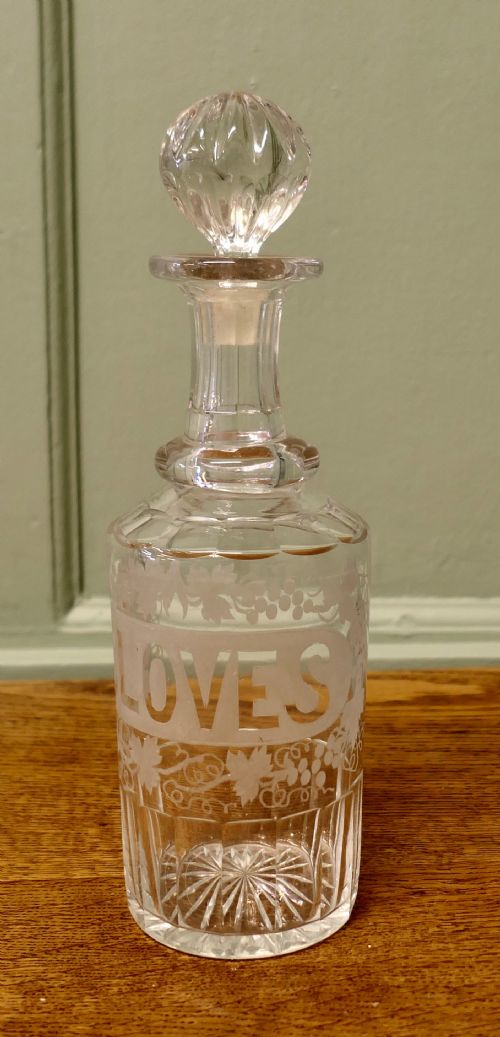
Some nineteenth century vessels were specifically labelled for cloves and bitters, proving ancestors enjoyed a very spiced constitution.
Execution and proportion
Quality rests upon the crispness of the glass cutting, the weight of the metal content, and the balance of the proportions. Sharply defined facets catch the light cleanly, whereas softer edges indicate lighter work.
The presence of matching stoppers intended for the specific neck, original silver mounts, and precise engraving separate standard production from finer workshop output.
James Powell·Walsh & Walsh·Karl Palda
The Clear Crystal Spirit Decanters Glossary
- Lead crystal
- Glass containing heavy metal oxides that increases density, ring, and refractive index. This material allows deeper facet cutting without fracturing.
- Sugar loaf
- A Georgian decanter profile featuring a conical body tapering broadly toward the base. The shape resembles traditional blocks of refined sugar.
- Ovoid
- An egg shaped vessel body popular during the Regency period. This curved form provides stability and generous capacity for spirits.
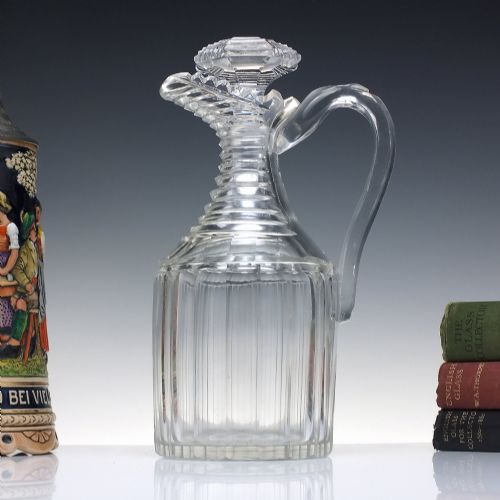
- Claret jug
- A specialised pouring vessel designed for red wine rather than neat spirits. These pieces frequently feature integrated handles and hinged mounts.
- Square section
- A bottle profile blown and cut with flat vertical sides and right angled corners. This geometry maximised storage efficiency in ship cellarets and sideboards.
Clear Crystal Spirit Decanters: Frequently Asked Questions
How do I clean an old decanter?
Residue inside vintage glass requires gentle treatment without abrasive materials. Warm water with specialist cleaning beads lifts deposits safely from the base.
Stoppers should remain unsoaked if fitted with cork layers or metal collars to prevent deterioration.
Are stoppers original to the decanter?
Stoppers were individually ground to fit each specific neck during manufacture. Matching number marks on the base and stopper confirm original pairing.
Slight variations in fit often occur across centuries due to replacement over time.
How do I date a decanter?
Stylistic indicators such as facet patterns, ring neck designs, and pontil marks on the base provide chronological markers. Georgian and Regency examples typically display polished pontils and heavier lead weight.
Edwardian and Art Deco production shifts toward geometric cutting and lighter walled vessels.
Can these decanters hold modern spirits?
Lead crystal vessels safely store whisky, brandy, and liqueurs for short periods. Modern guidance suggests avoiding prolonged storage of high alcohol liquids in older lead glass.
Regular use benefits from thorough rinsing between different contents.