




Vintage Liquor Bottle
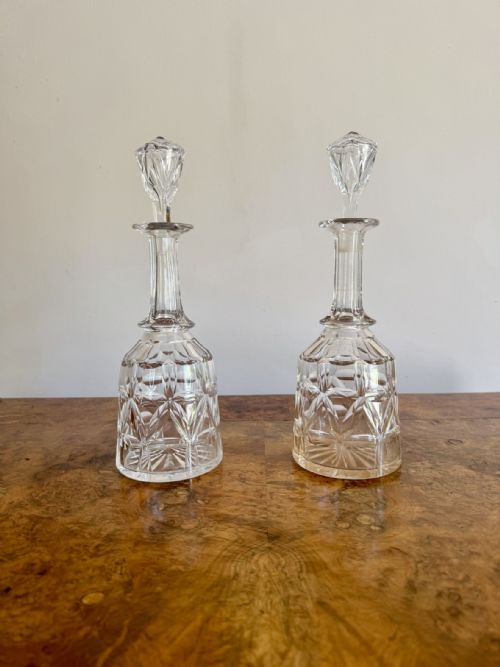
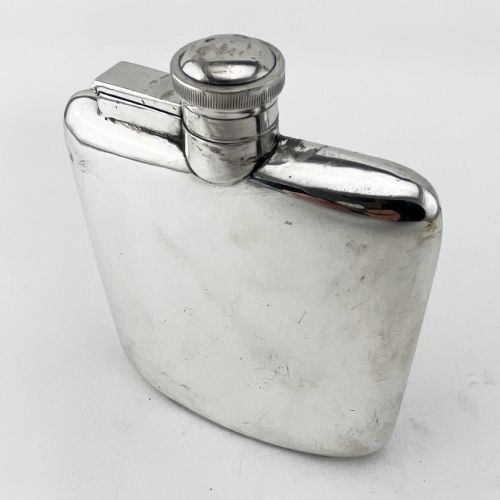
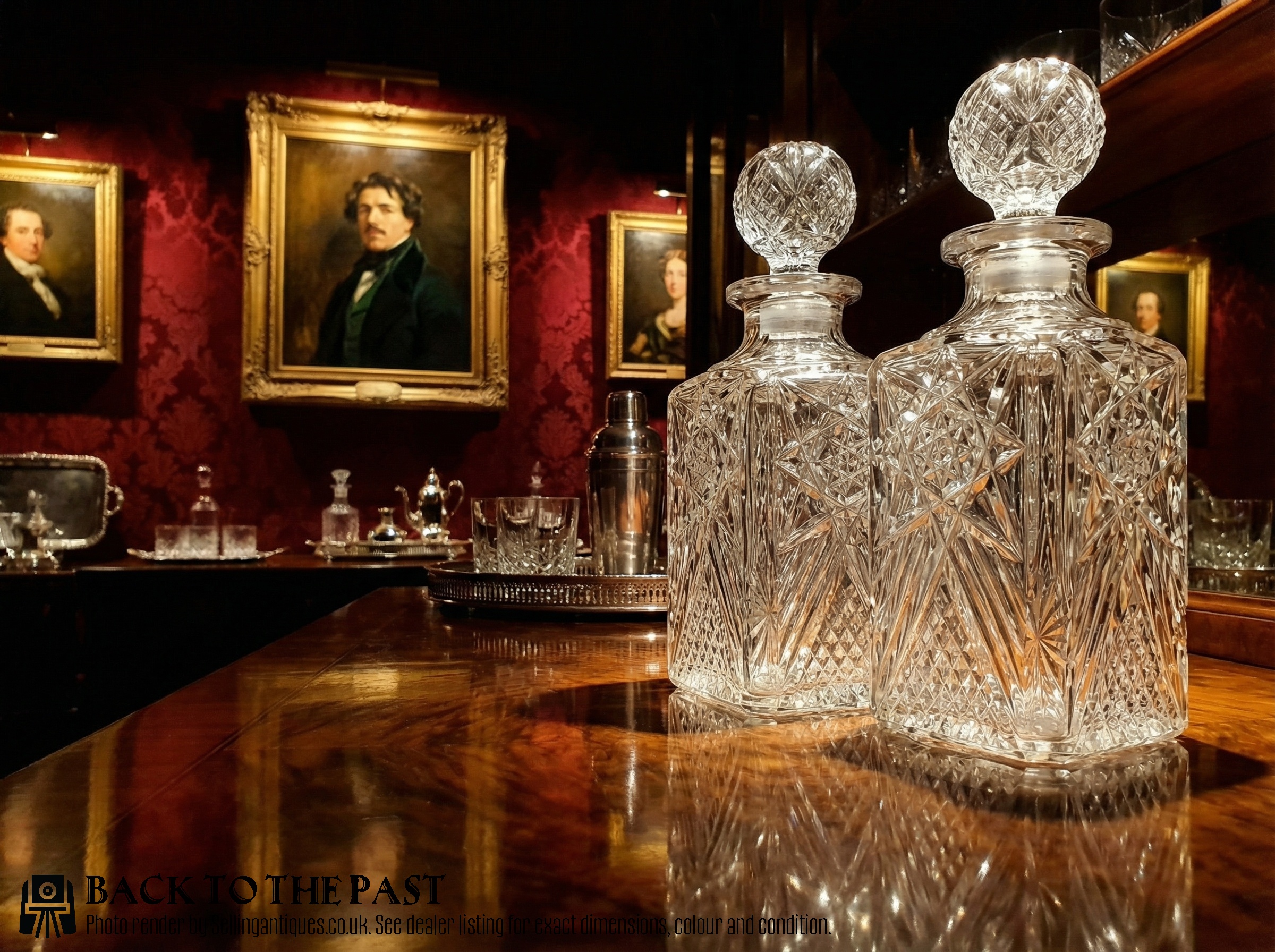
These vintage liquor bottle examples encompass glass decanters, silver hip flasks and fitted cellarettes designed to hold and serve spirits in style.
Vintage Liquor Bottle
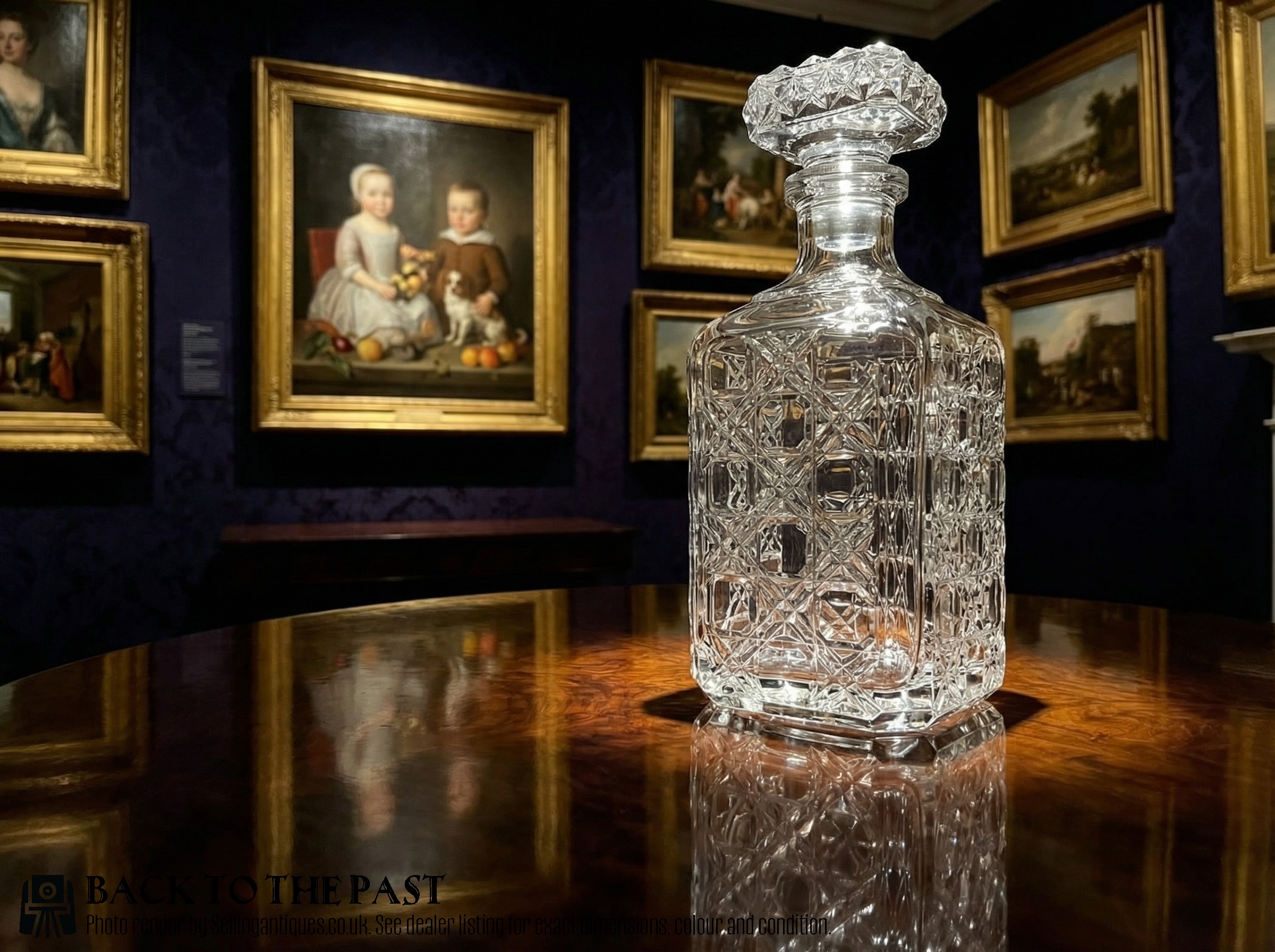
A vintage liquor bottle search covers a broad array of serving vessels and storage containers, ranging from tall glass decanters to portable silver hip flasks. The pieces encountered on this page stretch across the Georgian, Victorian, and Edwardian eras into the Art Deco period.
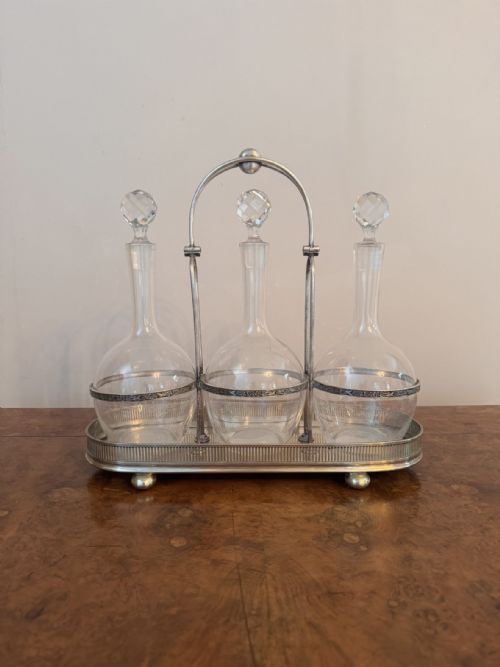
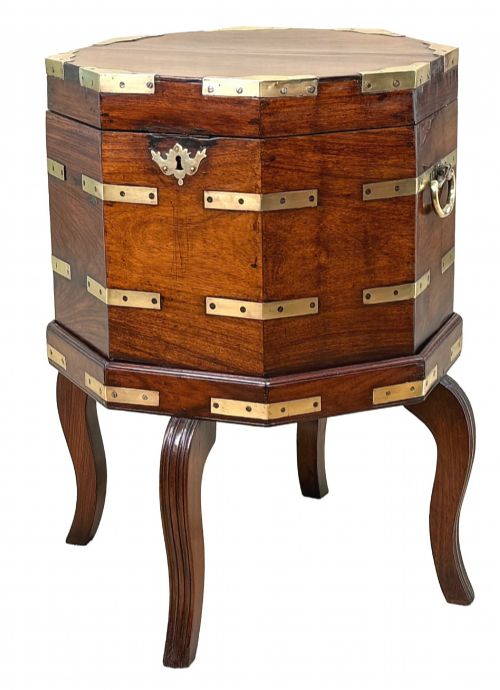
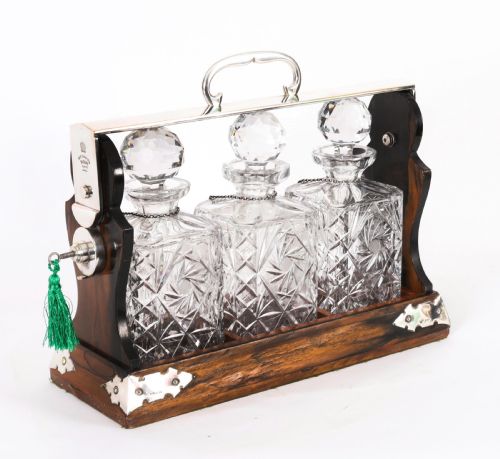
Beyond standard bottles, the selection incorporates matching decanter sets, silver plated stands, and secure locking tantalus frames. Larger furniture forms like mahogany cellarettes and wine coolers also appear alongside smaller tabletop spirit flagons.
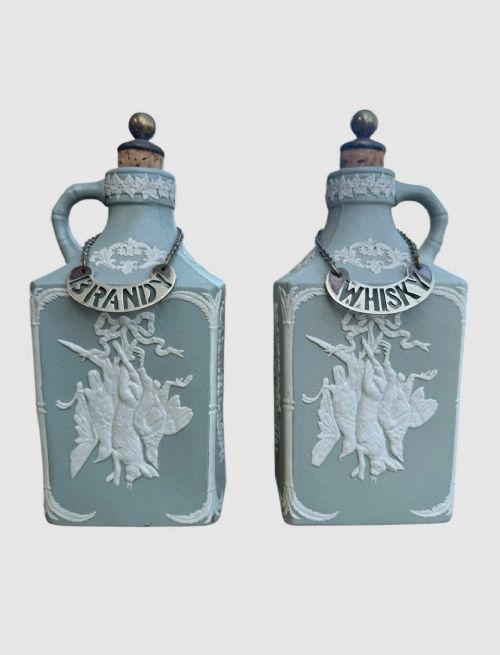
Design influences vary widely, spanning plain sterling silver, cut crystal, and engraved glass labelled for specific spirits like whisky, brandy, rum, or sherry.
Materials and construction methods
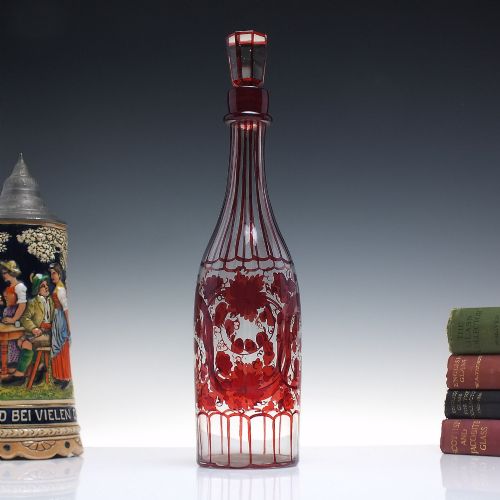
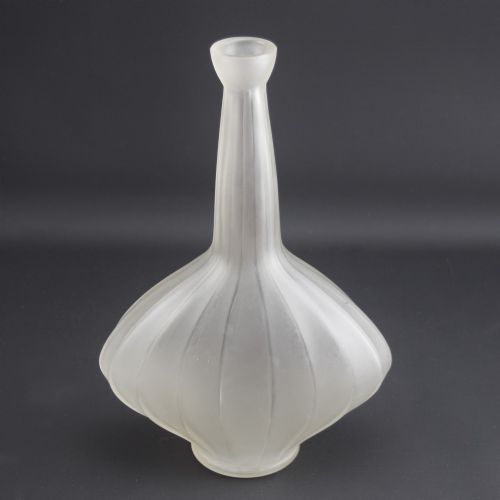
Glass vessels are frequently formed through heavy cutting, optical blowing, or hand painting, often paired with hallmarked sterling silver collars and mounts. Coloured glass varieties such as ruby, cranberry, and green feature prominently alongside clear lead crystal.
Enclosing furniture and frames rely heavily on dense hardwoods like mahogany, oak, and coromandel, sometimes ornamented with brass fittings and marquetry stringing. Metalware components utilise sterling silver, silver plate, and Old Sheffield Plate.
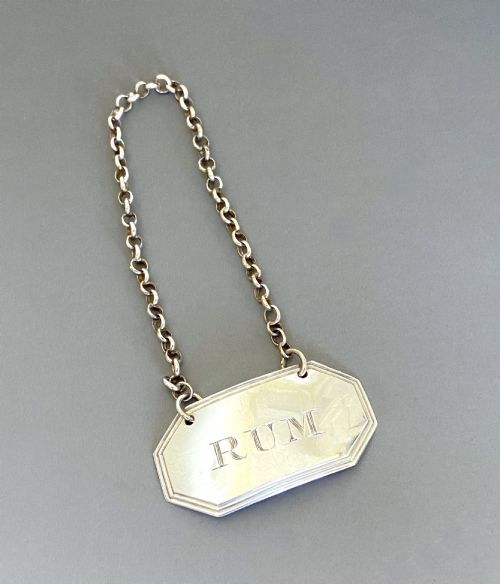
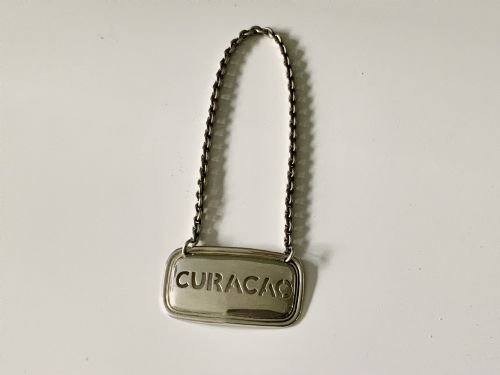
Accompanying labels and small tags are fashioned from sheet silver, shaped and engraved by hand or by named silversmiths.
Some nineteenth-century Scottish whisky bottles bear enamelled city titles like Glasgow alongside cheerful bird blend designations.
Judging the quality of the pieces
Distinctions in quality often rest on the crispness of the glass cutting, the clarity of the crystal, and the weight of the silver collars or mounts. Heavy, hand-blown glass with deep wheel engraving indicates higher craftsmanship than mass-produced alternatives.
The sophistication of the housing mechanism elevates an item, such as a secure locking tantalus with fully functioning keys and precise dovetailing in oak or mahogany cellarettes. Maker attribution and crisp silversmith hallmarks on bottle labels or collars add further distinction.
Elizabeth Morley·Tiffany·Betjemann·Rene Lalique·James Powell·Elkington
The Vintage Liquor Bottle Glossary
- Tantalus
- A locked wooden frame holding decanters securely so they remain visible while preventing access to the contents without a key.
- Cellarette
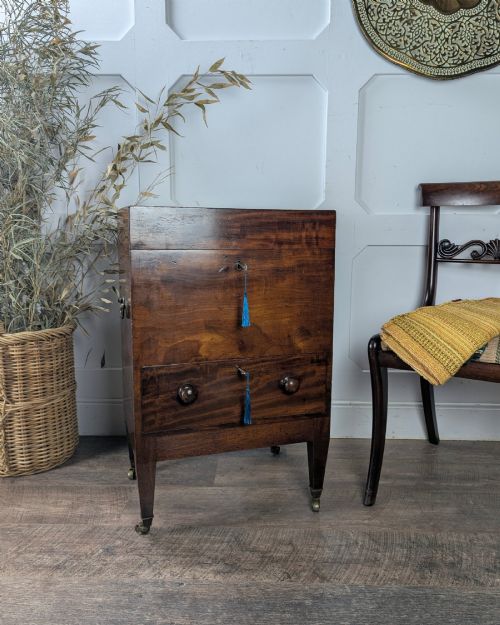
- A lockable cabinet or standalone box, frequently lined with lead, designed to store wine and spirit bottles safely within a dining room.
- Decanter label
- A small silver or plated tag suspended by a chain around the neck of a bottle to identify the specific spirit held inside.
- Hip flask
- A flat, pocket-sized container constructed from metal for carrying liquor discreetly on the person.
- Old Sheffield Plate
- A composite material formed by fusing a thin sheet of silver to a thicker copper base, common in earlier serving ware.
Vintage Liquor Bottle: Frequently Asked Questions
How do I identify a cellarette?
A cellarette is a dedicated storage piece, ranging from freestanding mahogany furniture items to table-top boxes designed to keep wine and liquor cool and secure. They often feature fitted interior partitions to hold multiple bottles upright.
Origins stretch from the eighteenth century through the Victorian period, frequently utilising high-grade timber and interior lead linings.
What do decanter labels specify?
Decanter labels are small hanging tags inscribed with the names of specific drinks, ensuring guests and hosts could distinguish between contents like whisky, brandy, rum, or sherry when bottles looked identical.
They are typically made from sterling silver, with some bearing hallmarks that indicate the date of manufacture and the silversmith responsible.
How should I clean antique glass decanters?
Antique glass requires gentle handling to preserve delicate cut patterns, engraved surfaces, and delicate enamel work. Harsh scrubbing should be avoided to protect the original material integrity.
Silver collars and mounts attached to these bottles must also be polished with care to prevent abrasive cleaning agents from damaging adjacent glass.