
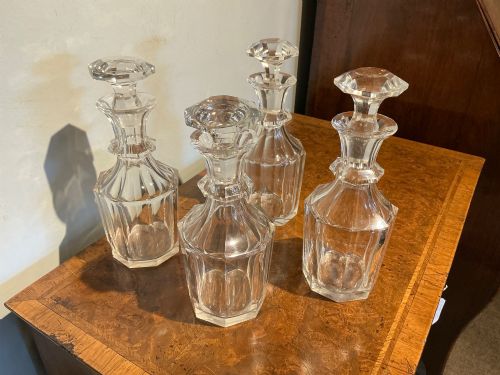
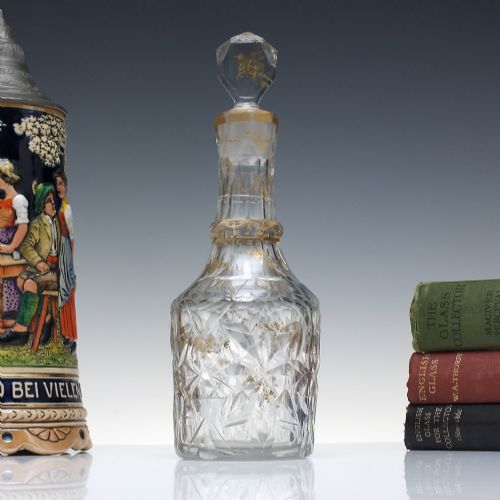
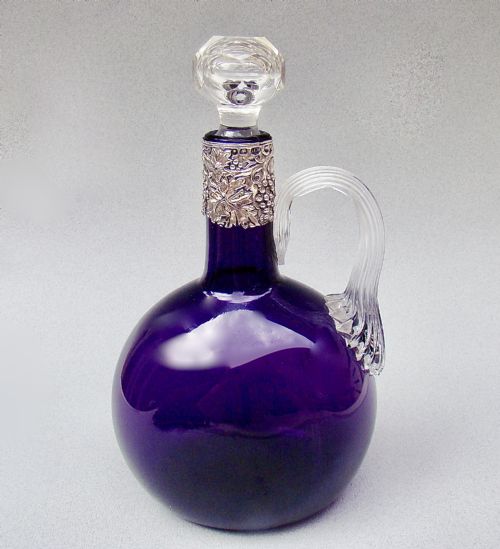
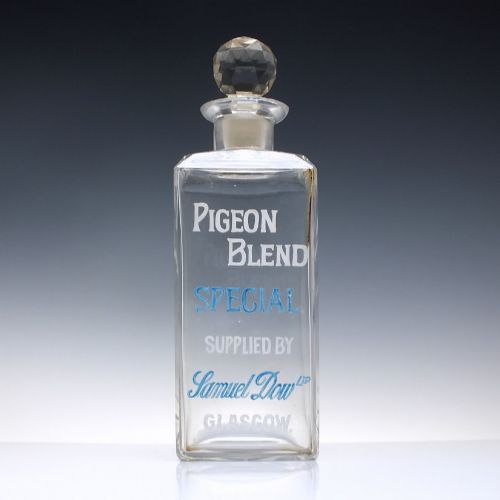
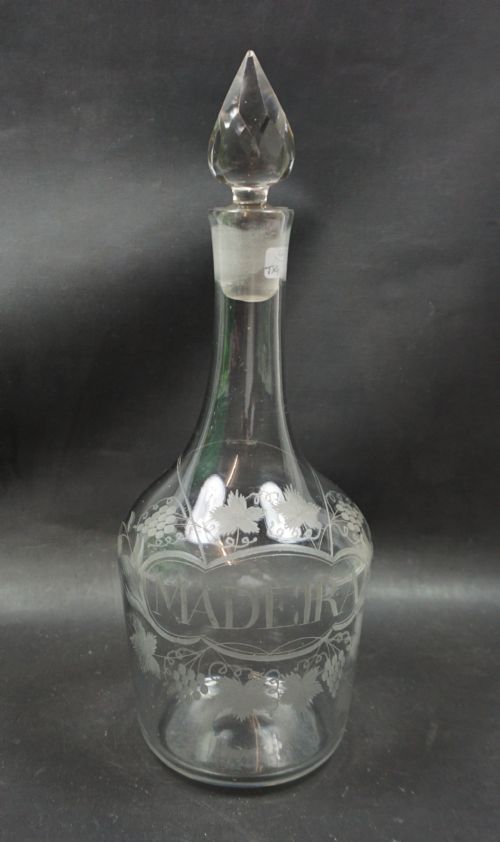

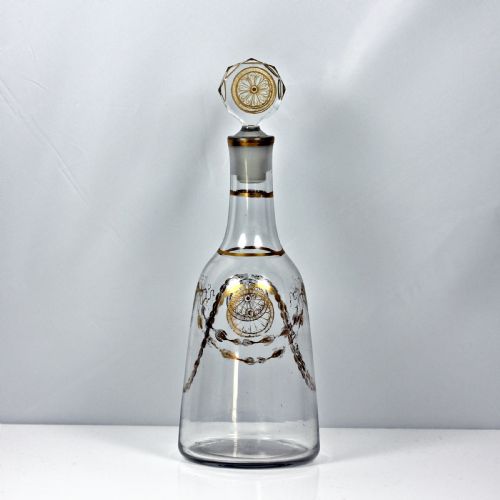


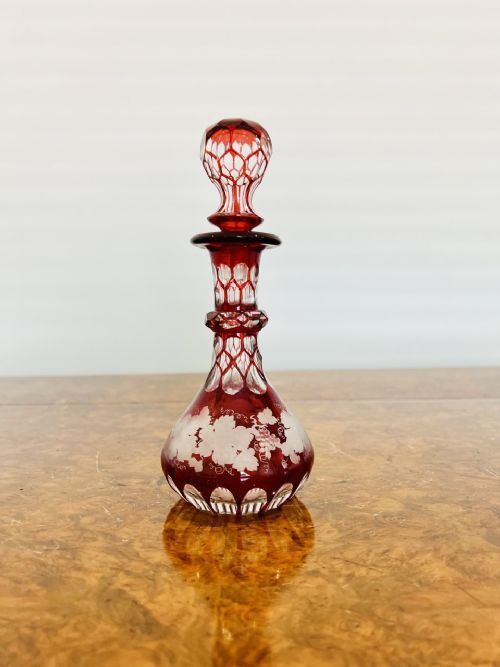


Faceted Glass Decanter
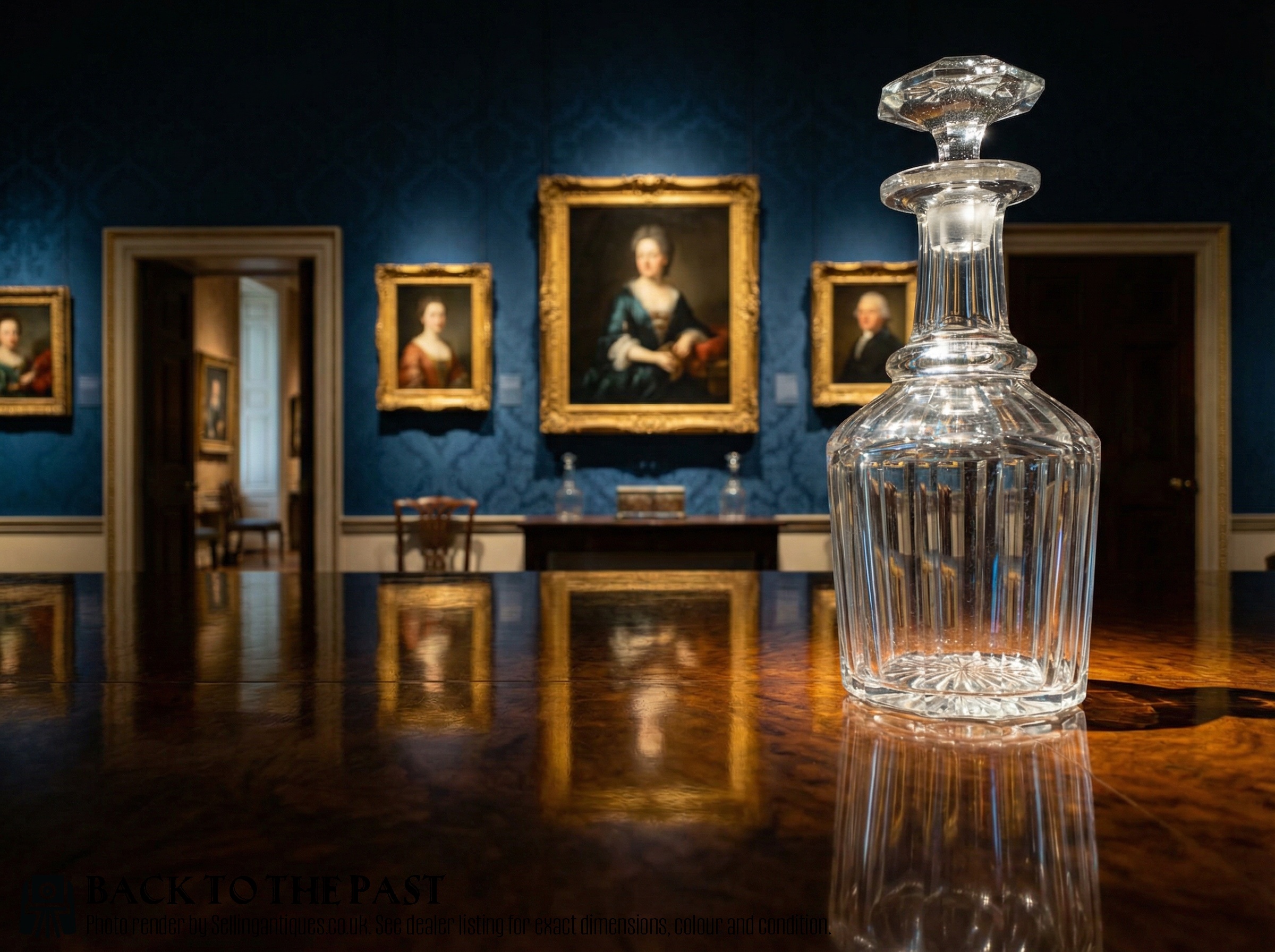
A faceted glass decanter catches the light from every angle, holding spirits while anchoring a table or sideboard.
What these pieces are
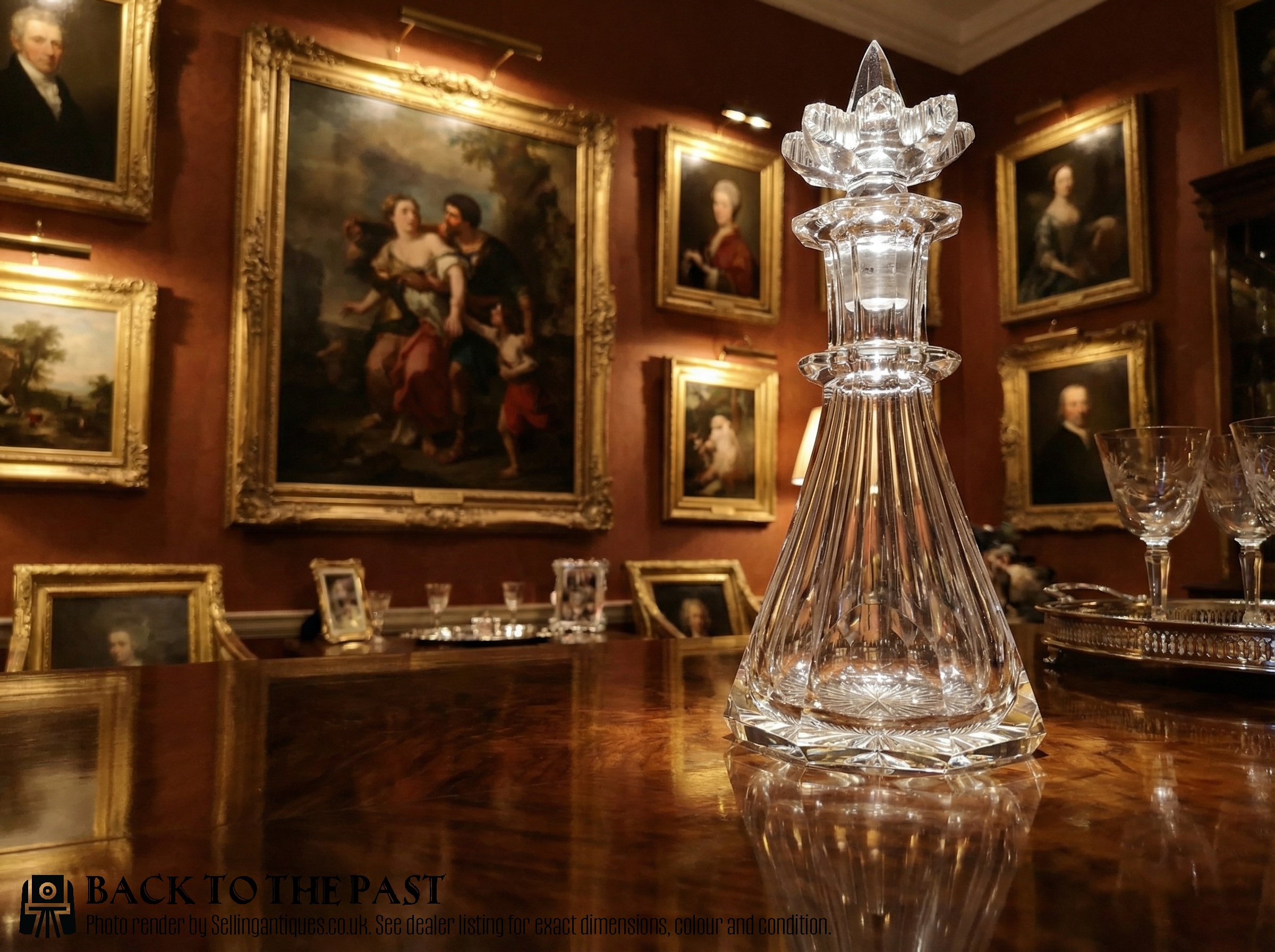
A faceted glass decanter provides a brilliant vessel for serving spirits, drawing on designs produced across the Victorian, Edwardian, and Art Deco eras. These pieces range from substantial Victorian table decanters and English ships decanters to colourful Bohemian and Czech examples.
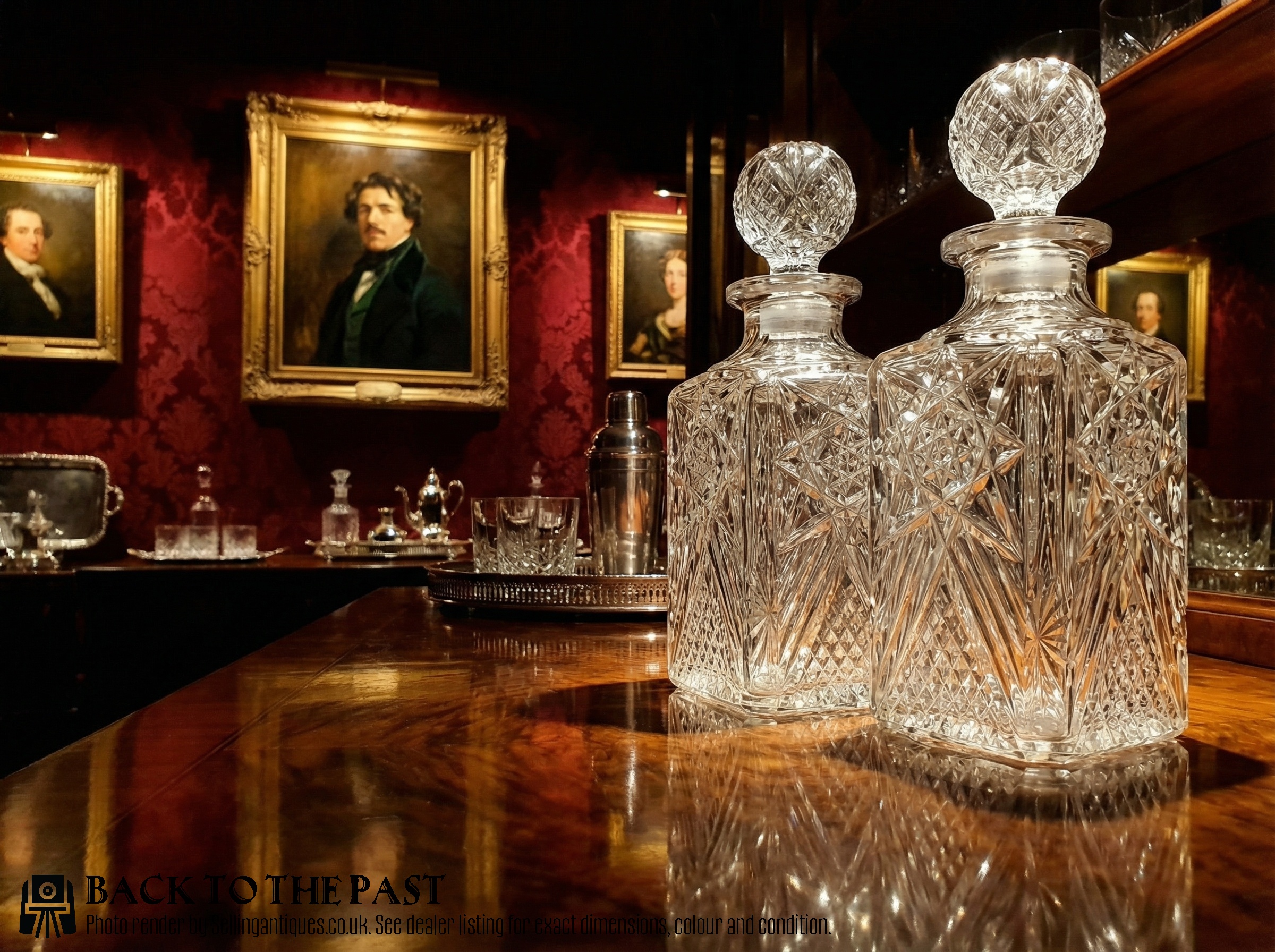
The selection here includes matched spirit sets, liqueur decanters paired with shot glasses, and robust whiskey containers. Buyers encounter styles spanning Gothic Revival darkness to clean, geometric Art Deco lines.
How they were made
Makers shaped lead crystal, clear cut glass, and dark green glass through traditional blowing and heavy cutting techniques. Sharp facets were ground and polished by hand to create the characteristic geometric planes that define the surface.
Certain vessels integrate decorative metalwork, such as Moser glass fitted with 800 silver mounts and enamel details. Sets often include matching glass trays produced as a single cohesive suite.
Retail Price Guide 2026
Typical UK retail prices for faceted glass decanter, calculated from the Sellingantiques database of over a million retail prices indexed since 2003. This retail price guide relies exclusively on Sellingantiques data; no external sources or auction records are used, so the figures do not describe the wider market.
The inventory spans Victorian, Edwardian, and Art Deco styles, utilising lead crystal, coloured glass, and 800 silver.
What varies in quality
Quality rests in the crispness of the cutting and the weight of the material, where deep, clean facets refract light cleanly rather than appearing soft or blurred. Superior vessels exhibit balanced proportions and flawless clarity in the glass body.
The presence of integrated details like matching trays, silver mounts, or complete sets of shot glasses elevates an individual piece into a comprehensive service. Master glassworks achieved distinction through precise symmetry and brilliant mineral composition.
The Faceted Glass Decanter Glossary
- Faceted glass
- Glass decorated by grinding and polishing flat planes into the surface to create geometric light-catching angles. This technique requires steady hands and abrasive wheels to achieve sharp edges.
- Ships decanter
- A specific bottle form featuring a wide base that prevents tipping at sea. The broad footprint keeps the vessel stable during movement.
- Lead crystal
- Glass containing metal oxides that increase weight, brilliance, and the ringing sound when struck. It allows for deeper cutting without fracturing.
- Liqueur decanter
- A smaller vessel designed specifically for strong, sweet after-dinner drinks. These often accompany sets of miniature glasses.
- Enamel
- Opaque glass paste applied to the surface and fired for colour and decoration. It provides contrasting tones against clear or tinted glass.
Frequently Asked Questions
Can I store spirits in these decanters long term?
These vessels suit serving and short-term display rather than long-term storage, as historical stoppers rarely form an airtight seal.
Spirits left for years can evaporate or degrade the glass interior, particularly if lead content is high.
How do I date a glass decanter?
Examine the base for pontil marks, manufacturing style, and wear patterns that indicate age.
Cut patterns, stopper shapes, and accompanying metal mounts also provide strong clues to Victorian or Art Deco periods.
What is the difference between crystal and glass?
Crystal contains added minerals that increase brilliance and allow for deeper, sharper cutting.
Standard glass lacks these additives, resulting in lighter weight and softer facet edges.