
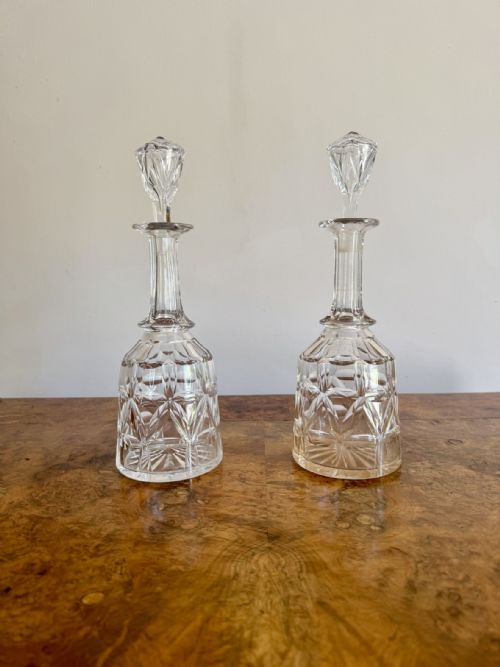
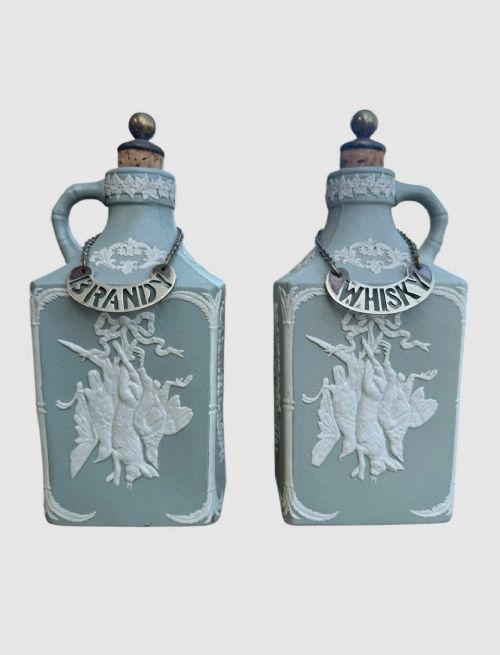


Vintage Whisky Decanter
A vintage whisky decanter brings period character to a sideboard, holding spirits in heavy lead crystal, cut glass, or silver-collared vessels.
Vintage Whisky Decanter
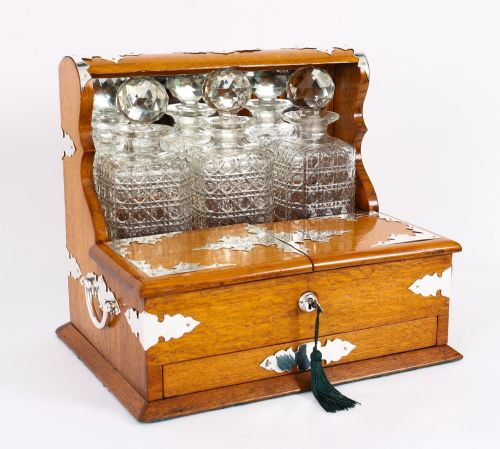
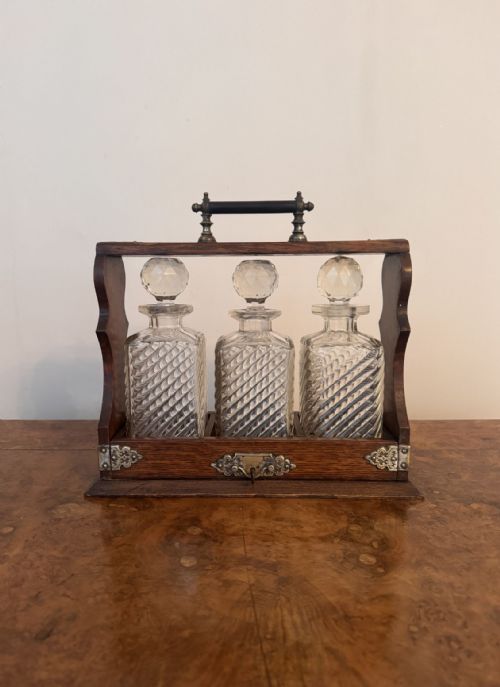
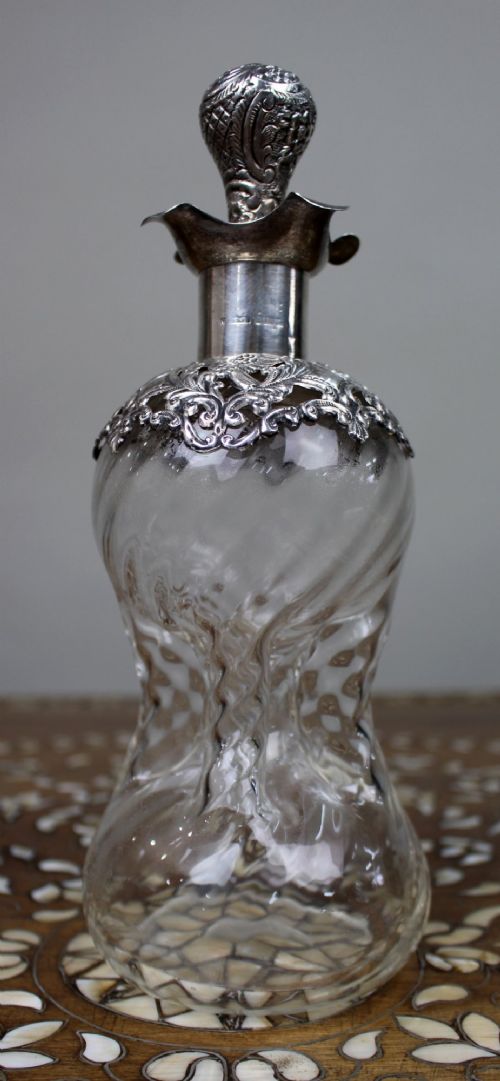
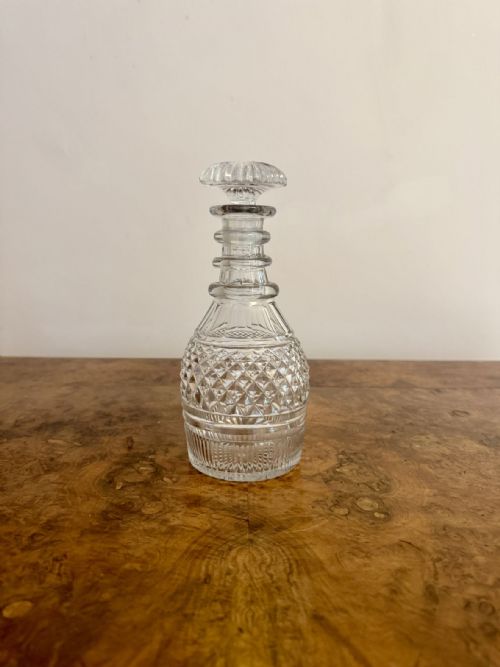
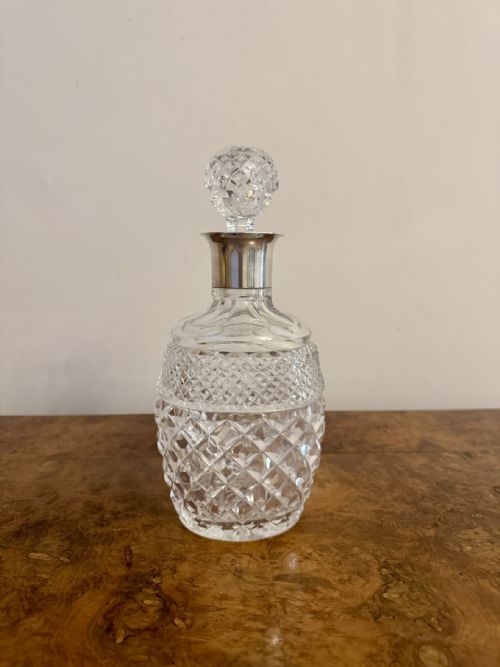
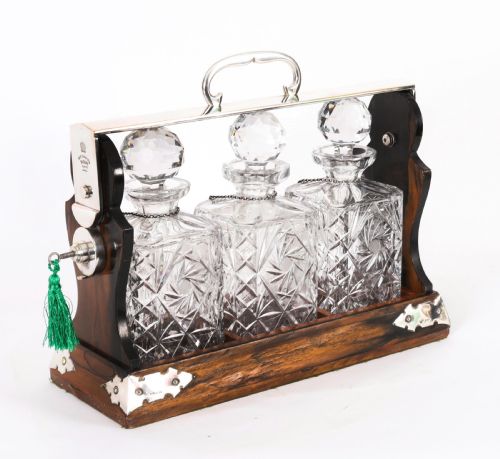
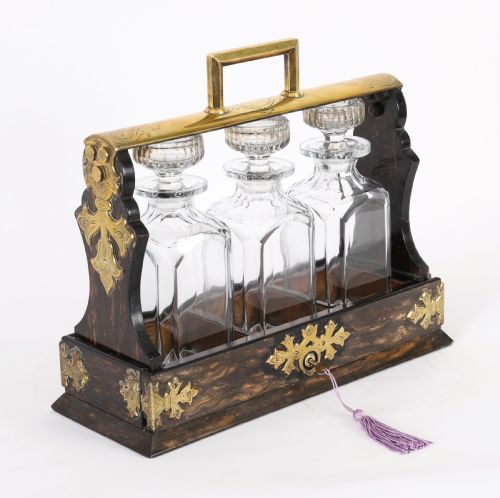
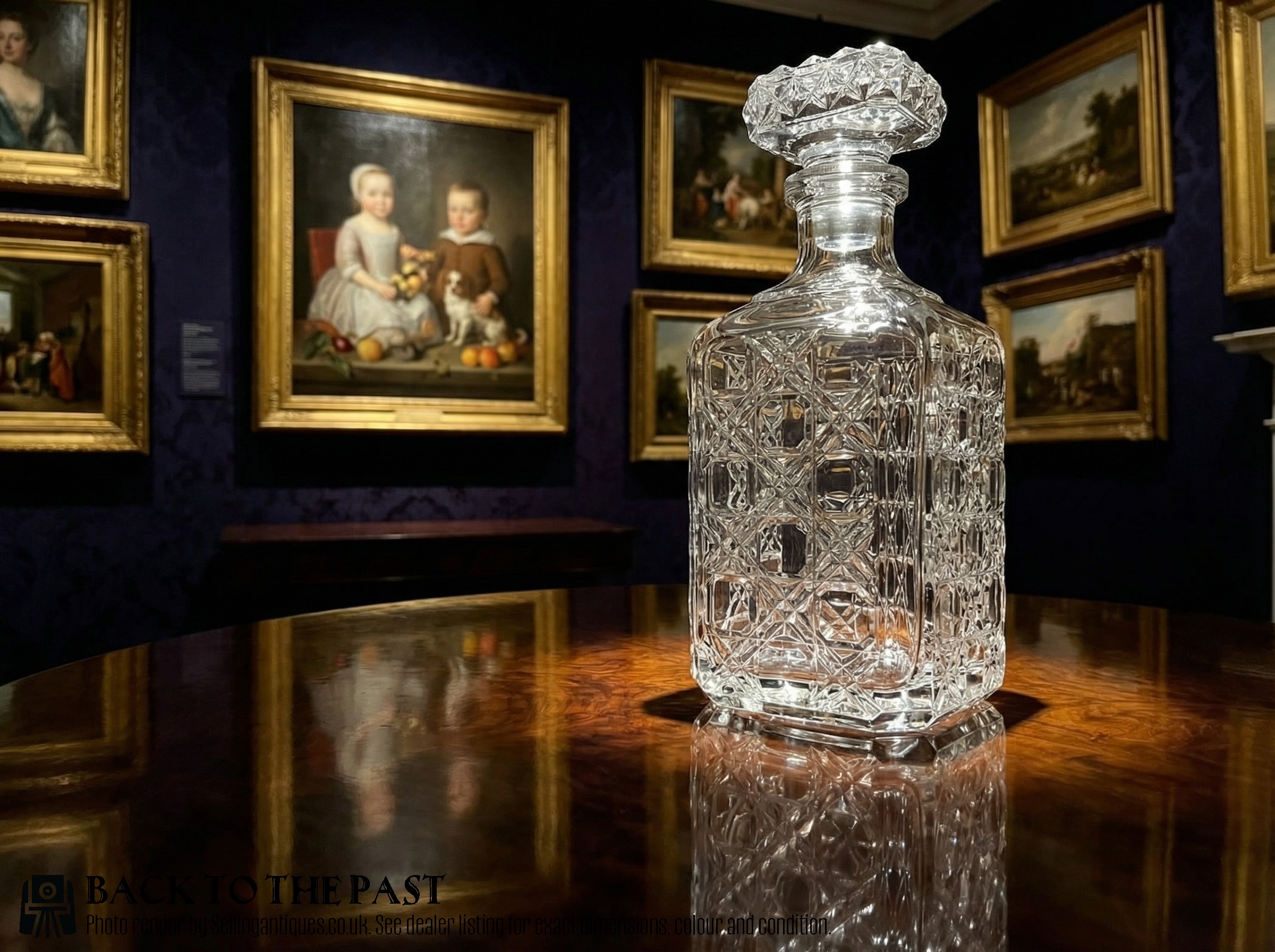
A vintage whisky decanter encompasses heavy crystal vessels, locking tantaluses housed in oak or coromandel, and smaller individual noggins designed for a single measure. These pieces originate from the Victorian, Edwardian, and Art Deco periods, spanning the late nineteenth and early twentieth centuries.
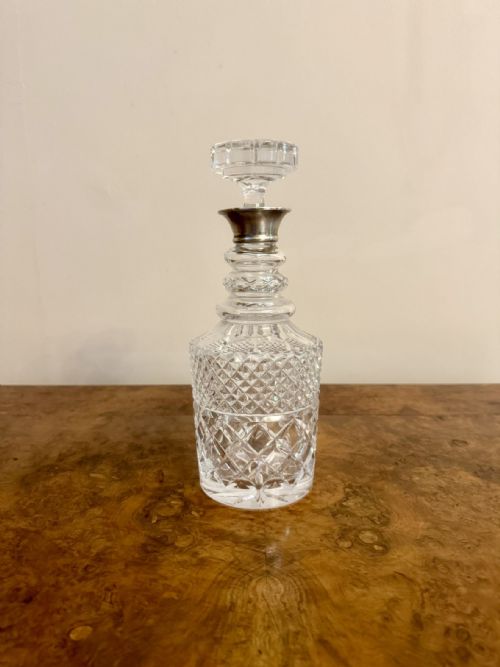
The most common form met on this page is the Edwardian cut glass or lead crystal decanter, often fitted with a silver collar or paired in sets. Tantaluses and spirit barrels also appear frequently, alongside ceramic flasks and geometric Czech glass sets from the nineteen-thirties.
Materials and Technique
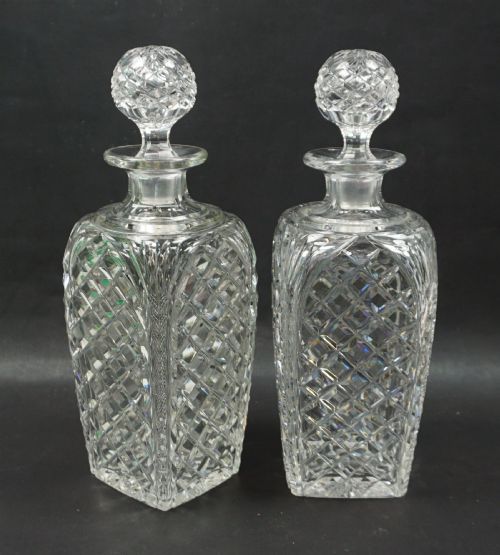
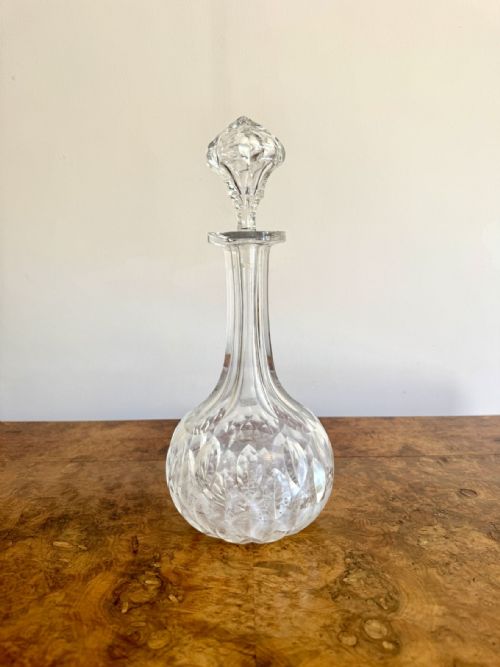
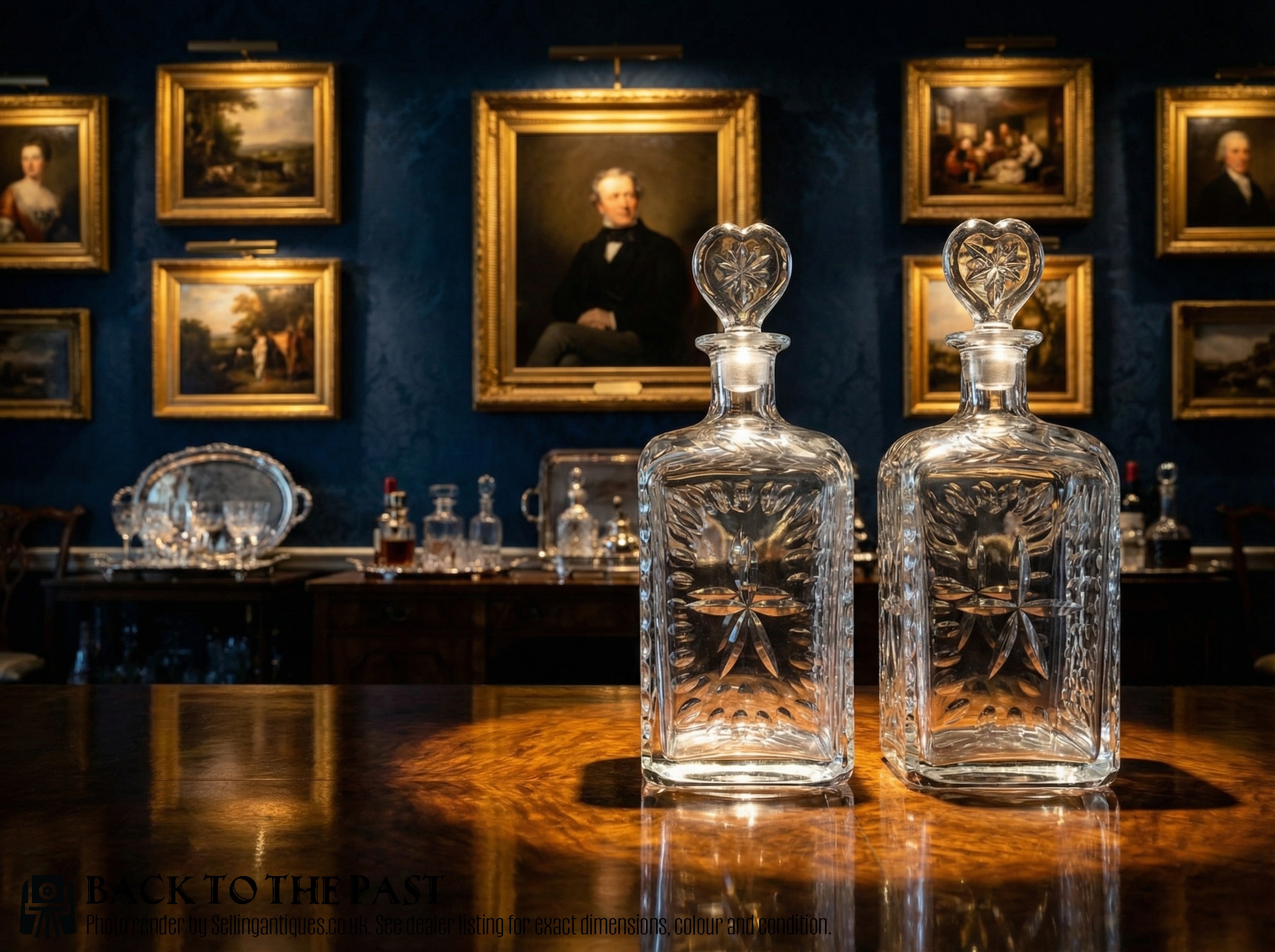
Cut glass and lead crystal form the body of most decanters, shaped by blowing and deep wheel-cutting to create geometric facets that catch the light. Silver plate and sterling silver provide mounts, collars, and hinged locking bars for tantaluses.
Cabinetmakers constructed the housing boxes from oak, blonde oak, satinwood, and coromandel, frequently incorporating brass hardware and integrated games compendiums. Ceramics also feature through brown-glazed stoneware and jasper spirit flagons.
Vintage Whisky Decanter Retail Price Guide 2026
Typical asking prices for vintage whisky decanter among the pieces listed under this phrase on Sellingantiques today, from the lower quarter to the upper quarter. They describe what is for sale here now, not the wider market.
Some nineteenth-century drinkers kept their liquor secure by locking the decanters inside a tantalus that doubled as a travelling games box.
Assessing the Standard
Quality rests in the crispness of the glass cutting, the weight and clarity of the crystal, and the substantial nature of any silver mounts or locks. Superior pieces retain matching stoppers and display precise facets without clouding or surface wear.
Cabinetwork reveals distinction through the selection of veneers such as coromandel or satinwood, tight joinery, and fully functioning brass mechanisms in tantalus frames.
Betjemann·Karl Palda·Royal Doulton
The Vintage Whisky Decanter Glossary
- Tantalus
- A locking frame that holds decanters securely while displaying the contents, preventing unpermitted access when keyed shut.
- Noggin
- A small vessel or jug holding a single measure of spirits, frequently fitted with a sterling silver mount and a matching label.
- Lead crystal
- Glass containing metal oxide that increases weight, brilliance, and resonance, allowing for deeper and sharper wheel-cutting.
- Spirit barrel
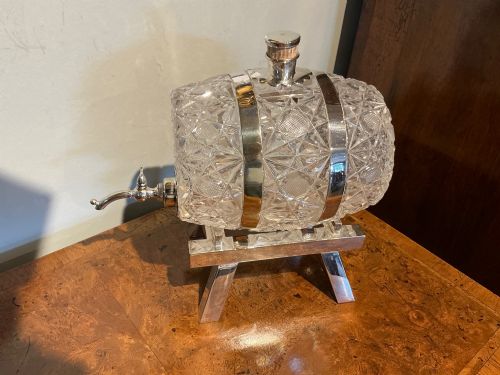
- A horizontal cask-shaped container mounted on a wooden cradle, used for storing and dispensing liquor.
- Games compendium
- A multi-use box incorporated into tantalus bases, containing items for cards, dice, or board games alongside the liquor bottles.
Vintage Whisky Decanter: Frequently Asked Questions
What is a tantalus?
A tantalus is a locking wooden frame that secures decanters behind a metal bar so the bottles cannot be removed without a key. This kept expensive spirits safe from unauthorized household staff.
Most examples house two or three cut crystal decanters and are constructed from oak or exotic hardwoods like coromandel.
How do I date a decanter?
Dating relies on hallmarks on silver collars, the depth and style of glass cutting, and the overall form. Edwardian pieces often feature bright-cut silver mounts, whilst Victorian examples tend towards heavier, deeper prismatic cutting.
Cabinet hardware and timber choices on fitted stands also provide reliable chronological indicators.
What is a whisky noggin?
A whisky noggin is a small individual jug or decanter holding a single measure, popular in the late nineteenth and early twentieth centuries. They usually feature a sterling silver lip mount and an attached spirit label.
Collectors often find them paired with a star-cut base and a loop handle for easy pouring.