






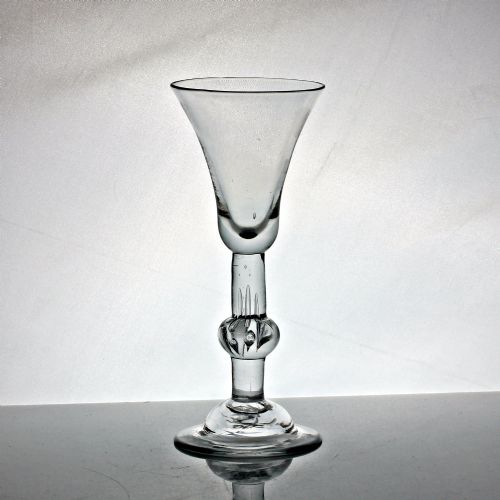








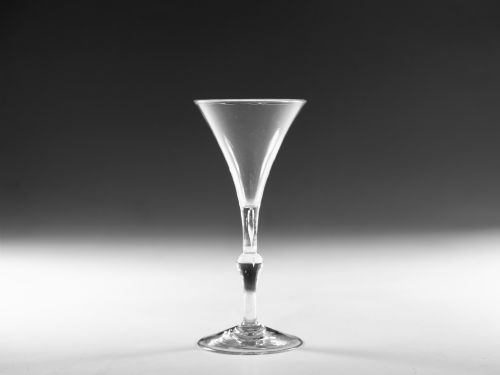
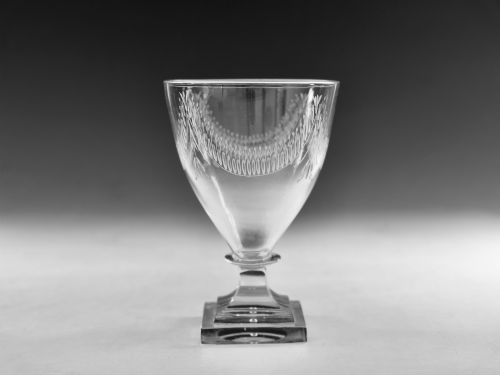
Georgian Crystal Goblet
These georgian crystal goblet examples bring hefty lead glass drinking vessels from the eighteenth and early nineteenth centuries straight to your table.
Georgian Crystal Goblet
A georgian crystal goblet search reveals heavy drinking vessels shaped for wine, rum, ale and champagne across the eighteenth century and the regency period. You will most frequently encounter lead glass pieces featuring baluster stems, twist stems or cut bowls.
The selection ranges from early baluster wine glasses and dram glasses to large serving rummers and faceted drinking glasses. These stemware pieces served functional roles at the table long before becoming cabinet items.
Originating predominantly in English workshops, these items span from the early seventeen hundreds into the nineteenth century. The forms alter from plain stems and air twists to heavy cut rummers and engraved bowls.
Materials and construction methods
Maker operations utilised lead glass, flint glass and lead crystal to achieve heavy weight and brilliant clarity in each vessel. The inclusion of lead oxide in the melt allowed glassmakers to draw out slender stems and form deep bowls.
Techniques varied from drawing air twists and inserting opaque white enamel threads into the stem to mould-blowing ogee and trumpet bowls. Artisans finished pieces by hand-polishing pontil marks and engraving surface details such as hops, barley and commemorative inscriptions.
Georgian Crystal Goblet Retail Price Guide 2026
Typical asking prices for georgian crystal goblet among the pieces listed under this phrase on Sellingantiques today, from the lower quarter to the upper quarter. They describe what is for sale here now, not the wider market.
Listings feature lead crystal, flint glass and clear glass across periods spanning the early eighteenth century, the regency era and the victorian age.
Factors influencing quality
Quality rests in the optical clarity of the lead crystal and the precision of the stem formation, whether managing air bubbles or arranging opaque enamel threads. Superior examples display crisp wheel engraving and well-balanced proportions between foot, stem and bowl.
Weight and thickness dictate the character of the vessel, with heavier lead-glass rummers and balusters demanding greater skill at the furnace. The crispness of facet cutting and the stability of folded feet further separate standard table glass from masterwork pieces.
The Georgian Crystal Goblet Glossary
- Air twist
- A stem formation created by drawing out internal air bubbles into spiral threads within the molten glass. This technique creates delicate optical patterns inside the stem.
- Baluster
- A heavy, thick stem style featuring knops and swelling profiles reminiscent of architectural balusters. It defines many early eighteenth-century drinking vessels.
- Opaque twist
- A stem containing white enamel glass rods twisted into single or double spiral strands. These threads create stark, opaque white lines inside clear glass stems.
- Rummer
- A large, sturdy drinking glass or goblet used for rum, wine or beer during the late eighteenth and early nineteenth centuries. They typically feature heavy stems and deep bowls.
- Pontil mark
- A rough scar left on the base of a vessel where the pontil rod was snapped off after blowing and finishing. Skilled artisans often ground or polished these marks flat.
Georgian Crystal Goblet: Frequently Asked Questions
How do you date a georgian crystal goblet?
Dating relies on combining stylistic evidence such as bowl shapes, stem configurations and foot construction. Early pieces often feature heavy baluster stems or folded feet, while later regency examples display deep facet cutting.
Material composition also assists, as high-lead flint glass produces specific weight and refractive traits characteristic of particular decades.
Were these goblets used daily?
These vessels served active roles at dining tables, taverns and formal gatherings for wine, ale, rum and champagne. Their robust lead-glass construction made them practical for regular toasts and communal drinking.
Over time, many surviving examples transitioned from active table service into display cabinets and collections.
What is an air twist stem?
An air twist stem is formed when trapped air bubbles inside molten glass are elongated and twisted into spiral threads during drawing. This creates shimmering internal patterns visible through the clear glass.
Makers produced single-spiral and multi-spiral variations across the eighteenth century.