


Georgian Crystal Decanter
A georgian crystal decanter brings heavy lead glass and sharp cut facets to the dining table, serving wine with unmistakable period weight.
Georgian Crystal Decanter
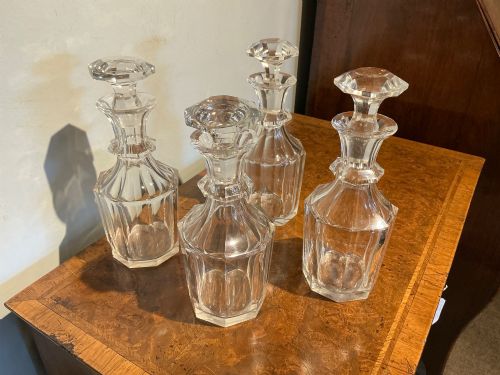
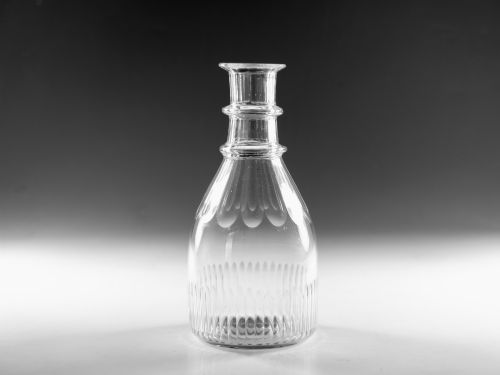
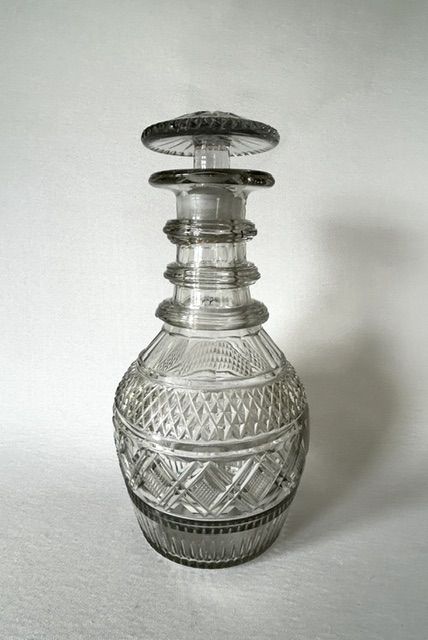
When searching for a georgian crystal decanter, you encounter vessels designed to hold wine and spirits, most frequently appearing from the Georgian, Regency, and nineteenth-century periods. These range from broad-based ship's decanters built to stay steady at sea to tall Prussian forms adorned with concentric neck rings.
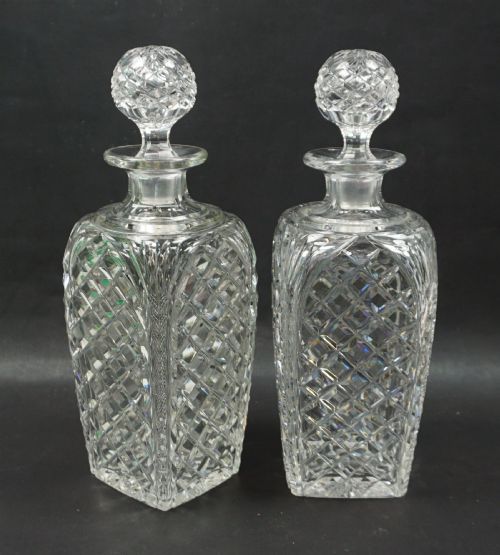
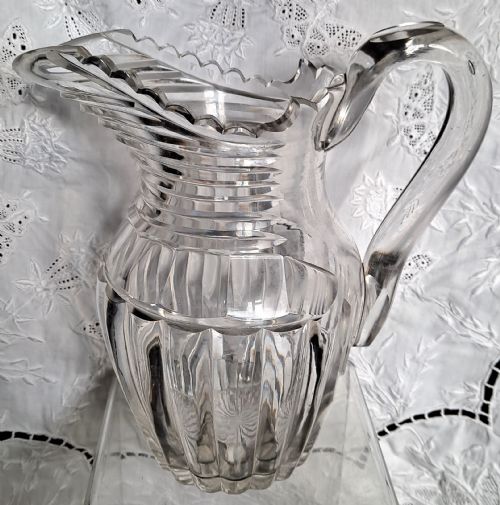
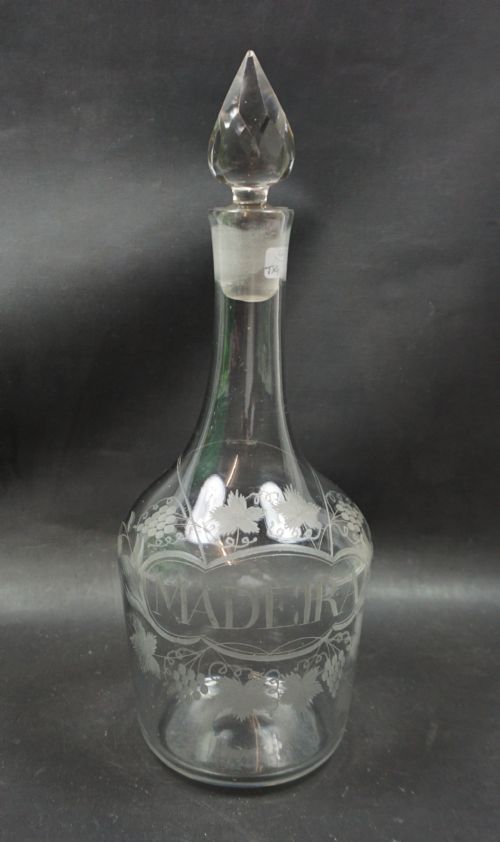
The selection includes matched pairs, single spirit vessels, and larger shoulder decanters engraved with beverage labels like Madeira. Alongside standard decanters, you will find related forms such as carafes, water jugs, and multi-bottle cruet sets made from clear glass.
English and Irish origins dominate the selection, spanning production from the mid-eighteenth century through the Edwardian era. You meet both plain lead glass bodies and heavily faceted cut crystal pieces fitted with matching stoppers.
How they were made
Glassmakers shaped these pieces using heavy lead crystal and clear lead glass, materials valued for their brilliance and weight. Artisans applied wheel-cutting techniques to create sharp facets, pillar cuts, and horizontal neck rings that helped secure a grip.
Decoration relied on surface engraving and etching to apply botanical motifs or drink labels directly onto the body. Stoppers were hand-ground to fit individual bottle necks securely, ensuring an airtight seal for stored spirits.
Listings feature lead crystal, cut glass, and silver plate across Georgian, Regency, Victorian, and Edwardian periods.
What varies in quality
Quality rests in the clarity of the lead crystal and the crispness of the wheel-cut facets. Superior examples display deep, sharp cutting that catches the light cleanly, whereas lower tiers show softer, shallower polishing.
The presence of an original matching stopper elevates a piece significantly, as many surviving decanters carry replacements. Weight and balance also separate standard utility vessels from finely proportioned cabinet pieces.
The Georgian Crystal Decanter Glossary
- Prussian decanter
- A form characterised by a wide body tapering towards the top, featuring three or more applied neck rings. This shape became popular during the late eighteenth and early nineteenth centuries.
- Ship's decanter
- A style featuring a broad, low base and a conical body designed to prevent tipping on rolling ocean vessels. It remains a practical and stable choice for dining.
- Lead crystal
- Glass containing a high proportion of lead oxide, which increases weight, brilliance, and workability for deep cutting. It forms the primary material for high-end Georgian glassware.
- Neck ring
- A horizontal band of glass applied around the neck of a decanter to provide a secure grip for pouring. These rings are often cut with facets or left smooth.
- Cruet set
- A matched assembly of small bottles or decanters held in a frame, used for condiments, oils, or vinegars at the table. These sets often incorporate cut glass and silver plate.
Georgian Crystal Decanter: Frequently Asked Questions
How do I clean an old decanter?
Residue inside can be removed using warm water and specialised cleaning beads, avoiding harsh abrasives that scratch the antique lead glass.
After washing, leave the vessel upside down on a drying rack until completely dry inside before replacing the stopper.
Were these decanters meant for red wine?
Many served port, Madeira, and heavy red wines, while smaller versions held white wine, spirits, or liqueurs.
Their thick lead crystal walls kept contents cool and allowed safe pouring at the dining table.
How can I tell a Georgian piece from a later copy?
Examine the base for a polished pontil mark where the glassblower's rod was snapped off and smoothed away.
Genuine eighteenth and early nineteenth-century pieces also show subtle irregularities in the hand-blown body and hand-cut facets.
Can I still use them to serve wine today?
These vessels remain fully functional for decanting and serving contemporary wines and spirits.
Hand washing is essential to protect the historic lead glass and preserve the clarity of the crystal.