
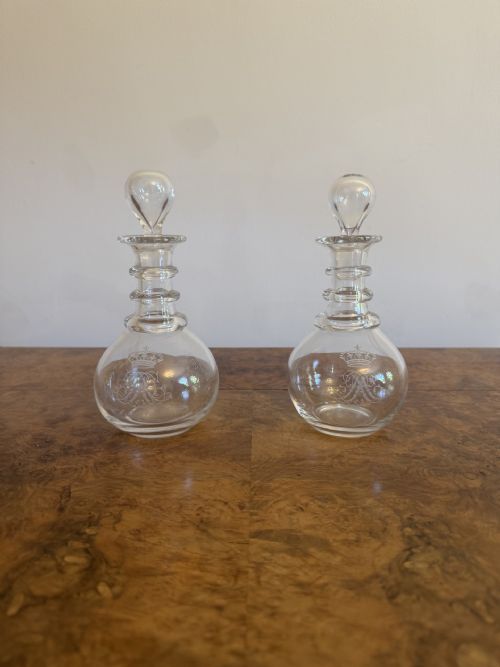


Ring Neck Decanters
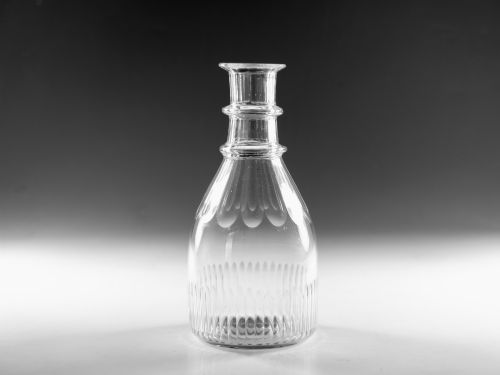
Ring neck decanters are heavy glass vessels defined by horizontal bands around the neck, made to hold spirits and wine securely on the dining table.
Ring Neck Decanters
Ring neck decanters are classic serving vessels featuring distinctive concentric glass rings encircling the upper neck, designed originally to give servants a secure grip with wet hands. When you browse this selection of ring neck decanters, you encounter forms ranging from George III and Regency periods through to Victorian and Edwardian examples. The inventory spans straightforward spirit decanters and larger rum or ship's decanters.
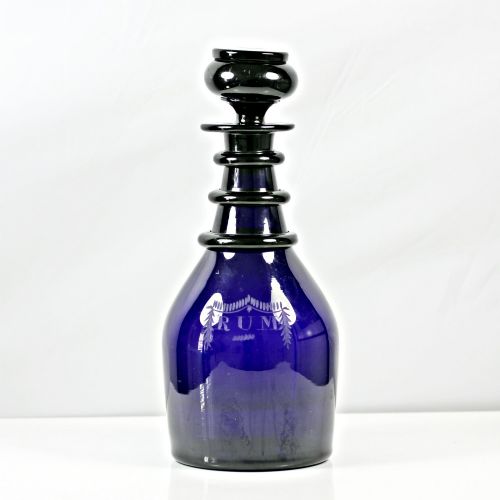
Most pieces you meet date from the Georgian and 19th Century eras, rendered in clear lead glass or crystal. Certain specimens appear in striking colours like Bristol blue or cobalt glass, sometimes heightened with gold leaf. You find them presented singly or as matched pairs, suitable for both display and actual use on the sideboard.
How They Were Made
These vessels rely on lead crystal, lead glass, and standard clear or coloured glass, blown into moulds or free-blown before receiving their final form. The characteristic neck rings are applied as hot glass trails or shaped directly from the body during the blowing process. Artisans then cool and anneal the metal carefully to prevent internal stress within the thick glass.
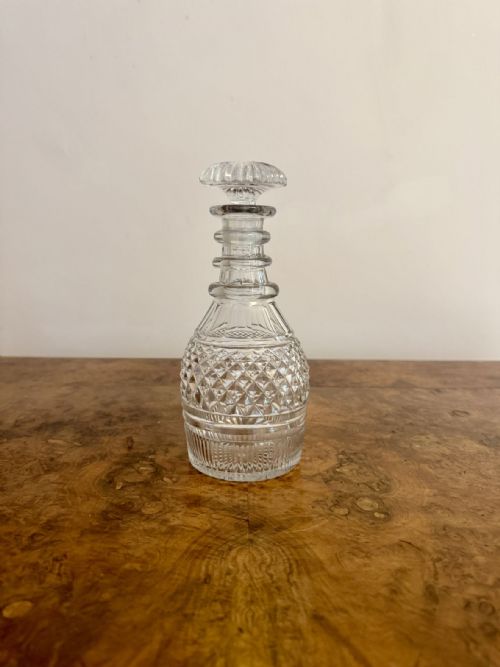
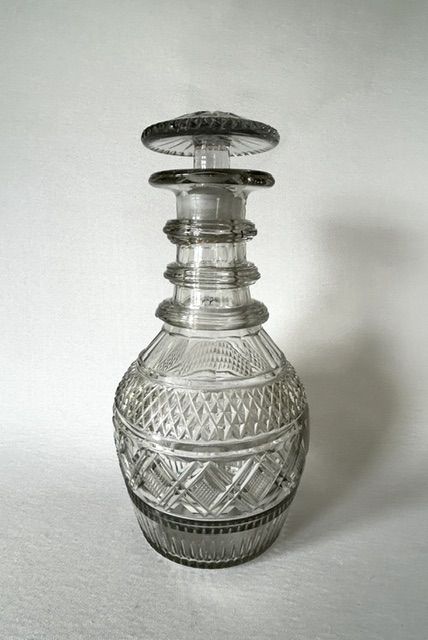
Cut glass decoration is applied by holding the vessel against rotating stone and metal wheels, creating flutes, pillars, and geometric facets that catch the light. The surfaces are polished by hand to achieve the brilliance seen on Regency and Georgian pieces. Stoppers are ground individually to fit each specific neck, ensuring a tight seal for the contents.
Listings feature lead crystal and cut glass from the Georgian, Regency, Victorian, and Edwardian periods, alongside cobalt glass and gold leaf details.
What Varies In Quality
The clarity and weight of the glass set the foundation for quality, with heavy lead crystal offering a sonorous ring and deep refraction compared to lighter standard glass. The precision of the wheel-cut facets dictates the crispness of the geometric patterns, where sharper edges and deeper cuts show greater hand skill. The number and symmetry of the neck rings also influence the overall elegance and balance of the silhouette.
The originality and fit of the stopper matter significantly, as matched original stoppers contribute greatly to the integrity of the piece. Minor variations in hand-blown forms, such as slight bubbles or striations in the metal, reflect the period manufacturing methods rather than detracting from the merit of the decanter.
The Ring Neck Decanters Glossary
- Ring neck
- The horizontal glass bands formed around the upper neck of the vessel. These rings serve both a decorative purpose and a practical function for gripping.
- Lead glass
- A type of glass containing lead oxide, which increases the weight, refractive index, and clarity of the material. It forms the basis of the finest decanters.
- Pillar cut
- A decorative cutting technique featuring wide, vertical flutes resembling architectural columns. This style appears frequently on Regency and Georgian pieces.
- Bristol blue
- A deep cobalt blue glass traditionally produced in the West Country of England. Decanters in this colour were popular for holding spirits.
- Ship's decanter
- A style with a broad base and sloping sides designed to prevent tipping at sea. These are common among early 19th-century examples.
Ring Neck Decanters: Frequently Asked Questions
What are ring neck decanters used for?
These vessels were originally manufactured to hold and serve wines and spirits such as rum, whisky, and port at the dining table. The neck rings provided a secure grip for pouring while passing the decanter among guests.
Today, collectors use them to display traditional barware or continue using them to decant and aerate vintage spirits and fortified wines.
How do I date an antique decanter?
Dating relies on observing the overall shape, the style of the cut glass decoration, and the profile of the neck rings. Georgian and Regency examples often feature heavy lead glass and specific pillar or flute cutting patterns.
Later Victorian and Edwardian pieces display different proportions and machine-assisted finishes. Comparing the pontil mark on the base also helps establish the manufacturing period.
Are original stoppers important?
Original stoppers that match the glass colour, weight, and cutting style are significant for the completeness of the piece. Each stopper was traditionally ground to fit its specific neck during production.
Finding a decanter with its matching original stopper enhances both its historical integrity and its visual balance on the sideboard.
How should I clean an old decanter?
Cleaning requires patience and gentle methods to preserve the antique glass and avoid thermal shock. Warm water and mild soap are generally preferred over harsh commercial detergents.
Stubborn interior residue can be addressed using specialised cleaning beads or rice with vinegar, followed by thorough air drying upside down.