
English Cut Glass
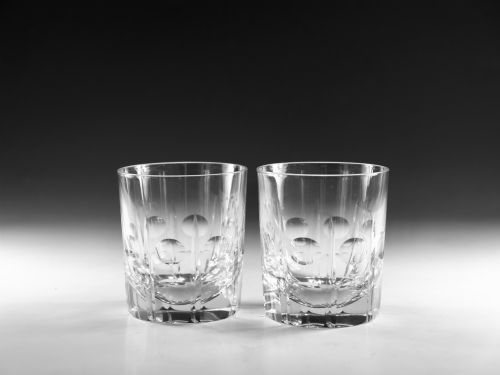
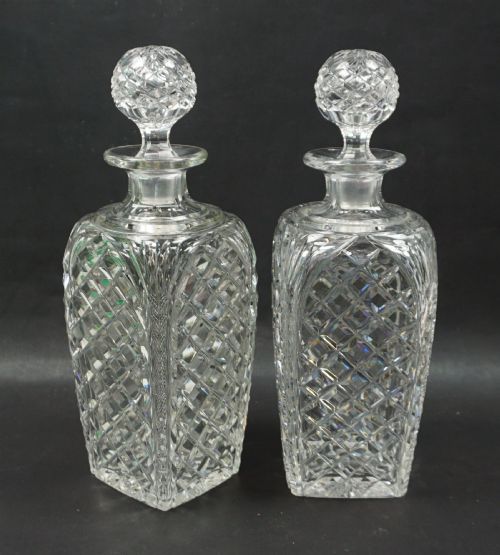
English cut glass brings weight and brilliance to the table, taking the form of decanters, rummers and heavy tumblers shaped by wheels and polished by hand.
English Cut Glass
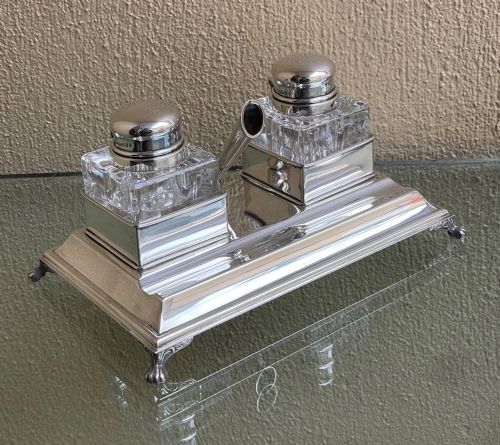
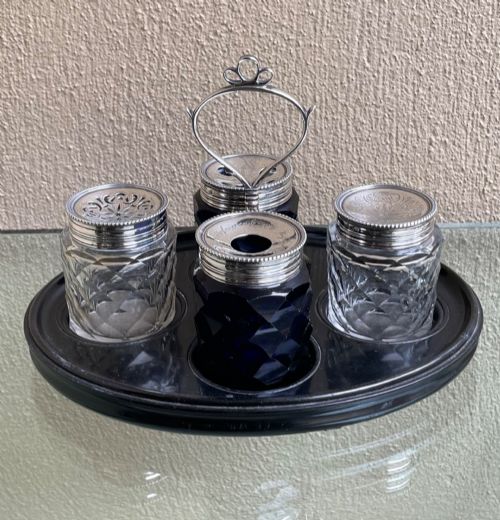
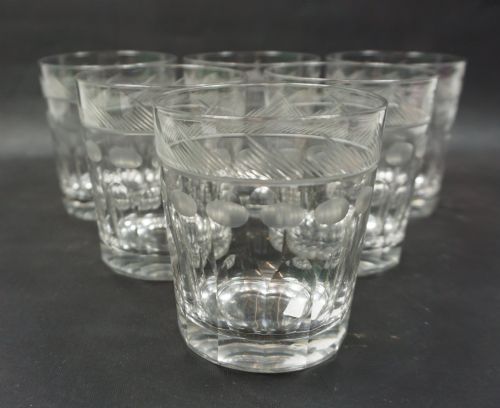
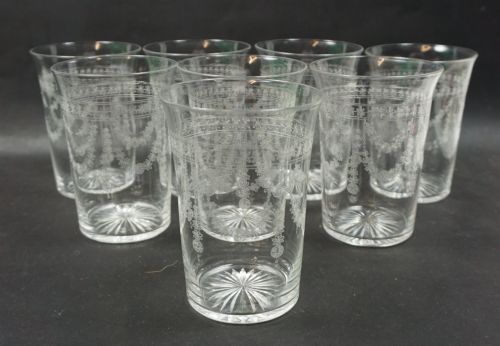
Collectors seeking english cut glass examine vessels made for the dining table, sideboard and desk, ranging from Georgian rummers and ship's decanters to Victorian jugs and Edwardian tumblers. Drinking vessels and serving pieces dominate the selection, alongside desk accessories fitted with silver collars and hinges.
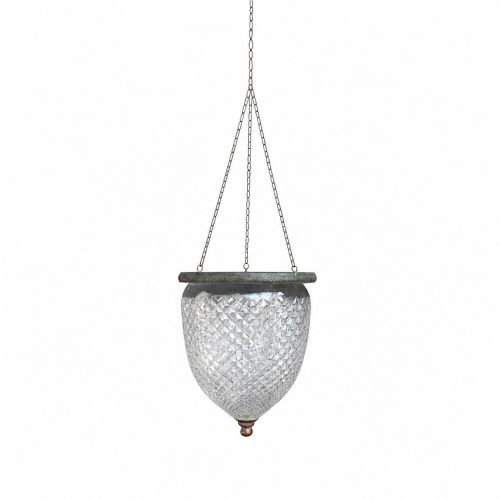
The objects span production from the late eighteenth century through the Edwardian era and into Art Deco designs, uniting heavy lead glass with deep faceted cutting. Drinking glasses, decanters and table lamps show how functional items received decorative geometric and botanical motifs through wheel cutting.
Rummers, carafes and spirit bottles appear frequently, often paired with sterling silver or silver-plated mounts. These pieces reflect the changing social habits of dining and entertaining across the nineteenth century.
How they were made
Glassmakers shaped these pieces using heavy lead glass and crystal compositions that permitted deep wheel cutting and sharp facets. Artisans applied abrasive wheels to the cooled vessel to grind away material, creating flutes, diamonds and star patterns before polishing the surface to transparency.
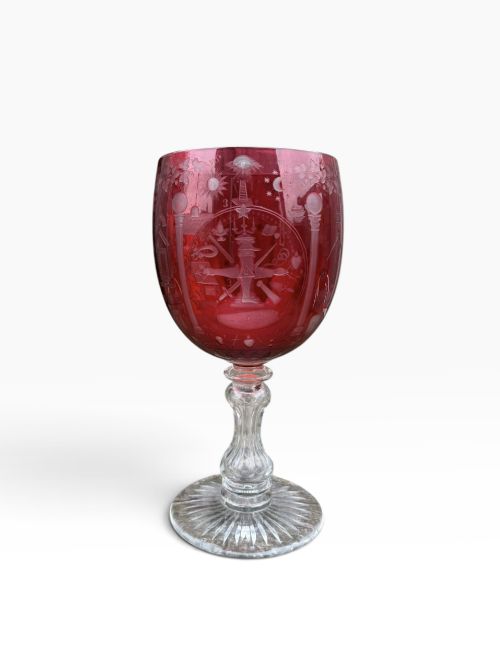
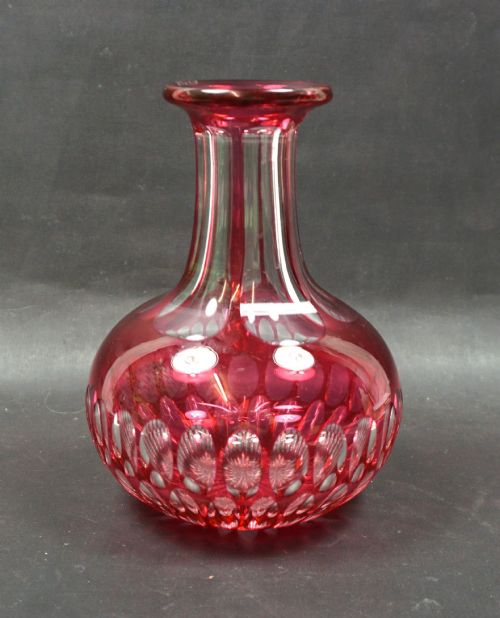
Overlay techniques added coloured glass layers over clear crystal, allowing cutters to slice through the outer ruby, cranberry or purple layer to reveal clear glass beneath. Metal mounts in sterling silver, brass and silver plate were then added to rims, bases and stoppers.
Engraving supplemented the cutting with fine details such as birds, vines and commemorative inscriptions, executed with smaller rotating copper wheels.
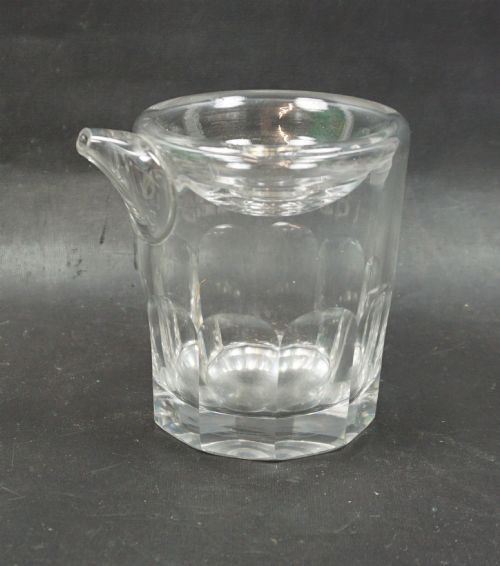
Feeding cups in crystal show that nineteenth-century invalids took their nourishment through cut glass spouts.
What varies in quality
Weight and thickness set the foundation for quality, as heavier lead crystal allowed deeper, sharper facets that catch the light cleanly. Crisp edges along the cut patterns distinguish skilled wheel work from softer, shallower impressions found in simpler commercial production.
The clarity of the metal itself matters, with superior glass showing no internal bubbles, striations or dullness. Matching components, such as original fitted stoppers for decanters and undamaged silver mounts, preserve the integrity of the piece.
William Rudkins·Richardsons·Stevens and Williams·John Round·J Dixon·Martin Hall·Henry Perkins
The English Cut Glass Glossary
- Rummer
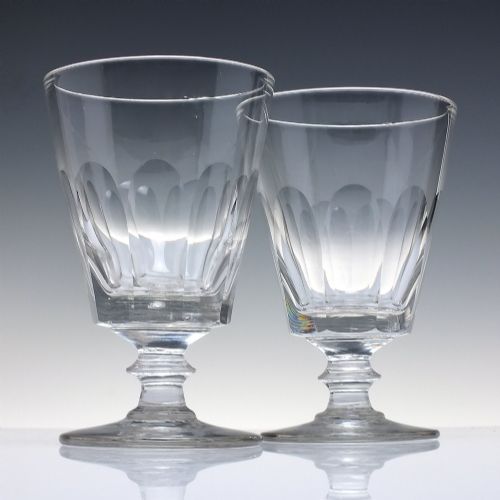
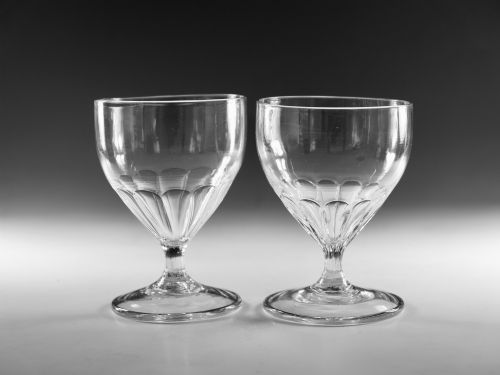
- A large heavy drinking glass with a short stem and a capacious bowl, popular in the Georgian and Victorian periods for ale, wine or punch. These sturdy vessels often featured facet cutting around the lower bowl.
- Overlay
- A technique where a layer of coloured glass is fused over a clear crystal body before cutting. The cutter grinds through the coloured exterior to expose the clear glass underneath, creating high contrast patterns.
- Celery vase
- A tall, footed glass vessel designed to hold stalks of celery upright on the dining table during the nineteenth century. They frequently shared the heavy cut decoration of contemporary rummers and decanters.
- Ship's decanter
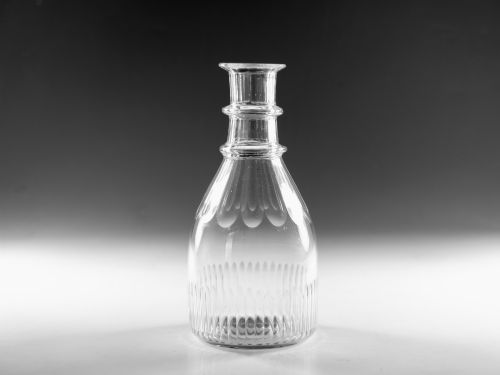
- A decanter with a broad, stable base and a conical body designed to prevent tipping at sea. The low centre of gravity made them practical for dining rooms aboard vessels and in homes alike.
- Intaglio
- A method of engraving where the design is ground into the glass surface rather than left in relief. This technique produced detailed botanical and figurative scenes on goblets and scent bottles.
English Cut Glass: Frequently Asked Questions
How do I date english cut glass?
Dating relies on combining the form of the vessel with the style of the cutting and any accompanying metal mounts. Georgian pieces often display thick metal with simple flutes and prisms, while Victorian examples introduce complex overlay colours and heavier press-moulded elements.
Silver collars and hallmarks provide precise decades for mounted items like scent bottles and decanters. Comparing the pontil mark and rim finish helps distinguish eighteenth-century hand-blown glass from later Victorian production.
Were these decanters used for port or wine?
Decanters served multiple roles on the dining table, holding port, sherry, claret and spirits such as whisky. Ship's decanters and spirit bottles accommodated daily hospitality in the Victorian home.
Matching sets often accompanied games compendiums and tantaluses during the Edwardian period. Their heavy cut crystal walls protected the contents and added sparkle to the sideboard.
How should I clean cut glass?
Washing requires warm water and mild detergent, avoiding sudden temperature shifts that can crack heavy lead crystal. Soft cloths prevent scratching the polished surface of antique decanters and rummers.
Metal mounts demand separate care to keep silver and brass polished without touching the glass. Stained interiors in decanters respond to specialised cleaning beads rather than harsh abrasives.
Why do some pieces have coloured layers?
Coloured layers, known as overlay or cased glass, added visual depth to nineteenth-century tableware. Makers fused ruby, cranberry or purple glass over clear crystal before cutting through the exterior colour.
This method created striking contrasts between the bright facets and the saturated hues. Such techniques appeared on decanters, scent bottles, lustres and champagne coupes.