




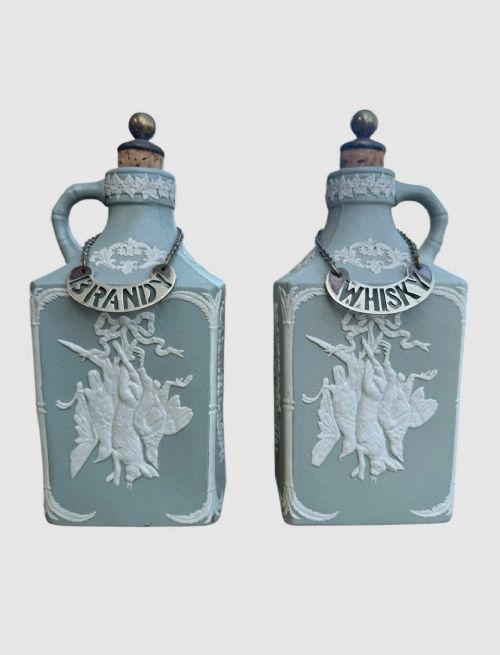
Vintage Whiskey Decanter
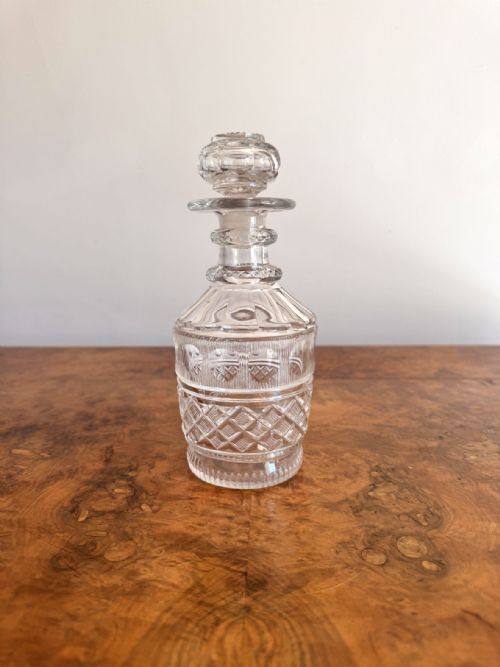
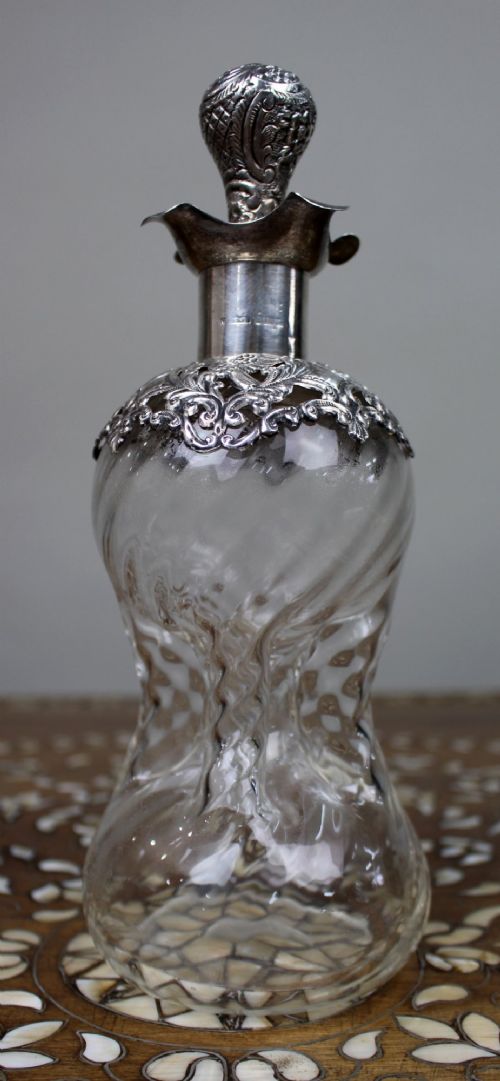
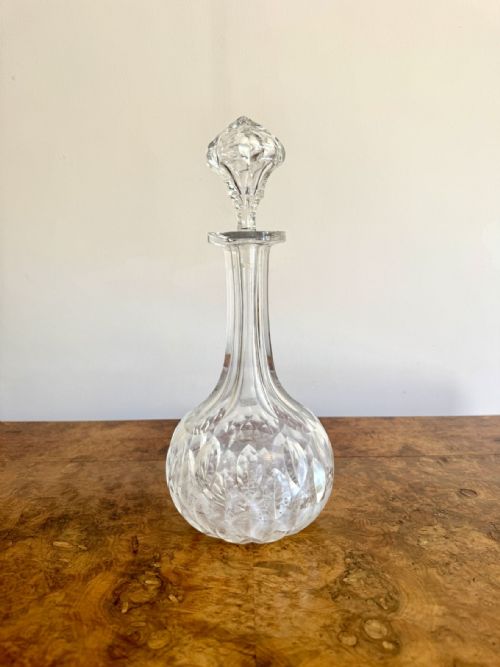
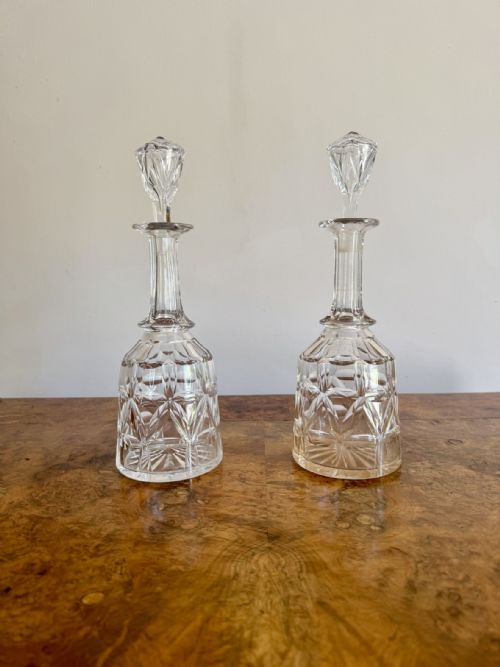
When you search for a vintage whiskey decanter, you are looking at heavy cut glass, silver-collared vessels and locking oak tantaluses built to hold spirits.
Vintage Whiskey Decanter
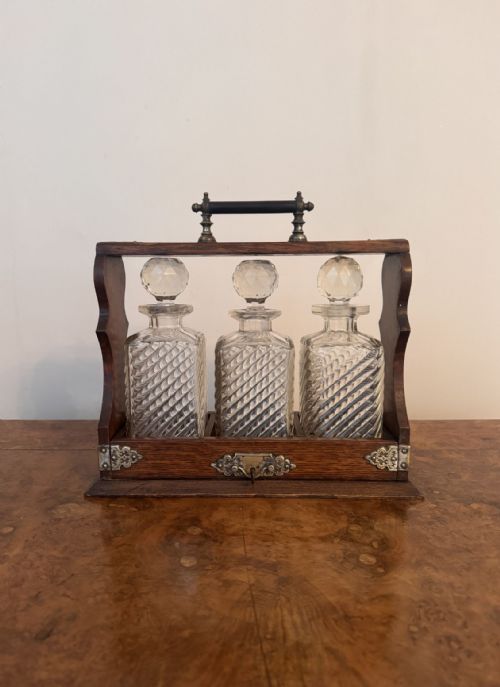
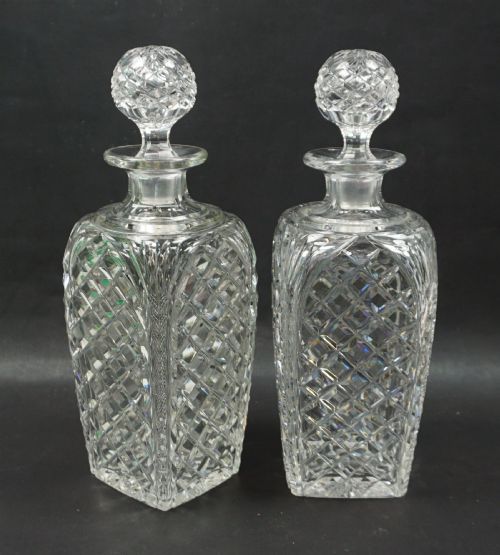
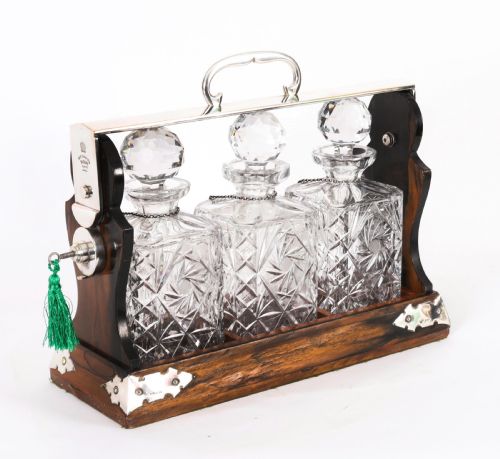
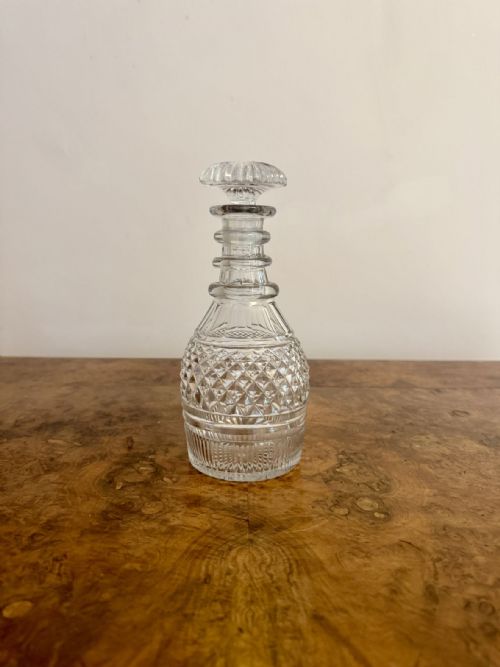
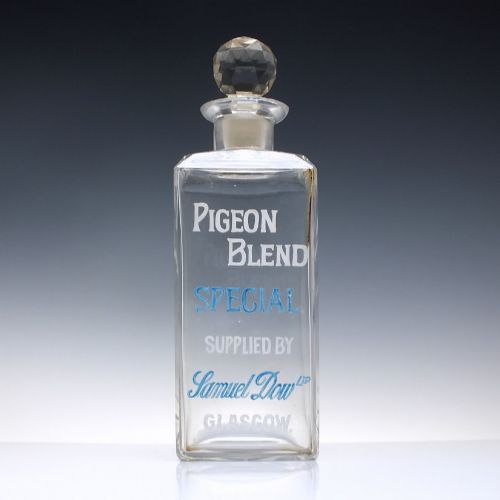
A vintage whiskey decanter encompasses a range of serving vessels, from standalone square-section crystal bottles to elaborate locking tantalus frames housing three decanters alongside games compendiums. The examples appearing most frequently on this page hail from the Edwardian and Victorian periods, often featuring deep cut glass or silver collars.
How they were made
Makers utilised clear lead crystal and heavy glass, shaping vessels through blowing and deep wheel-cutting to create geometric facets that catch the light. These glass bodies were frequently paired with mounted sterling silver collars, silver plate mounts, and fitted wooden frameworks in oak, coromandel and walnut.
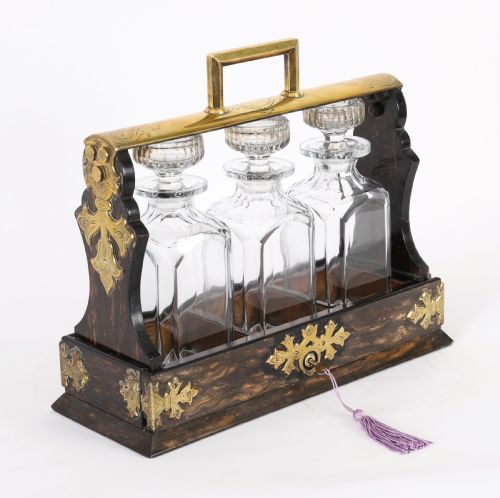
Locking mechanisms on tantalus frames involved brass hardware and working keys to secure the decanters within their wooden bases, while ceramic pieces like Royal Doulton flasks utilised moulded stoneware with glazed relief motifs.
Object forms on this page range from standalone decanters and matching glass sets to locking tantalus frames and ceramic whisky flasks.
What varies in quality
The distinction between ordinary production and top-tier pieces lies in the crispness of the glass cutting, the weight of the lead crystal, and the substance of the metal mounts. Substantial sterling silver collars bearing clear hallmarks elevate a piece above standard silver-plated alternatives.
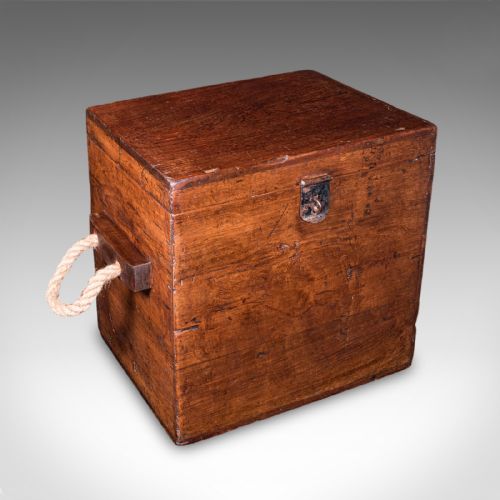
Joinery and hardware distinguish the housing boxes and tantaluses, where figured timbers like coromandel or satinwood inlay, integrated games compendiums, and original functioning locking mechanisms separate standard containers from masterwork examples.
Betjemann·Karl Palda·Royal Doulton
The Vintage Whiskey Decanter Glossary
- Tantalus
- A locking wooden frame that holds decanters securely by their stoppers, displaying the bottles while preventing access without a key. This device gained popularity in the late nineteenth century.
- Noggin
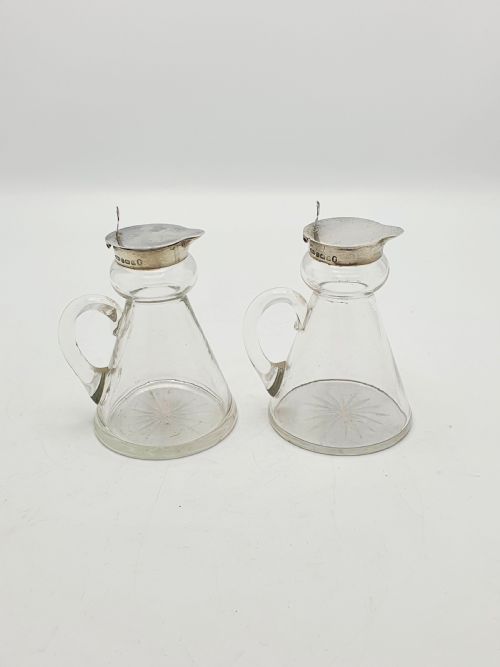
- A small drinking vessel or jug, often fitted with a silver mount and a hinged lid, specifically designed for serving a single measure of whisky. These typically include a matching spirit label.
- Square section
- A bottle profile featuring flat sides and a heavy base, designed to prevent tipping during transit or aboard maritime vessels. This shape is common in nineteenth-century spirit storage.
- Coromandel
- A dense, heavily grained exotic timber from Asia used for luxury Victorian box construction and tantalus frames. It provides a dark, striped surface finish.
- Kingsware
- A specialised brown-glazed stoneware developed by Royal Doulton featuring moulded relief decoration. These flasks often depict historical figures or sporting motifs.
Vintage Whiskey Decanter: Frequently Asked Questions
What is a whiskey tantalus?
A whiskey tantalus is a locking wooden stand that secures decanters in place with a metal bar over the stoppers. This kept expensive spirits safe from unauthorised access by household staff.
The frame allowed the bottles to remain on display while the key stayed with the master of the house.
How do I use a whisky noggin?
A whisky noggin is a small individual jug used to pour single measures at the table or desk. They are generally fitted with a handle and a lip for controlled pouring.
Many examples include an integrated silver label hanging from the neck to identify the contents.
Are these decanters safe for modern whiskey?
These glass and crystal vessels are suitable for holding spirits for serving and short-term storage. Traditional lead crystal formulations were standard for high-end spirit decanters of the period.
For daily consumption, modern users typically avoid storing high-proof alcohol in antique decanters for extended months.
How do I date an antique decanter?
Dating relies on the manufacturing style, glass-cutting depth, and any accompanying metal hallmarks. Victorian pieces often show heavier cutting and robust silver mounts, while Edwardian examples favour lighter collars and George V pieces carry specific assay office marks.
Fitted boxes and tantaluses also reflect the cabinet-making trends of their respective decades.