




Ruby Flashed Glass
Ruby flashed glass brings rich colour and layered depth to a room, catching the light across decanters, vases, and tableware.
Ruby Flashed Glass
When you search for ruby flashed glass, you look at objects created by applying a thin layer of red glass over a clear or contrasting body before cutting or engraving through the surface. These pieces span the eighteenth, nineteenth, and early twentieth centuries, originating from English and Bohemian workshops.
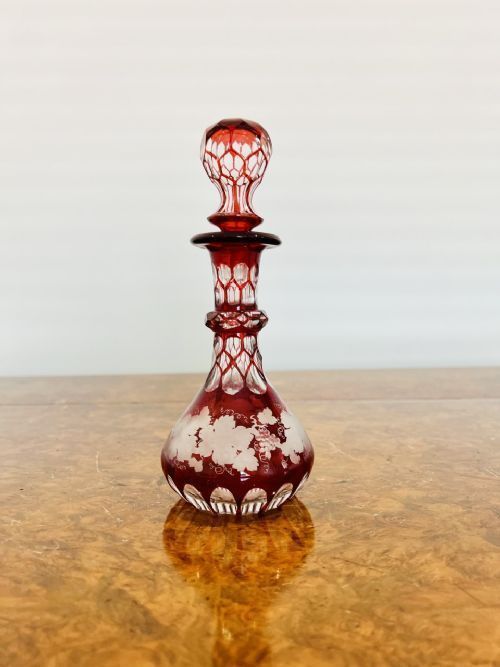
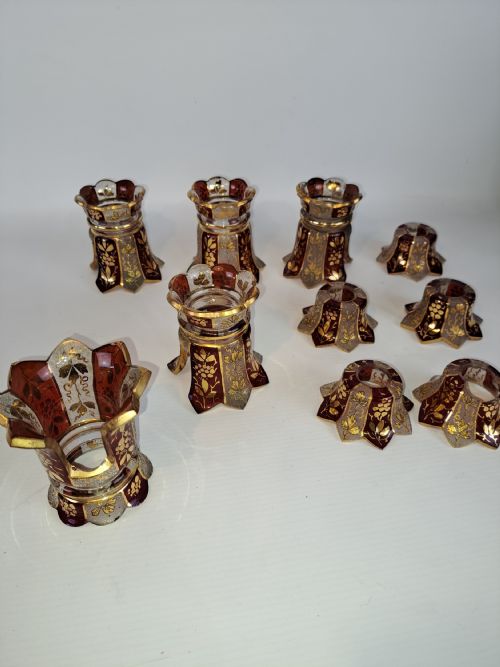
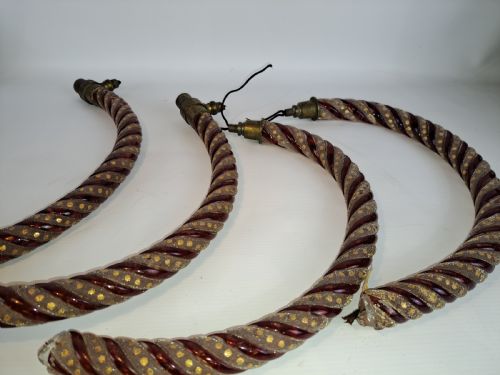
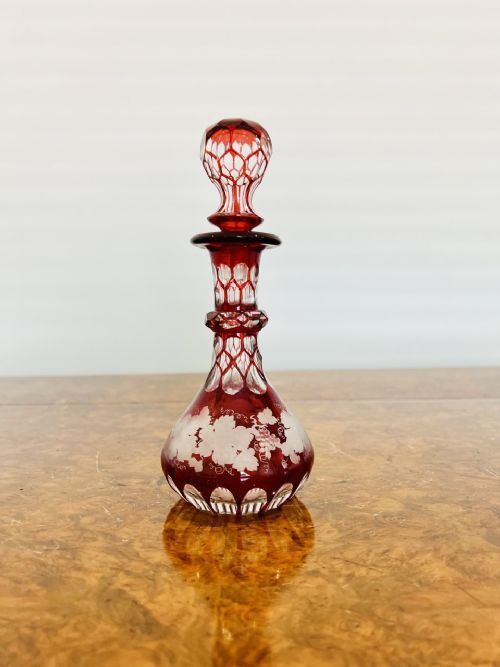
The most common forms on this page include decanters, spirit bottles, vases, tumblers, and glassware alongside architectural lighting components such as chandelier arms, bowls, and stems. Victorian and Edwardian examples dominate the selection, often pairing the deep red colour with cut crystal or overlaid clear glass underneath.
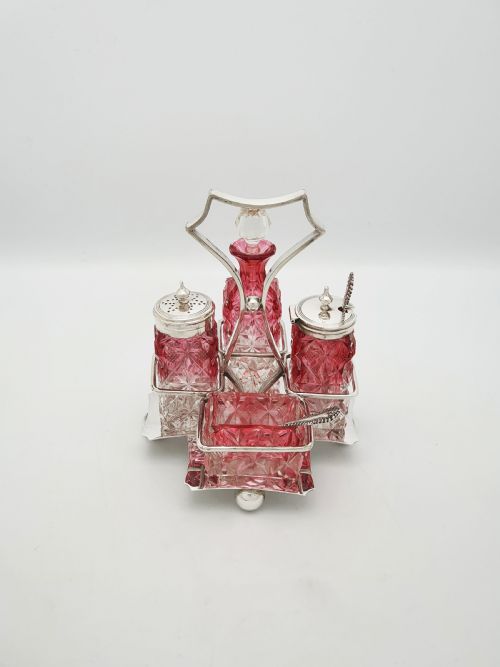
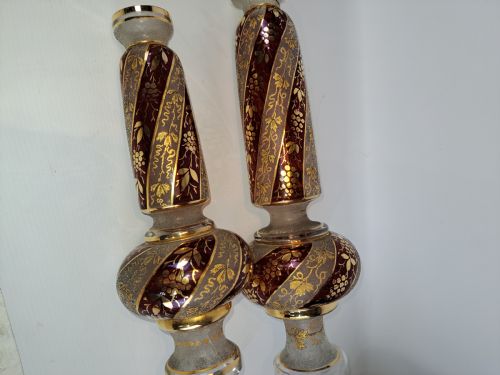
Tableware and decorative items range from cruet sets and champagne coupes to lustres and small scent bottles. Bohemian pieces frequently display elaborate gilding, etching, and frosting, while English pieces often favour engraved vines and birds.
How ruby flashed glass was made
The method relies on casing or flashing, where a gather of clear glass is dipped into a crucible of molten red glass to form a thin exterior skin before blowing. This dual-layer composition allows artisans to cut, etch, or grind away sections of the outer red layer to reveal the clear or frosted glass beneath.
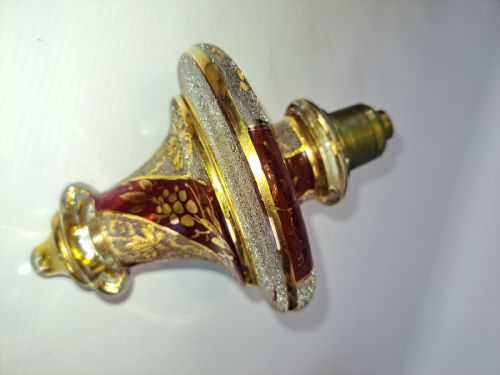
Makers enhanced these vessels using gold leaf, surface enamel, and wheel engraving to depict botanical motifs, birds, and geometric panels. Metal mounts in silver plate and brass occasionally complete items such as cruet sets and perfume bottles.
Materials documented across the inventory include ruby glass, cranberry glass, cut crystal, gold leaf, enamel, and brass.
What varies in quality
The precision of the wheel engraving and the depth of the wheel-cut facets dictate the artistic merit of each piece. Crisp, sharply defined cut panels reveal the clear crystal underneath with absolute clarity against the rich ruby surface.
The application of gilding and enamel work also separates standard utility items from finer decorative pieces. Hand-applied gold leaf that remains bright and intact shows superior craftsmanship from Bohemian and English workshops alike.
The Ruby Flashed Glass Glossary
- Flashing
- A technique of applying a thin layer of coloured glass over a colourless body during the blowing process. This creates a dual-colour effect suitable for surface cutting.
- Overlay
- A thicker layer of coloured glass applied over a clear base than flashing, allowing for deep relief cutting through the top colour. This method exposes the contrasting crystal underneath.
- Lustre
- A decorative table ornament featuring a bowl and stem hung with cut glass prisms. These pieces reflect candlelight through the surrounding ruby glass components.
- Cruet set
- A matched collection of small glass bottles or cruets held in a stand for condiments and oils. They frequently incorporate silver plate frames alongside cut ruby glass.
- Chandelier component
- Individual manufactured parts such as arms, bowls, stems, and capitals made for hanging light fixtures. These elements demonstrate the decorative use of ruby glass in architectural settings.
Ruby Flashed Glass: Frequently Asked Questions
How do I clean ruby flashed glass?
Wash these pieces by hand using lukewarm water and mild soap. Avoid soaking items that incorporate delicate gilding, enamel work, or metal mounts.
Dry them immediately with a soft cloth to protect the surface sheen and prevent water spots on the glass.
Can I use these decanters for wine?
Most antique decanters and carafes function adequately for serving wine or spirits on the dining table. Ensure you check the interior for any stubborn residue before filling.
Hand wash the vessel promptly after use to maintain the clarity of the clear and ruby layers.
How do I tell Bohemian from English pieces?
Bohemian items frequently display heavy gilding, frosted panels, and elaborate wheel-cut foliage or architectural chandelier components. They often date from the nineteenth century.
English pieces tend to focus on decanters and tableware with precise engraved birds and vines over clear crystal.
What is the difference between flash and overlay?
Flashed glass uses a very thin surface coating of coloured glass blown over a clear base. This skin is easily removed by light etching or cutting.
Overlay involves a substantially thicker layer of coloured glass that permits deep, dimensional facet cutting into the body of the object.
Are chandelier parts usable for restoration?
Individual arms, bowls, stems, and capitals serve as replacement elements for antique lighting fixtures. Matching the exact period and colour tone ensures a cohesive restoration.
Consult a specialist restorer to fit these fragile components safely onto existing metal frames.