
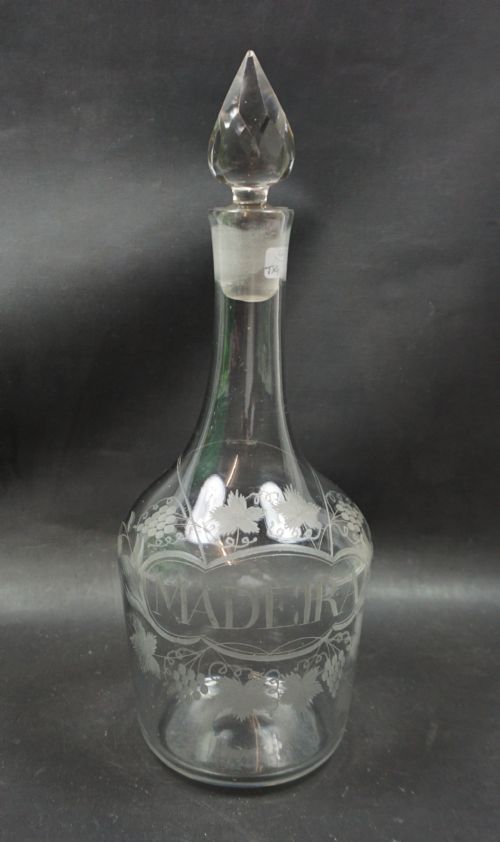


Lead Crystal Spirit Decanter
A lead crystal spirit decanter brings weight and brilliant refractive cut glass to a sideboard or table.
Lead Crystal Spirit Decanter
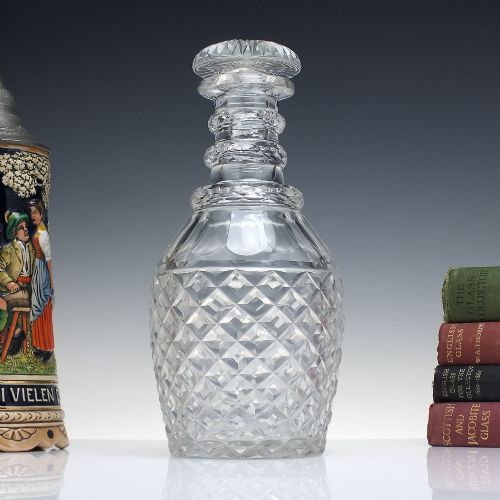
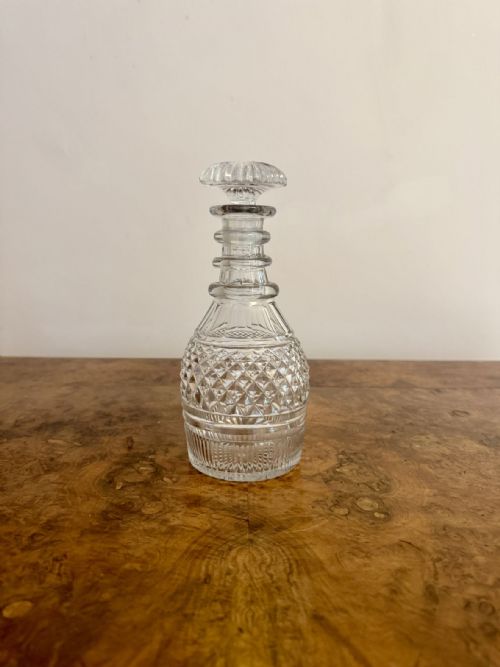
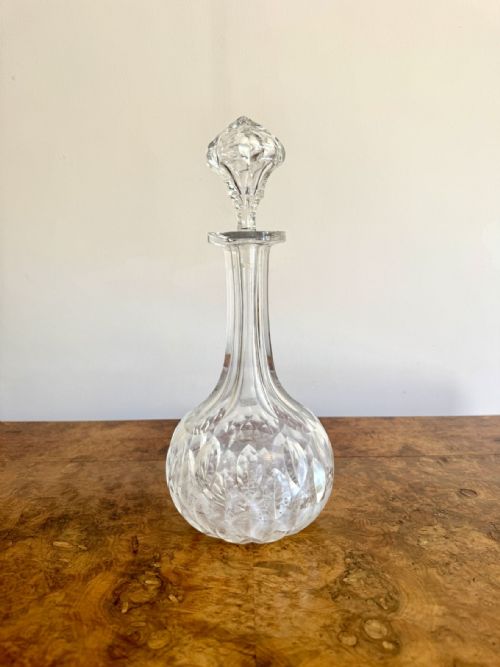
A lead crystal spirit decanter is a heavy, refractive glass vessel designed for holding and pouring liquor. When you search for a lead crystal spirit decanter, you meet heavy glasswork intended to catch the light on a dining table or sideboard. The pieces listed here span several decades and styles, offering functional vessels shaped for spirits.
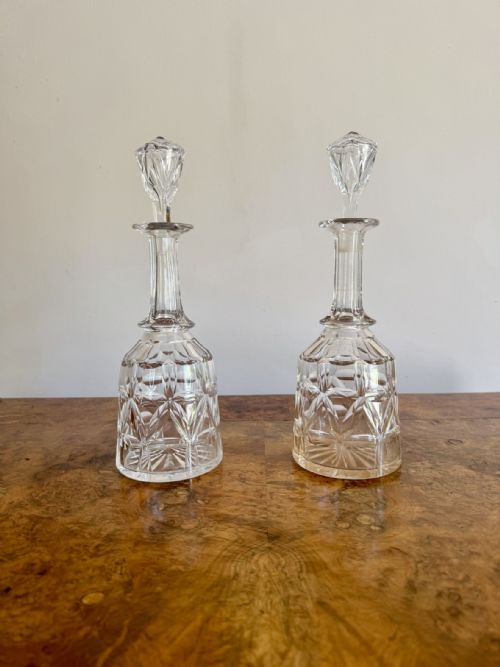
Victorian and Edwardian examples dominate the selection, alongside Georgian and Regency forms. You find single decanters and matched pairs, often cut with deep geometric patterns or fitted with stoppers. These vessels range from stout ship shapes to tall pillar-cut designs.
Origins stretch across English workshops from the eighteenth, nineteenth, and early twentieth centuries. The assortment includes specialised barware bearing engraved spirit labels alongside classic geometric table decanters.
How they were made
Makers shaped lead crystal and lead glass while molten, using blowing techniques to form the basic body. Optically blown vessels received careful manipulation to achieve even walls and clear transparency before cooling.
Workers applied wheel-cutting methods to cold glass, carving deep facets, flutes, and pillar cuts into the thick material. Engraving tools added fine surface lettering or floral motifs to complete the decoration.
Object forms include matched pairs, trio sets, ship shapes, and individual spirit decanters.
What varies in quality
Clarity and weight set apart the finer pieces from ordinary glassware. High lead content produces a brilliant refractive index and a resonant ring when struck, giving the material its characteristic heft.
The precision of the cutting defines the execution. Crisp, deep facets with sharp arrises demonstrate superior craftsmanship compared to soft, rounded grinding.
James Powell
The Lead Crystal Spirit Decanter Glossary
- Lead crystal
- Glass containing a significant proportion of lead oxide, which increases weight, brilliance, and softness for easier cutting.
- Prussian decanter
- A style featuring a tapering cylindrical body with multiple neck rings, popular during the Georgian and Regency periods.
- Pillar cut
- A decorative technique involving wide, vertical flutes or columns carved into the body of the vessel.
- Ship's decanter
- A form with a wide base and low centre of gravity, originally designed to remain stable at sea.
- Optically blown
- A method where glass is blown into a ribbed mould to impart internal pattern and consistent thickness.
Lead Crystal Spirit Decanter: Frequently Asked Questions
Can I use these for everyday serving?
These vessels suit regular use for holding and pouring spirits at the table or bar. The sturdy lead glass construction withstands normal handling during social gatherings.
Take care when placing heavy stoppers back into their matching necks to avoid chipping the rim. Hand washing preserves the clarity and prevents chemical clouding over time.
How do I identify the period of a decanter?
Examine the overall silhouette, weight, and cutting style alongside any engraved labels or pontil marks on the base. Georgian and Regency pieces often show distinctive hand-cut rings and tapered profiles.
Edwardian and Victorian examples tend toward heavier geometric facets and standardised stopper shapes. Comparing the glass tint and surface wear helps narrow down the decade of production.
Do stoppers belong originally to the decanter?
Original stoppers match the grinding marks, glass colour, and wear patterns of the decanter neck. A correct fit sits flush and continues the decorative cutting scheme of the body.
Inspect the ground peg and interior rim for matching age characteristics and minor tool marks. Hand-fitted stoppers from the period show individual quirks that differentiate them from later replacements.