


Art Deco Crystal Decanter
An art deco crystal decanter brings geometric brilliance to a sideboard, combining heavy lead glass with striking period mounts.
Art Deco Crystal Decanter
When you search for an art deco crystal decanter, you encounter vessels produced primarily during the 1920s and 1930s across England, France, and Bohemia. These pieces range from standalone glass jugs to complete decanter sets accompanied by matching glasses, cocktail shakers, and tantalus frames.
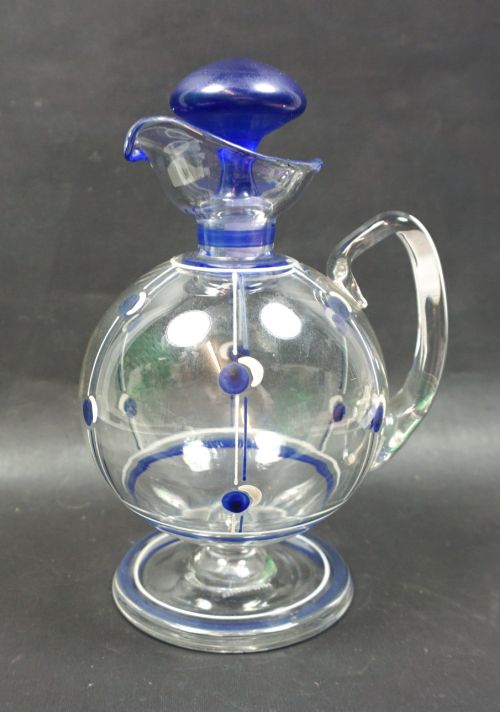
The most common examples on this page are Czech productions featuring geometric patterns and hand enamel decoration, alongside English cut crystal designs fitted with sterling silver collars or tops. French pieces by makers such as Rene Lalique and Val Saint Lambert also appear, offering moulded forms and sophisticated liquor services.
Forms extend beyond traditional wine jugs to include glug glug decanters, perfume bottles, and scent bottles in clear, green, blue, and black glass. Each variation reflects the distinct modernist aesthetic of the interwar period.
Factors of distinction
The distinction between standard production and exceptional quality rests upon the clarity of the crystal, the precision of the cutting, and the crispness of the enamel work. Pieces bearing recognised workshop signatures or attributed to notable designers demonstrate superior execution in both glass chemistry and metal mounting.
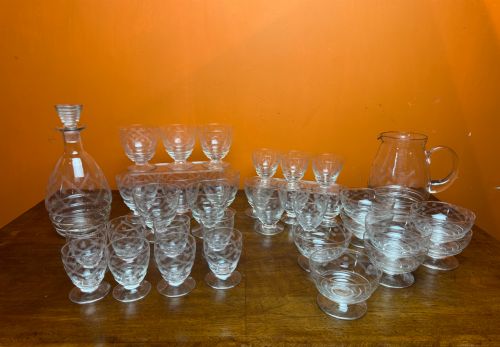
Completeness significantly elevates a piece, such as finding a decanter retaining its original matching stopper or a full set accompanied by all six matching glasses. The integration of solid sterling silver mounts by established silversmiths rather than generic metal plating also marks the upper tier of the range.
Jazz Man decanter sets capture the rhythm of the 1930s by pairing geometric crystal vessels with matching musical themed drinking glasses.
Karl Palda·Hukin and Heath·Rene Lalique·Val Saint Lambert·Jacques Adnet·Barnsley and Co
The Art Deco Crystal Decanter Glossary
- Lead crystal
- Glass containing a substantial percentage of lead oxide, which increases weight, refractive index, and clarity. This material allows for deep, sharp wheel cutting.
- Tantalus
- A locked wooden or metal frame that secures decanters to prevent unauthorized access while keeping the contents visible. The interwar versions often employed chrome and glass.
- Glug glug decanter
- A vessel with a multi-chambered neck designed to admit air and emit a distinctive gurgling sound when liquid is poured. They typically date from the early twentieth century.
- Enamel decoration
- Pigments applied to the glass surface and fired to create coloured geometric patterns or motifs. This technique is particularly prevalent in Bohemian production.
Art Deco Crystal Decanter: Frequently Asked Questions
How do I date an art deco decanter?
Dating relies on stylistic markers such as geometric patterns, modernist chrome fittings, and specific enamel colour palettes typical of the 1920s and 1930s. Hallmarks on sterling silver collars or mounts provide exact assay office dates for the metal components.
Maker attribution also helps establish chronology, as prominent Bohemian and French studios operated during specific decades. Comparing the cut crystal motifs with documented manufacturer catalogues confirms the period of production.
Are stoppers usually original to the decanter?
Many decanters retain their original stoppers, often ground to fit the specific neck of that individual vessel during manufacture. Matching the glass colour, cutting style, and wear patterns helps verify originality.
Replacement stoppers occur frequently due to breakage over decades of use. Close inspection under magnification reveals whether the ground glass surfaces share identical age and manufacture.
What is a tantalus and how does it work?
A tantalus is a locking frame that holds decanters securely so they cannot be removed without a key, though the contents remain visible. A metal bar drops across the crystal stoppers, preventing them from being lifted.
Interwar examples often combined chrome frames with cut crystal bottles. The mechanism allowed hosts to display fine spirits while restricting access.
How should I clean antique crystal decanters?
Cleaning requires lukewarm water and mild detergent, avoiding sudden temperature changes that can crack historic glass. Stubborn internal residue is best treated with specialised cleaning beads rather than harsh abrasives.
Silver mounts and collars should be polished carefully with a soft cloth to avoid staining the surrounding crystal. Storing decanters with their stoppers slightly loose prevents moisture entrapment.