


Antique Silver Lock Decanter
These antique silver lock decanter pieces are secure barware vessels designed to keep spirits safe from unauthorised household staff.
Antique Silver Lock Decanter
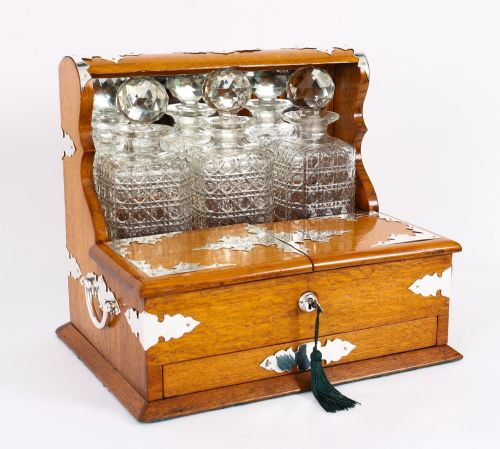
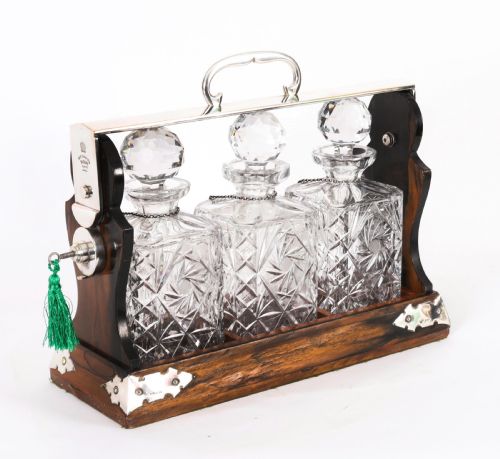
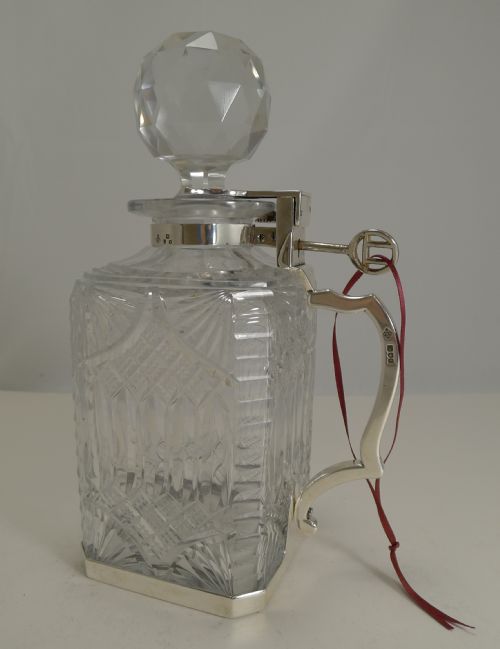
An antique silver lock decanter brings together heavy glassware and secure metal hardware, often housed within a wooden tantalus framework or fitted with a direct locking collar. These vessels protect fine spirits under lock and key, reflecting the domestic habits of the Victorian and Edwardian periods.
You are most likely to meet oak and coromandel tantalus sets alongside individual cut crystal decanters featuring sterling silver or silver plated mounts. Forms range from single bottle cased pieces to elaborate three bottle after dinner games compendiums dating from the late nineteenth century into the 1930s.
How they were made
Cabinet makers constructed the frames using blonde oak, coromandel wood, and sturdy oak housings designed to securely cradle heavy crystal bodies. Metalworkers formed locking mechanisms and collars from sterling silver, silver plate, and specialised brass hardware.
Glassmakers shaped heavy cut glass and cut crystal vessels to fit precisely within the locking bars, ensuring the stoppers remained trapped until the key turned. Silversmiths applied hallmarks and decorative collars to the necks of the decanters, marrying secure functionality with refined dining room display.
The name tantalus comes from the mythological king who was punished by being placed just out of reach of water and fruit.
What varies in quality
The sophistication of the locking mechanism and the reputation of the maker separate standard production pieces from exceptional works. Patent hardware by firms like Betjemann or Hukin and Heath commands attention through smooth mechanical action and precise engineering.
The weight and depth of the cut crystal, combined with the choice of cabinet timbers such as figured coromandel rather than plain oak, define the upper tier of the range. Complete sets retaining matching stoppers and original working keys possess a distinct advantage over adapted or incomplete examples.
Betjemann Brothers·Hukin and Heath
The Antique Silver Lock Decanter Glossary
- Tantalus
- A locking frame that holds decanters securely by their stoppers, preventing guests or staff from pouring spirits while displaying the bottles.
- Coromandel
- A dense, heavily figured exotic timber from Asia utilised in high end nineteenth century cabinet work.
- Sterling silver
- A silver alloy containing 92.5 percent pure silver, frequently utilised for decorative neck mounts and hallmarked components.
- Games compendium
- A multi functional box containing a tantalus alongside compartments for cards, dice, or gaming pieces.
- Silver plate
- A layer of silver fused to a base metal substrate, commonly utilised for mounts and handles on barware.
Antique Silver Lock Decanter: Frequently Asked Questions
How do these locking decanters work?
A metal bar drops over the glass stoppers, secured at the side by a working key and lock mechanism.
When locked, the stoppers cannot be removed and the bottles cannot be lifted from their fitted wooden or metal frames.
Were these used in homes or offices?
These pieces sat in dining rooms, libraries, and studies of Victorian and Edwardian households.
Masters of the house utilised them to control access to expensive spirits and prevent unauthorized sampling by staff.
How do I date an oak tantalus?
Dating relies on timber choices, style shifts from late Victorian elaboration to Art Deco plainness, and metal hallmarks.
Makers marks and patent stamps stamped onto the lock plates provide precise manufacturing windows.
Can I still find replacement keys?
Original keys are scarce because many were lost over generations of domestic use.
Specialist antique locksmiths can often fit a replacement key to an existing vintage lever lock.