


Clear Glass Whiskey Bottle
These clear glass whiskey bottle pieces span the Victorian, Edwardian and mid-20th-century periods, offering practical barware shaped by historic glassmaking traditions.
Clear Glass Whiskey Bottle
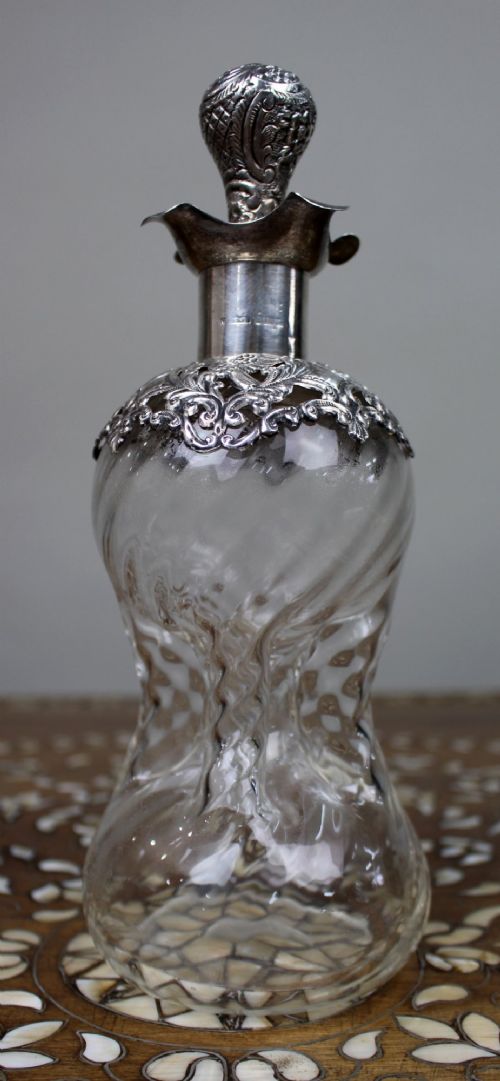
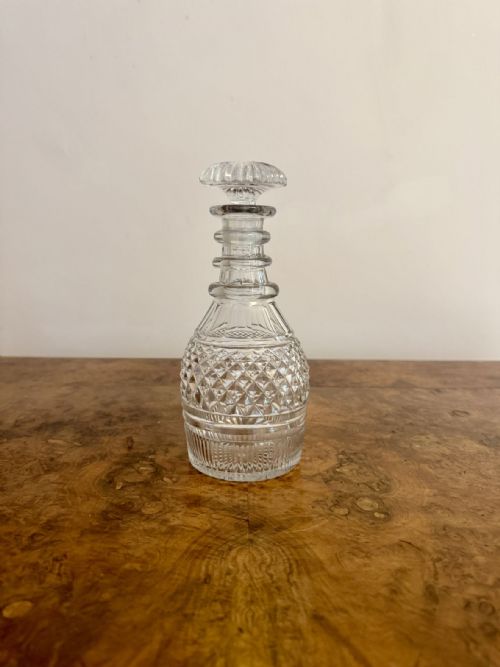
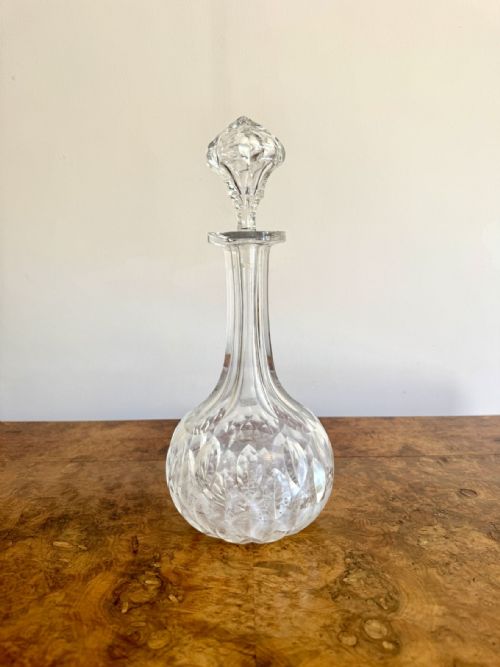
When you search for a clear glass whiskey bottle, you encounter vessels designed for serving and storing spirits, primarily appearing as decanters, whisky jugs, and noggins. The selection draws heavily from the Edwardian and Victorian eras, alongside 19th-century examples.
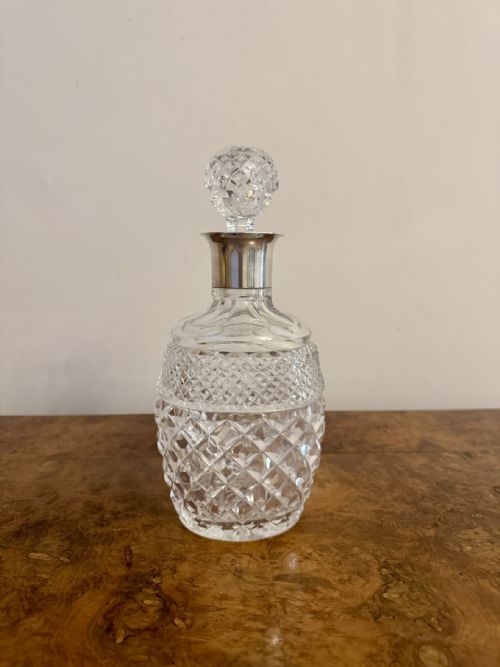
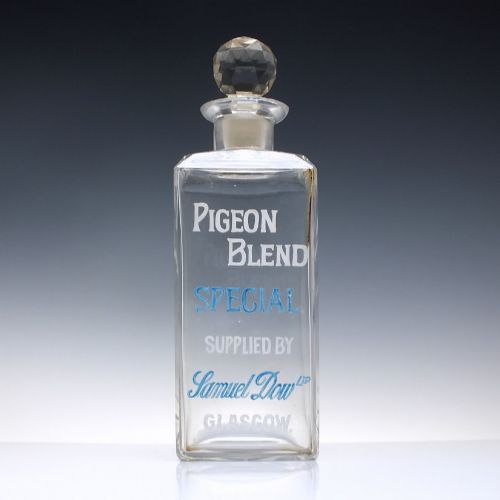
Most pieces combine transparent glass bodies with sterling silver mounts, collars, or labels designating contents such as scotch or whiskey. Forms range from bell-shaped and hourglass profiles to optically blown crystal and specialised Scottish enamelled whisky bottles.
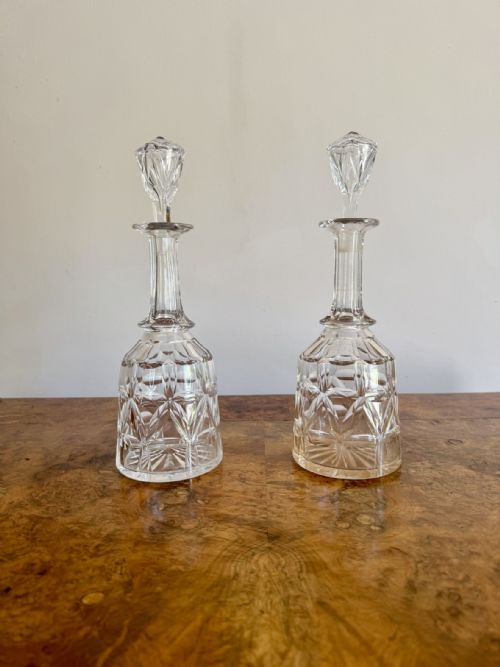
Makers and silversmiths of the period produced individual bottles as well as paired sets, occasionally housed in silver-plated stands or featuring locking mechanisms.
Glass and silver craftsmanship
The body of each piece relies on clear glass, cut glass, cut crystal, or lead crystal, shaped through techniques like optical blowing and wheel-cutting to create faceted surfaces and engraved labels.
Metalwork complements the glass, incorporating hallmarked sterling silver collars, mounts, and silver-gilt details produced by silversmithing firms.
Some Scottish 19th-century examples incorporate hand-enamelled lettering directly onto the glass surface to denote regional whisky blends.
Materials recorded across the inventory include lead crystal, cut glass, sterling silver, and silver-gilt.
Design complexity and material execution
Quality rests upon the crispness of the glass cutting and the weight of the crystal body, where deeper facets and clear optical blowing demonstrate greater technical skill.
The refinement of the silver mounts, including hallmarked collars, figural tops, and associated matching labels, distinguishes standard production items from more substantial commissions.
James Powell·Elkington·Hukin & Heath Ltd·Freeman & Son Ltd
The Clear Glass Whiskey Bottle Glossary
- Decanter
- A vessel with a stopper used for holding and serving alcoholic spirits. These glass containers often feature cut patterns and silver collars.
- Noggin
- A small mug or small-capacity vessel for liquor, frequently mounted with silver during the Edwardian period. They are typically used for single measures of whisky.
- Lead crystal
- Glass containing lead oxide, which increases brilliance, weight, and clarity. This material allows for sharp, deep decorative cutting.
- Hallmark
- An official stamp applied to precious metals indicating standard of purity and origin. Silver collars on these bottles carry these marks to date the metalwork.
Clear Glass Whiskey Bottle: Frequently Asked Questions
What periods do these bottles come from?
The pieces originate primarily from the Victorian and Edwardian eras, spanning the 19th century through to the early and mid-20th century.
Specific dates are often confirmed by silver hallmarks on the collars or mounts rather than the glass itself.
How were whisky noggins used?
Noggins served as individual small measures for spirits, distinct from large decanters meant for shared dining tables.
They usually include a single handle and a matching silver label denoting the contents.
How do I identify cut crystal from plain glass?
Cut crystal exhibits sharp, faceted geometric patterns carved into the body, which refract light and provide a heavier feel in the hand.
Plain or optically blown glass relies on smooth contours rather than deep incisions.
Are stoppers original to the decanters?
Many retain their matching stoppers shaped to the neck of the individual vessel during manufacture.
Differences in glass tint or fit can indicate whether a stopper has been paired with a bottle at a later date.