



English Silver Spirit Bottle
An English silver spirit bottle delivers portable or table-ready liquor with the weight of sterling and cut crystal.
English Silver Spirit Bottle
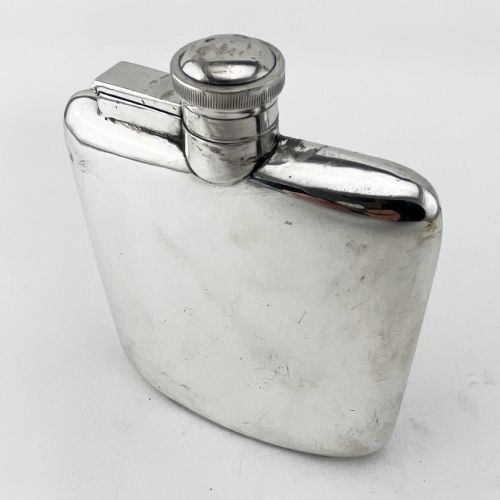
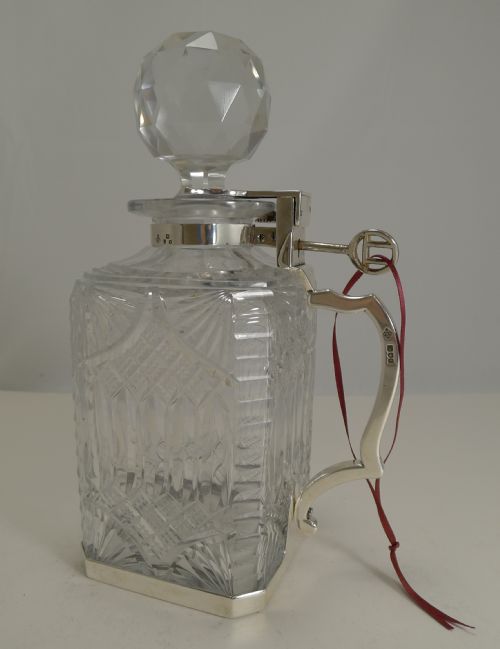
When you search for an english silver spirit bottle, you encounter a varied assortment of barware, decanters, hip flasks, and spirit bottles intended for port, whisky, sherry, and brandy. These vessels combine functional storage with decorative metalwork, often pairing glass or crystal bodies with hallmarked collars, mounts, or caps.
The pieces appearing on this page span several distinct periods, with Edwardian, Victorian, and Georgian examples sitting alongside Art Deco designs from the 1920s, 1930s, and 1940s. Forms range from miniature individual decanters and flagons to pocket-sized flasks and locking single decanters housed in caddies.
Materials shift between clear glass, cut crystal, amethyst glass, and ceramic, complemented by sterling silver, silver plate, and pewter mounts. Decanter labels in silver further accompany these spirit bottles, marking specific contents such as rum, whiskey, and champagne.
How they were made
Glass bodies were blown and frequently finished with heavy hand-cut facets or crystal detailing to refract light through the contained spirit. Coloured varieties such as amethyst glass required specific mineral additives during the melting process to achieve their distinct hue.
Silver components including collars, caps, and hip flasks utilised sterling silver or silver plate, shaped through spinning, stamping, or smithing. Makers applied hallmarks to certify metal purity, noting assay offices such as Birmingham and London alongside specific production years.
Listings feature sterling silver and silver plate paired with clear, cut crystal, amethyst glass, and ceramic bodies across the Edwardian and Victorian periods.
What varies in quality
Quality rests upon the crispness of the glass cutting and the clarity of the crystal, alongside the substantial weight and gauge of the sterling silver mounts. Superior pieces display deep, clean facet work on the glass and robust, well-fitted metal collars that secure tightly.
Makership and hallmarking distinguish finer examples, particularly those bearing the marks of known silversmiths and clear date letters. The integration of functional elements, such as locking mechanisms on decanters or secure screw caps on flasks, also elevates the standard of the piece.
William Neale·Mappin & Webb·Hukin and Heath·Elizabeth Morley
The English Silver Spirit Bottle Glossary
- Hallmark
- A series of official marks stamped on precious metal items to show the standard of purity, the assay office, and the year of manufacture. These stamps provide a verifiable timeline for English silver.
- Decanter
- A vessel used for holding and serving decanted spirits or wine. They typically feature a stopper and a narrow neck to limit the surface area of the liquid exposed to air.
- Hip Flask
- A thin container used to carry a liquor of choice in a pocket. They are curved to fit comfortably against the body.
- Silver Plate
- A base metal, such as copper or nickel brass, coated with a thin layer of pure silver. This technique offered an affordable alternative to solid sterling silver.
- Cut Crystal
- Glass containing lead oxide that is faceted by cutting wheels to create brilliant reflective patterns. The lead content makes the material heavier and softer to carve than standard glass.
English Silver Spirit Bottle: Frequently Asked Questions
How do I clean an old decanter?
Resist using harsh abrasives or hot water on antique glass, as thermal shock can crack delicate or old crystal. Instead, utilise warm water with mild detergent and specialised cleaning beads to gently lift residue from the interior.
Polish the sterling silver mounts separately with a soft cloth, taking care to keep polishes away from the glass surfaces. Ensure the vessel dries completely before replacing the stopper.
Are these bottles safe for storing alcohol?
Most antique spirit bottles and decanters function adequately for short-term storage or immediate serving during gatherings. However, historic crystal occasionally contains trace lead that can leach into liquids left inside for extended periods.
For daily consumption or long-term storage, verify the interior condition and avoid leaving spirits in antique vessels for months at a time.
How do I identify the date of a silver collar?
Examine the stamped hallmarks on the silver mount to find the assay office mark, the maker's mark, and the standard mark indicating sterling quality. A specific date letter stamp usually accompanies these symbols.
Reference regional assay office charts to match that exact letter shape to its corresponding year of testing and manufacture.