
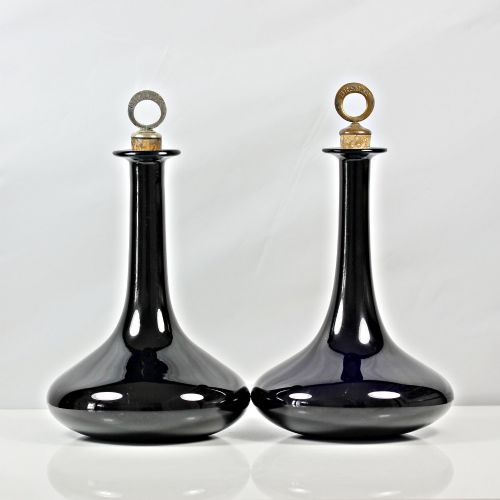
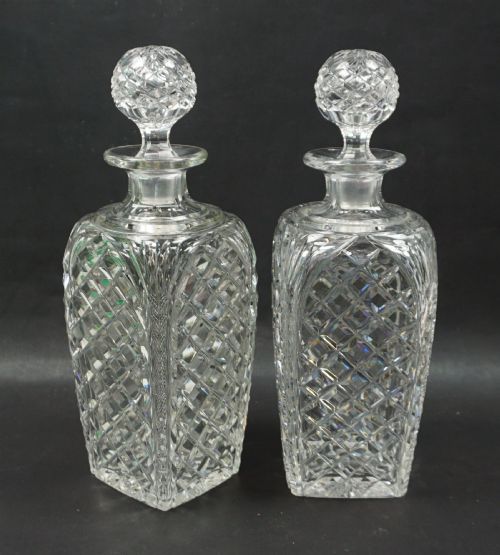
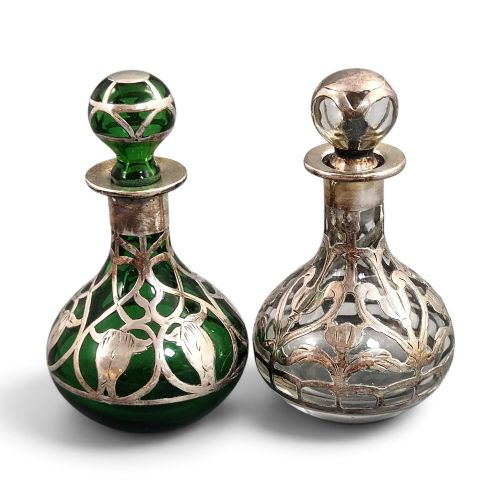
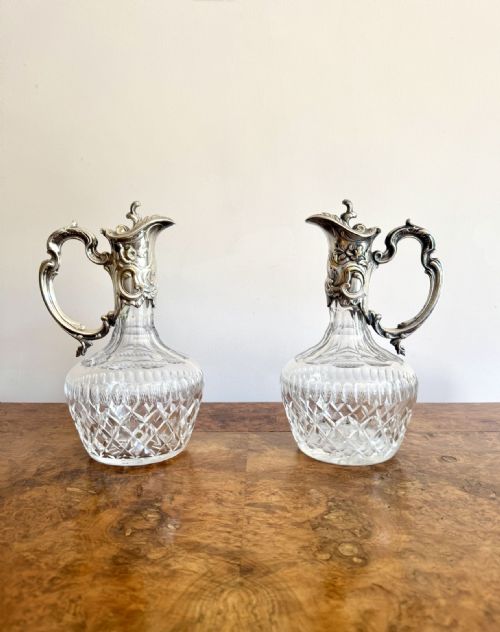
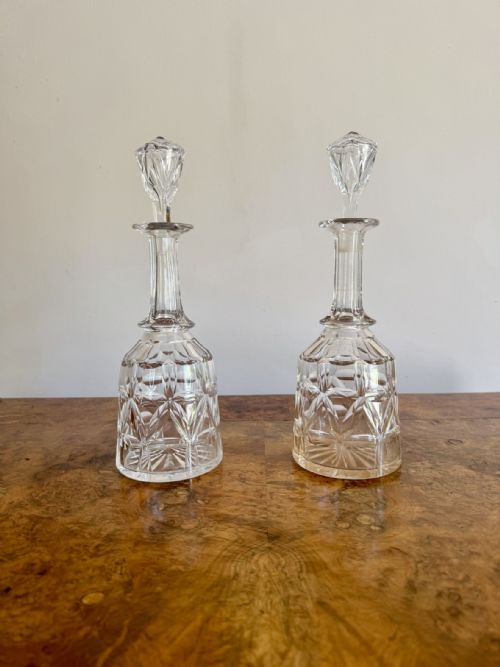
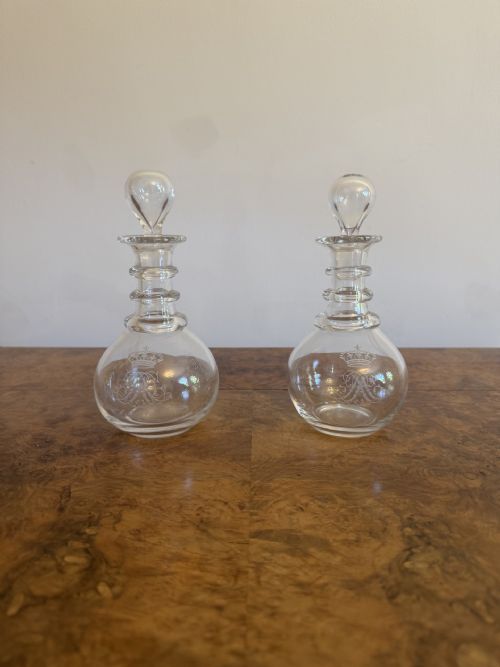

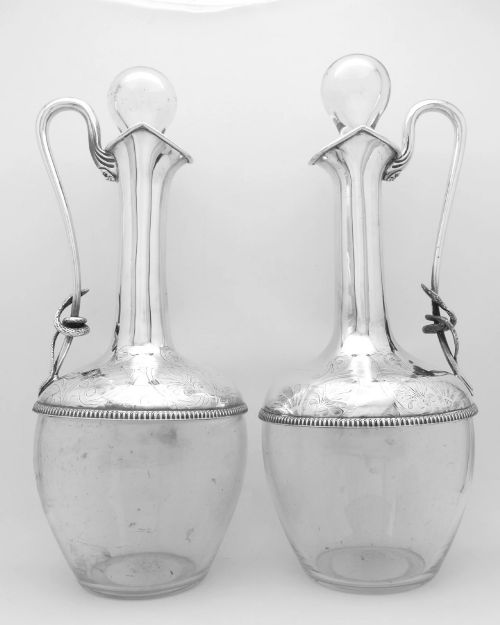


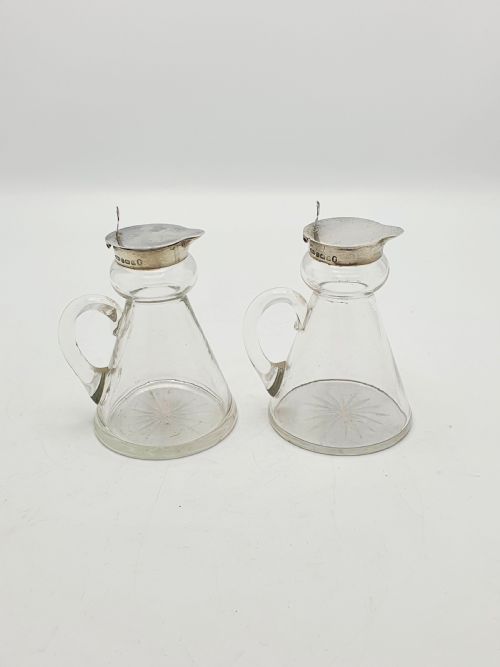

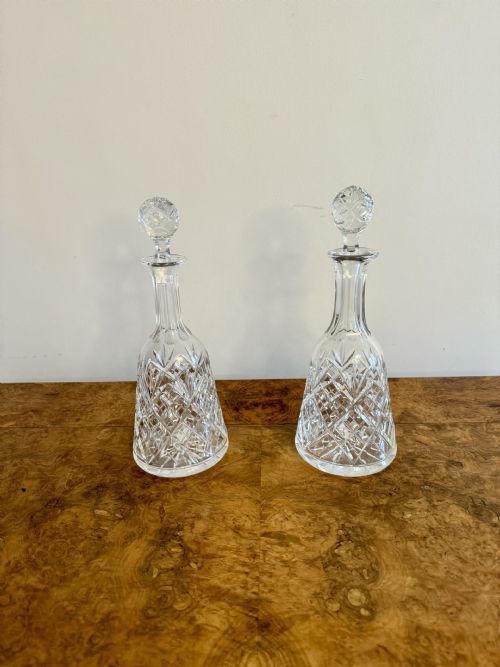


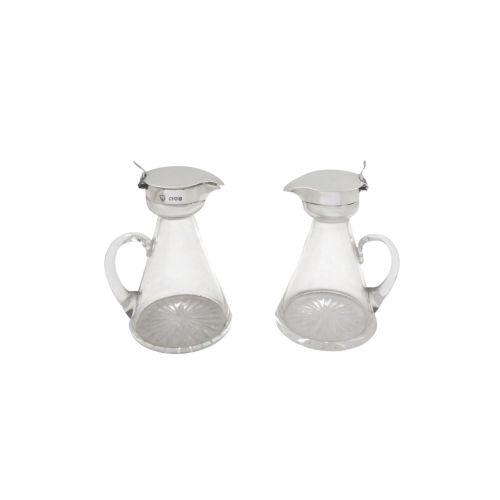
Pair of Glass Decanters
A pair of glass decanters brings symmetry to a sideboard, offering matching vessels for spirits and wine across centuries of design.
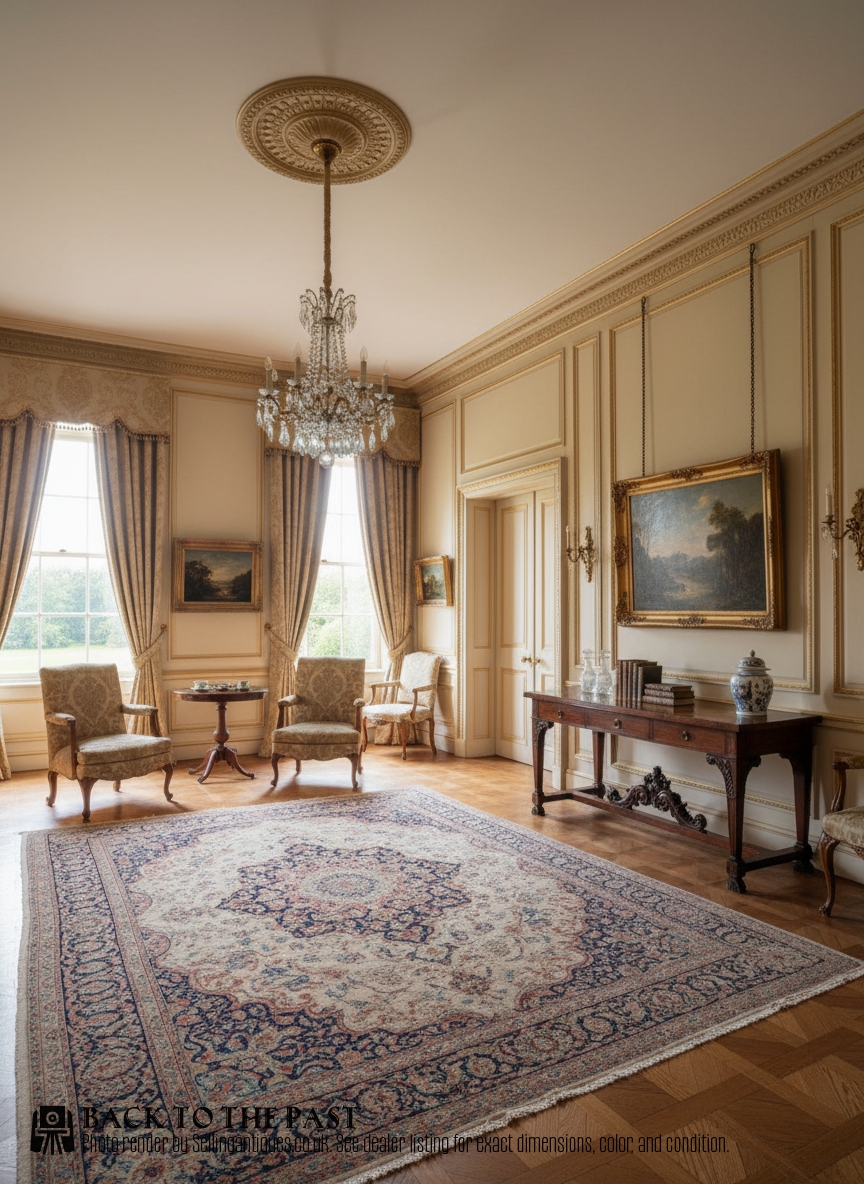
Decanters on the sideboard
A pair of glass decanters unites matching vessels designed to hold wine and spirits for the table. When searching for a pair of glass decanters, a buyer encounters forms ranging from Georgian spirit flagons to Edwardian serving bottles.
The pieces on this page span the Georgian, Victorian, Edwardian, and nineteen-hundreds periods. Buyers meet styles including Georgian cut glass, Victorian ships decanters, and Arts and Crafts crystal.
Vessels appear in clear crystal, lead crystal, and cut glass, alongside coloured options in amber, blue, green, cranberry, milk glass, and ruby. Some examples feature silver mounts, silver plated frames, or engraved labels designating contents such as brandy and whisky.

Creation and technique
Maker operations utilised lead crystal, crystal glass, and standard glass, shaped through optical blowing or traditional methods. Surfaces received deep cutting, hobnail patterns, engraving, and gilding.
Designers incorporated silver tops, silver mounts, and silver plated frames to complement the glass bodies. Certain pieces incorporated specialised forms like Prussian shapes, onion-shaped bodies, or four compartment divisions.
Retail Price Guide 2026
Typical UK retail prices for pair of glass decanters, calculated from the Sellingantiques database of over a million retail prices indexed since 2003. This retail price guide relies exclusively on Sellingantiques data; no external sources or auction records are used, so the figures do not describe the wider market.
A few antique sets even arrived with their original matching wine glasses tucked neatly alongside the decanters.
Judging the range
Distinctions in quality rest upon the crispness of the cut glass facets and the clarity of the crystal. Superior examples display precise hand-cutting that catches the light cleanly across the body and stopper.
Integration of precious metals elevates certain works, particularly where solid silver stoppers or hallmarked mounts accompany the glass. The presence of matching original stoppers and legible engraved spirit labels further separates standard items from finer works.
James Powell·Alderman Copeland
The Pair of Glass Decanters Glossary
- Prussian decanter
- A specific Georgian decanter shape featuring a broad base that tapers slightly towards the neck, designed to remain stable aboard ship or on crowded dining tables. This form often accommodated heavy cut glass patterns.
- Hobnail cut
- A decorative surface pattern consisting of small, pyramid-shaped raised points cut into the glass body. This technique creates intense refraction and tactile grip.
- Ships decanter
- A form with a wide, heavy base that prevents tipping during maritime travel or vigorous dining. The low centre of gravity made these vessels practical for sea voyages.
- Optically blown
- A glassblowing technique where molten metal is inflated in a ribbed or patterned mould to create internal optical effects within the walls. This method produces subtle fluting or pattern lines inside the glass.
- Lead crystal
- Glass containing lead oxide that increases weight, brilliance, and workability for deep cutting. This material allows artisans to achieve sharper facets than standard soda-lime glass.
Frequently Asked Questions
What were pair of glass decanters used for?
These matching vessels served wine and spirits at the dining table or sideboard, allowing hosts to decant vintages from casks.
Pairs enabled the simultaneous service of different drinks, such as port and sherry, or brandy and whisky, maintaining symmetry in table service.
How do I identify Georgian decanters?
Georgian examples often display characteristic three-ring necks, heavy kick-up bases, and heavy hand-cut patterns including flutes and prisms.
Stoppers from this era are typically heavy, hand-ground, and matched specifically to the individual neck opening of each bottle.
What defines Edwardian glass decanters?
Edwardian pieces frequently showcase lighter, highly polished cut crystal forms, sometimes fitted with sterling silver collars or mounts.
They reflect a continuation of Victorian manufacturing standards with a turn towards cleaner, brighter table settings.
How should I clean antique decanters?
Cleaning requires warm water and non-abrasive methods to protect aged glass surfaces and original stoppers. Harsh chemicals can damage antique lead crystal and any gilt decoration.
Avoid sudden temperature changes to prevent thermal shock and cracking in historical glass.