





Spirit Decanter Pair
A spirit decanter pair brings symmetry to a sideboard, offering dual service for whiskey, brandy or port across Victorian, Edwardian and Georgian dining rooms.
Spirit Decanter Pair
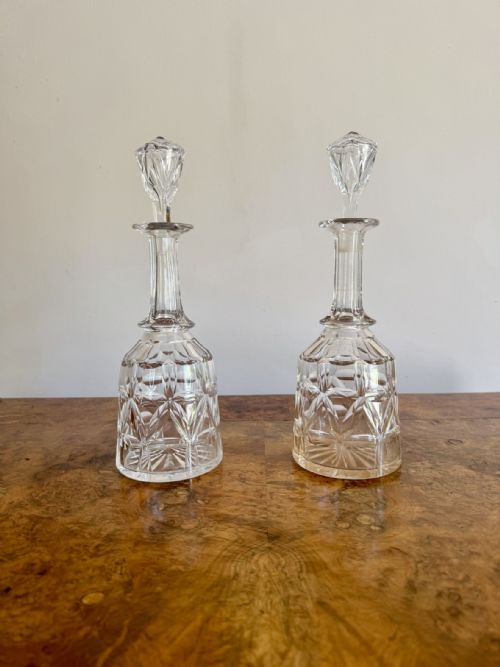
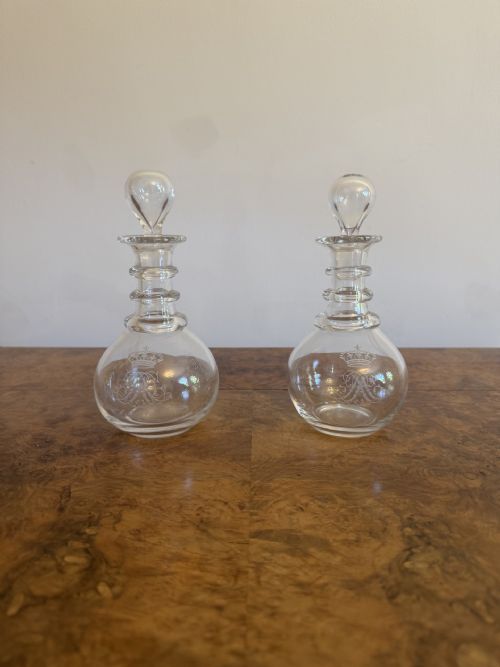
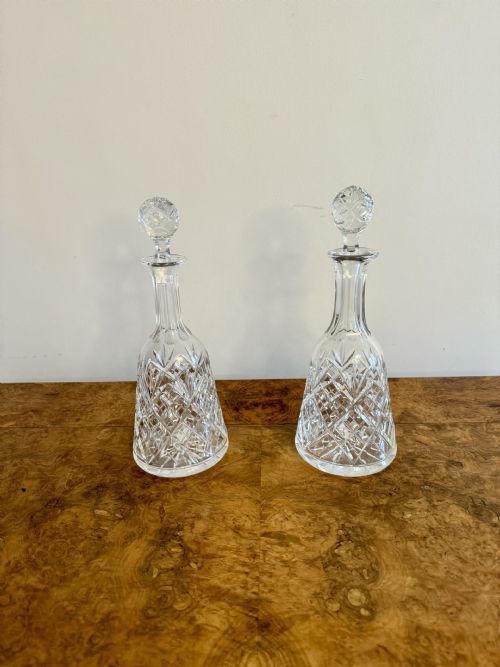
A spirit decanter pair consists of matching vessels designed to hold and serve potable spirits on the dining table or sideboard. These sets appear frequently in Edwardian and Victorian iterations, alongside earlier Georgian forms.
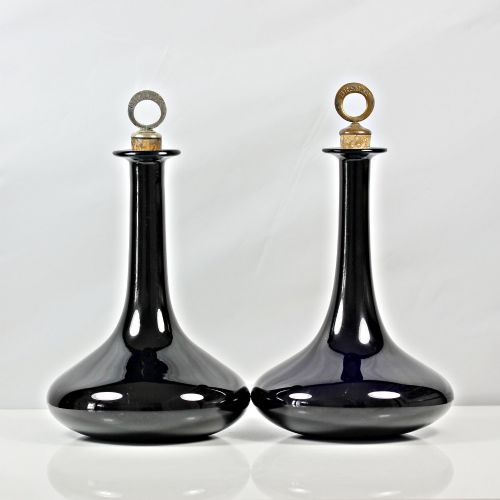
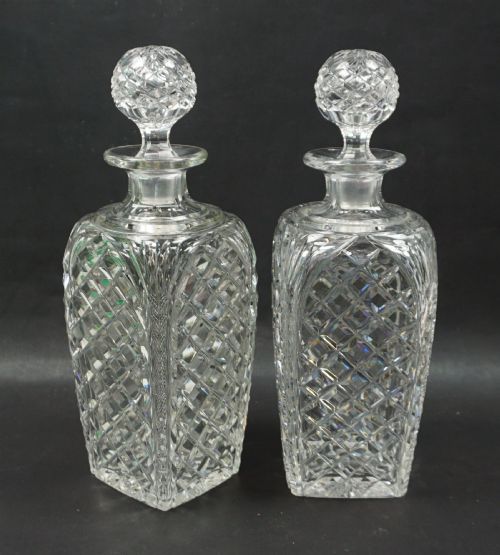
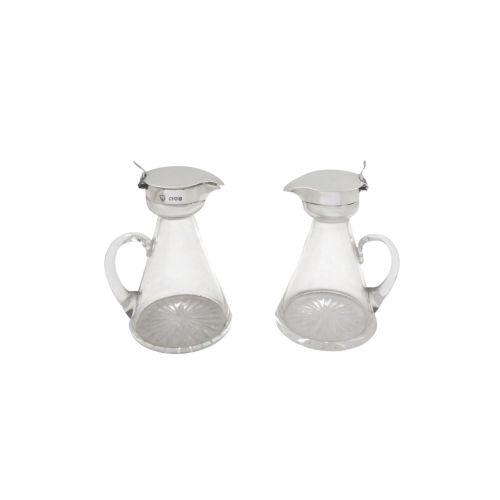
The selections span standard serving decanters, square-section shapes, ships decanters with wide bases for stability, and smaller whisky noggins with sterling silver mounts. Coloured glass variants in ruby, green, amber and Bristol blue sit alongside clear lead crystal.
Makers and retailers such as James Powell, Hukin & Heath and Mappin & Webb contribute to the lineage, supplemented by French crystal carafes and Rene Lalique designs. Matching pairs often retain their original stoppers and occasionally sit within silver-plated frames or oak tantalus carriers.
How they were made
Glass production relies on lead crystal or standard glass manipulated through optical blowing, moulding or free-blown techniques. Bodies receive surface enrichment via pillar cutting, hobnail cutting, engraving, etching or gilding.
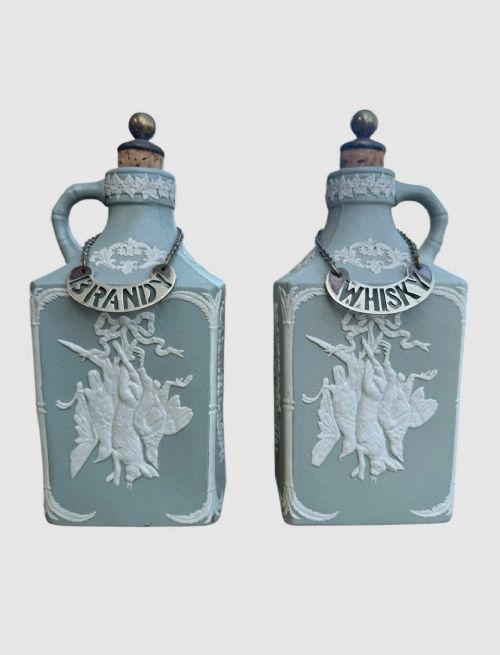
Metal components utilise sterling silver or silver plating, paired with glass bodies for whisky noggins and spirit flagons. Ceramic elements such as jasper appear in select 19th-century flagons.
Listings feature periods from the 18th century through the Georgian, Victorian and Edwardian eras up to the 1920s Art Deco period.
What varies in quality
Quality rests on the crispness of the glass cutting and the weight of the crystal. Sharp, deep facet or hobnail cuts reflect light differently than soft, moulded impressions.
The presence of matching original stoppers, hallmarked sterling silver mounts by notable makers, and unusual glass colours such as ruby or Bristol blue elevate the standing of a set.
James Powell·Hukin & Heath·Rene Lalique·Mappin & Webb
The Spirit Decanter Pair Glossary
- Noggin
- A small personal drinking vessel or decanter for spirits, often fitted with a silver lip and handle. These miniature jugs typically hold a single measure.
- Prussian style
- A decanter shape featuring a tapered neck and three concentric glass rings around the upper neck. This Georgian form aided grip during pouring.
- Ships decanter
- A vessel with a broad, flat base designed to prevent tipping on board rolling ships. The low centre of gravity proved equally practical on dining tables.
- Hobnail cut
- A sharp, faceted decorative pattern resembling the hobnails on stout boots. It creates intense light refraction across the crystal body.
Spirit Decanter Pair: Frequently Asked Questions
What is a whisky noggin?
A whisky noggin is a small, single-serving decanter fitted with a silver mount and handle. They were designed for individual use alongside a larger water jug.
These pieces emerged strongly in the Edwardian era and often feature sterling silver hallmarks from makers like Hukin & Heath.
How do I date a glass decanter?
Dating relies on the shape, the depth of the pontil mark underneath, and the style of cutting. Georgian examples often feature three neck rings or heavy lead crystal.
Victorian and Edwardian versions introduce coloured glass bodies, square sections, and machine-assisted facets alongside sterling silver hardware.
Why do some decanters have wide bases?
Wide bases belong to ships decanters, which were originally engineered to stay upright on maritime voyages. The heavy, low-slung profile stopped them sliding across rolling dining tables.
Cabinet makers and glasshouses continued producing this stable silhouette well into the twentieth century for domestic use.
Can I use antique decanters daily?
Antique decanters serve well for holding and pouring spirits during meals or gatherings. Hand washing protects the delicate lead crystal and any gilt or engraved details.
Original stoppers should be paired carefully with their matching vessels, as stoppers were ground by hand to fit individual necks.