
Clear Cut Glassware
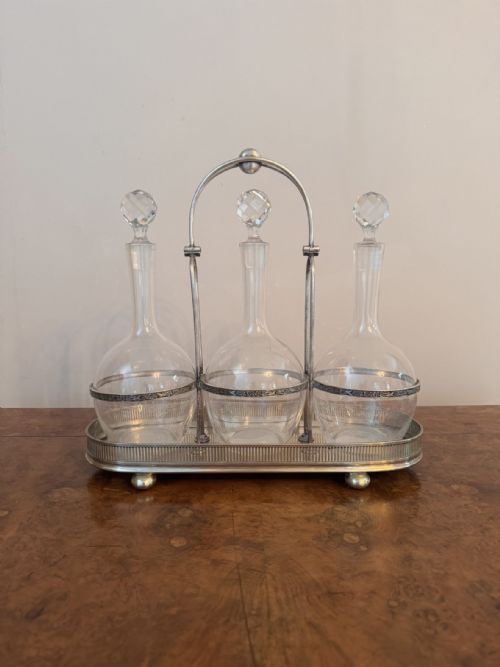
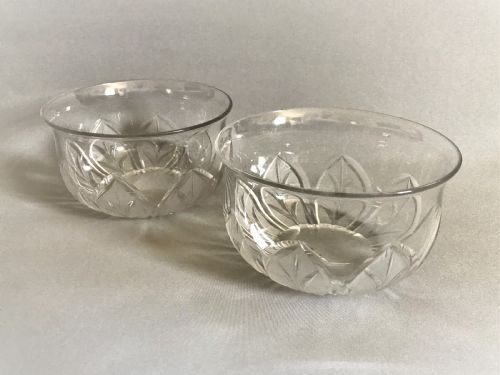
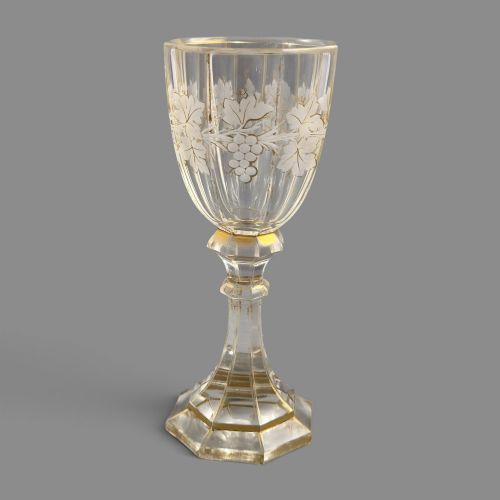
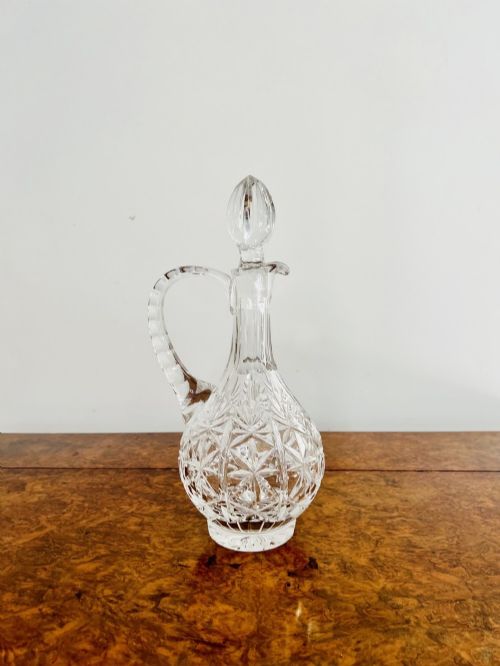
Clear cut glassware brings brilliance to any table through sharp facets and heavy lead crystal forms.
Clear Cut Glassware
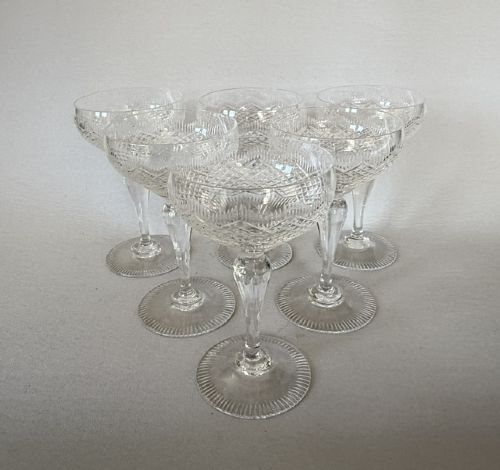
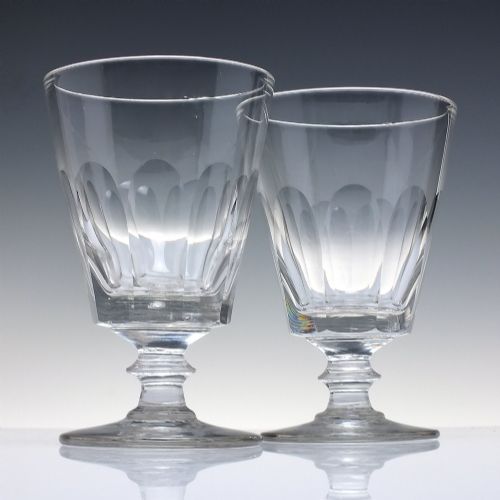
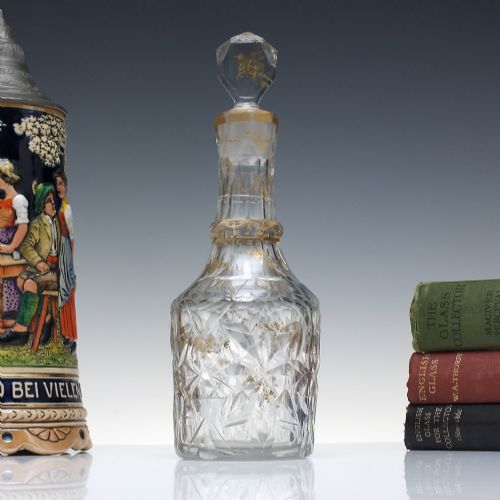
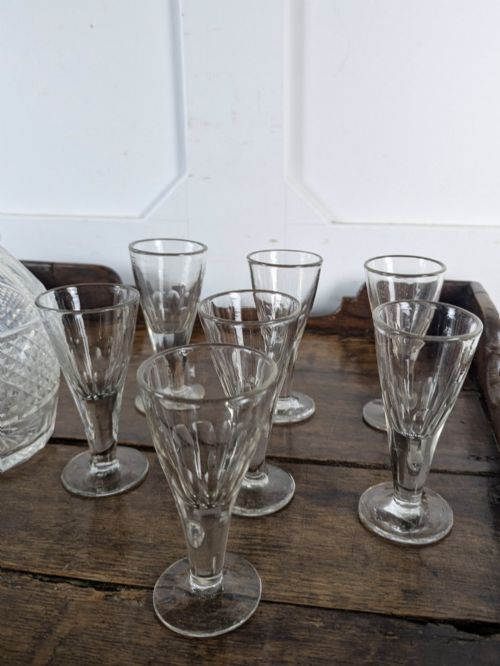
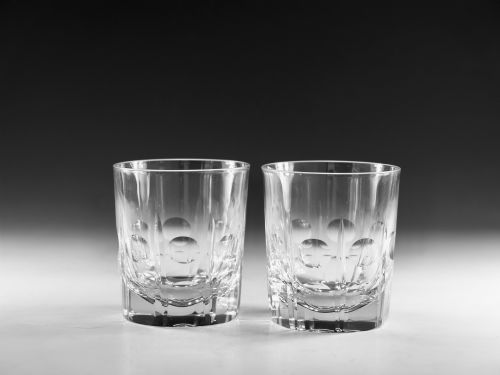
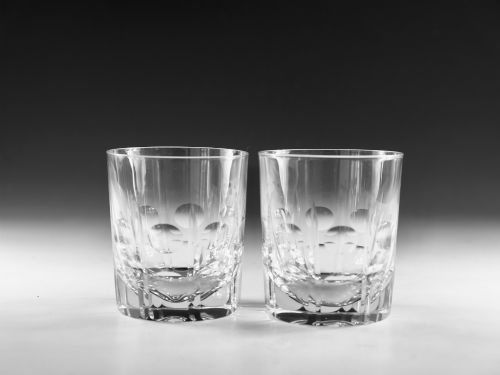
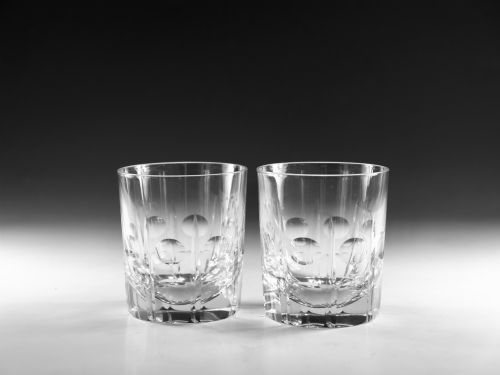
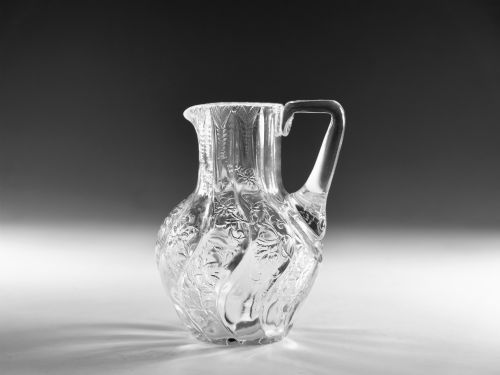
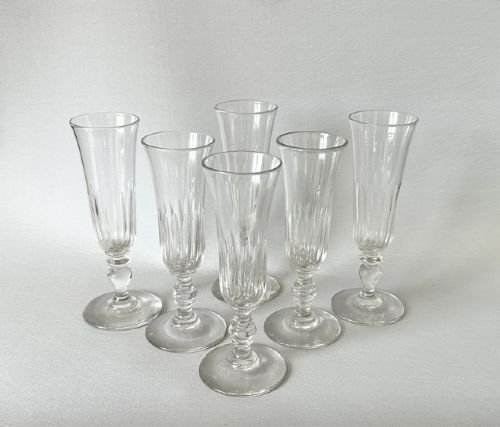
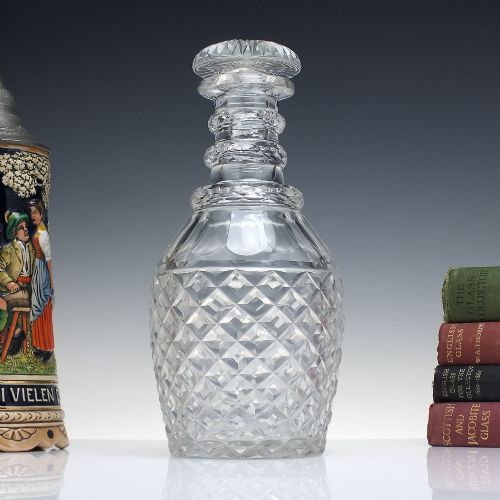
Clear cut glassware encompasses drinking vessels, decanters, jugs, and bowls shaped across the Georgian, Victorian, and Edwardian eras. Buyers encounter matching sets of champagne flutes, rummers, and whisky tumblers alongside individual decanters and ewers.
The pieces on this page originate primarily from English, Irish, and Bohemian workshops spanning the eighteenth, nineteenth, and early twentieth centuries. Forms range from heavy Georgian hobnail bucket rummers to delicate Edwardian suites and French Art Deco drinking glasses.
Materials and cutting techniques
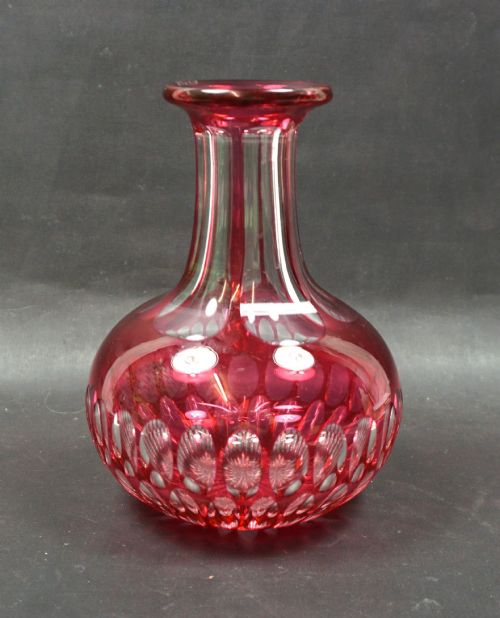
Makers utilised lead crystal, clear glass, and crystal, often layering colours like cranberry or cobalt blue over a clear core before cutting through the surface. Artisans also applied gilding, acid etching, and intaglio engraving to enhance the visual depth of the vessels.
Hot metal was blown into moulds or free-blown before cold-working technicians ground and polished geometric facets, flutes, and thumb-cuts onto the body using abrasive wheels.
An apothecary jar stands ready to dispense remedies from the Edwardian surgery.
Evaluating quality in cut glass
Quality rests upon the crispness of the facet edges and the weight of the metal itself. Superior examples display deep, sharp cutting that remains smooth to the touch inside the hand.
The clarity of the glass and the precision of the symmetry distinguish finer production. Finished pieces show balanced proportions, particularly where silver mounts or gilt highlights are integrated into the design.
Atelier of James Giles·Stevens and Williams·Moser Bohemian·Webb Corbett
The Clear Cut Glassware Glossary
- Lead crystal
- Glass containing a high proportion of lead oxide, which increases brilliance, weight, and the refractive index. This material allows for deeper and sharper cutting without fracturing.
- Rummer
- A large, sturdy drinking glass popular in the eighteenth and nineteenth centuries, typically featuring a short stem and a bucket-shaped bowl used for ale or wine.
- Hobnail cut
- A raised, diamond-shaped geometric pattern carved into the surface of the glass. The sharp facets catch light from multiple angles.
- Intaglio
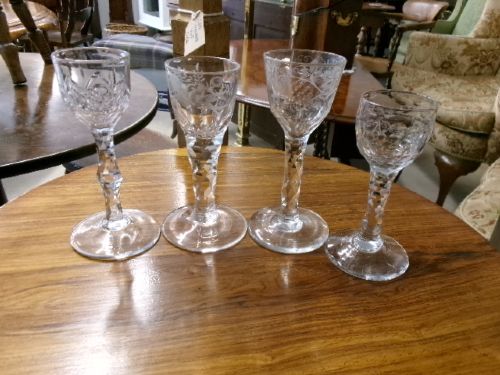
- A technique where designs are sunk below the surface of the glass using small engraving wheels. It creates a low-relief carved effect rather than raised facets.
- Thumb-cut
- Shallow, concave depressions ground into the sides of a glass or decanter. They provide a secure grip for the hand.
Clear Cut Glassware: Frequently Asked Questions
How do I date antique cut glass?
Dating relies on stylistic markers, pontil marks, and the weight of the metal. Georgian pieces often display thick kick-ups and hand-polished pontils, while Victorian items introduce heavier lead content and machine-smoothed bases.
Changes in decorative motifs, such as the shift from Georgian hobnails to Edwardian Greek key patterns, help narrow the decade of production alongside any accompanying silver mounts.
Can I use antique cut glass daily?
These vessels were built for regular service, particularly the sturdy whisky tumblers and rummers from the nineteenth century. Hand washing in warm water preserves the lead crystal and prevents thermal shock from modern dishwashers.
Avoid using abrasive sponges on gilded or acid-etched surfaces. Proper care ensures the glass maintains its brilliance during regular dining use.
What is the difference between glass and crystal?
Crystal contains lead oxide, which gives the material greater weight, a resonant ring when struck, and higher light dispersion. Standard glass lacks this lead content and feels lighter in the hand.
Cut crystal displays sharper refraction along the facet lines compared to standard pressed or blown glass.
How do I spot Georgian cut glass?
Georgian examples usually feature thick, heavy lead metal with hand-polished facets that feel slightly softer than later Victorian machine-cut edges. Look for distinct tool marks and darker metal tones.
Stems on wine glasses from this period are frequently facet-cut with wide foot bases and distinct pontil scars underneath.